
Hear from Our Customers
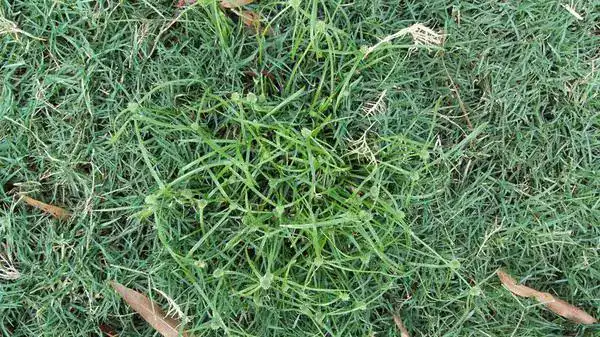
Once kyllinga is properly eliminated, you stop watching a dark green patch quietly take over the rest of your yard. That’s not a small thing. Kyllinga spreads through underground rhizomes and produces thousands of seeds per season in Sayville’s moist South Shore conditions, it moves faster than it would in drier inland towns. Getting ahead of it means you’re protecting the whole lawn, not just treating a symptom.
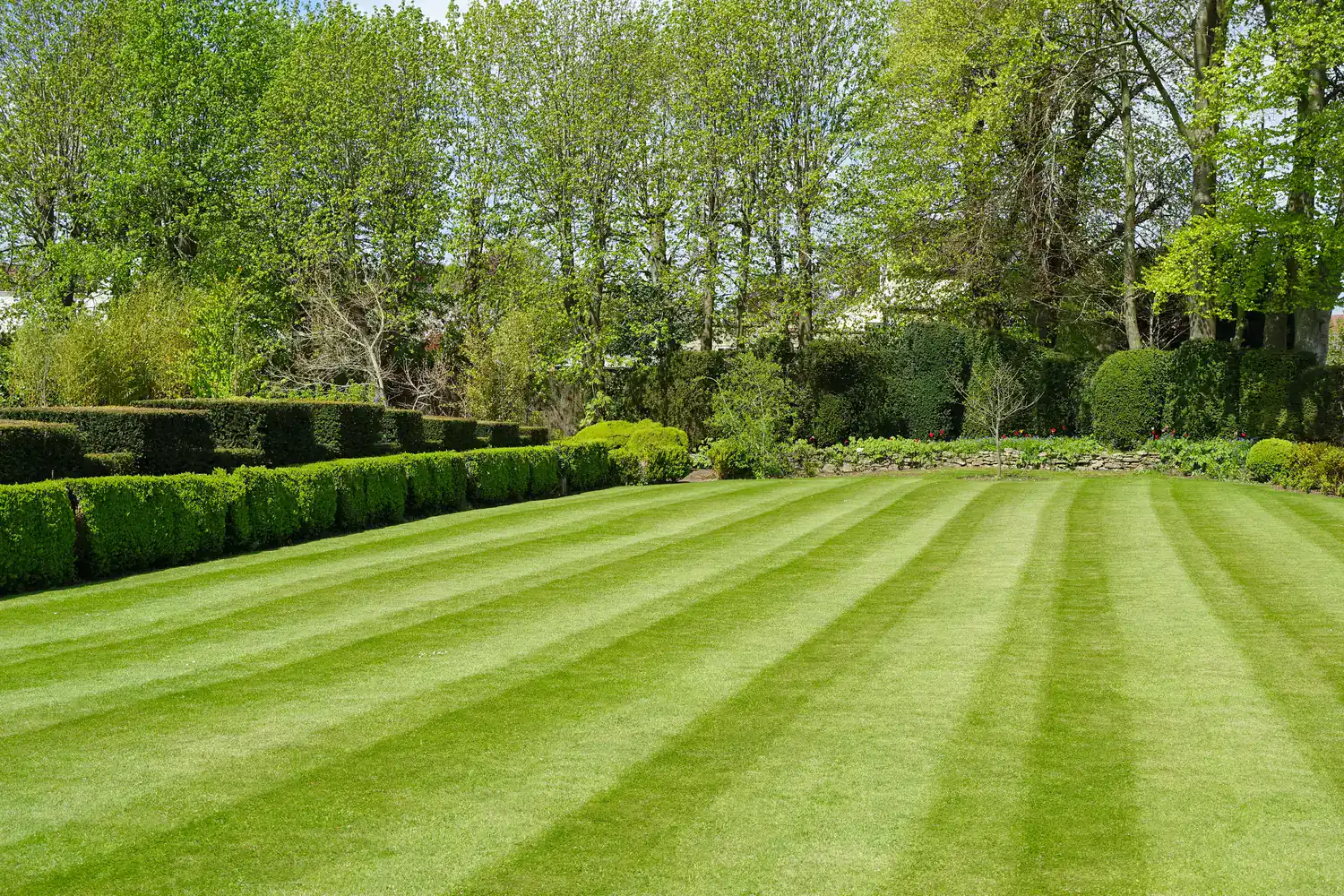
For homeowners in Sayville and West Sayville especially, this weed isn’t just a maintenance issue it’s a geography issue. Properties near Great South Bay sit on soil that holds more moisture, and no amount of irrigation adjustment fully corrects that. A lawn that’s been treated correctly, with the right chemistry at the right time, looks uniform again. The texture evens out, the color normalizes, and the bare spots left behind get reseeded so nothing else moves in.
That’s the full picture. Not just a sprayed patch, but a restored lawn that’s actually harder for kyllinga to reclaim.
We’re based out of Port Jefferson Station and serve all of Suffolk County including Sayville, West Sayville, and the surrounding South Shore communities. This isn’t a franchise with a local phone number. We’re a locally owned lawn specialist operation where the person responsible for your results is the same person running the business.
Kyllinga control is one of those services where local knowledge actually matters. The soil conditions along the Great South Bay corridor behave differently than what you’d find in Holbrook or Selden. Older residential properties near Sayville’s historic downtown the kind of established yards on streets that have been there since the early 1900s carry decades of compacted soil and accumulated weed seed banks that change how treatment needs to be approached.
We hold a valid NYSDEC Commercial Pesticide Applicator License (Category 3a) and operate in full compliance with Suffolk County’s pesticide regulations, including SCDHS buffer zone requirements that are particularly relevant for properties near the bay. When restoration won’t cut it, our new lawn installation in Sayville delivers a fresh lawn.
The first step is identification. Kyllinga and nutsedge are both sedges, and they look similar but they’re different plants that don’t always respond identically to the same approach. Before anything gets applied to your Sayville lawn, the specific sedge species present gets confirmed. That step alone separates a program that works from one that wastes your time and money.
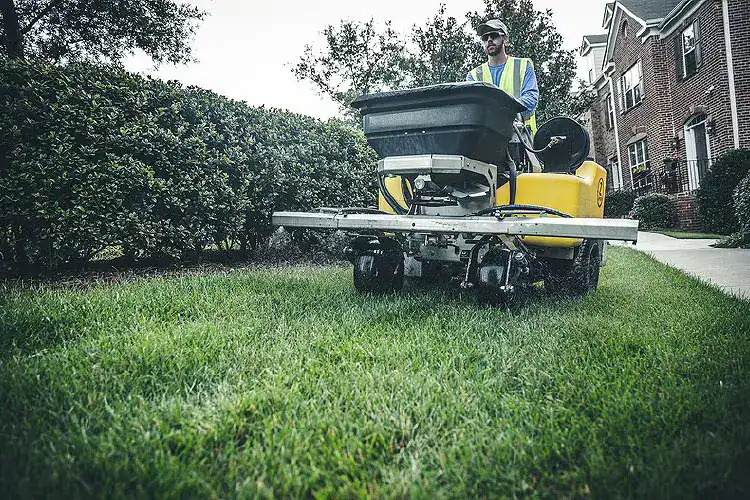
From there, treatment is scheduled during kyllinga’s active growing window late May through late August in this part of Long Island. Sayville’s South Shore location, moderated by Great South Bay, tends to see an earlier spring green-up than inland Suffolk County towns, which means first applications can often be timed slightly earlier here. The professional-grade herbicides we use halosulfuron-methyl and sulfentrazone are not available at retail stores. They require a licensed applicator, and they’re what actually work on established kyllinga.
A single application is not the program. Kyllinga’s rhizome network survives one treatment even when the visible plant dies back. A properly structured program runs two to three applications spaced four to six weeks apart. After the weed is eliminated, bare and thin areas get addressed through overseeding so your lawn closes back in before anything else takes hold.
Ready to get started?
Every kyllinga control program we offer starts with a proper lawn assessment not a glance from the truck. The goal is to understand how far the infestation has spread, whether drainage or irrigation issues are feeding it, and whether there are additional sedge species present alongside the kyllinga. In Sayville, that assessment almost always includes a look at soil moisture patterns, particularly for properties in West Sayville or near the marina corridor where the water table runs higher.
Treatment uses professional-grade sedge-active chemistry that isn’t sold over the counter. Applications are timed to the active growing season and spaced correctly to address both the visible plant and the underground rhizome system that keeps it coming back. For properties near Great South Bay, every application is made in compliance with SCDHS buffer zone regulations something we’re specifically familiar with given our exclusive focus on Suffolk County.
Post-treatment, the program doesn’t just stop at weed elimination. Thin and bare areas left behind after kyllinga dies off are addressed through overseeding with competitive cool-season grasses. Bare soil is the fastest re-entry point for kyllinga seeds already sitting in the ground closing those gaps is part of what makes the results last, not just look good for a season.
The most common reason kyllinga returns is that only one application was made, or the wrong product was used or both. Kyllinga spreads through an underground rhizome network that survives a single herbicide application even when the visible plant tissue dies back. If the root system isn’t addressed through a properly timed, multi-application program, the plant regenerates from what’s still alive underground.
In Sayville specifically, the problem is compounded by the moist soil conditions along the South Shore. Even after a successful treatment, kyllinga seeds already in the soil can germinate in areas where moisture levels remain elevated particularly in low-lying spots, near irrigation zones, or on properties close to Great South Bay. A complete program accounts for this by pairing chemical treatment with post-treatment overseeding, which closes bare areas before new seeds can establish.
You can attempt DIY treatment, but the products available at retail stores are not the same chemistry that professional applicators use. The professional-grade formulations of halosulfuron-methyl and sulfentrazone the two herbicides with the strongest track record against kyllinga in residential turf require a valid NYSDEC Commercial Pesticide Applicator License to purchase and apply at professional rates. What’s on the shelf at a hardware store is a diluted or differently labeled version that typically doesn’t produce the same results on an established infestation.
This isn’t a knock on the effort it’s a product access issue. Many Sayville homeowners who call us have already tried a store-bought sedge killer and watched the kyllinga come back within a season. The licensing requirement exists for good reason, and it’s also why hiring a properly credentialed applicator isn’t just about convenience it’s about actually solving the problem with the right tools.
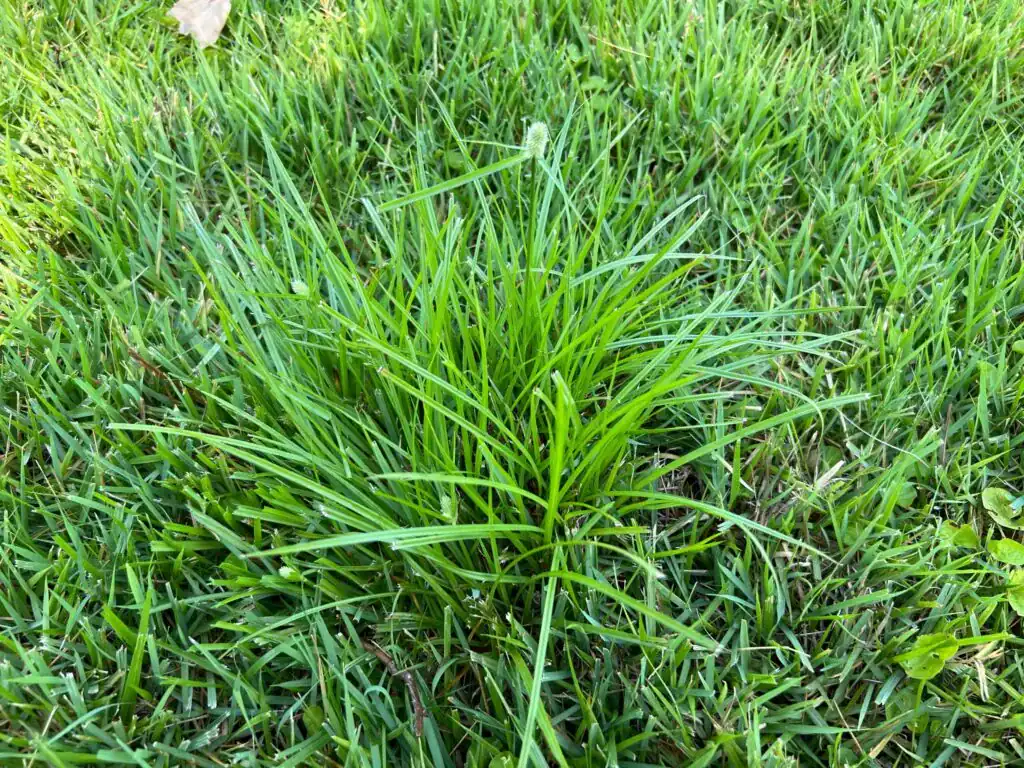
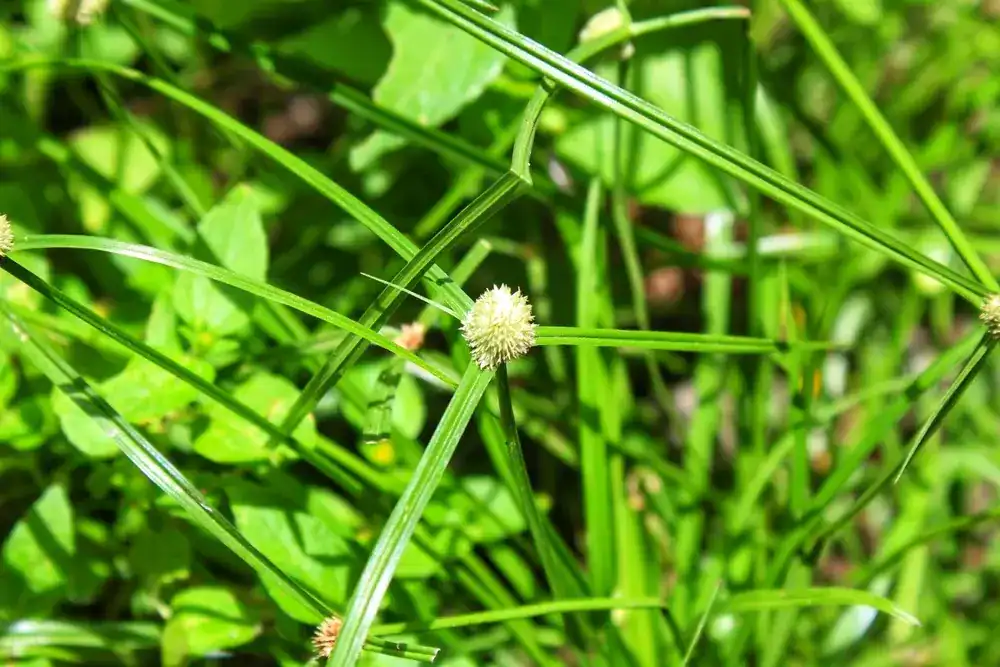
Both kyllinga and nutsedge belong to the sedge family, which is why they’re often confused and why a lot of treatment programs miss the mark. The most visible difference is the seed head: nutsedge produces a spiky, star-shaped cluster, while kyllinga produces a smaller, rounder, more compact head. Kyllinga also tends to grow lower to the ground and spreads more aggressively in wet conditions, which is part of why it shows up so frequently in Sayville lawns near the bay.
The treatment distinction matters because while both respond to sedge-active herbicides, the timing, rate, and product selection can vary depending on which species or combination of species is present. Treating nutsedge with a program designed for kyllinga, or vice versa, often produces incomplete results. That’s why identification happens before any product gets applied, not after.
A properly structured kyllinga control program requires a minimum of two to three applications, spaced four to six weeks apart during the active growing season. In Sayville, that window runs from late May through late August though the South Shore’s bay-moderated microclimate sometimes allows first applications to be timed slightly earlier than in inland Suffolk County towns.
One application will damage the visible plant but leave the rhizome network intact. The second and third applications target the plant as it attempts to regenerate, hitting it during the period when it’s most metabolically vulnerable. Trying to compress this into a single visit is one of the most common reasons kyllinga persists after a treatment attempt. The biology of the plant requires a multi-step approach, and any program that doesn’t account for that is going to disappoint.
Yes when it’s done by a licensed applicator who knows the local regulatory requirements. Suffolk County Local Law 41-2007 establishes pesticide-free buffer zones around public drinking water supply wells, and the SCDHS maintains a compliance map that licensed commercial applicators are legally required to check before any application. We operate exclusively in Suffolk County and are specifically familiar with these requirements, including how they apply to properties in West Sayville and near-waterfront areas along the bay.
Suffolk County also has its own nitrogen fertilizer restrictions designed to limit runoff into waterbodies like Great South Bay. A licensed applicator working in this area understands both sets of rules and applies products accordingly. For Sayville homeowners who are environmentally conscious about the bay and many are, given how active local organizations like Save The Great South Bay have been hiring a properly credentialed, locally knowledgeable applicator is the responsible choice, not just the effective one.
It likely comes down to where Sayville sits geographically. Kyllinga is a moisture-loving sedge that thrives in wet or poorly drained soils, and Sayville’s position directly along Great South Bay means many properties here especially in West Sayville and low-lying areas near the marina have naturally elevated soil moisture that isn’t easily corrected through irrigation management alone. The water table runs higher here than in inland Suffolk County communities like Holbrook or Selden, and the flat South Shore topography doesn’t help drainage.
Older Sayville properties add another layer to this. Homes built in the early-to-mid 20th century on streets near the historic downtown or the LIRR corridor often have compacted soils, mature tree root competition, and decades of accumulated weed seed banks. That combination persistent moisture, compacted soil, and an existing seed bank is exactly the environment where kyllinga establishes quickly and spreads aggressively. It’s not a reflection of how well you maintain your lawn. It’s a function of where your lawn is.
Useful Links
Other Services we provide in Sayville