
Hear from Our Customers
Kyllinga doesn’t respond to standard weed killers not the ones you can buy at the hardware store, and not the generic broadleaf sprays most lawn companies are still reaching for. When the right chemistry finally gets applied at the right time, you stop watching that dark-green patch creep across your lawn and start seeing real turf fill back in.
For Setauket homeowners specifically, this matters more than it might in other parts of Suffolk County. Properties near Conscience Bay and Setauket Harbor sit on soils that stay moist well into the growing season. That persistent moisture is exactly what kyllinga thrives in and it means the weed has a structural advantage on North Shore lawns that it simply doesn’t have in drier, sandier communities further inland.
Add in the mature tree canopies common on older Setauket properties, which create shaded and damp microclimates, and you’ve got conditions that give kyllinga every reason to stay. A properly structured treatment program one built around the plant’s biology, not convenience changes that equation. Dense, healthy turf comes back. The weed doesn’t.
We’re based in Port Jefferson Station right next door to the Three Village area along Route 25A. That proximity means our technicians know these neighborhoods, understand the soil conditions common on North Shore lots in Setauket, and aren’t treating your lawn the same way we’d treat one in Medford or Holbrook.
We’re a lawn-specific company, not a general landscaping outfit that squeezes weed control between mulch jobs. Lawn Master holds the NYSDEC Commercial Pesticide Applicator License required to legally purchase and apply the professional-grade sedge-active herbicides that actually work on kyllinga. That credential isn’t universal a lot of companies operating in Suffolk County don’t have it.
When you call, you’re reaching a locally operated business whose reputation is built entirely on what happens to lawns in this county. That accountability is real.
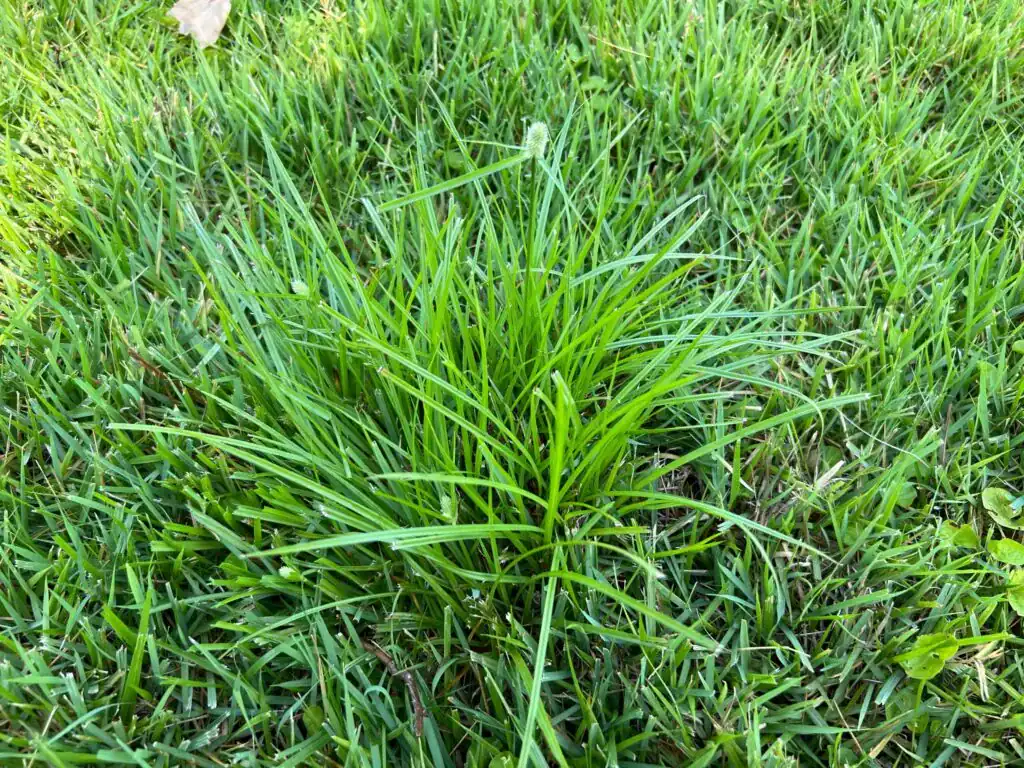
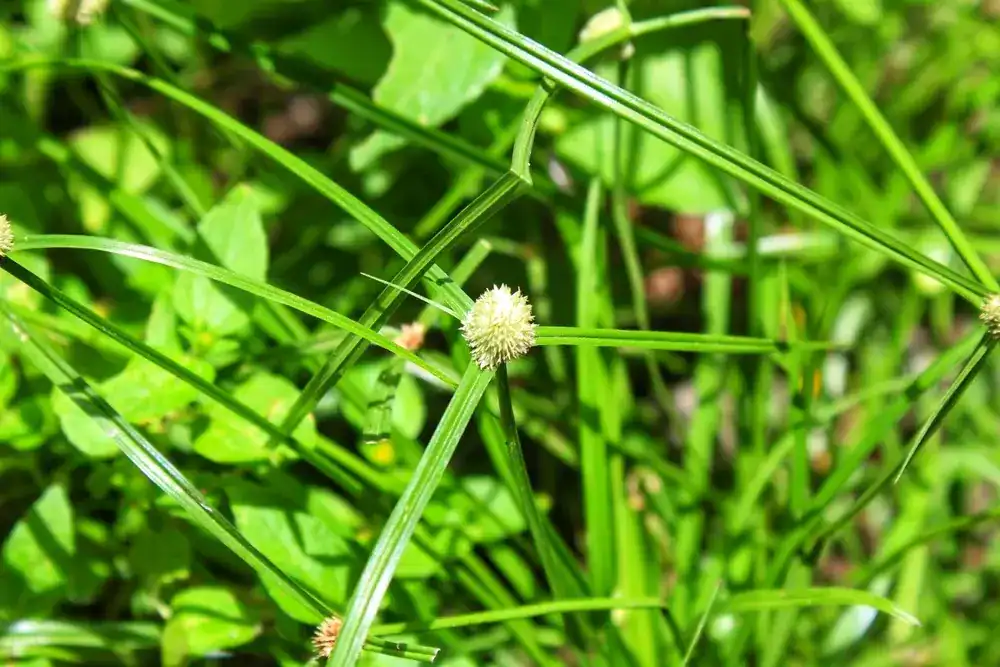
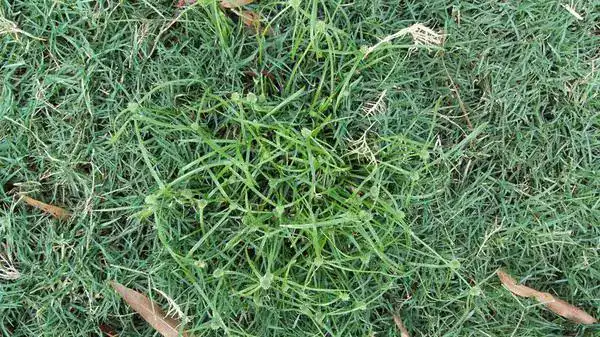
It starts with identification. Kyllinga is a sedge not a grass, not a broadleaf weed and it gets misidentified constantly. Before anything gets applied to your lawn, we confirm what you’re actually dealing with. Kyllinga has a triangular stem, a round or oval seed head, and a rhizome network underground that most treatments never reach. Knowing that changes everything about how the program is structured.
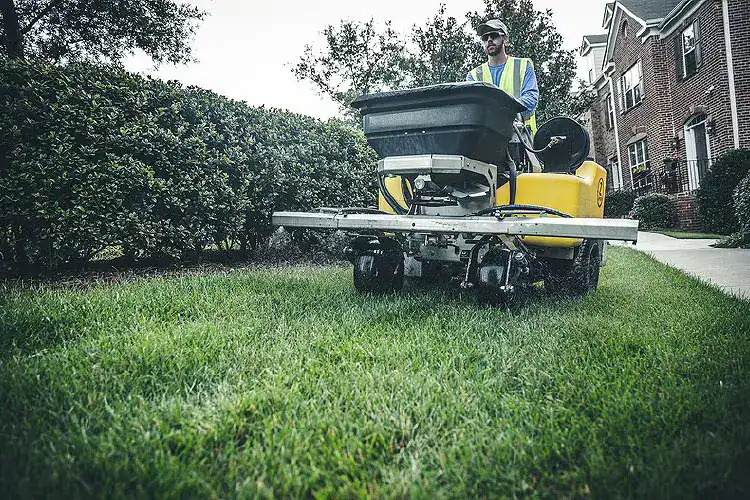
Once the species is confirmed, treatment begins during the active growing window on Long Island’s North Shore, that’s typically late May through late August. The herbicides we use, primarily halosulfuron-methyl or sulfentrazone, require a licensed applicator to obtain and apply. These aren’t retail products. They work by moving through the plant systemically, but the rhizome network means one application isn’t enough. A properly built program runs a minimum of two to three applications spaced four to six weeks apart, targeting both the visible plant and the regrowth from surviving root tissue.
Under Suffolk County Chapter 647, you’ll receive written notification before any application goes down that’s a county-level compliance requirement, and we handle it as a standard part of every job. After the treatment cycle is complete, the focus shifts to filling in the bare areas left behind with the right seed varieties for cool-season North Shore turf, so the lawn closes up and doesn’t leave an open door for reinfestation.
Ready to get started?
Kyllinga control through Lawn Master isn’t a single spray and a handshake. It’s a structured, multi-application program designed around the biology of a perennial sedge one that can produce up to 5,000 seeds per plant each season and regenerate from its root system after a poorly timed or incorrect treatment.
The program includes proper species identification before any product is selected, professionally licensed herbicide applications using sedge-active chemistry not available through retail channels, and treatment timing calibrated to Setauket’s North Shore growing season. For properties near Conscience Bay or with in-ground irrigation systems both common in Setauket we also evaluate the cultural conditions contributing to the infestation. Overwatering is one of the most consistent drivers of kyllinga pressure in irrigated residential lawns, and adjusting that pattern is part of a lasting fix, not an afterthought.
Post-treatment, the bare or thinned areas left behind by the dying sedge get addressed through targeted overseeding with cool-season turf varieties suited to North Shore conditions. The goal is a lawn that’s dense enough to resist the next kyllinga seedling trying to find a foothold. Setauket homeowners with properties in the $1 million range don’t need a temporary improvement they need a program that actually holds.
If you’ve had your lawn treated and the weed returned within a few weeks, kyllinga’s rhizome network is almost certainly the reason. The plant grows underground as well as above the soil surface, and a single herbicide application even a correct one typically kills the visible growth while leaving the root system intact enough to regenerate. That regrowth can appear within three to four weeks, which makes it look like the treatment failed when it actually just wasn’t finished.
A complete kyllinga control program requires a minimum of two to three applications spaced four to six weeks apart during the active growing season. Each application targets the new growth coming up from surviving rhizomes, progressively depleting the plant’s ability to recover. On North Shore properties in Setauket where soil moisture stays elevated near Conscience Bay or in shaded areas under mature trees, this follow-through is especially important those conditions keep the plant metabolically active and pushing new growth longer than it would in drier environments.
It matters quite a bit. Both are sedges in the same plant family, and they look similar enough that they get confused regularly by homeowners and by lawn companies that aren’t sedge specialists. But kyllinga grows lower to the ground, has a distinctly round or oval seed head, and can respond differently to various herbicide formulations than yellow or purple nutsedge does.
Treating kyllinga as if it were nutsedge or treating all sedges with the same product at the same rate is one of the most common reasons programs fail. The herbicides with the strongest activity on kyllinga, particularly halosulfuron-methyl and sulfentrazone, need to be selected and applied based on what’s actually in the lawn. We identify the specific sedge species before selecting a treatment approach. That step isn’t optional it’s the foundation of a program that actually works rather than one that produces partial results and lets the infestation continue spreading through your lawn.
The short answer is that the products available at retail are not the same products used in a professional kyllinga control program. The herbicides with meaningful activity on kyllinga halosulfuron-methyl and sulfentrazone in professional-grade formulations require a New York State DEC Commercial Pesticide Applicator License to purchase and apply. That’s not a technicality. Those formulations simply aren’t sold to the general public.
What you’ll find at the hardware store are broadleaf herbicides, crabgrass controls, and general weed killers none of which have reliable activity on sedges. Some retail products marketed for nutsedge exist, but they’re weaker formulations and still won’t address kyllinga’s rhizome network the way a properly structured professional program will. If you’ve already tried a retail product and watched the weed return, that’s why. It wasn’t a matter of application technique it was a product access problem from the start.
This is a legitimate question, and it deserves a straight answer rather than a generic reassurance. The herbicides we use in professional kyllinga control programs are approved for residential turf applications when applied according to label requirements by a licensed applicator. The NYSDEC licensing requirement exists specifically to ensure that applicators are trained in proper application rates, buffer distances from water features, and environmental precautions.
Suffolk County also maintains pesticide buffer zone regulations under Local Law 41-2007 through the SCDHS, which establish compliance requirements around public drinking water supply wells. For properties near Conscience Bay, Setauket Harbor, or the Long Island Sound shoreline, we apply with full awareness of those buffer requirements it’s part of operating as a licensed commercial applicator in this county, not something that gets addressed only when a homeowner asks. If your property has specific proximity concerns, that gets evaluated before the first application goes down.
Timing matters more with kyllinga than with most other lawn weeds. The herbicides we use work best when the plant is actively growing and metabolically engaged enough to move the chemistry through its system and down into the root network. Applying too early in the season before the plant has broken full dormancy reduces effectiveness significantly.
On Long Island’s North Shore, Setauket’s proximity to Long Island Sound moderates temperatures compared to mid-island communities. Spring warms slightly later here than it does in Medford or Holbrook, which means the kyllinga growing season typically kicks in from mid-to-late May rather than early May. The optimal treatment window runs from late May through late August. Starting the first application in that window and completing the full program before the plant begins slowing down in early fall gives you the best chance of meaningful suppression heading into the following season. Waiting until August to start the first application leaves very little runway to complete the necessary follow-up treatments.
A properly structured kyllinga control program meaning multiple licensed applications with professional-grade sedge-active herbicides, not a single spray typically runs in the range of $200 to $500 or more for a full-season program, depending on lawn size and how established the infestation is. Larger properties or lawns with significant kyllinga coverage across multiple zones will sit toward the higher end of that range.
For most Setauket homeowners, the more relevant frame isn’t the program cost in isolation it’s what the alternative has already cost. If you’ve spent two seasons watching retail treatments fail, or paid a general lawn service that misidentified the weed and applied the wrong product, you’ve already spent money on things that didn’t work. A licensed, properly structured program costs more upfront than a bag of hardware store weed killer, but it’s designed to actually resolve the problem rather than temporarily suppress it. On a property worth over a million dollars, a lawn that’s visibly infested with a spreading sedge weed isn’t a minor issue and the cost of fixing it properly reflects that.
Useful Links
Other Services we provide in Setauket