
Hear from Our Customers
If water is sheeting off your lawn instead of soaking in, or your fertilizer program isn’t doing what it’s supposed to, compaction is almost always the reason. The sandy coastal soils common throughout East Islip develop a surface layer that becomes hydrophobic over time water hits it, rolls off, and your grass never gets what it needs. Core aeration breaks that cycle by physically removing plugs of soil, opening up pathways for water, air, and nutrients to reach the root zone where they actually matter.
For lawns along the South Shore near East Islip, that salt air coming off the Great South Bay adds another layer of stress. It pulls moisture from grass blades and gradually weakens turf over time. Compacted soil makes recovery harder because the lawn can’t absorb what it needs between stressors. After aeration, you’ll notice water absorbing instead of running off, fertilizer actually doing its job, and turf that fills in rather than thins out.
The difference tends to show up within a single season. Fertilizer uptake efficiency can increase 30 to 40 percent after proper aeration. Overseeded lawns on aerated ground germinate at rates 30 to 50 percent higher than those seeded on un-aerated soil. If you’ve been putting money into your lawn year after year without seeing results, this is usually the missing piece.
We’re a locally owned Suffolk County lawn care company not a franchise, not a call center routing jobs to whoever’s available. The people doing the work know what South Shore soil actually behaves like, understand the difference between a lawn near The Moorings in East Islip and one a few miles inland, and have seen firsthand what salt air and bay humidity do to turf over a season.
Every applicator on our team holds a New York State DEC Pesticide Applicator License. That’s a state requirement for any commercial operator applying fertilizers or pesticides and it matters especially in East Islip, where the Great South Bay and the Connetquot River are right in your backyard. New York’s fertilizer laws include phosphorus restrictions near waterways, and licensed operators know those rules. A lot of informal outfits operating in the area don’t.
When you call us, you’re talking to someone who knows East Islip. That’s not a selling point it’s just the reality of being a local company that’s been working Suffolk County lawns for years.
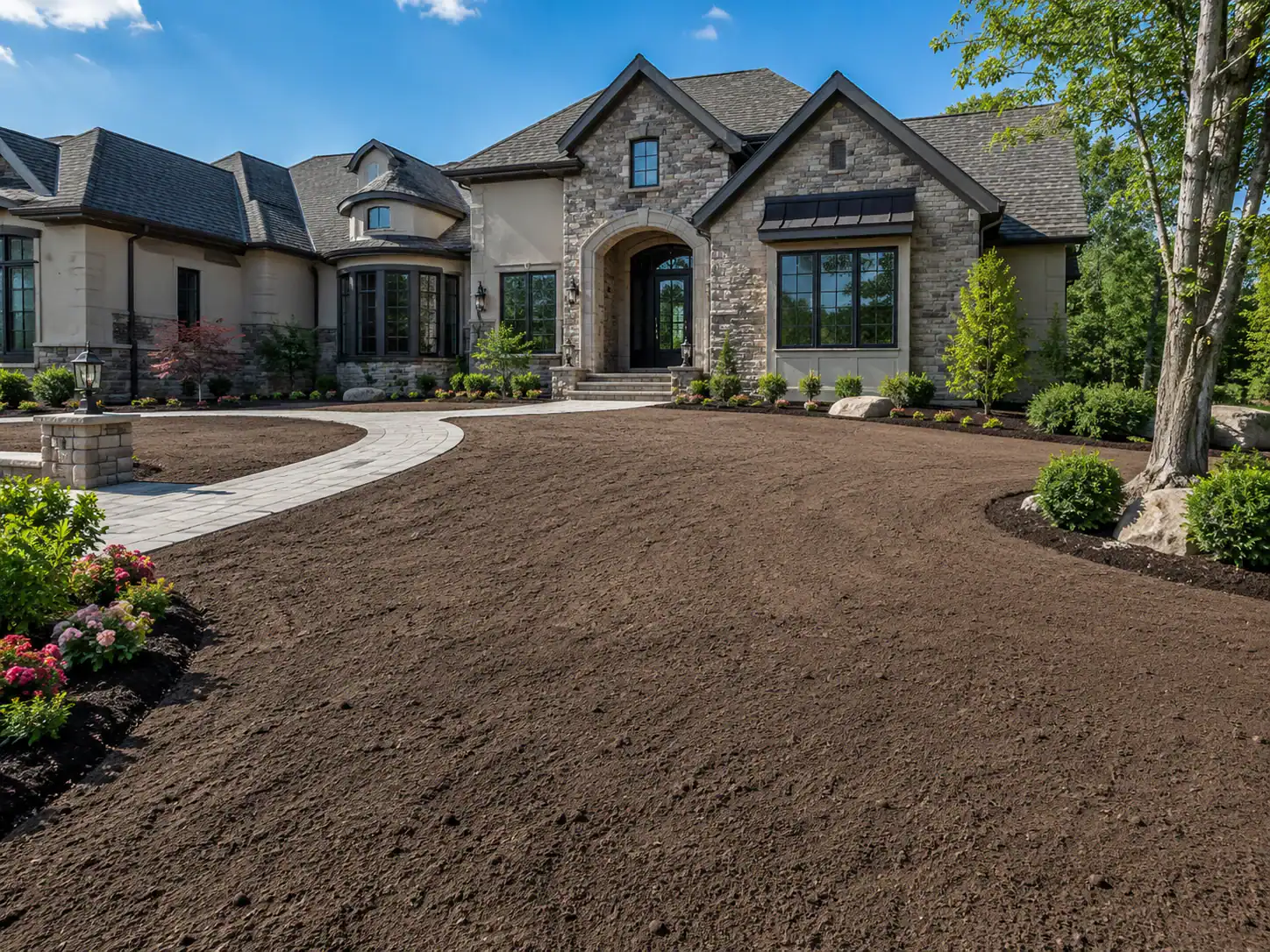
It starts with a site assessment. Before any equipment touches your lawn, we evaluate the condition of your turf, thatch depth, and compaction level. East Islip’s sandy South Shore soils can look deceptively fine on the surface while holding a compaction layer underneath that’s blocking everything water, air, nutrients. Knowing what we’re dealing with determines how the job gets done.
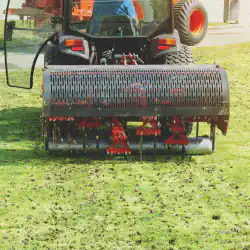
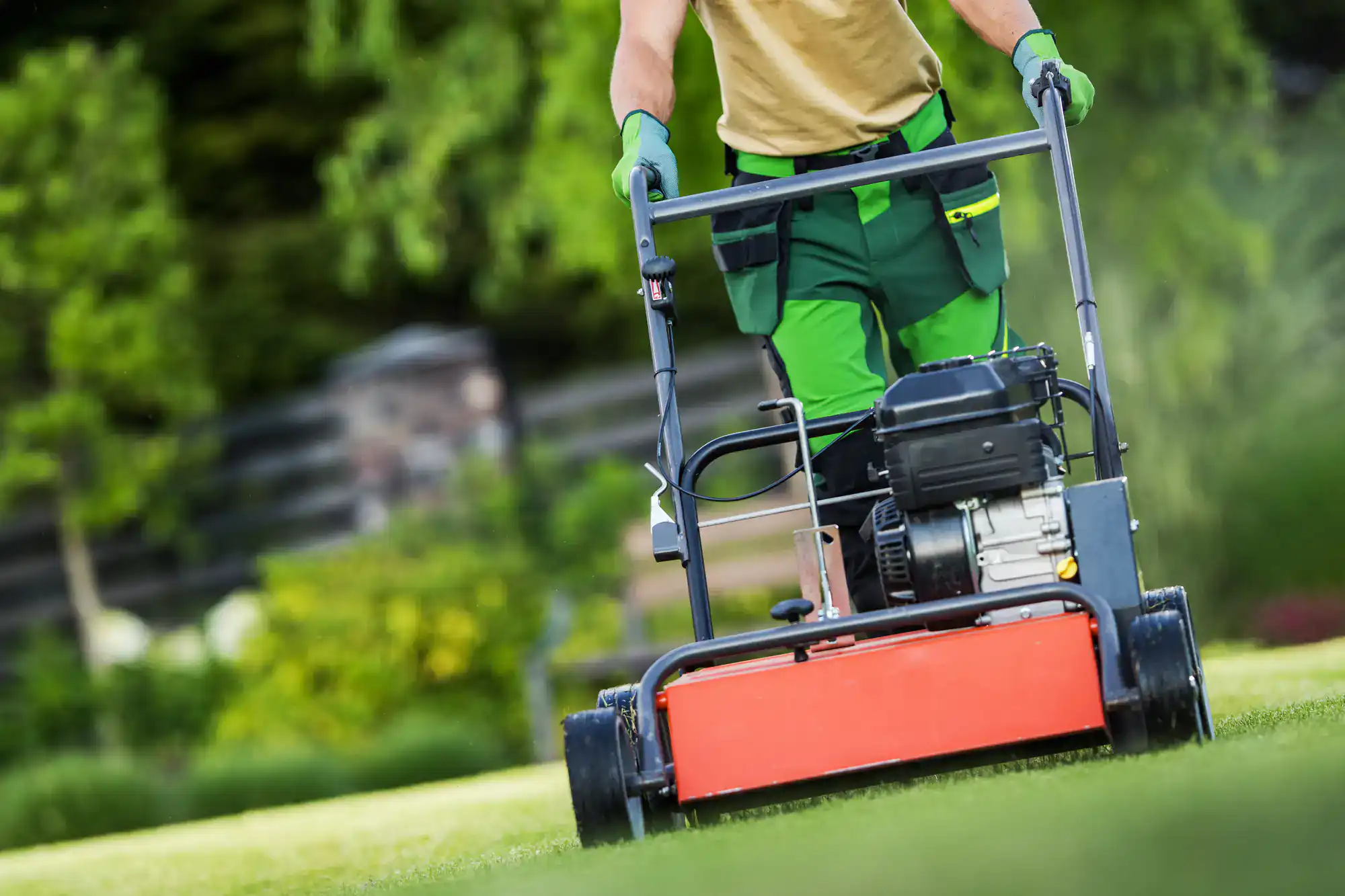
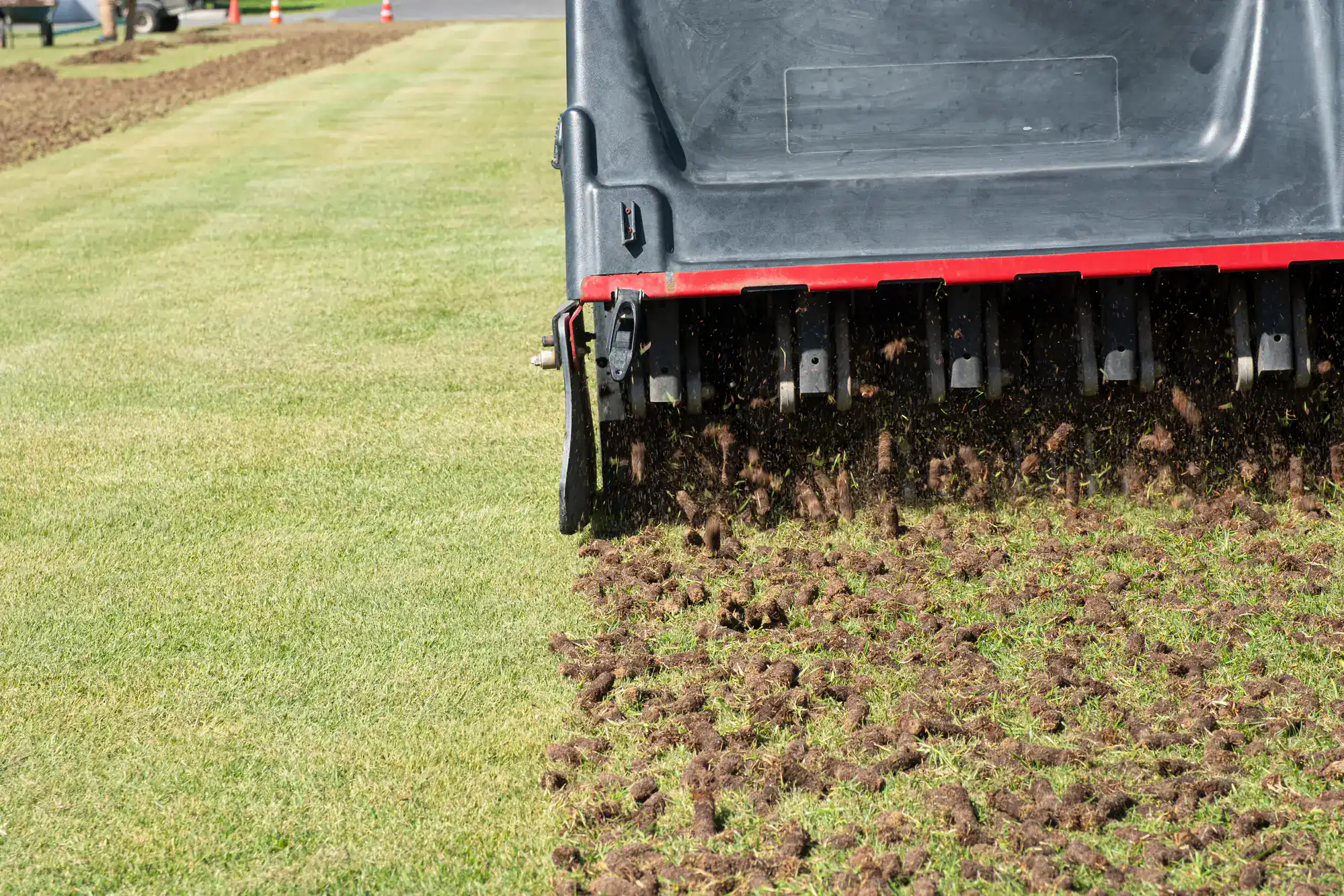
Then comes the aeration itself. We use a commercial hydraulic aerator not the drum-style machine you’d rent from a big-box store. Rental equipment typically penetrates 1.5 to 2 inches on a good day, often less on compacted sandy soil. Our hydraulic aerator drives tines 3 to 4 inches deep, reaching the actual compaction zone rather than just the surface. That depth difference is the reason results look different. The cores pulled up get left on the surface they break down naturally within two to four weeks and return organic matter back into the soil.
If you’re combining aeration with overseeding, that happens immediately after. The open holes left by the aerator give seed direct contact with soil, which is exactly what germination needs. For East Islip’s cool-season grasses tall fescue, Kentucky bluegrass, perennial ryegrass the fall window from late August through October is the right time to do this. The soil is still warm enough for germination, but the air has cooled enough to reduce stress on new growth. That window fills up fast across Suffolk County, so earlier is better.
Ready to get started?
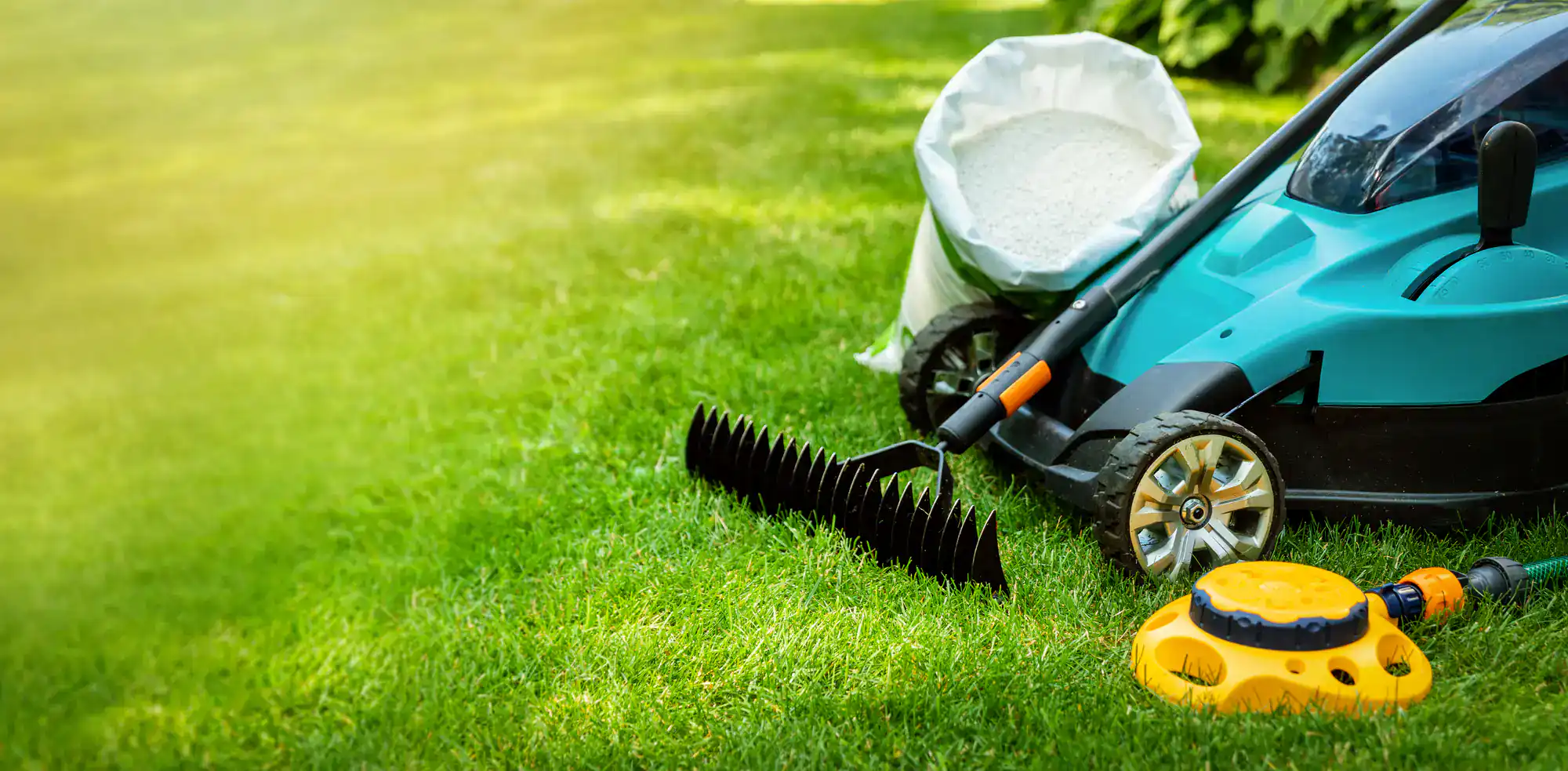
Core aeration on its own is a meaningful improvement. But when you pair it with overseeding and fertilization, the results compound. Aeration opens the pathways overseeding fills in the thin and bare areas, and fertilization feeds the new and existing growth through soil that can now actually receive it. Running only one or two parts of that sequence is the reason a lot of East Islip lawns plateau. The system works when you run the full sequence.
Our aeration program is built around that approach. You’re not just getting holes poked in the ground you’re getting a service that’s timed to your lawn’s seasonal cycle, matched to the cool-season grass varieties that perform on the South Shore, and delivered with equipment that reaches the compaction layer that actually needs to be addressed. For properties in neighborhoods like Deer Run, Country Village, or near the Heckscher State Park perimeter, where high-traffic residential use compounds compaction season over season, annual aeration isn’t optional maintenance it’s what keeps the lawn functional.
Pricing for core aeration in the East Islip area typically runs from around $125 to $175 for smaller lawns under 5,000 square feet, and $200 to $350 or more for larger properties. Combined aeration and overseeding services generally range from $150 to $400 depending on lawn size and seed selection. Every estimate is specific to your property request one and you’ll get a real number, not a ballpark.
For the cool-season grasses that make up most East Islip lawns tall fescue, Kentucky bluegrass, and perennial ryegrass fall is the right window. Late August through October gives you soil temperatures warm enough for germination while air temperatures have dropped enough that new growth isn’t fighting heat stress. East Islip’s coastal position along the Great South Bay means soil temperatures tend to stay warm slightly longer than inland communities, which can extend the effective window a bit but not by much.
September is the sweet spot. By mid-October, the window is narrowing. Homeowners who wait until November have missed the year’s best opportunity for aeration and overseeding combined. Spring aeration is an option for lawns with severe compaction that can’t wait, but summer heat stress on new seed is a real risk, and South Shore humidity can increase fungal pressure on spring-seeded turf. If you’re trying to decide between seasons, fall is the answer for most East Islip properties.
Core aeration removes a physical plug of soil creating real decompression and leaving an open channel for water, air, and nutrients to move through. Spike aeration pushes a solid spike into the ground without removing anything. The problem with spike aeration is that it displaces soil sideways, which actually compacts the area immediately surrounding each hole. You end up with more compaction, not less.
On East Islip’s sandy South Shore soils, where surface compaction and thatch buildup are the primary issues, spike aeration doesn’t solve the problem. It’s common in the DIY market and sold at hardware stores across Long Island, but it’s not a substitute for core aeration. If a service provider offers spike aeration as an equivalent option, that’s a signal they either don’t understand the mechanics or are cutting corners on equipment. Core aeration is the only method with real agronomic backing for compacted residential turf.
This is one of the most common frustrations we hear from homeowners on the South Shore. You’re fertilizing every year, spending real money on a program, and the lawn still looks thin, patchy, or flat. The fertilizer usually isn’t the problem. The soil is.
East Islip’s sandy coastal soils develop a compacted surface layer and a thatch buildup that acts as a barrier. Fertilizer applied on top of that layer sits on the surface, washes off with the first rain or irrigation cycle, and never reaches the root zone. Studies show that fertilizer uptake efficiency can increase 30 to 40 percent after proper core aeration. If your fertilization program has been running for years without delivering the results you expected, aeration is almost certainly the missing piece not a different fertilizer blend, not more frequent applications, just soil that can actually receive what you’re putting into it.
Yes, and more than most people realize. Salt air off the Great South Bay is a persistent stressor for turf in East Islip it pulls moisture from grass blades and gradually increases sodium levels in the soil. Over time, that sodium buildup weakens turf, makes it harder for grass to absorb water and nutrients, and contributes to the thinning and patchiness that a lot of waterfront and near-waterfront homeowners in East Islip deal with year after year.
Compacted soil makes the problem worse because the lawn can’t flush excess sodium or absorb rainfall efficiently enough to recover between exposures. Core aeration improves the soil’s drainage capacity and its ability to move water through the profile which helps dilute and displace sodium buildup over time. For properties in The Moorings, along Bayview Avenue, or near the marina areas in East Islip, where salt air exposure is most direct, annual aeration is one of the most practical things you can do to keep turf resilient through the coastal conditions that come with living on the South Shore.
The cores pulled up during aeration get left on the surface and that’s intentional. They look a little rough for a week or two, but they break down naturally within two to four weeks under normal conditions. As they decompose, they return organic matter and microorganisms back into the soil, which actually improves soil structure over time. You don’t need to rake them up or remove them.
If you’re combining aeration with overseeding, the cores breaking down also help cover newly seeded areas with a light layer of soil, which improves seed-to-soil contact and germination rates. The visual disruption is temporary. What you’re left with after the plugs dissolve is a lawn with better drainage, better nutrient absorption, and a root zone that can actually support healthy growth through the rest of the season including the humidity and salt air conditions that East Islip turf deals with from late spring through early fall.
Pricing depends on lawn size, condition, and whether you’re combining aeration with overseeding. For a typical residential property in East Islip under 5,000 square feet, core aeration generally runs $125 to $175. Larger properties and there are plenty of them in neighborhoods like The Moorings and around the former estate subdivisions typically fall in the $200 to $350 range or higher depending on square footage. Combined aeration and overseeding services run $150 to $400 and up based on lawn size and the seed varieties used.
The more useful way to think about cost is in terms of what you’re already spending. If you’re running a fertilization program that costs $400 to $600 per year and getting underwhelming results because compaction is blocking absorption, a single aeration treatment that unlocks the full value of that investment isn’t an added expense it’s a correction. Most East Islip homeowners who add aeration to their existing program see better results in one season than they’ve seen in several years of fertilizing alone. Request an estimate and you’ll get a number specific to your property, not a range pulled from a brochure.
Useful Links
Other Services we provide in East Islip