
Hear from Our Customers
If you’ve been fertilizing for years and your lawn still looks thin, patchy, or just flat-out underwhelming, the problem probably isn’t what you’re putting on it it’s what the soil is doing to it. Compacted ground acts like a wall. Water pools on the surface instead of soaking in. Nutrients sit there, wash off with the next rain, and never make it to the root zone. You spend money on a fertilization program and get a fraction of the result you should.
Setauket’s soils make this worse than most. The North Shore sits on glacial moraine and beneath the loamy surface of most properties here lies a layer of clay-influenced till that compacts hard under decades of foot traffic, mowing, and seasonal wet-dry cycles. In the older neighborhoods around Old Field Road and the Village Green, some of these lawns have been managed and compacted for 40 or 50 years. That kind of compaction doesn’t respond to fertilizer. It responds to a machine that can actually break through it.
Core aeration pulls physical plugs of soil from the ground, opening up channels for water, air, and nutrients to reach the root zone directly. Research consistently shows fertilizer uptake can improve 30 to 40 percent after proper aeration which means the program you’ve already been paying for starts working the way it was supposed to. Add overseeding into those open channels and you’ve given new grass seed the direct soil contact it needs to actually germinate. That’s the difference between a lawn that looks like it belongs on a property valued near $860,000 and one that doesn’t.
We’re a Suffolk County lawn care company not a national franchise routing your call to a regional call center. The people who show up on your property are the same people who know what North Shore soil actually looks like, how it behaves in fall, and what it takes to get real results out of it.
That matters in Setauket specifically. The Three Village area has a distinct landscape character mature tree canopies in Old Field, waterfront properties along Conscience Bay and Strongs Neck, clay-influenced soils that behave differently than what you’d find in newer developments further inland. A generic lawn care program designed for a generic Long Island lawn isn’t the right fit here, and we don’t operate that way.
Every applicator on our team holds a New York State DEC pesticide applicator license. That’s not a detail buried in the fine print it’s a legal requirement that a surprising number of operators quietly skip. For properties near Conscience Bay, Setauket Harbor, or the tidal areas around Poquott, working with a licensed applicator isn’t just a preference. It’s the responsible call.
It starts with a quick estimate we look at your lawn’s size, condition, and any specific problem areas before recommending a service plan. If your lawn has heavy shade from mature trees, low spots that hold water near a tidal area, or decades of accumulated thatch, that gets factored in before anyone shows up with equipment.
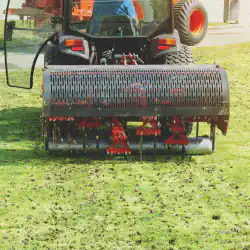
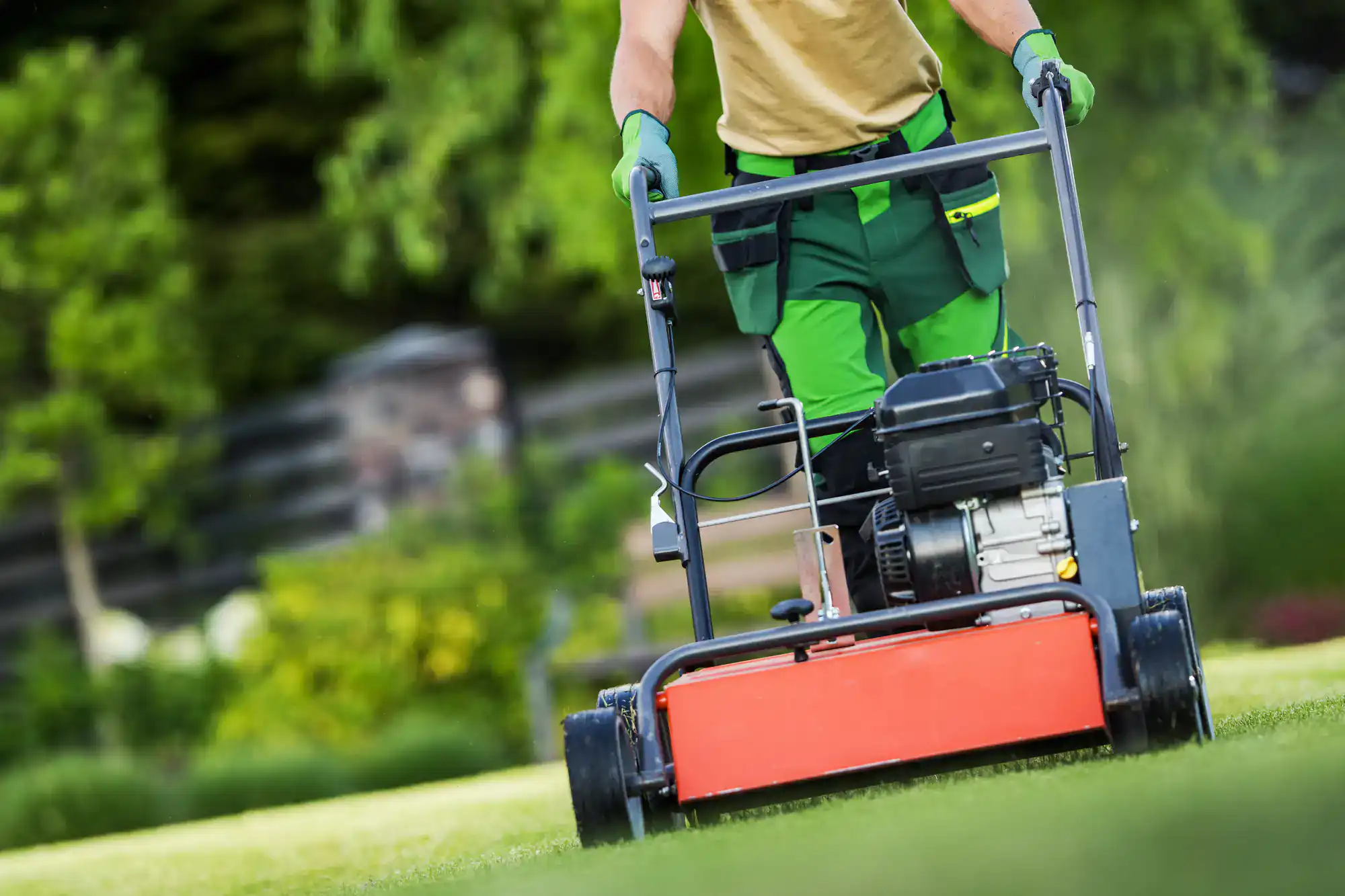
On service day, we use a hydraulic aerator not the drum-style machine you’d rent from a hardware store. The hydraulic aerator drives tines 3 to 4 inches into the ground, adjusting pressure dynamically based on what the soil is doing. On the clay-influenced soils common throughout Setauket, that depth difference is significant. A standard rental aerator typically reaches 1.5 to 2 inches enough to disturb the surface, not enough to reach the actual compaction layer. The cores pulled from your lawn get left on the surface, which is intentional. They break down in 2 to 4 weeks and return organic matter and soil microbes back into the turf.
In Setauket, the optimal window for aeration and overseeding runs from late August through mid-October. Soil temperatures are still warm enough for cool-season grass seed to germinate, air temperatures have dropped enough to reduce stress on new growth, and the upcoming fall season gives your lawn the longest possible runway before summer heat arrives. The North Shore’s coastal influence tends to moderate the transition, which can extend this window slightly later than on the South Shore but it still closes, and waiting until November means waiting a full year to do it right.
Ready to get started?
Core aeration and lawn aeration are the same service we don’t treat them as separate offerings or use confusing tiered language to upsell you into something you don’t need. What you’re getting is a complete decompression treatment using hydraulic equipment that’s built for the kind of soil conditions Setauket actually has, not the sandy South Shore profiles that most generic Long Island lawn care content is written around.
When aeration is paired with overseeding, we use cool-season grass varieties suited to the Three Village area tall fescue, Kentucky bluegrass, and perennial ryegrass, depending on your lawn’s sun exposure and existing turf profile. Seed dropped into freshly aerated ground has direct soil contact, which is what germination actually requires. Germination rates following core aeration are consistently 30 to 50 percent higher than overseeding on un-aerated ground. For shaded areas under mature oaks and maples common throughout Old Field and the neighborhoods around Frank Melville Memorial Park that difference is even more pronounced, because shade-stressed turf can’t compensate for poor seed-to-soil contact the way sun-exposed grass can.
Our applicators are also trained to work within New York State’s fertilizer application rules, including phosphorus restrictions near sensitive waterways. For properties in Strongs Neck, Poquott, or anywhere along Conscience Bay, this isn’t a formality it’s a compliance issue that unlicensed operators regularly ignore. When fertilization follows aeration as part of a complete program, nutrients are applied correctly, at the right time, with the right product mix for Long Island’s cool-season turf calendar.
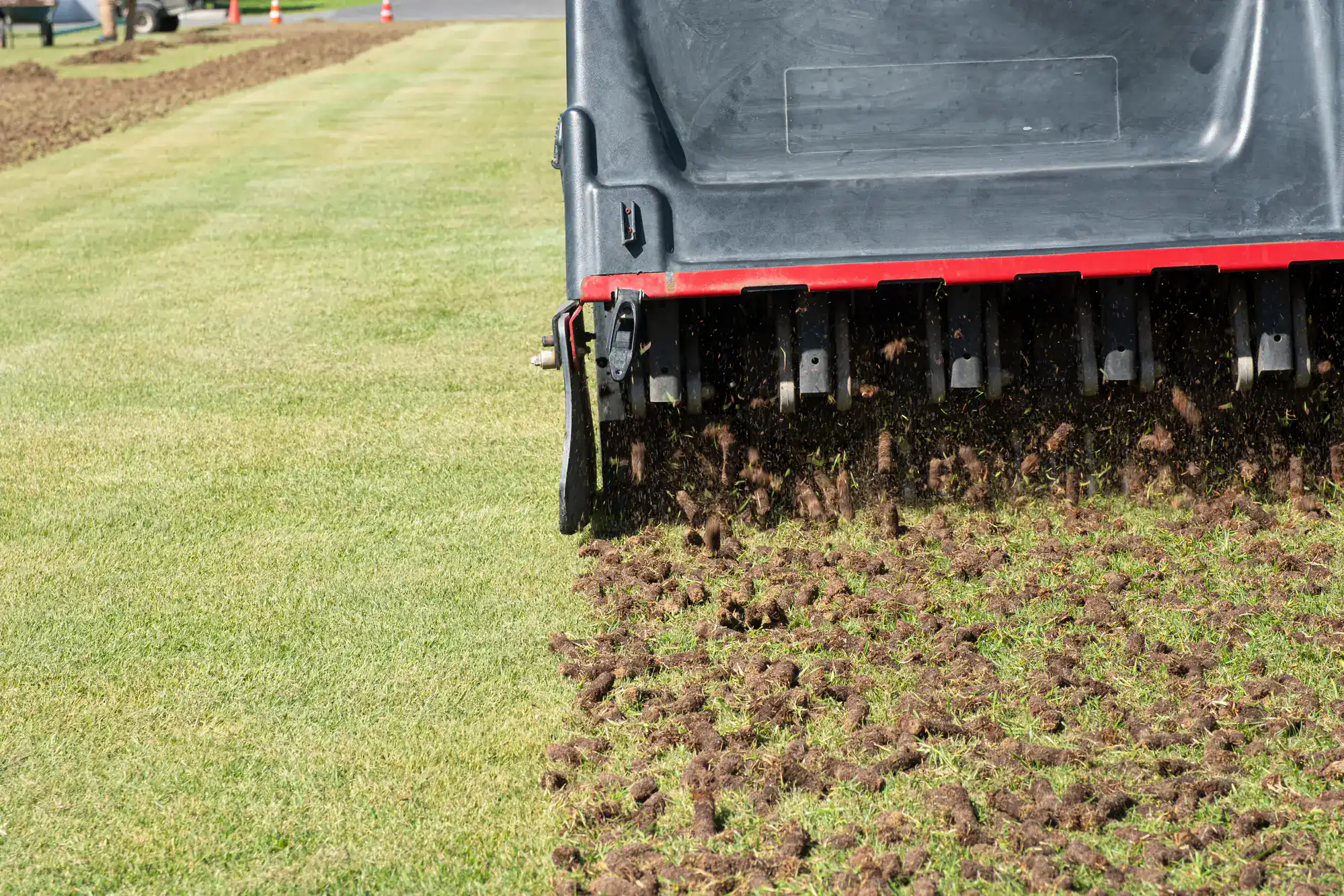
For Setauket and the broader Three Village area, the best window for core aeration is late August through mid-October. This is when cool-season grasses tall fescue, Kentucky bluegrass, perennial ryegrass are entering their active fall growth phase. Soil temperatures are still warm enough to support germination if you’re overseeding, and air temperatures have dropped enough that new growth isn’t immediately stressed by summer heat.
The North Shore’s position along Long Island Sound gives Setauket a slightly cooler, more moderated fall season than inland or South Shore communities. That coastal influence can extend the viable aeration window by a week or two compared to warmer parts of Suffolk County but it still closes. Waiting until November typically means the soil is too cold for effective seed germination, and you’ve lost the season. Spring aeration is an option for lawns with severe compaction, particularly in heavily shaded areas, but fall remains the recommended window for the best overall results.
This is one of the most common frustrations among homeowners in Setauket, and the answer is almost always the same: the fertilizer isn’t reaching the roots. Compacted soil acts as a barrier. Nutrients applied to the surface sit there, and when it rains or when your irrigation runs they wash off rather than infiltrating down to the root zone where grass actually uses them. You’re spending money on a program that’s delivering a fraction of the result it should.
Setauket’s clay-influenced glacial soils are particularly prone to this. Beneath the loamy surface layer on most properties here, there’s a denser subsurface that compacts hard over time, especially on older lots that have been mowed and trafficked for decades. Core aeration opens up direct channels through that compacted layer, and studies show fertilizer uptake efficiency can improve 30 to 40 percent following proper aeration. The fertilization program you’ve already been running doesn’t need to be replaced it needs soil that can actually receive it.
Core aeration removes a physical plug of soil from the ground, which creates genuine decompression and leaves the surrounding soil intact. Spike aeration pushes a solid tine into the ground without removing anything it displaces soil to the sides rather than extracting it. On lighter, sandier soils, spike aeration might offer marginal benefit. On the heavier, clay-influenced soils common throughout Setauket and the North Shore, it’s counterproductive. The walls of a spike hole are compressed clay harder than they were before the tine went in.
If you’ve tried a DIY spike aerator and seen no improvement, that’s not evidence that aeration doesn’t work. It’s evidence that the wrong tool doesn’t work on North Shore soil. Core aeration specifically with commercial-grade hydraulic equipment that can reach 3 to 4 inches deep is what actually breaks through the compaction layer that’s causing the problem. Rental drum aerators typically max out at 1.5 to 2 inches, which is enough to look like something happened but not enough to address the real issue.
Pooling water is one of the clearest signs of soil compaction, and it’s a common issue on properties throughout the Three Village area particularly in low-lying spots near Conscience Bay, in shaded areas under mature trees, and on older lots where the soil has been compacted over many years. When the subsurface layer becomes impermeable, water can’t infiltrate. It sits on the surface, suffocates the root zone, and creates the exact conditions where moss, weeds, and bare patches take hold.
The instinct is usually to reduce irrigation or improve surface drainage, but neither of those fixes the underlying problem. Core aeration restores the soil’s permeability by creating physical pathways through the compacted layer. Water that was pooling on the surface starts moving down to the root zone where it belongs. For properties near tidal areas like Strongs Neck or Poquott, where seasonal moisture is already elevated, this is especially important waterlogged, compacted soil degrades turf significantly faster than either condition alone.
On most North Shore lawns, yes it matters more than most homeowners realize. The standard drum-style aerator available at hardware stores and used by many lower-tier operators typically penetrates 1.5 to 2 inches into the ground. On the sandy, looser soils of Long Island’s South Shore, that might be sufficient. On the clay-influenced glacial till beneath most Setauket properties, 2 inches gets you into the topsoil layer and stops well short of the actual compaction zone.
We use a hydraulic aerator that drives tines 3 to 4 inches deep, adjusting pressure dynamically based on soil resistance. That extra depth isn’t a minor upgrade it’s the difference between treating the symptom and addressing the cause. If a company can’t tell you exactly what machine they’re using and how deep it penetrates, that’s worth asking about before you book.
New York State requires commercial lawn care applicators to hold a DEC pesticide applicator license, and that requirement exists for good reason especially in communities like Setauket where residential properties sit in close proximity to Conscience Bay, Setauket Harbor, and the tidal areas around Strongs Neck and Poquott. New York’s fertilizer laws include phosphorus restrictions specifically designed to protect sensitive waterways, and a licensed applicator knows how to apply nutrients in compliance with those rules.
Many informal operators and smaller local services either don’t hold this license or can’t produce it on request. That’s not just a regulatory gap it’s a practical risk for homeowners near water. Phosphorus runoff from residential lawns is a documented contributor to Long Island Sound water quality issues, and the Three Village community’s proximity to protected natural areas like Frank Melville Memorial Park makes this more than an abstract concern. Every applicator on our team is fully licensed and trained to work within New York State’s requirements, including in environmentally sensitive areas throughout the Setauket service area.
Useful Links
Other Services we provide in Setauket