
Hear from Our Customers
If you’ve watched the same brown patches come back every summer same corner of the yard, same shaded area near the fence line it’s not bad luck and it’s not your irrigation schedule. Hauppauge’s soil profile is the real culprit. Beneath the sandy loam on top, there’s a clay layer that traps moisture at the root zone long after rain or watering. That trapped moisture is what brown patch (Rhizoctonia solani) feeds on, and in Hauppauge’s humid central Suffolk County summers where nighttime temperatures regularly stay above 70°F from late June through August the conditions are almost ideal for an outbreak.
Once you get a proper diagnosis and the right fungicide applied at the right time, those spots stop coming back. That’s not a promise based on hope it’s what happens when the chemistry is matched to the actual disease instead of whatever was on sale at the garden center. Dollar spot, red thread, brown patch they all look similar on the surface but respond to different treatments. Getting that call right is the difference between a lawn that recovers and one you’re reseeding every fall.
The mature tree canopy in Hauppauge’s older neighborhoods adds another layer to this. Homes built in the 1960s and 70s now sit under large oaks and maples that shade the turf, reduce airflow, and keep the grass surface damp for hours after rain. Those are exactly the conditions where fungal disease spreads fastest. A targeted fungicide program accounts for that not just what disease is present, but why certain areas of your lawn are more vulnerable than others. Where a lawn is beyond repair, our new lawn installation in Hauppauge starts fresh.
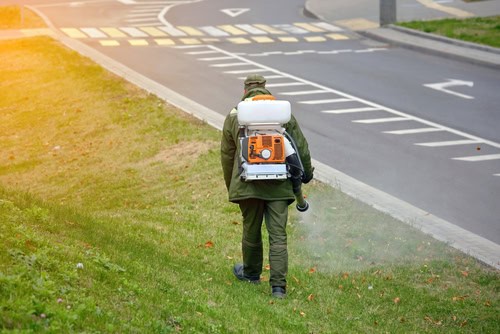
We are a New York State DEC-licensed commercial pesticide applicator serving Hauppauge and Suffolk County. That license isn’t a marketing detail it’s a legal requirement, and it’s what separates a professional fungicide treatment from a bag of Scott’s you picked up near Veterans Memorial Highway. Under New York State law, only licensed commercial applicators can purchase and apply restricted-use pesticide formulations the same professional-grade chemistry used to maintain the fairways at Wind Watch Golf and Country Club right here in Hauppauge. You can’t buy these products at any retail store on Long Island.
We serve Hauppauge with the kind of familiarity that comes from actually working these lawns understanding the Smithtown side versus the Islip side of Townline Road, knowing which neighborhoods sit lower in the Nissequogue watershed and hold moisture differently, and recognizing the seasonal disease windows that hit central Suffolk County every year without fail. When you call us, you’re not getting a franchise script. You’re getting someone who knows this community. When disease leaves a lawn badly thinned, a full lawn restoration in Hauppauge brings it back.
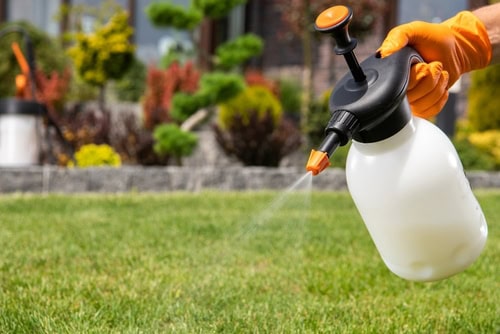
The first thing that happens when we come to your Hauppauge property is a proper visual assessment. Brown patches, dollar spot rings, red thread filaments each disease has its own signature, and identifying it correctly before reaching for any product is the only way to make sure the treatment actually works. This step alone is where most DIY attempts and generic spray programs fail. If you’re treating red thread with a product designed for brown patch, you’re wasting time and money.
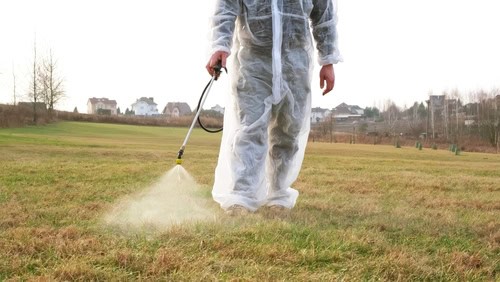
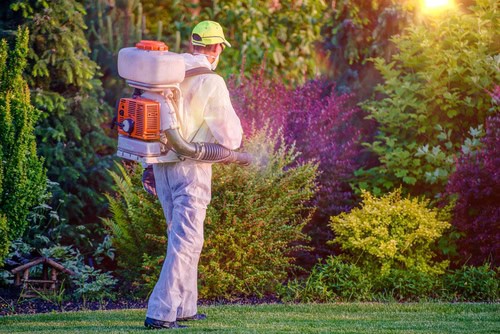
Once the disease is identified, we select the right fungicide chemistry and apply it at the correct rate for your specific lawn conditions. In Hauppauge, that means accounting for your soil profile, your tree canopy coverage, your irrigation habits, and where you are in the seasonal disease calendar. Brown patch season runs roughly mid-June through early September here. Dollar spot overlaps that window. Red thread peaks in spring and again in September and October when temperatures cool and nitrogen is depleted. Timing matters enormously preventative applications before an outbreak are far more effective than trying to stop one already in progress.
After every application, you receive written documentation of exactly what was applied the product, the active ingredient, the rate, and the date. This is a legal requirement for licensed applicators in New York State, and it’s something every homeowner in Hauppauge should expect when hiring someone to treat their lawn. Hauppauge sits above the Long Island sole-source aquifer, and knowing what goes into your ground isn’t just reasonable it’s your right.
Ready to get started?
Our fungicide service covers the three diseases most active on Hauppauge lawns: brown patch, dollar spot, and red thread. Brown patch is the most aggressive of the three during Hauppauge’s humid summers it can destroy large sections of turf in a matter of days when nighttime temperatures stay elevated and the soil stays wet. Dollar spot tends to show up as small, silver-dollar-sized dead circles scattered across the lawn and is most common when turf is drought-stressed and nitrogen-deficient both common conditions in Hauppauge’s sandy topsoil during dry summer stretches. Red thread is a cooler-weather disease that typically peaks in April through June and again in the fall, showing up as pinkish-red threads on grass blades.
What makes our approach different from a generic spray program is fungicide rotation. Applying the same product repeatedly even a good one eventually selects for resistant fungal strains that become progressively harder to eliminate. A professional program alternates modes of action across the season, using strobilurin-based chemistry like azoxystrobin and triazole-based chemistry like propiconazole at the right intervals to prevent resistance from developing. This is standard practice on golf courses and professional sports turf. It’s rarely done correctly by homeowners or unlicensed operators.
Every treatment we perform in Hauppauge is documented, compliant with NYSDEC regulations, and followed by neighbor notification as required by New York State law. If you’ve been reseeding the same dead patches every fall without results, active fungal disease is almost certainly the reason and a properly timed, properly matched fungicide application is what breaks that cycle.
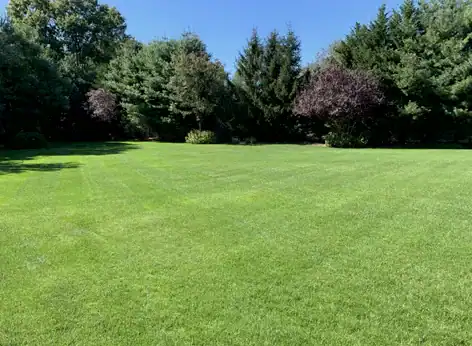
The short answer is that Hauppauge’s soil and climate create near-ideal conditions for brown patch every year. The soil in much of Hauppauge particularly in the Smithtown-side neighborhoods near the Nissequogue watershed has a sandy loam surface with clay layers beneath. After rain or irrigation, that clay layer holds moisture at the root zone longer than a purely sandy soil would. Combine that with Hauppauge’s humid central Suffolk County summers, where nighttime temperatures regularly stay above 70°F from late June through August, and you have the exact environment that Rhizoctonia solani (the fungus that causes brown patch) thrives in.
The other common factor is irrigation timing. Homeowners who water in the evening leave grass wet overnight, which dramatically increases disease risk. If you’re seeing the same spots come back year after year in Hauppauge, the answer isn’t more seed or more water it’s a properly diagnosed and timed fungicide application from a licensed professional who understands why those specific areas of your lawn are vulnerable.
They’re three distinct fungal diseases that affect Long Island lawns at different times of year and require different treatments. Brown patch shows up as large, irregular brown or tan circles sometimes several feet across and is most active in Hauppauge during the hot, humid stretch from mid-June through early September. Dollar spot creates small, roughly circular dead spots about the size of a silver dollar and tends to cluster across the lawn rather than forming one large patch. It’s most common when turf is drought-stressed and low on nitrogen, which happens frequently in Hauppauge’s sandy topsoil during dry summers. Red thread is a cooler-weather disease that appears as pinkish-red threads on grass blades and is most active in spring and again in the fall.
The reason this distinction matters is that they don’t all respond to the same fungicide chemistry. Applying the wrong product or the right product at the wrong time is the most common reason store-bought treatments fail. A licensed applicator identifies the specific disease before selecting a treatment, which is the only approach that consistently works.
You can try, but there are two significant limitations that make DIY fungicide treatment unreliable for most Hauppauge homeowners. The first is product access. New York State law restricts the most effective fungicide formulations the professional-grade, restricted-use products used by licensed commercial applicators to licensed buyers only. What’s available at retail stores in Hauppauge contains lower concentrations of active ingredients and is generally less effective, especially against an established infection.
The second limitation is diagnosis. Store-bought fungicides are typically broad-spectrum products that aren’t optimized for any specific disease. If you’re treating dollar spot with a product designed primarily for brown patch, you’re likely to see minimal improvement. And if the problem is actually drought stress or grub damage both of which can look nearly identical to fungal disease you’re treating the wrong thing entirely. A licensed professional identifies the actual cause before recommending any treatment, which is what makes the difference between a lawn that recovers and one you’re still fighting the following summer.
If this is the first time you’ve seen disease symptoms and the outbreak is isolated to a small area, a curative treatment may be enough to stop it and allow recovery. But if you’ve been dealing with recurring brown patches, dollar spot, or red thread for two or more seasons or if you’re in a Hauppauge neighborhood with mature tree canopy, low-lying areas near the Nissequogue watershed, or heavy shade that keeps the lawn surface wet a preventative program is almost always the better investment.
Preventative fungicide applications are applied before the disease becomes visible, timed to Hauppauge’s specific seasonal disease windows. Brown patch season starts in mid-June here. Dollar spot overlaps that window. Red thread hits twice spring and fall. A program that anticipates these windows and applies the right chemistry in advance is significantly more effective than waiting for visible damage and then trying to reverse it. The cost of a season-long program is also a fraction of what a full lawn renovation costs if disease is allowed to destroy an established turf stand.
Watering itself doesn’t cause fungal disease, but the timing and frequency of irrigation can make an existing risk much worse. The key factor is how long your grass stays wet. Fungal pathogens like Rhizoctonia solani (brown patch) require prolonged leaf wetness to germinate and spread typically six or more continuous hours of wet conditions. If you’re watering in the evening, your grass stays wet through the night, which is exactly the window when brown patch spreads most aggressively.
In Hauppauge, this is compounded by the soil’s moisture retention. The clay layers beneath the sandy topsoil in many Hauppauge neighborhoods hold water at the root zone longer than a purely sandy soil would, so even a well-timed irrigation cycle can leave certain areas of your lawn wetter than you’d expect. The best practice is to water early in the morning ideally before 9 a.m. so the grass surface dries out during the day. If you’re already dealing with active disease, adjusting your irrigation timing alone won’t eliminate the infection, but it will slow the spread while a proper fungicide treatment takes effect.
Fall is actually one of the higher-risk periods for fungal disease in Hauppauge, and it’s the season when the most homeowners make a costly mistake: spreading seed over active disease and wondering why it never establishes. Red thread peaks again in September and October as temperatures drop back into the 60–75°F range and nitrogen levels are depleted after summer. Brown patch can also persist into early fall if temperatures stay warm. New grass seed cannot establish in soil with active fungal pathogens the disease will attack the seedlings before they have a chance to root.
If you’re planning to overseed or renovate any part of your Hauppauge lawn this fall, a fungicide assessment before seeding is the right call. Eliminating active disease first gives new seed a clean environment to germinate and root. This is especially important in shaded areas under the mature oaks and maples common in Hauppauge’s established neighborhoods those spots are more vulnerable to red thread and slower to recover, so getting the disease cleared before seeding makes a measurable difference in how well the new grass takes hold.
Useful Links
Other Services we provide in Hauppauge