
Hear from Our Customers
When a lawn is struggling in Hauppauge, it’s rarely just one thing. It’s the July heat pulling moisture out of sandy soil faster than roots can absorb it. It’s white grubs quietly destroying the root system underground while the surface just looks brown. It’s years of foot traffic compacting the soil until water and nutrients can’t get through at all. By the time most homeowners call us, they’ve already tried a bag of seed from the hardware store. It didn’t work and now they want to know why.
Lawn restoration is the process of bringing an existing lawn back to a healthy, dense, functional state without tearing it out and starting over. That means identifying what’s actually wrong, correcting the soil conditions that are making recovery impossible, and reestablishing turf in the areas where it’s been lost. When it’s done right, the difference is visible within a single growing season.
For Hauppauge homeowners, this matters more than most realize. With home values averaging near $707,000, your lawn is part of a significant investment. A thin, patchy, or dead front yard doesn’t just look bad it signals neglect in a neighborhood where curb appeal is taken seriously. A restored lawn changes that picture entirely, and it starts with understanding what the lawn actually needs.
We’ve been operating in Suffolk County since before most of Hauppauge’s current homeowners moved in. That’s not a boast it’s context. Thirty-eight years of working across the Towns of Islip and Smithtown means we’ve seen the same soil problems, the same seasonal damage patterns, and the same turf failures repeat themselves across thousands of properties in this exact area. We know what Hauppauge lawns deal with, because we’ve been fixing them for decades.
Every one of our applicators is NYS-licensed, which matters specifically here. Suffolk County Chapter 459 restricts fertilizer applications between November 1 and April 1, with fines up to $1,000 for violations. We build every restoration program around that window not because we have to, but because it’s the right way to do the job. Compliant timing, properly selected products, and a process built around your lawn’s actual conditions not a generic program applied to every yard on the route.
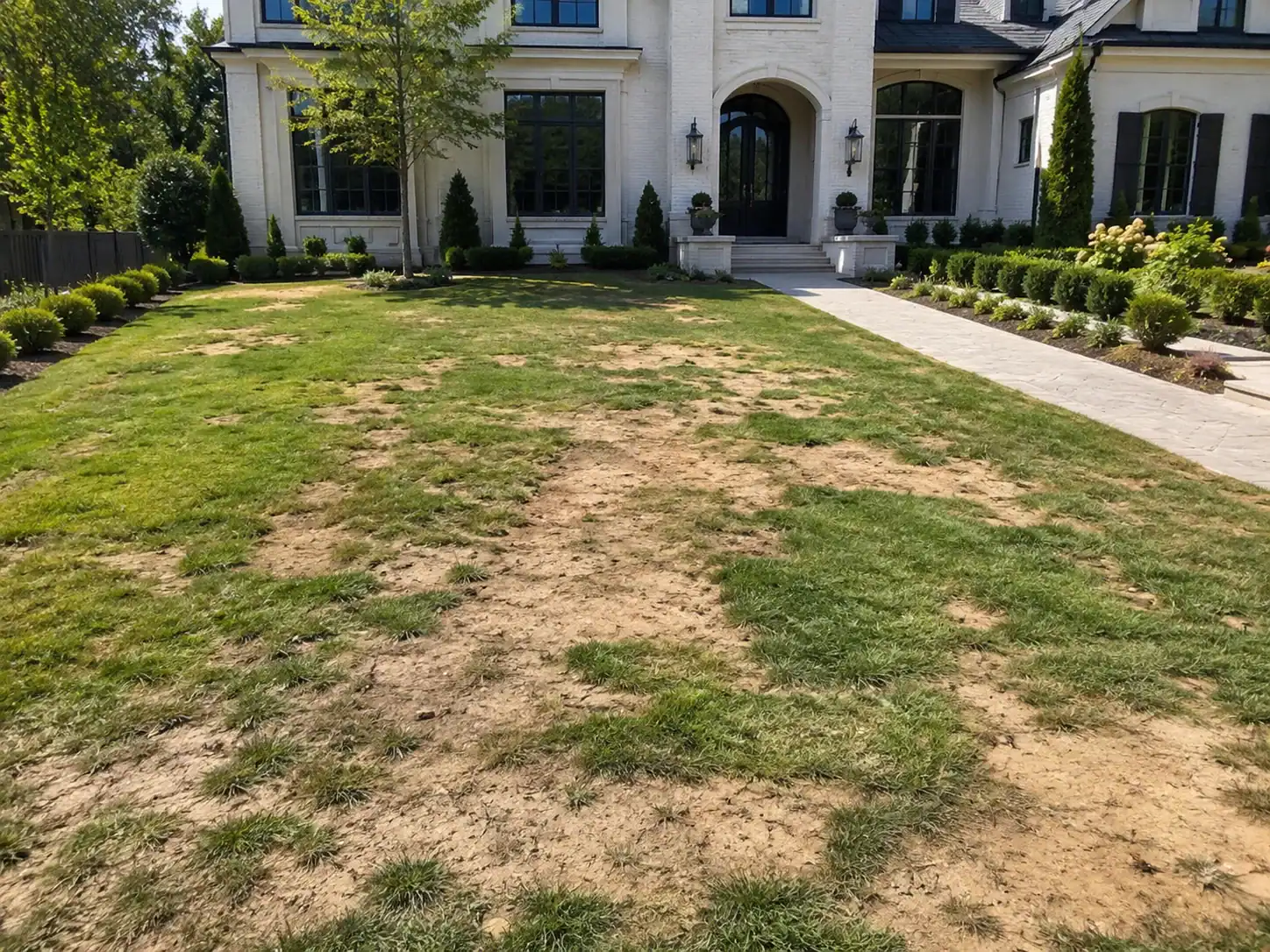
The first step is a real assessment. Before anything gets applied or seeded, we evaluate what’s actually going on soil composition, pH levels, compaction depth, thatch buildup, and the percentage of viable turf still present. This step matters because Hauppauge soil isn’t uniform. Some properties sit on sandy glacial outwash that drains fast but can’t hold nutrients. Others have heavier, more compacted soil that sheds water and suffocates roots. The fix for one is not the fix for the other, and skipping this step is exactly why DIY attempts tend to fail.
Once we understand what we’re working with, we address the soil first. That might mean core aeration to break up compaction, lime applications to correct pH imbalance, or organic matter amendments to help sandy soil retain moisture and nutrients. Soil correction isn’t optional it’s the foundation that determines whether new seed survives or dies in the same conditions that killed the original turf.
After the soil is prepared, we use slice seeding to establish new growth in bare and thin areas. Unlike surface overseeding, slice seeding cuts directly through thatch and deposits seed into the soil profile, which dramatically improves germination rates. On Long Island, the optimal window for this work is late August through September soil temperatures are still warm enough for germination, but the cooler air reduces stress on new seedlings. We time every restoration program around that window, and we plan ahead so your lawn is on the schedule before the fall slot fills up.
Ready to get started?
It’s worth being clear about what lawn restoration is and what it isn’t, because the distinction matters for your property and your budget. Restoration means rehabilitating an existing lawn correcting the soil, reseeding bare or thin areas, and treating the underlying causes of damage so the turf can recover and stay recovered. It’s the right call when your lawn still has a viable base to work with, typically when 40% or more of the existing turf is salvageable.
When a lawn has dropped below that threshold severe grub infestation that destroyed the entire root system, years of neglect that left nothing but weeds and bare soil, or structural drainage problems that have made recovery impossible restoration isn’t the answer. That’s renovation territory: a full rebuild that starts from scratch. If your assessment puts you in that category, we’ll tell you directly and walk you through what renovation involves. You can also find more detail on our lawn renovation page.
For properties that are restoration candidates, the program typically includes a soil assessment, pH correction, core aeration, slice seeding with appropriate cool-season grass varieties, and a timed fertilization plan that complies with Suffolk County’s fertilizer ordinance. Homes near high-traffic roads like NY-347 or Veterans Memorial Highway may also need targeted treatment for salt-related edge damage. Every program we build is around what your specific Hauppauge property actually needs not a package pulled off a shelf.
Restoration and renovation are two different scopes of work, and the distinction is important before you spend money on either. Restoration means bringing an existing lawn back to health correcting soil conditions, filling in bare patches, and reestablishing turf density without removing what’s already there. It’s the right approach when your lawn still has a workable foundation, generally when 40% or more of the existing grass is viable.
Renovation is a full rebuild. The existing turf is killed off, the soil is regraded or amended from scratch, and the lawn is re-established from the ground up. It’s more involved, more expensive, and the right call when a lawn is too far gone to recover through restoration alone. If you’re not sure which category your lawn falls into, that’s exactly what our assessment is for we’ll give you a straight answer before recommending anything.
Most lawns that look dead or beyond saving in Hauppauge are actually restoration candidates they just need the right diagnosis. Drought stress, grub damage, and compaction can all cause widespread browning and dieback that looks permanent but isn’t. The key question is how much viable turf is still present beneath the surface. If the root system is intact in enough of the lawn, recovery is very achievable with the right soil correction and seeding program.
That said, not every lawn can be saved through restoration. If white grub damage wiped out the entire root system, or if years of neglect left the property with more weeds and bare soil than actual grass, a full renovation is the more honest recommendation. We assess each property individually and tell you what we find not what’s easiest to sell. If restoration is the right path, we’ll restore it. If it needs a rebuild, we’ll say so.
Timeline depends on the condition of the lawn going in and when the work is done, but here’s a realistic picture for Hauppauge properties. If restoration work is completed in the fall ideally late August through September, which is the optimal window for cool-season grasses on Long Island you can expect to see germination within 14 to 21 days under normal conditions. Turf density continues to improve through the fall and picks back up in the following spring.
Spring restoration is also possible, but it comes with more variables. Cooler soil temperatures slow germination, and summer heat arrives before new turf has fully established, which puts stress on seedlings. Fall is the preferred window for a reason, and it’s why we encourage Hauppauge homeowners to get on the schedule before the season fills up. By the following summer, a fall-restored lawn should be performing significantly better than it was the year before.
The most common culprits we see on Hauppauge properties are white grub damage, summer drought stress, soil compaction, and salt runoff. Grubs Japanese beetle larvae feed on grass roots in late summer and fall, creating brown patches that look like drought stress but won’t recover on their own because the root system is gone. If the damaged area pulls up like a loose rug, grubs are almost certainly involved.
Drought stress is the other major driver. Hauppauge’s sandy soils drain quickly, which means lawns in this area lose moisture faster during July and August heat than lawns in areas with heavier soil. Without adequate irrigation, turf thins out or dies back entirely. Properties near Veterans Memorial Highway or NY-347 also deal with road salt runoff along their edges, which causes its own pattern of dieback that’s easy to misread as a watering or fertility problem. Knowing which cause you’re dealing with is what determines the right fix.
Yes, and it’s something every Hauppauge homeowner should understand before starting a restoration program. Suffolk County Chapter 459 prohibits fertilizer application between November 1 and April 1. The law exists to protect Long Island’s sole-source aquifer the only source of drinking water for the entire island from nitrogen leaching and runoff. Violations carry fines up to $1,000.
For restoration timing, this means the fertilization component of your program must be completed before November 1 or after April 1. The fall restoration window late August through September fits comfortably within the legal period and also happens to be the best time for cool-season grass germination on Long Island. Every program we design is built around these regulations from the start. As NYS-licensed applicators, we handle the timing and product selection so you don’t have to navigate the rules yourself or risk a fine from a DIY application that crossed the wrong date.
Cost varies based on the size of the lawn, the extent of the damage, and what the soil assessment reveals. A straightforward restoration program for a typical Hauppauge single-family property aeration, slice seeding, pH correction, and a timed fertilization plan generally falls in the range of $400 to $900 for a standard quarter-acre lot. Properties with more significant soil issues, heavier grub damage, or larger areas of bare turf will sit toward the higher end or may require a phased approach across two seasons.
What affects cost most is the scope of soil correction needed. A lawn that just needs overseeding is a different job than one that requires lime applications, organic matter amendments, and multiple aeration passes before seed goes down. That’s why the assessment comes first it gives you an accurate picture of what the work actually involves before you commit to anything. For Hauppauge homeowners with properties valued near $707,000, a well-executed restoration is one of the higher-return investments you can make in your home’s curb appeal and long-term condition.
Useful Links
Other Services we provide in Hauppauge