
Hear from Our Customers
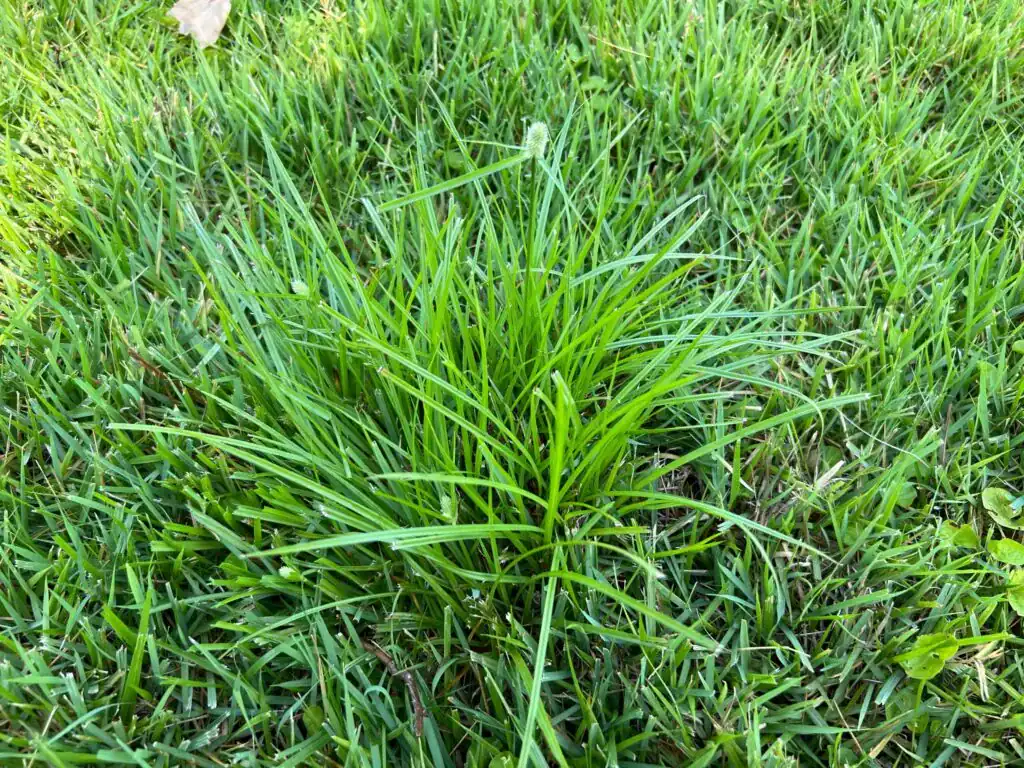
If you’ve got a low-growing, dark green patch that keeps spreading no matter what you spray on it, that’s likely kyllinga and it’s not going anywhere until the right chemistry is applied at the right time. It’s not a grass. It’s not a broadleaf weed. It’s a sedge, and that distinction changes everything about how it has to be treated.
Here’s what most Hauppauge homeowners don’t find out until after they’ve already wasted a season: the herbicides that actually work on kyllinga require a New York State pesticide applicator’s license to purchase. You can’t buy them at any store. That’s not a sales pitch it’s a regulatory fact. Which means if your current lawn service isn’t licensed and specifically treating for sedge, they’re applying the wrong product and calling it done.
Hauppauge’s older housing stock most of it built between 1940 and the 1990s means a lot of lawns here have decades of compaction, drainage irregularities, and accumulated weed seed history working against them. Add the area’s naturally moist soils, a legacy of the springs and wetlands that gave Hauppauge its name, and you’ve got conditions that kyllinga genuinely thrives in. The good news is that with the right program, it can be eliminated. Not suppressed eliminated. For lawns too far gone, we also provide Hauppauge new lawn installation.
We’re based in Port Jefferson Station, about 10 to 15 miles from Hauppauge along Route 347 the same Nesconset Highway that runs through the neighborhoods we service every week. This isn’t a national chain routing a crew to a zip code. We’re a locally owned business with a real owner who is accountable to Hauppauge and Suffolk County customers by name.
We hold a NYSDEC Commercial Pesticide Applicator License (Category 3a, Ornamental and Turf) the credential required by New York State to legally purchase and apply the professional-grade herbicides that actually work on kyllinga. We’re also fully familiar with Suffolk County’s pesticide buffer zone requirements under Local Law 41-2007 and the SCDHS drinking water well protection guidelines that affect applications throughout Hauppauge and the surrounding area.
If you’ve had a bad experience with a national lawn care company and based on what Hauppauge homeowners have shared publicly, plenty of you have you already know what it looks like when a company doesn’t understand your lawn or your area. We do. Heavily damaged turf often needs our Hauppauge lawn restoration rather than spot treatment.
It starts with identification. Kyllinga and nutsedge look similar enough that many providers and nearly every homeowner mistake one for the other. They’re both sedges with three-sided stems, but they’re different plants that can respond differently to treatment. Before anything gets applied to your Hauppauge lawn, we confirm exactly what we’re dealing with.
From there, timing drives everything. Kyllinga is a warm-season sedge, which means it’s most vulnerable during active growth late May through late August in the Long Island climate. The first application goes down in that late May to mid-June window, when the plant has broken dormancy and is actively growing but hasn’t yet set seed for the season. A second application follows four to six weeks later. For heavier infestations, a third may be needed before the end of August. Applications after September are significantly less effective, so if you’re calling in the fall, the honest answer is that spring is the better starting point.
After treatment, kyllinga leaves behind thin or bare areas where it was crowding out your desirable turf. Those open spots need to be overseeded and restored otherwise they become re-entry points for kyllinga and other opportunistic weeds. That restoration step is part of how we approach this work, not an afterthought.
Ready to get started?
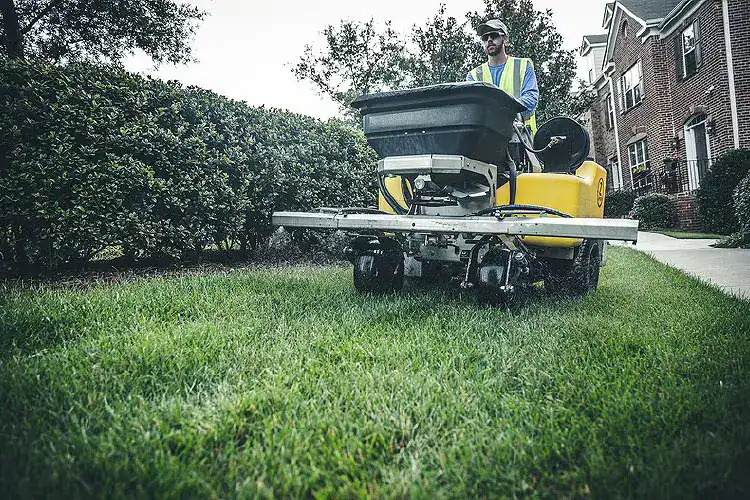
The herbicides used in a professional kyllinga program halosulfuron-methyl (Sedgehammer) and sulfentrazone (Dismiss) are not available at retail. They require a licensed commercial applicator to purchase and apply, and they need to be deployed on a structured schedule tied to the plant’s active growth cycle. A single application will damage visible tissue but leave the rhizome network underground intact. That’s why kyllinga keeps coming back after a one-and-done spray the root system survives and regenerates.
Every application we make in Hauppauge is done in compliance with Suffolk County’s Chapter 647 requirements, including proper notification, record-keeping, and the SCDHS buffer zone map checks that are mandatory for licensed commercial applicators operating in central Suffolk County. If your property falls near a designated drinking water well buffer zone which affects parts of Hauppauge given its municipal infrastructure that’s factored into how and where product is applied.
Kyllinga also produces up to 5,000 seeds per plant per season, and those seeds can stay viable in the soil for multiple years. The older the lawn, the deeper the seed bank. For Hauppauge properties with pre-1970 housing stock and decades of accumulated lawn history, we pair treatment with cultural recommendations drainage adjustments, irrigation calibration, and overseeding designed to reduce the conditions that allowed kyllinga to establish in the first place.
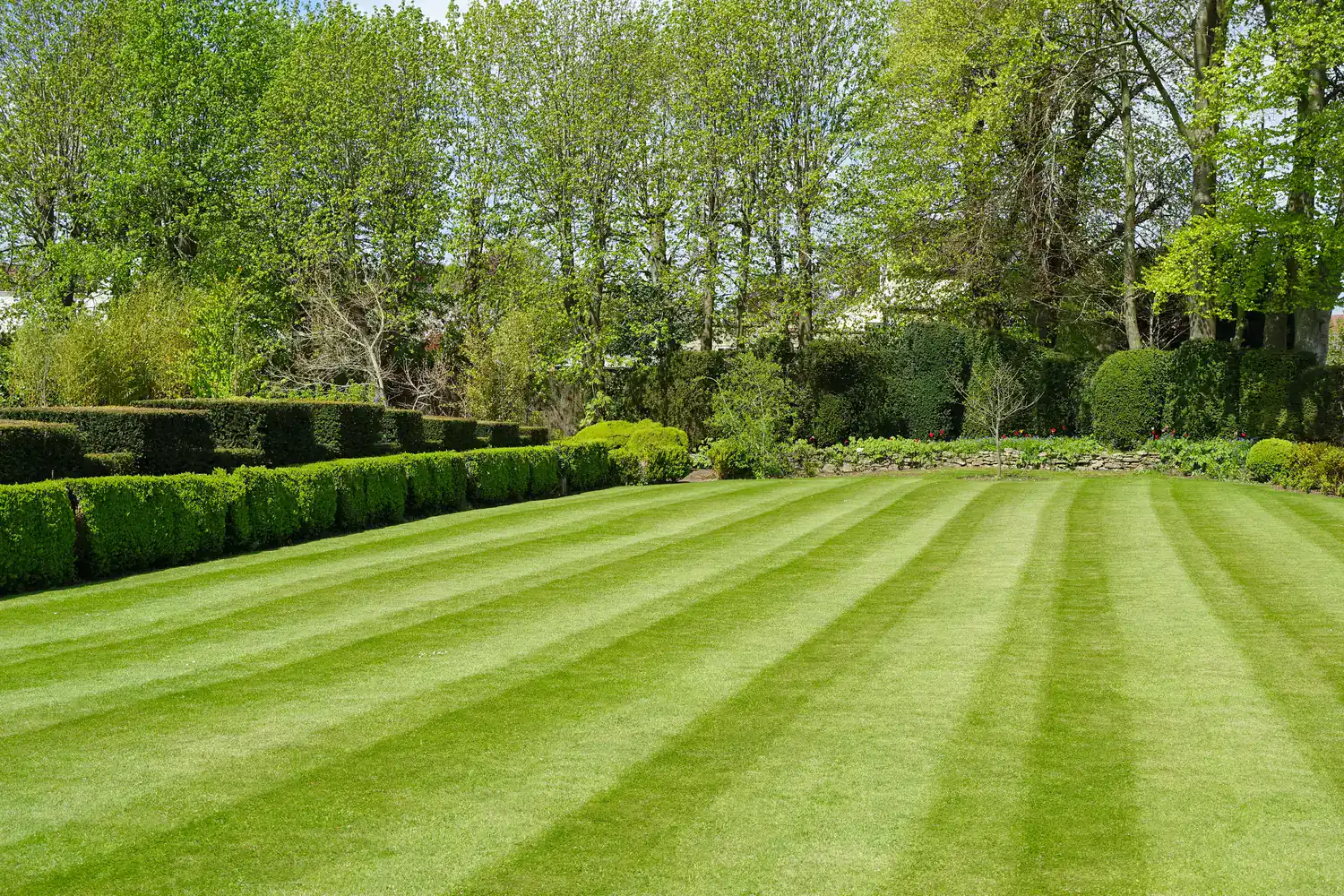
Kyllinga spreads through two mechanisms that make it exceptionally persistent: an underground rhizome network and seed production that can reach up to 5,000 seeds per plant per season. When a single application of herbicide is made or worse, when the wrong product is used entirely the visible plant tissue may die back, but the root system survives underground and regenerates new growth the following season. That’s the most common reason it keeps returning.
In Hauppauge specifically, the problem is often compounded by the lawn’s underlying conditions. Many properties here have older soil profiles with years of compaction, inconsistent drainage, and moist pockets tied to the area’s historical wetland hydrology the same conditions referenced in the hamlet’s name, which translates to “sweet waters.” Kyllinga thrives in exactly those environments. Treating the weed without addressing the soil conditions that invited it in is a cycle that repeats indefinitely. A properly structured program addresses both.
Both kyllinga and nutsedge are sedges meaning they have three-sided stems and are completely unaffected by the broadleaf and grassy weed controls sold at retail stores. That’s where a lot of the confusion starts, because they look similar at a glance and require the same category of licensed herbicide chemistry to control.
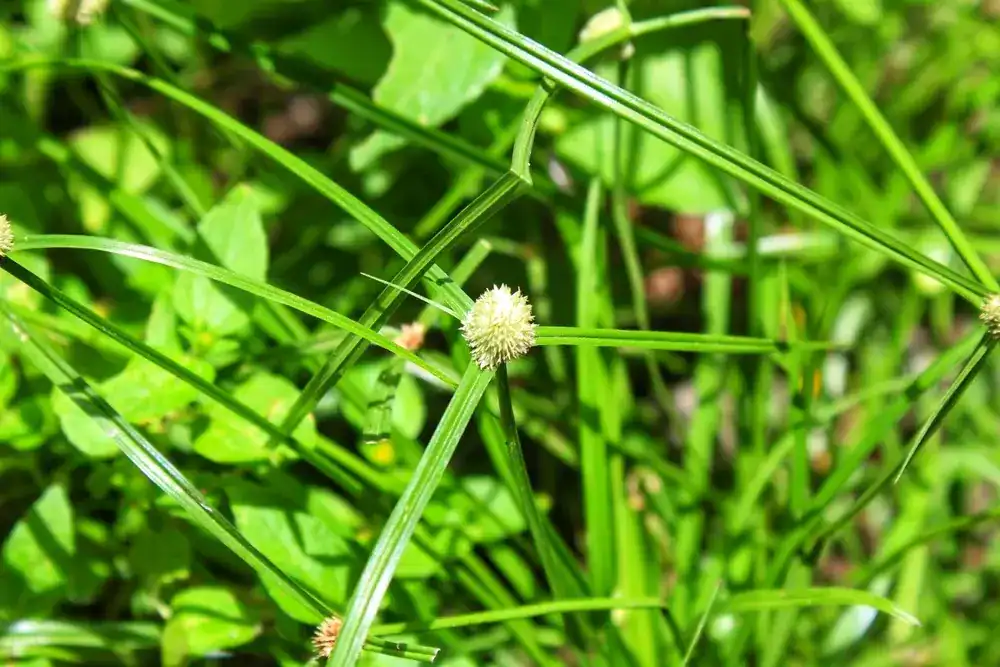
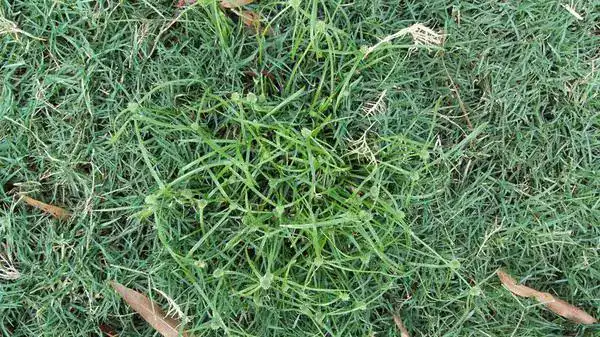
The key visual differences: kyllinga grows low and dense, forming a tight mat close to the soil surface, and produces a small, round or oval seed head that’s white to pale green in color. Nutsedge grows more upright sometimes noticeably taller than the surrounding turf and produces a branched, multi-part seed head. Both are present in Suffolk County lawns, and both are increasingly common in Hauppauge properties. The reason correct identification matters before treatment is that while the herbicide categories overlap, the specific protocol, timing, and number of applications can differ depending on which sedge or combination of sedges is present in your lawn.
The short answer is no not effectively. The herbicides that produce reliable results against established kyllinga are professional-grade formulations of halosulfuron-methyl and sulfentrazone. These products require a New York State Department of Environmental Conservation Commercial Pesticide Applicator License (Category 3a) to purchase. They are not sold at any home improvement store, garden center, or big-box retailer in Hauppauge or anywhere else in New York.
What you will find on store shelves broadleaf weed killers containing 2,4-D, dicamba, or triclopyr; crabgrass preventers; grassy weed controls have no meaningful activity against kyllinga. Kyllinga is a sedge, not a broadleaf plant and not a grass, so it simply doesn’t respond to those chemistry categories. If you’ve already tried a retail product and watched the kyllinga come back, that’s exactly why. The plant wasn’t resistant to what you applied the product just wasn’t designed for it.
The active treatment window for kyllinga in Hauppauge runs from late May through late August, which aligns with the plant’s warm-season growth cycle on Long Island. The ideal first application is in the late May to mid-June window after kyllinga has broken dormancy and is actively growing, but before it has produced and dropped seeds for the season. Treating early in this window gives you the best combination of plant vulnerability and seed prevention.
A second application follows four to six weeks after the first, typically in mid-July. For heavier infestations, a third application in late July to mid-August may be warranted. After September, kyllinga begins moving toward dormancy and becomes significantly less responsive to herbicide treatment. Many Hauppauge homeowners first notice kyllinga in July or August, when it stays dark green and keeps growing while the surrounding cool-season turf tall fescue, Kentucky bluegrass, fine fescue slows down in the summer heat. That visual contrast is what makes it suddenly obvious. If you’re calling in August, we can still help but the earlier in the season, the better the outcome.
Kyllinga spreads in two ways: underground through rhizomes, which are horizontal root structures that extend outward from the plant and generate new growth, and above ground through seed dispersal. That’s why an infestation that looks manageable in July can cover a noticeably larger area the following summer.
As for why it’s worse in certain spots that almost always comes down to soil moisture. Kyllinga is a moisture-loving sedge, and it concentrates in areas where water pools, drains slowly, or stays near the surface longer than the rest of the lawn. In Hauppauge, this is especially relevant because the area’s underlying hydrology the springs and drainage patterns that historically fed into the Nissequogue River watershed still influences soil moisture in lower-lying residential areas. If you have an irrigation system, over-watering in specific zones is another common driver. The patches of kyllinga that keep appearing in the same corner of your lawn year after year are usually telling you something about what’s happening underground in that spot.
Yes and this is one of the most important things to understand before hiring anyone to treat kyllinga on your property. In New York State, the professional-grade herbicides required for effective kyllinga control can only be legally purchased and applied by someone holding a NYSDEC Commercial Pesticide Applicator License, Category 3a (Ornamental and Turf). This isn’t a technicality it’s a state law that governs what products can be used on residential turf and who can use them.
In Suffolk County, there are additional compliance requirements that go beyond the state license. Under Local Law 41-2007, commercial pesticide applicators are required to follow specific notification and record-keeping protocols. The Suffolk County Department of Health Services also maintains a buffer zone map around public drinking water supply wells, and licensed applicators are required to check that map before making any application. Hauppauge, as a densely developed central Suffolk County community with significant municipal infrastructure, has areas that fall within or near these designated zones. A locally licensed applicator who operates in this area regularly and knows where those zones fall is not just preferable, it’s the responsible choice for your property and your neighbors’ water supply.
Useful Links
Other Services we provide in Hauppauge