
Hear from Our Customers
If you’ve been putting money into a fertilization program and your lawn still looks the same, compaction is almost certainly the reason. Nutrients can’t penetrate a hardened surface they sit on top, wash off with the next rain, and never reach the root zone. That’s not a fertilizer problem. It’s a soil problem. And it’s one of the most common frustrations we hear from homeowners across Hauppauge.
Hauppauge’s residential neighborhoods are some of the most established in western Suffolk County. Many homes here were built in the postwar expansion of the 1950s through 1970s, which means lawns that have been walked on, mowed, irrigated, and compacted for fifty or sixty years. The Haven Loam soils common in this part of the county drain well by nature but under that kind of long-term pressure, even well-draining soil develops a surface layer dense enough to block water, air, and nutrients from getting through. Once that layer is broken up, fertilizer uptake improves, water actually reaches the roots instead of running off, and bare patches finally have a real chance to fill in.
If you have an in-ground irrigation system which is common at Hauppauge’s home value level this matters even more. Repeated wet-dry cycles from irrigation accelerate surface compaction over time. The water you’re already paying for may be running off rather than soaking in. Core aeration restores the soil’s ability to absorb it. A complete new lawn installation for Hauppauge yards is sometimes the smarter route.
We’re a Suffolk County lawn care company not a national franchise, not a call center routing jobs to subcontractors. The team serving your Hauppauge property knows the difference between a lawn on the Smithtown side and one on the Islip side, and we understand what decades of suburban development does to the Haven Loam soils common in this area.
Every applicator on our team is licensed through the New York State DEC a legal requirement for commercial fertilizer and pesticide application that not every operator in this market can actually meet. That license isn’t just a piece of paper. It means our team understands New York’s fertilizer laws, including the phosphorus restrictions that apply near the Nissequogue River watershed that borders Hauppauge.
What that means for you is straightforward: you’re working with a company that’s accountable to the state of New York, knows Hauppauge’s soil and seasonal conditions, and brings commercial-grade equipment to your property not whatever was available at the rental counter. For widespread bare areas, our lawn restoration service in Hauppauge restores full coverage.
Before anything starts, we assess your lawn’s current condition thatch depth, visible compaction symptoms like water pooling or slow drainage, and the overall turf density. On Hauppauge properties, where mature lawns often sit on decades of accumulated compaction, this step matters. It tells us what we’re working with before the machine ever touches the ground.
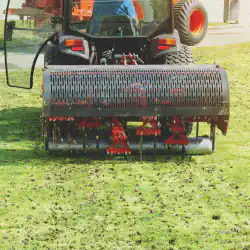
The aeration itself is done with a hydraulic aerator commercial equipment that drives hollow tines three to four inches into the soil. That depth is the key difference. A standard rental drum aerator typically penetrates one and a half to two inches on a good day, which often isn’t deep enough to reach the actual compaction layer in a mature Hauppauge lawn. The hydraulic aerator adjusts tine pressure dynamically, so it performs consistently even on the denser, more compacted areas of your property.
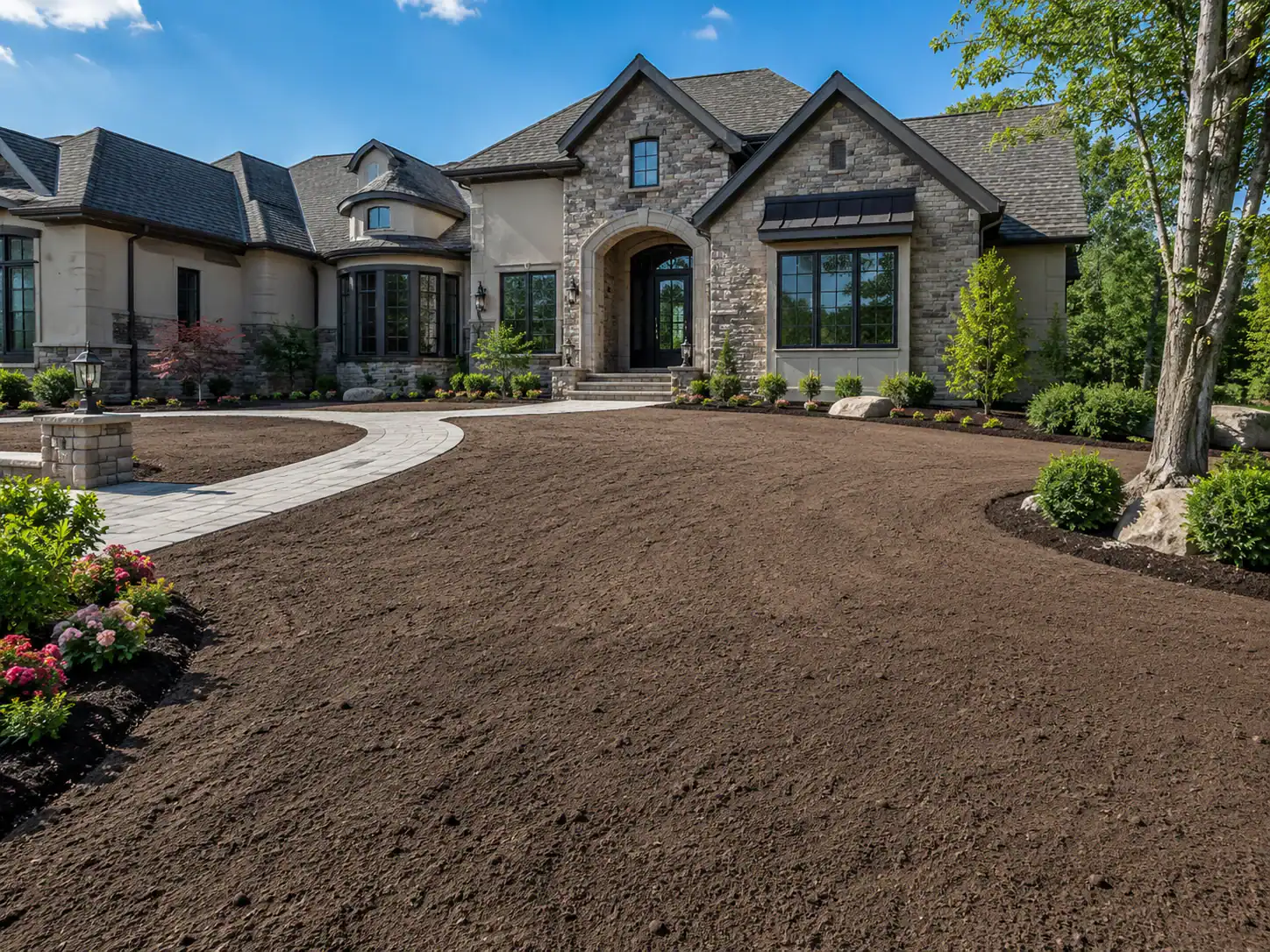
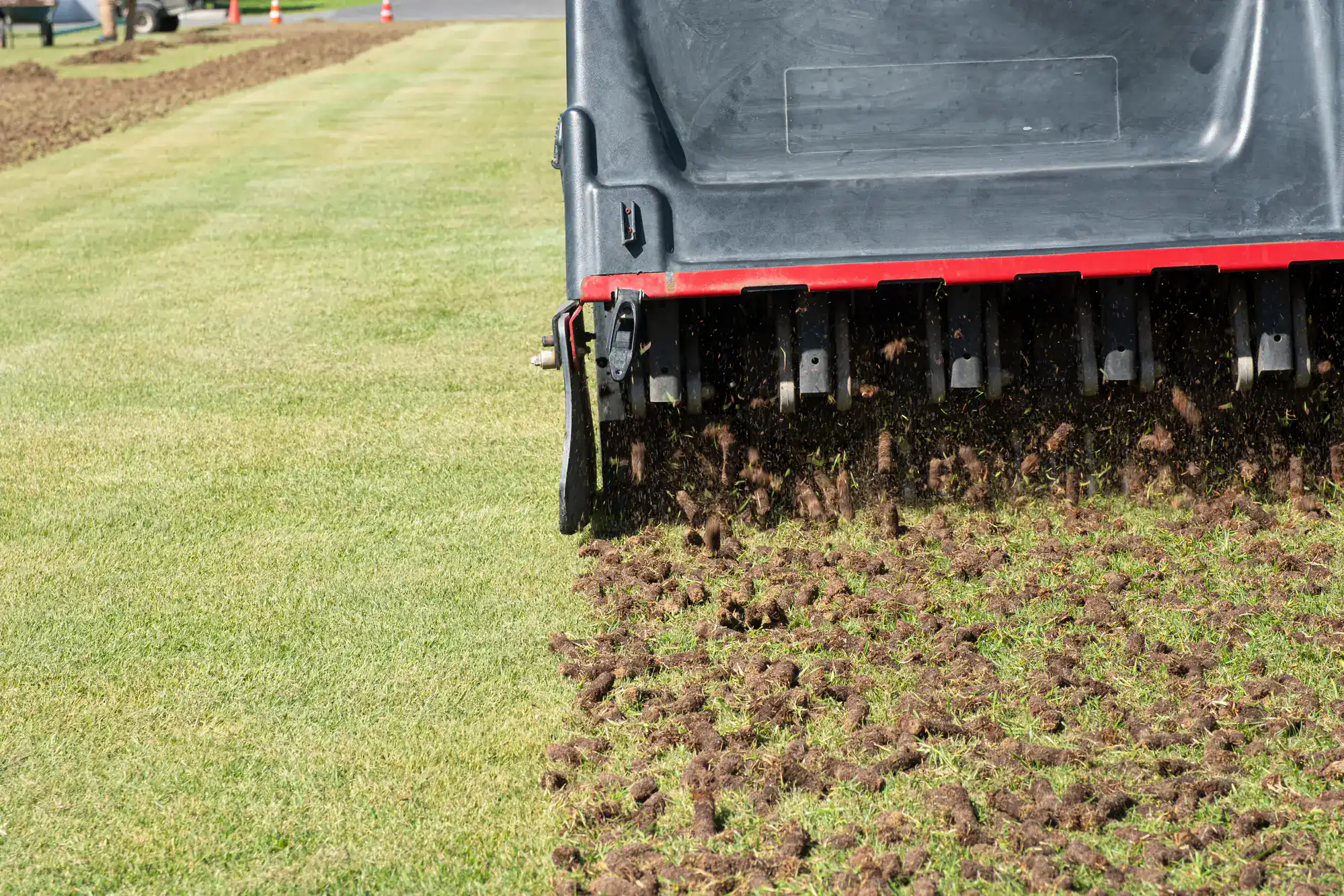
After the pass, you’ll see soil cores scattered across your lawn. Leave them. Each plug contains organic matter and beneficial soil microbes. They break down naturally within two to four weeks and return nutrients to the surface while helping decompose thatch buildup. If you’re pairing aeration with overseeding which we strongly recommend during the late August through October window on Long Island seed is applied immediately after, directly into the open channels the aerator created. That’s when germination rates improve most significantly, because seed finally has direct contact with soil instead of sitting on top of a compacted, thatch-covered surface.
Ready to get started?
Core aeration and lawn aeration are the same service here there’s no upsell version with a different name. What you’re getting is a full hydraulic aeration pass on your property, performed by a NYS-licensed applicator using commercial-grade equipment. That’s the baseline, and it doesn’t change based on your zip code or neighborhood.
Where the service naturally extends is into overseeding and fertilization. Hauppauge’s cool-season lawns typically tall fescue, Kentucky bluegrass, or perennial ryegrass respond best to overseeding immediately after aeration, when the tine channels are open and seed can reach the soil directly. The fall window from late August through October is the optimal time for this combination on Long Island. Soil temperatures are still warm enough for germination while the cooler air reduces stress on new growth. Miss that window and you’re looking at another full year before conditions align again.
We also pair aeration with our fertilization programs, and for good reason. Aerating before a fertilizer application means the nutrients actually reach the root zone instead of sitting on a compacted surface. For Hauppauge homeowners who’ve been running a fertilization program without seeing proportionate results, this is often the single change that makes everything else start working. We service all of Hauppauge including properties in the Town of Smithtown to the north and Town of Islip to the south as well as surrounding areas including Nesconset, Commack, and Brentwood.
The best window for core aeration on Long Island is late August through October. During this period, soil temperatures in Hauppauge are still in the range that supports cool-season grass germination typically 55 to 65 degrees Fahrenheit while air temperatures have cooled enough that new growth isn’t immediately stressed by heat. This combination makes fall the most effective time to aerate and overseed in one program.
Spring aeration is a legitimate option if your lawn has severe compaction that can’t wait, but it’s agronomically inferior for overseeding because the timing doesn’t align as well with cool-season grass growth cycles. Summer aeration is not recommended opening up the soil surface during peak heat puts unnecessary stress on your turf. For most Hauppauge homeowners, fall is the window that produces the most visible improvement, and booking early matters because our fall schedule fills up as September approaches.
This is one of the most common questions from homeowners across Hauppauge, and the answer almost always comes back to soil compaction. When the surface layer of your lawn is dense and compacted which is the norm in mature postwar neighborhoods like those throughout Hauppauge nutrients applied at the surface can’t penetrate to the root zone. They sit on top, and the next rain event washes a significant portion of them away before they do any work.
Research from university extension programs shows that fertilizer uptake efficiency can improve 30 to 40 percent following proper core aeration, simply because the nutrients now have open pathways to travel through. If you’ve been investing in a fertilization program and not seeing proportionate results, aeration isn’t an additional expense layered on top it’s what makes the investment you’ve already been making actually function the way it’s supposed to. One treatment can change the trajectory of a lawn that’s been underperforming for years.
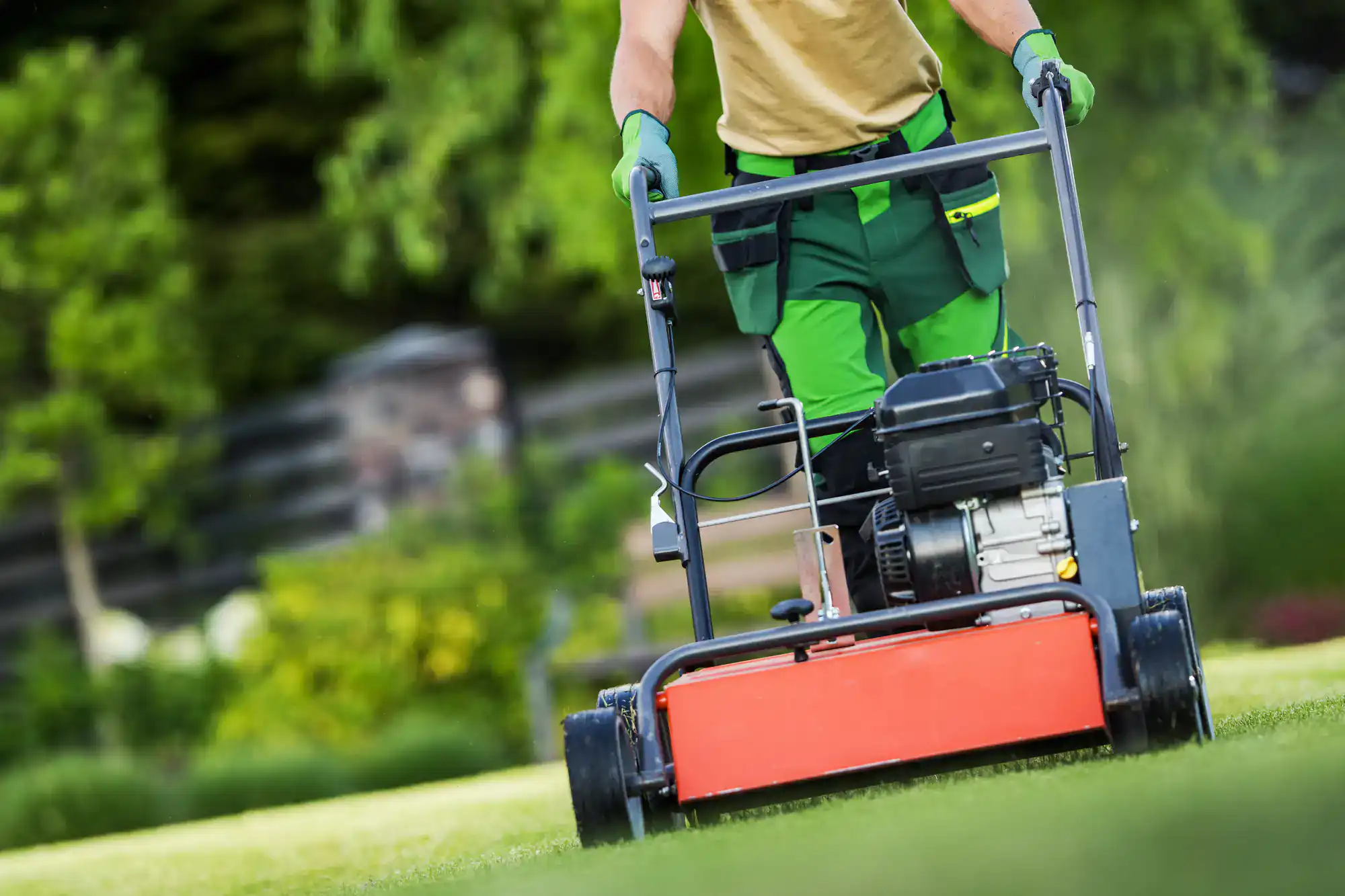
Core aeration removes a physical plug of soil from the ground, creating real open space for air, water, and nutrients to move through. Spike aeration pushes soil aside to create holes without removing anything which means the soil immediately surrounding each hole actually becomes more compacted in the process. On the mature, compacted Haven Loam soils common in Hauppauge, spike aeration does essentially nothing to relieve compaction and can make the problem worse in localized areas.
This distinction matters because spike aerators are what most rental centers carry. Homeowners who have tried DIY aeration with a rental machine, seen no improvement, and concluded that aeration doesn’t work have almost certainly used a spike aerator rather than a true core aerator. If that’s your experience, the service you tried and the service we provide are fundamentally different tools solving the problem in fundamentally different ways.
Leave them where they are. The plugs you see scattered across your lawn after core aeration are a normal and intentional part of the process not a cleanup oversight. Each core contains soil, organic matter, and beneficial microbial activity. As they break down over the next two to four weeks under normal conditions, they return nutrients to the surface and contribute to natural thatch decomposition.
Raking them up would remove a meaningful portion of the long-term benefit of the service. The lawn will look temporarily disrupted for a few weeks, which is understandable if you’re in one of Hauppauge’s well-kept neighborhoods where curb appeal matters. But within a month, the cores are gone, the holes have closed, and the lawn is measurably better for it especially if overseeding was done at the same time. The short-term appearance is part of the process, not a problem.
Depth is where the real difference between professional and DIY aeration shows up. A standard rental drum aerator typically penetrates one and a half to two inches under normal conditions and on the denser, more compacted soils found in Hauppauge’s mature residential neighborhoods, it may not even reach that. The compaction layer in a lawn that’s been walked on and irrigated for fifty years doesn’t sit right at the surface. It’s deeper, and equipment that can’t reach it isn’t solving the problem.
Our hydraulic aerator drives tines three to four inches into the soil, which is where the actual compaction lives in most established Hauppauge lawns. The hydraulic system adjusts tine pressure dynamically, so it maintains consistent penetration depth even across areas of your property that are more compacted than others. That consistency is what separates a treatment that produces visible results from one that just puts holes in the top inch of your lawn and calls it done.
Yes we service all of Hauppauge regardless of which town jurisdiction your property falls under. Hauppauge is one of the few communities in Suffolk County that spans two separate town governments, with the northern portion falling under the Town of Smithtown and the southern portion under the Town of Islip. The boundary runs through the middle of the hamlet, and depending on where your home sits, your municipal services, school district, and some local regulations may differ from a neighbor a few streets away.
From a lawn care standpoint, that jurisdictional line doesn’t change what your soil needs or what equipment is required to treat it properly. Our team is familiar with the area on both sides of that boundary the neighborhoods near Veterans Memorial Highway and the H.L. Dennison complex to the north, and the residential areas extending toward Brentwood and Central Islip to the south. The service is the same either way: hydraulic aeration, NYS-licensed applicators, and a process built around what Long Island’s cool-season turf actually requires.
Useful Links
Other Services we provide in Hauppauge