
Hear from Our Customers
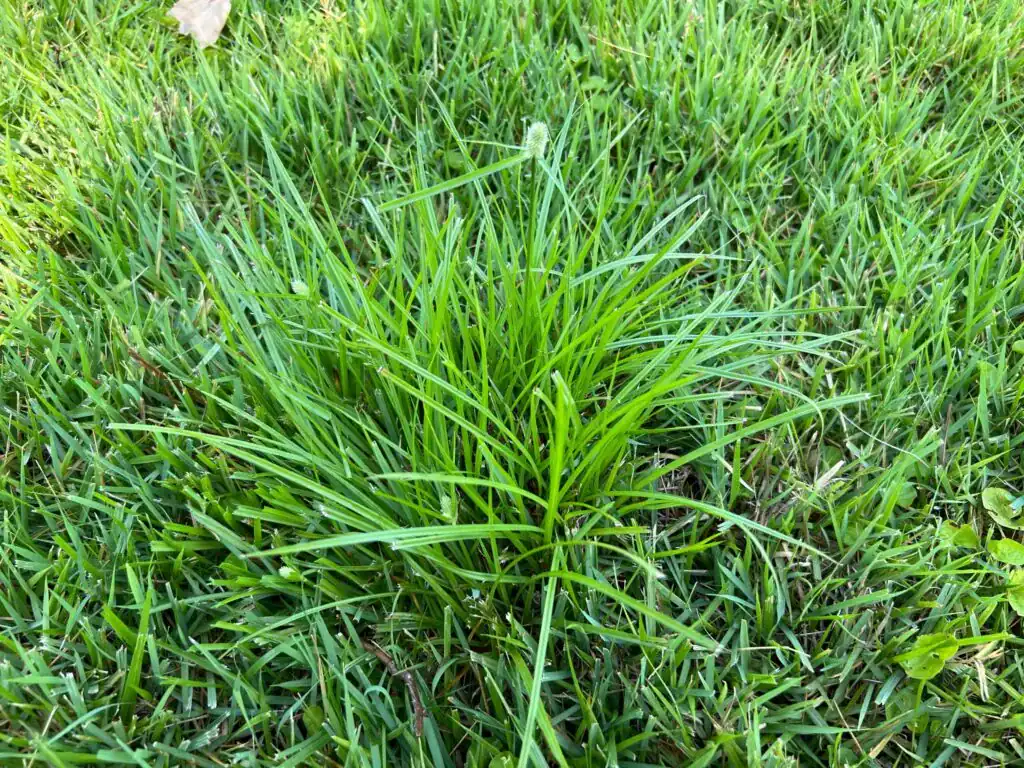
The frustrating part about kyllinga isn’t just that it spreads it’s that it spreads quietly, and by the time most homeowners realize what they’re dealing with, it’s already colonized a significant patch of lawn. What you’re left with is a dense, dark green mat that looks completely different from the rest of your turf, doesn’t respond to anything you’ve tried, and gets worse after every wet stretch of weather.
For homeowners in Great River, that wet stretch isn’t occasional. Your property sits in one of the most moisture-influenced landscapes on Long Island the Connetquot River, the Great South Bay, the mature tree canopy that keeps your soil shaded and slow to dry. Those are the exact conditions kyllinga exploits. It isn’t a coincidence that this weed keeps showing up along the South Shore. It’s a predictable outcome of the environment.
When kyllinga is treated correctly with licensed, sedge-active chemistry applied at the right intervals during the plant’s active growth window the lawn recovers. The mat thins, the desirable grass fills back in, and the reinfestation cycle stops. That’s the result a properly structured program produces. Not a temporary knockback. An actual resolution.
We’re a lawn-specific company based in Suffolk County. Not a tree service that added mowing. Not a national franchise running routes out of a regional hub. Every service we offer is built around one thing lawns and that focus matters when you’re dealing with a weed like kyllinga that most generalist companies either misidentify or undertreat.
Serving Great River and the surrounding South Shore communities means we work in the same soil conditions, the same drainage patterns, and the same landscape environment every day. The properties along Timber Point Road and the waterfront corridor near the Great South Bay aren’t abstract to us they’re the kinds of lawns we actually work in. That familiarity shapes how we approach every program.
We hold a NYSDEC Commercial Pesticide Applicator License, Category 3a, which is the state credential required to legally purchase and apply the professional-grade herbicides that actually control kyllinga. That’s not a marketing point. It’s the baseline for doing this job correctly.
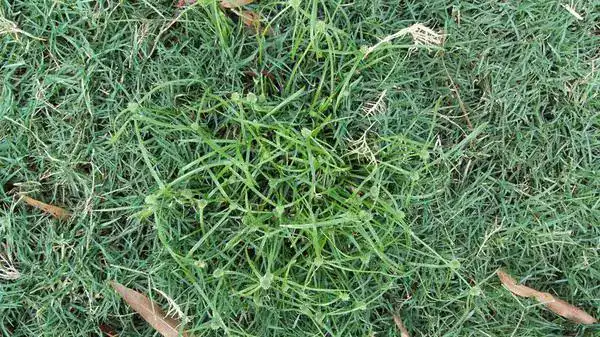
It starts with identification and that step matters more than most people realize. Kyllinga and nutsedge are both sedges, and they look similar enough that they get confused regularly. But they’re not the same plant, and treating one like the other produces incomplete results. Before any product is selected, the weed is identified by species. Green kyllinga and false green kyllinga are the two most common types found in Great River lawns, and both require the same targeted approach: sedge-active herbicide chemistry that isn’t available in any retail formulation.
From there, the program is structured around the plant’s biology not a fixed calendar. In the Long Island climate, kyllinga is actively growing from late May through late August. That’s the window when the plant is metabolically vulnerable and herbicide uptake is most effective. A properly built program runs two to three applications spaced four to six weeks apart within that window. One application will damage the visible plant tissue. It will not kill the rhizome network underground, which survives and regenerates new growth within weeks. The multi-application structure isn’t an upsell. It’s what the biology requires.
In Great River specifically, late-summer rain events and the elevated soil moisture near the river corridor can extend kyllinga’s active period and create new germination windows after treatment. That’s factored into how we time and monitor the program. After the infestation is eliminated, bare areas left behind are addressed because untreated thin spots are the fastest path back to reinfestation.
Ready to get started?
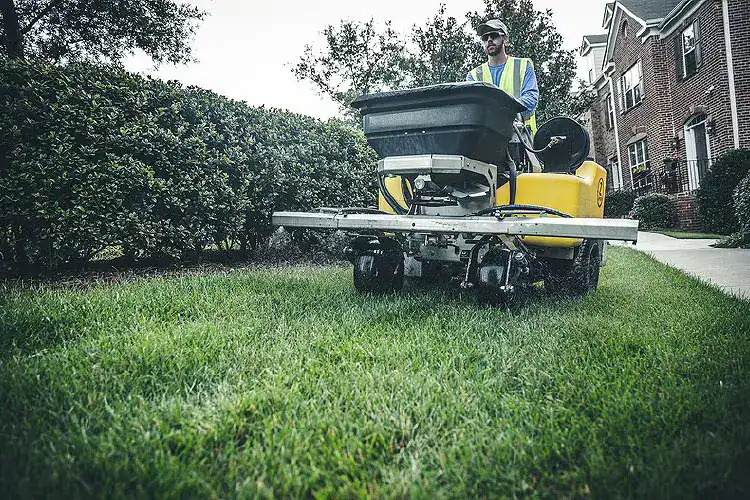
The herbicides used in a legitimate kyllinga control program primarily halosulfuron-methyl and sulfentrazone are not available to unlicensed applicators. They require a state-issued commercial pesticide applicator credential to purchase and apply at professional concentrations. Every Lawn Master treatment in Great River is performed under a valid NYSDEC Category 3a license. That’s what gives the program access to the products that actually work.
There’s also a compliance layer specific to Suffolk County that out-of-area providers frequently overlook. Suffolk County Local Law 41-2007 establishes pesticide-free buffer zones around public drinking water supply wells, and licensed applicators are required to consult the SCDHS buffer zone map before any application. In Great River where the Connetquot River watershed is an actively protected freshwater resource and the community participates in the Islip Township Pollinator Pathway that compliance isn’t optional. It’s part of how responsible treatment in this hamlet gets done.
Beyond the herbicide program itself, we assess cultural factors that feed kyllinga as part of the process. Irrigation systems on higher-value properties near the waterfront can create chronically moist soil conditions that favor sedge over desirable turf. Compacted soil a documented issue in Great River lawns slows drainage and keeps the root zone wet. Where those factors are present, correcting them is part of the long-term answer. Eliminating the weed without addressing what invited it in the first place is a program that needs repeating.
Kyllinga is a perennial sedge, which means it doesn’t die off completely in winter it goes dormant and comes back from the same root system the following season. But the deeper reason it keeps returning in Great River lawns specifically has to do with soil conditions. The Connetquot River corridor, the proximity to the Great South Bay, and the mature tree canopy throughout the hamlet all contribute to elevated soil moisture levels that kyllinga thrives in. If those conditions aren’t addressed alongside the herbicide treatment, the weed has a standing invitation to reestablish.
The other common reason it keeps coming back is incomplete treatment. A single herbicide application damages the visible plant tissue but doesn’t eliminate the rhizome network underground. The plant regenerates from those surviving root stems within weeks. A program structured around two to three applications during the active growth window late May through late August on Long Island is what’s required to break that cycle. One spray, regardless of what product is used, is not a complete program.
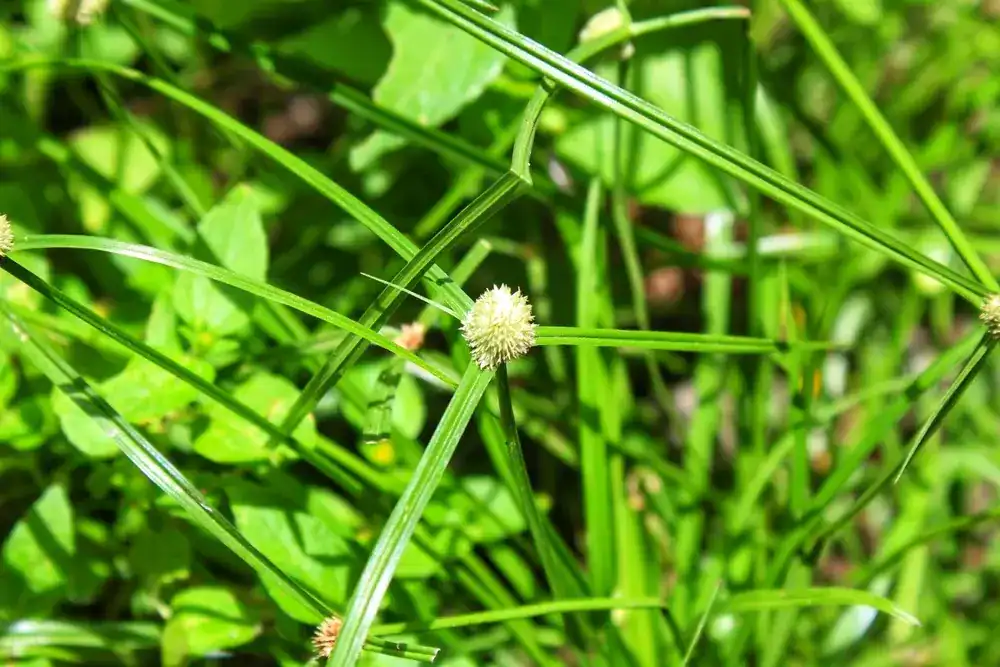
It matters because while both are sedges and both require sedge-active herbicide chemistry, they’re different plants with slightly different growth habits and identification markers. Kyllinga is lower-growing than nutsedge and forms a dense, carpet-like mat close to the soil surface. Its seed head is round or oval and typically white to green in color. Nutsedge grows more upright and produces a more elongated seed head that’s yellow or purple depending on the species. Both have three-sided stems that’s the sedge family trait that distinguishes them from grasses.
In Great River, the two species most likely to appear in residential lawns are green kyllinga and false green kyllinga. Both respond to the same professional-grade herbicides, but the identification step matters because it confirms you’re dealing with a sedge and not a grassy weed which would require completely different chemistry. A company that treats kyllinga with a broadleaf herbicide or a standard grassy weed control is applying the wrong product entirely, and the weed will not respond.
For most established infestations, a minimum of two to three applications is needed. The spacing between applications is typically four to six weeks, and all treatments need to fall within the plant’s active growth window which runs from late May through late August in the Long Island climate. Applications made outside that window, when the plant is dormant or just emerging, are significantly less effective because the plant isn’t actively taking up the herbicide through its vascular system.
The number of applications also depends on how established the infestation is and how large the affected area is. A small, recently established patch may respond well to two applications. A dense, multi-season infestation with an extensive rhizome network typically requires three. In Great River, where late-summer rain events and post-storm soil saturation can extend kyllinga’s active period and trigger late-season germination, we monitor through August as part of how the program is managed. The goal is complete elimination not just visible suppression.
The short answer is no not with the products that actually work. The professional-grade herbicides used for kyllinga control, primarily halosulfuron-methyl and sulfentrazone, require a New York State commercial pesticide applicator license to purchase in professional concentrations. These aren’t available in the formulations sold at retail. What you’ll find at a hardware store are broadleaf weed killers and grassy weed controls neither of which has any meaningful activity on sedges. Kyllinga is in the Cyperaceae family, which is botanically distinct from both broadleaf weeds and grasses. The chemistry that kills one doesn’t affect the other.
This is the most common reason DIY kyllinga control fails. It’s not that the homeowner applied the product incorrectly it’s that the product on the shelf is simply the wrong tool for the problem. If you’ve already tried a store-bought weed killer on a spreading patch in your Great River lawn and watched it come back untouched, that’s exactly what happened. The weed isn’t resistant. It was never vulnerable to what was applied.
Yes, and this is a real pattern that homeowners in Great River notice but don’t always connect to the cause. Kyllinga is a moisture-dependent sedge it germinates and spreads most aggressively in wet, poorly drained soil. After a significant rain event or a tropical system that temporarily saturates the lawn, soil conditions shift in kyllinga’s favor. Seeds that were dormant in the soil can germinate, and the rhizome network expands more readily when the ground is soft and wet.
For properties near the Connetquot River corridor or along the lower-lying streets closer to the Great South Bay, this isn’t a rare occurrence. Great River carries a moderate flood risk rating, and late-summer storm activity is a documented concern in this area. That means the window for kyllinga recruitment can extend later into the season than it would in a drier inland location. If you’ve noticed a kyllinga patch expanding noticeably in the weeks following a heavy rain, you’re observing a direct cause-and-effect relationship and it’s one that a properly timed follow-up application can address.
This is a legitimate question for Great River homeowners, and it deserves a straight answer. The herbicides used for kyllinga control halosulfuron-methyl and sulfentrazone are targeted sedge-active chemistry. We apply them directly to the affected turf areas, not broadcast across the entire property. When applied by a licensed professional at the correct rate and timing, they’re not the kind of indiscriminate treatment that poses broad environmental risk.
That said, Great River sits within a landscape that warrants genuine care. The Connetquot River watershed is an actively protected freshwater resource. The hamlet participates in the Islip Township Pollinator Pathway. Suffolk County Local Law 41-2007 establishes pesticide-free buffer zones around public drinking water supply wells, and the SCDHS maintains a map of those zones that licensed applicators are required to consult before any treatment. Every Lawn Master application in Great River is made in compliance with those requirements. We frame the program around Integrated Pest Management principles targeted chemistry, cultural corrections, and the least intervention necessary to produce a complete result. That approach aligns with what this community actually values, not just what the label allows.
Useful Links
Other Services we provide in Great River