
Hear from Our Customers
When soil gets compacted and in Great River, it does, whether you’re on a waterfront lot near the Connetquot River or set back under a canopy of mature oaks your grass is essentially suffocating. Water pools or runs off instead of soaking in. Fertilizer sits on the surface instead of reaching the root zone. The lawn looks like it’s struggling because it is.
Core aeration pulls out small plugs of soil and opens up channels so air, water, and nutrients can actually get where they need to go. For cool-season grasses like tall fescue and Kentucky bluegrass the most common varieties in Great River this is what allows roots to go deeper before winter, which is exactly what determines how your lawn comes back in spring.
For properties along the Great South Bay or near the river corridor, there’s an added layer. Salt air puts consistent stress on grass blades and deposits salt in the soil over time, which displaces the nutrients your lawn is trying to absorb. Aeration doesn’t eliminate that problem, but it does give your lawn a fighting chance by opening the soil so treatments can actually penetrate. On a property worth what Great River properties are worth, that’s not a minor detail.
We’ve been operating across Suffolk County since 1987. That’s not a tagline it means we’ve been treating lawns in the Town of Islip, on the South Shore, and throughout Great River long before most of the companies showing up in your search results even existed. We know the difference between the sandy coastal soils near the Great South Bay and the heavier conditions you find further inland, and we build programs around that difference.
Every technician we send to your property is a licensed pesticide professional not a seasonal hire supervised by someone off-site. That matters everywhere, but it especially matters in a community that sits within the watershed of the Great South Bay and borders a state-designated Wild, Scenic and Recreational River. We take that seriously, and the licensing backs it up.
We run a fleet of five fully wrapped trucks, use hydraulic aerators that outperform anything available to rent, and apply a custom-blended fertilizer made specifically for our programs not a generic product pulled off a shelf. You get owner-level expertise on every visit, and you can pay your invoice online when it’s convenient for you.
It starts with an assessment of your lawn’s current condition. We’re looking at thatch depth, soil compaction, grass type, shade patterns, and any problem areas things like low spots near the water, heavily trafficked sections, or areas under tree canopy that behave differently than the rest of the lawn. No two Great River properties are the same, and the program we build reflects that.
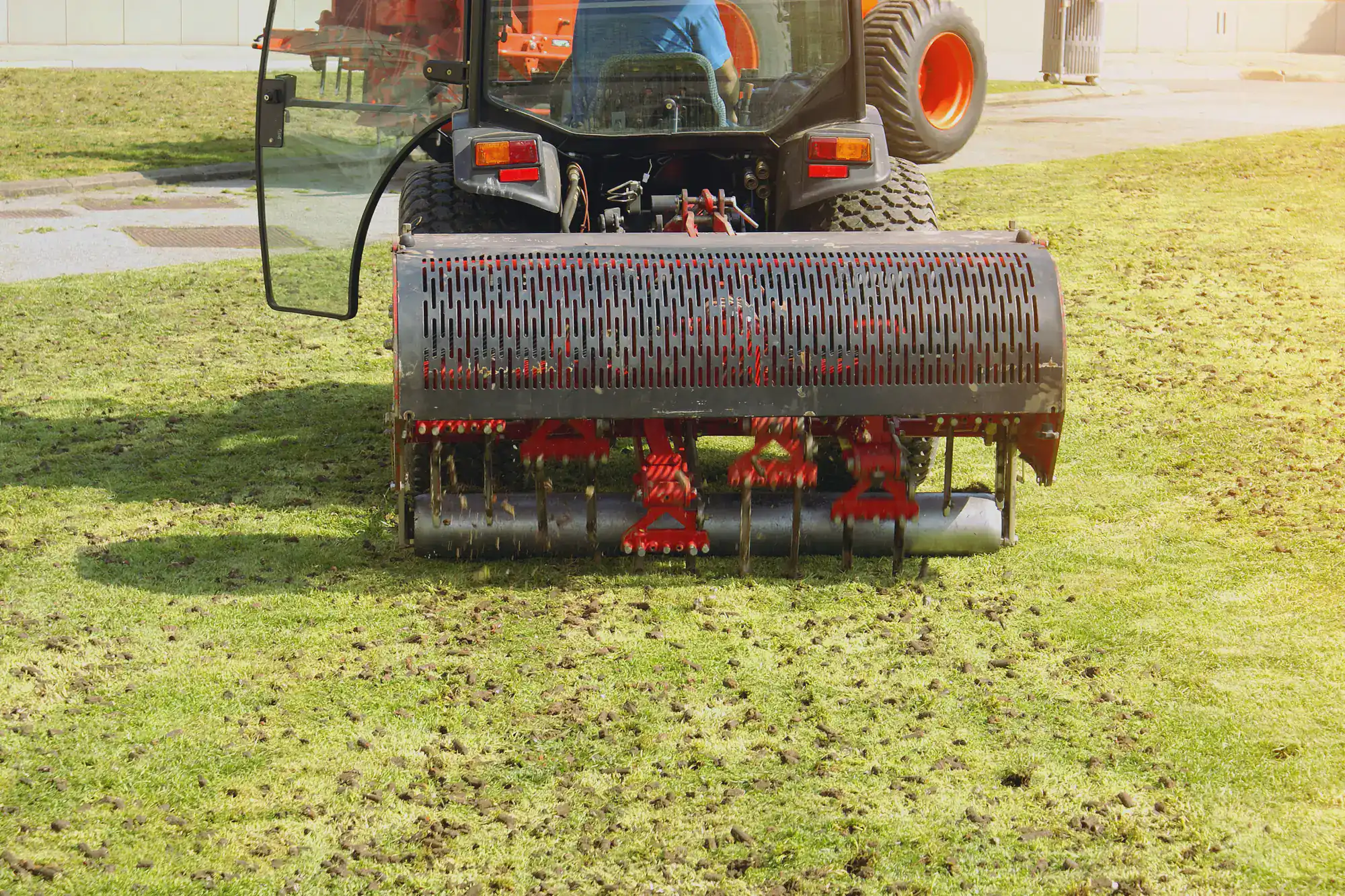
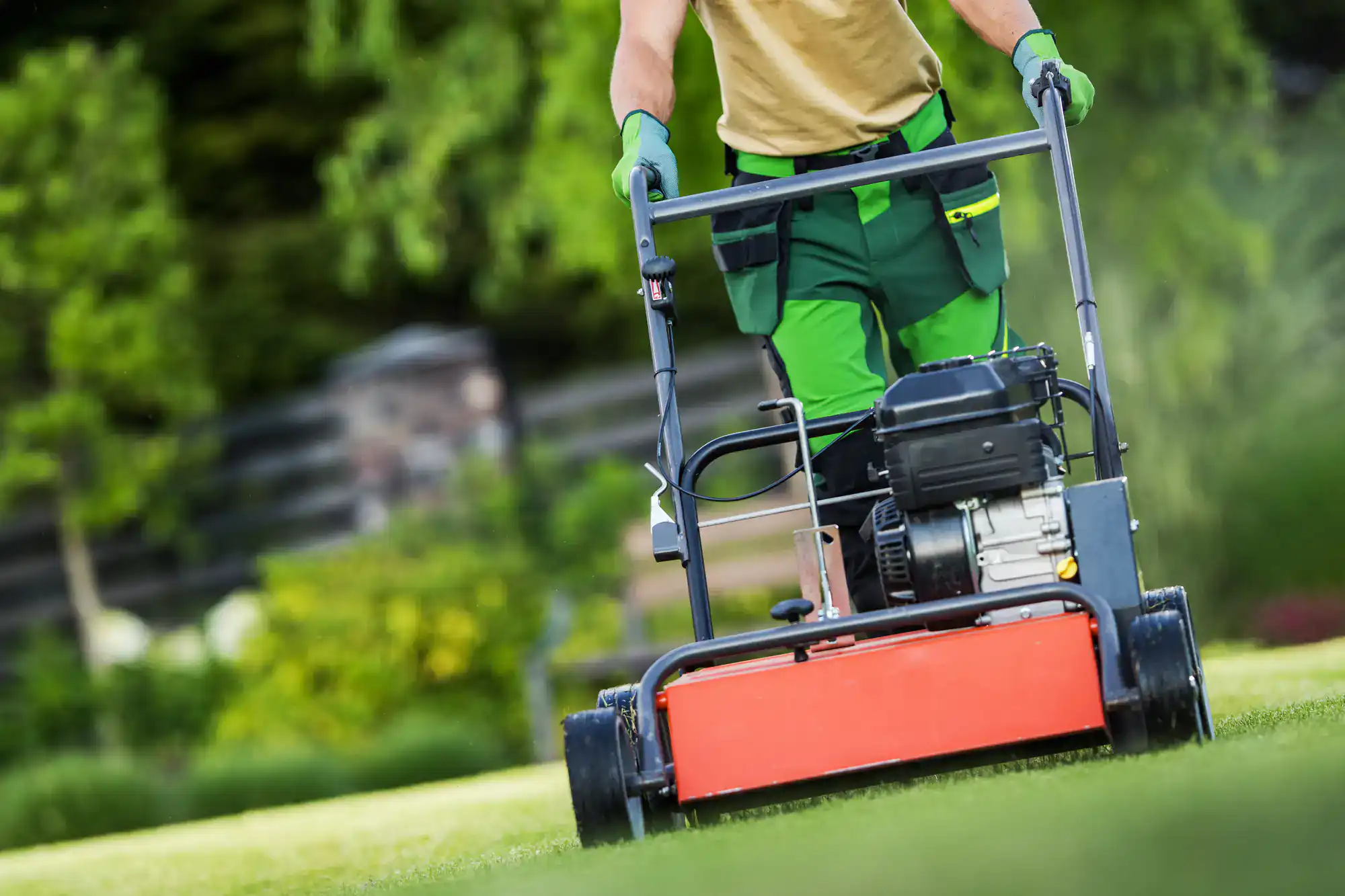
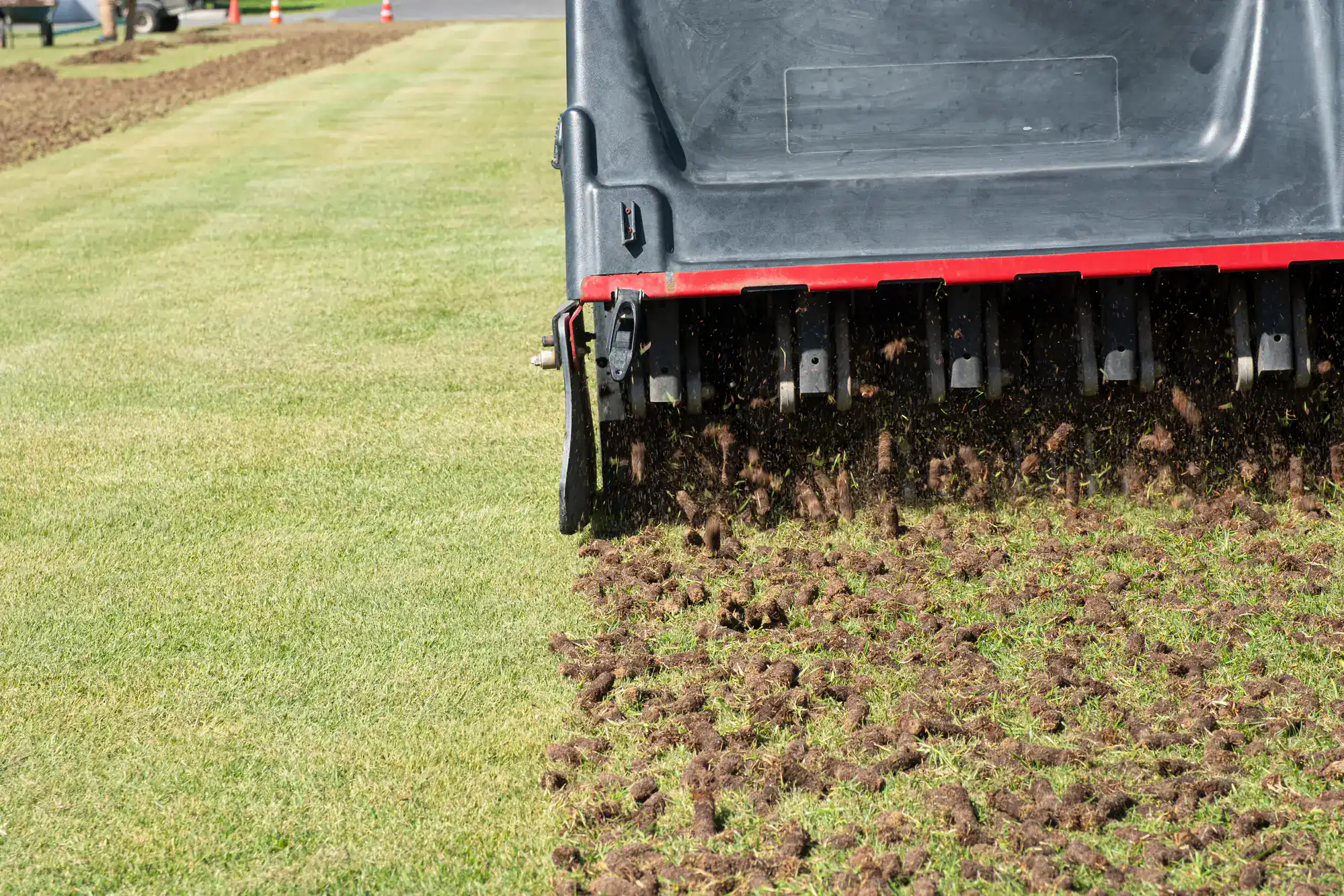
Once we’re ready to aerate, we use hydraulic core aerators professional-grade equipment that pulls clean, consistent plugs from the soil rather than bouncing over the surface the way lighter machines tend to do. The cores we pull out get left on the lawn. That’s intentional. As they break down over the next couple of weeks, they return organic matter and microorganisms back into the soil. It looks a little rough for a short time, but it’s part of the process.
If overseeding is part of your program, it happens immediately after aeration while the soil is open and receptive. For Great River lawns, the fall window roughly August through October is when this combination works best. It’s also worth knowing that Suffolk County’s fertilizer ban takes effect November 1, so if a fall fertilizer application is part of your program, that gets scheduled before the deadline. We plan around it so you don’t have to think about it.
Ready to get started?
We don’t sell off-the-shelf programs. What you get is a custom-tailored plan built around the actual condition of your lawn your soil type, your grass variety, your shade situation, your proximity to the water, and your goals for the property. A waterfront lot on the Connetquot River has different needs than a shaded interior property near the Bayard Cutting Arboretum, and we treat them differently.
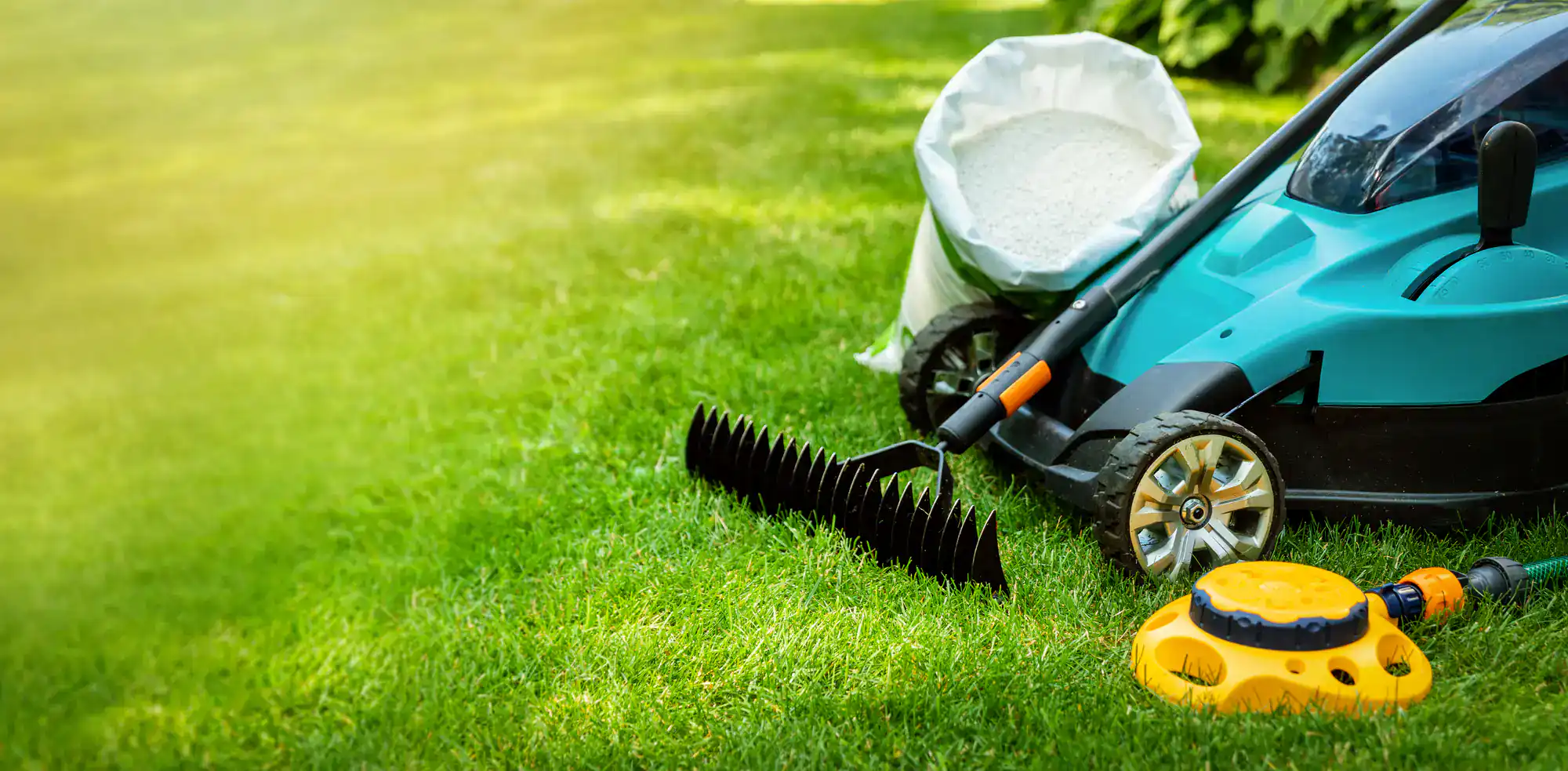
Core aeration is typically the foundation of a fall lawn care program, and for most Great River properties it’s paired with overseeding to fill in thin or bare areas while the soil is open. We use hydraulic seeders that work in tandem with our aerators, which means seed-to-soil contact is far better than broadcasting seed over an untreated surface. The fertilizer we apply is custom-blended specifically for our programs formulated for Long Island’s soil chemistry, not mass-produced for generic use across every market in the country.
As for lawn aeration cost, it varies based on your property’s size and condition. What we can tell you is that for a Great River property where median home values run well above a million dollars the cost of a professional aeration program is a small investment relative to what you’re protecting. We also offer lawn restoration and new lawn installs from seed for properties that need more than maintenance. Whatever your lawn looks like right now, there’s a path forward.
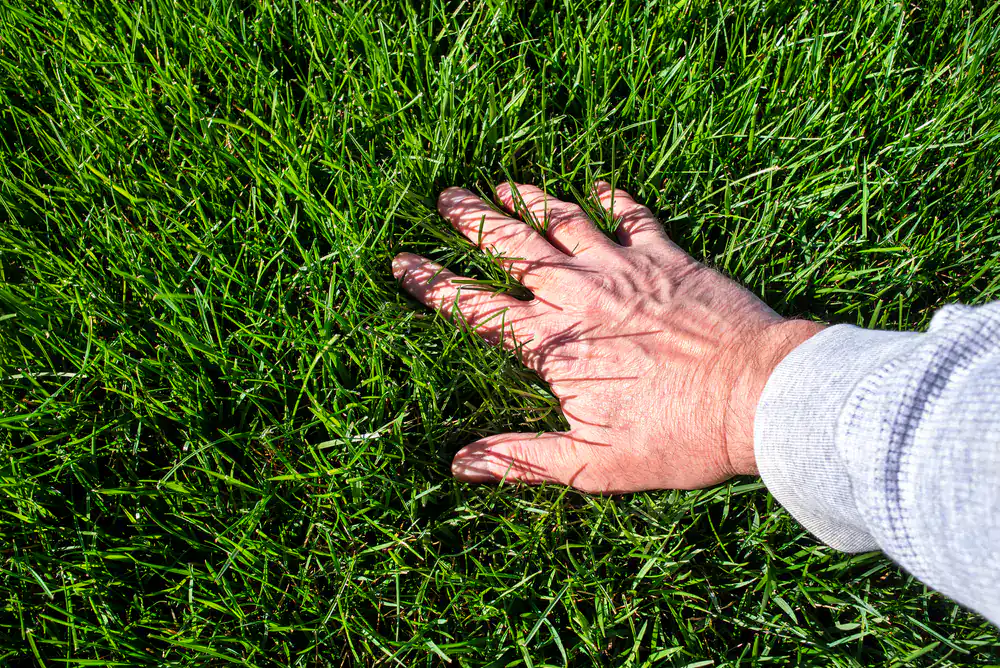
For the cool-season grasses that make up most Great River lawns tall fescue, Kentucky bluegrass, perennial ryegrass fall is the right window. Specifically, late August through October gives you warm soil that’s still easy to work, grass that’s actively growing and ready to respond, and enough time before the first frost for overseeded areas to germinate and establish.
There’s also a practical deadline to keep in mind. Suffolk County’s fertilizer ban runs from November 1 through April 1, which means the last opportunity to combine aeration with a fall fertilizer application is October. If you wait until the end of the month to schedule, you’re competing with everyone else who waited. Booking earlier in the fall window gives you more flexibility and better results the lawn has more time to recover before winter sets in.
It doesn’t require a lab or specialized equipment for a residential property. The most reliable field test is simple: push a standard screwdriver into the soil with your hand, without using the handle for extra leverage. If it goes in easily to about six inches, your soil is in decent shape. If it stops at two or three inches or you have to force it, you’ve got compaction worth addressing.
A trained eye can also read the lawn itself. Thin turf in high-traffic areas, water that beads and runs off instead of soaking in, or grass that goes brown quickly during dry stretches are all signs that the root zone is restricted. In Great River, where some properties have fine sandy coastal soils near the bay and others have heavier conditions near the river corridor, compaction shows up differently depending on where you are on the property. That’s exactly why a professional assessment matters not every area of your lawn compacts the same way.
It does, and it’s one of the more underappreciated challenges for waterfront and near-waterfront properties in Great River. Salt air deposits sodium on grass blades and, over time, into the soil itself. Sodium in the soil displaces calcium and magnesium two nutrients grass needs to stay healthy and it also affects soil structure, causing particles to compact more tightly than they would otherwise.
Aeration helps by opening the soil profile so that water, fertilizer, and amendments can actually penetrate to the root zone rather than sitting on a sodium-crusted surface. It won’t undo years of salt accumulation on its own, but as part of a consistent fall program aeration, overseeding, and a properly formulated fertilizer it gives lawns under salt stress a real path to improvement. Properties closest to the bay or along the Connetquot River tend to benefit most from keeping this on an annual schedule rather than treating it as a one-time fix.
For the grass types common in Great River, fall is almost always the better choice. Cool-season grasses grow most aggressively in the fall, which means they recover faster from aeration and take better advantage of overseeding. Spring aeration is possible, but it comes with a real complication: if you’ve applied a pre-emergent weed control product in early spring which most professional programs do aerating afterward breaks the barrier that pre-emergent creates, and crabgrass moves in.
Fall sidesteps that issue entirely. The soil is still warm from summer, the grass is ready to respond, and there’s no conflict with pre-emergent timing. For Great River properties that get heavy recreational use during the summer outdoor entertaining, kids, foot traffic from dock access fall aeration also addresses the compaction that built up over those months. It’s the right sequence for this climate and this type of lawn.
Spike aeration uses solid tines that poke holes into the soil without removing anything. The problem is that pushing soil aside to make a hole actually increases compaction in the area immediately surrounding each spike. It might look like something is happening, but for a lawn with real compaction issues, it can make things marginally worse rather than better.
Core aeration what we use removes actual plugs of soil from the ground, which physically relieves compaction rather than just redistributing it. Those cores get left on the surface and break down over a couple of weeks, returning organic matter to the lawn. For any Great River property dealing with genuine compaction from foot traffic, mowing equipment, or the natural settling that happens in coastal sandy soils over time, core aeration is the only method worth doing. Spike aerators are largely a consumer-grade shortcut that doesn’t solve the underlying problem.
Pricing for professional core aeration on a residential property in Suffolk County generally runs somewhere between $150 and $400 or more, depending on the size of the lawn and its current condition. Larger properties and Great River has plenty of them, particularly the waterfront lots along the Connetquot River and the Great South Bay will fall toward the higher end of that range. If overseeding is added, that’s a separate cost based on the square footage being treated.
What’s worth putting in context is what you’re protecting. On a property with a median sale price above $1.6 million, the cost of an annual aeration program is a rounding error compared to the value of the asset. The more relevant number is what it costs to renovate a lawn that’s been neglected for three or four seasons that’s a significantly larger investment than keeping up with it annually. A professional assessment from us will give you a specific number for your property, and there are no surprises after the fact.
Useful Links
Other Services we provide in Great River