
Hear from Our Customers
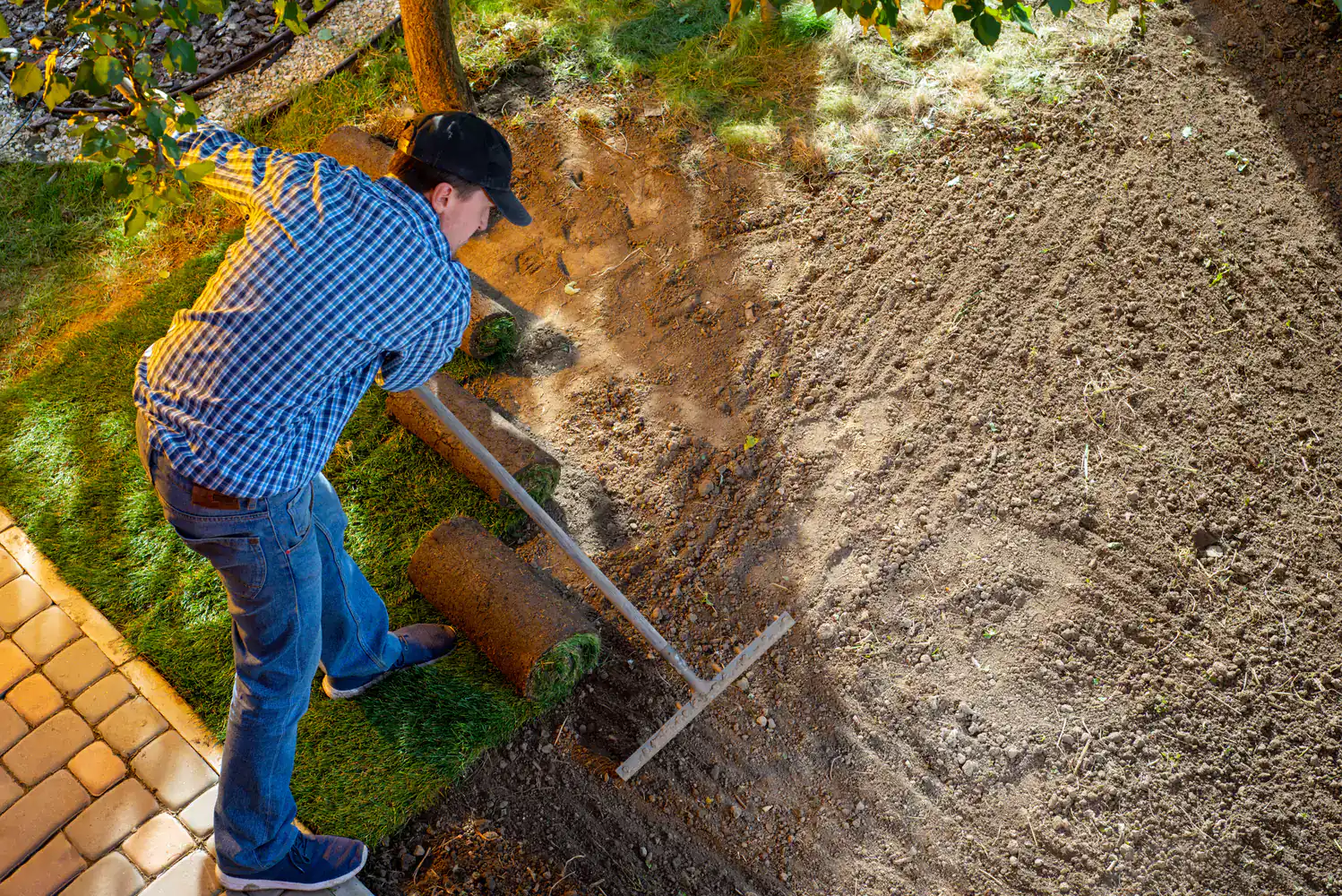
When you’re standing at the end of a construction project or a full outdoor tear-out, the last thing you want is a lawn that looks like an afterthought. You’ve invested in the property. The lawn needs to reflect that not undercut it.
Great River’s South Shore soil is sandy, fast-draining, and unforgiving if it’s not properly amended before a single seed goes down. Properties near the Connetquot River and the Great South Bay also carry real drainage considerations that have to be addressed before installation, not after. Skipping that step is how you end up with a lawn that drowns in spring and bakes out by July.
Large lots are the norm in Great River, not the exception. That means more square footage to prepare, more topsoil to plan for, and more at stake if the job is done wrong. When the installation is done correctly soil tested, graded properly, seeded with varieties matched to your specific conditions what you get is a lawn that establishes evenly, holds through the seasons, and genuinely looks like it belongs on a Great River property.
We’re not a landscaping company that added seeding to a menu of services. New lawn installation and renovation is our entire focus and it has been for 38 years on Long Island. That distinction matters when you’re hiring someone to build a lawn from bare ground on a property worth over a million dollars.
Working in Suffolk County for nearly four decades means we know the sandy coastal soils of the South Shore, the drainage patterns near the bay, and the grass varieties that actually hold up through Long Island winters and summers. The communities along the South Shore Great River, East Islip, Oakdale have their own conditions, and those conditions shape every installation decision we make on-site.
When you call Lawn Master, you’re not talking to a franchise rep reading from a script. You’re talking to specialists who have built lawns on properties like yours, in soil like yours, in Great River.
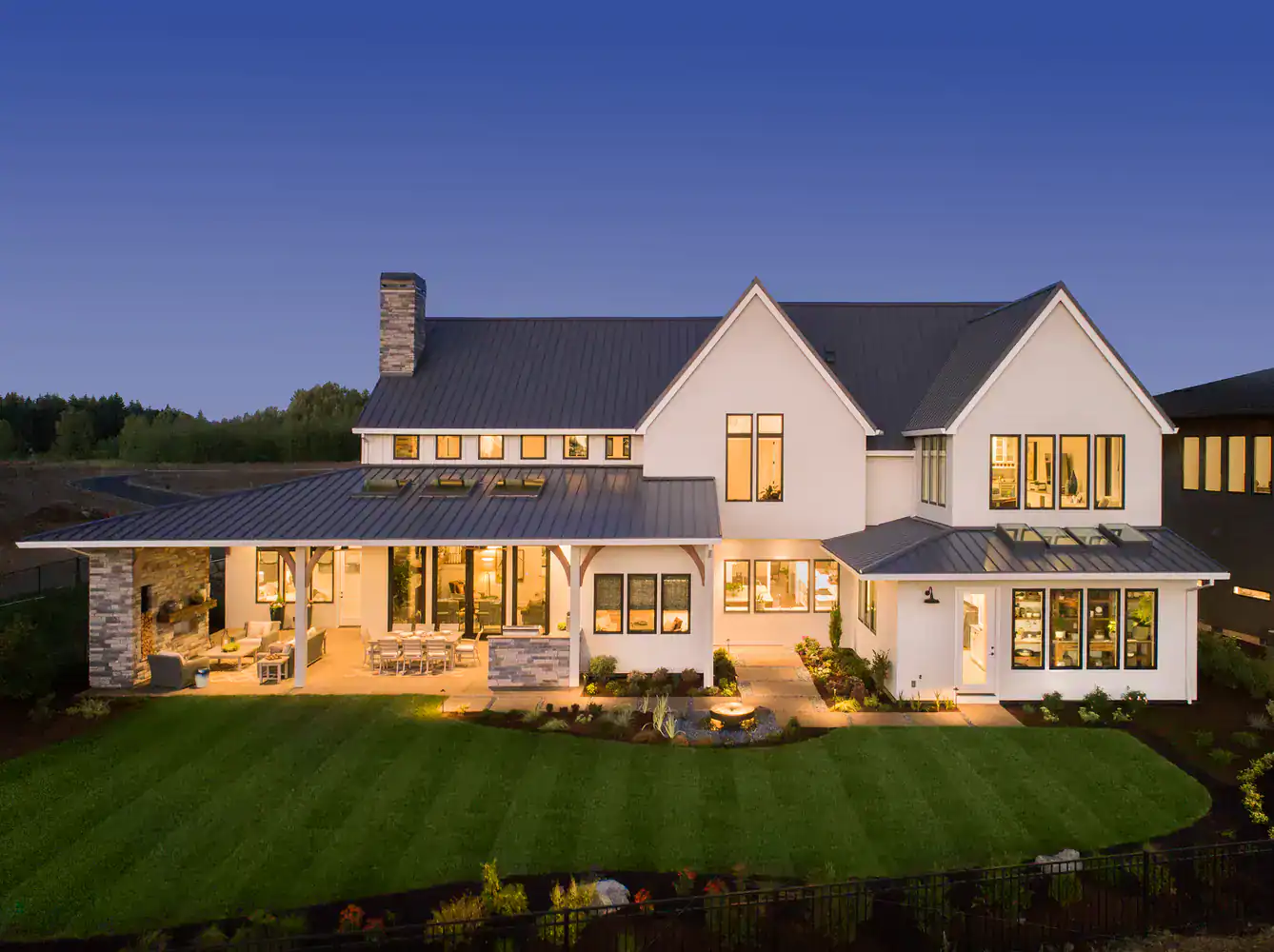
Most installation failures start before anyone picks up a spreader. The prep work is what determines whether a new lawn establishes evenly or struggles from day one and on Great River properties, that prep work carries more weight than almost anywhere else in Suffolk County.
It starts with a site assessment. We test soil. We evaluate compaction especially relevant on properties that have been through construction, where heavy equipment has compressed the subsoil to a point where grass roots simply can’t penetrate without intervention. We review grading, assess drainage, and plan topsoil needs before any installation decisions are made. For properties near the Connetquot River or in low-lying areas with moderate flood risk, drainage planning is not optional it’s foundational.
From there, seed selection is matched to the actual site conditions: sun exposure, shade from mature tree canopy, salt air tolerance for bay-facing properties, and the seasonal timing that gives a new lawn the best possible establishment window. On Long Island, that window is late August through October for cool-season grasses and the South Shore’s ocean-moderated temperatures keep that window open slightly longer than in inland communities. After installation, you get a clear establishment plan: watering schedule, first-mow timing, and what to expect at 30, 60, and 90 days. The job doesn’t end when the crew leaves.
Ready to get started?
New lawn installation in Great River is not a one-size-fits-all job. The properties here are larger, the soil conditions are more specific, and the expectations are higher than in most of Suffolk County. Every installation we do is approached as a custom build because that’s what these properties require.
Depending on the size of the property and the condition of the ground, the right installation method might be seed-based, seeding, or a combination approach. For large Great River lots, seeding delivers strong, even establishment at a fraction of the cost of sod and the grass grows in place, developing root systems that transplanted sod simply can’t match at that scale. Sod is available when the timeline or the situation calls for it, and the recommendation is always based on what’s right for your property, not what’s easiest to deliver.
All commercial applications are handled in compliance with NYSDEC certification requirements and New York State nutrient runoff law which limits high-phosphorus fertilizer use except on new installations or when soil tests require it. In a community bordered by the Connetquot River and the Great South Bay, that’s not just a legal requirement it’s the right way to work. The Town of Islip oversees permitting for grading and significant earthwork in Great River, and any work requiring a permit is handled with that process in mind from the start.
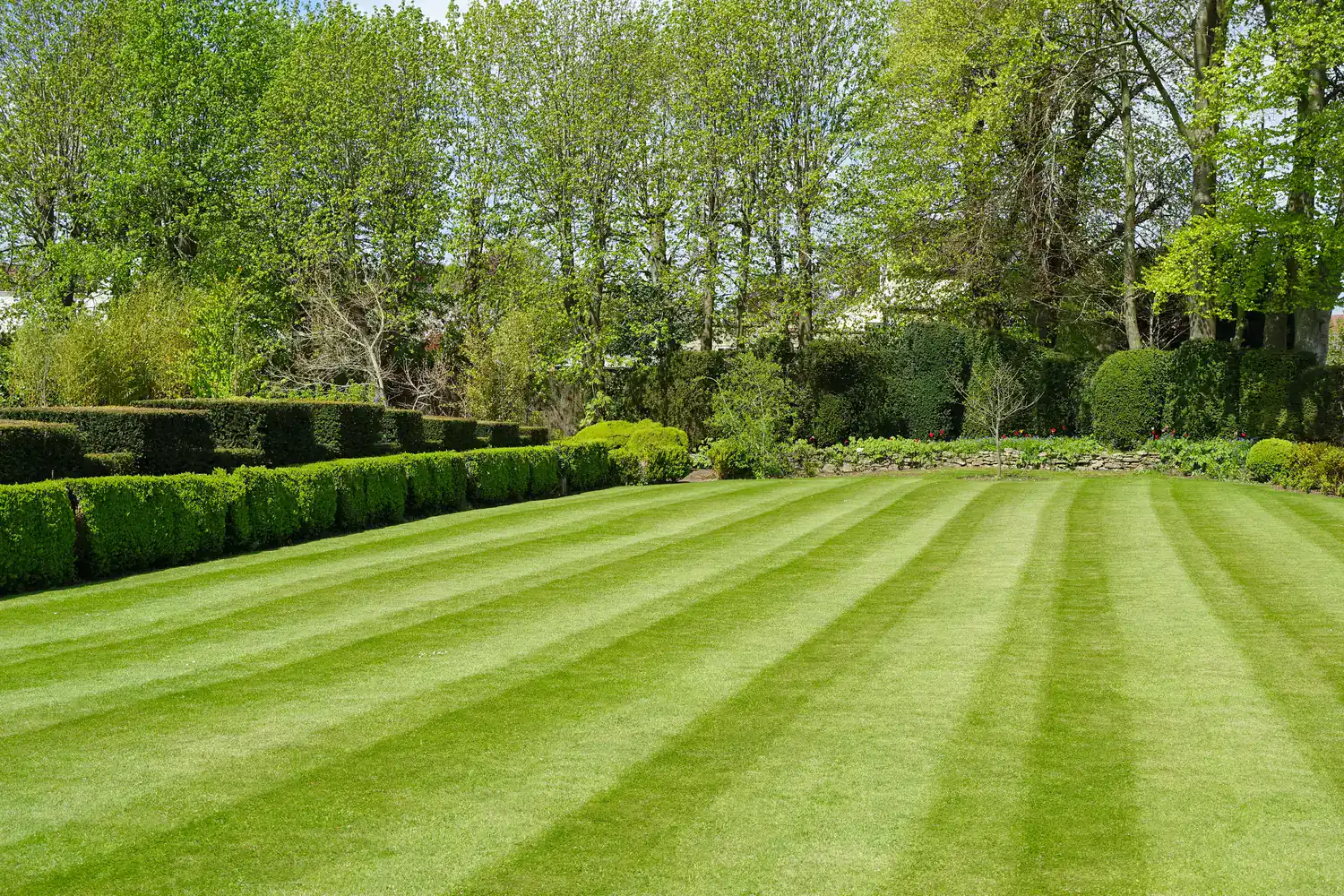
Great River has a specific combination of conditions that you don’t find in most of Suffolk County. The soil is sandy and fast-draining typical of the South Shore which means it needs proper organic amendment and topsoil planning before installation can succeed. Properties near the Connetquot River and the Great South Bay also carry real drainage and flood-risk considerations that have to be addressed through grading before a single seed goes down.
On top of that, Great River lots tend to be significantly larger than the typical suburban property in towns like Centereach or Holbrook. More square footage means more preparation, more topsoil, and a higher total investment which makes getting it right the first time even more important. Add in the salt air exposure for bay-facing properties, the mature tree canopy that creates shade challenges, and the Town of Islip’s oversight on grading and earthwork, and you have an installation environment that genuinely requires local knowledge and experience to navigate correctly.
For most large properties on Long Island including the estate-scale lots common in Great River seed-based installation or seeding is the stronger choice in the long run. Sod gives you an immediately green surface, but it’s transplanted grass that has to re-establish its root system in your soil after the fact. On a large lot, it’s also significantly more expensive, and the cost difference can be substantial when you’re covering 10,000 to 20,000 square feet or more.
Seeding sometimes called seeding applies a slurry of seed, mulch, and starter fertilizer across the surface in a single pass. It’s cost-effective for large areas, establishes evenly when the soil prep has been done correctly, and produces grass that roots directly into your soil from day one. That said, sod makes sense in specific situations high-traffic areas that need to be functional quickly, erosion-prone slopes, or tight timelines. The right answer depends on your property, your timeline, and your budget, and it’s worth having that conversation before any decision is made.
For cool-season grasses which are the right choice for Long Island’s climate the optimal installation window is late August through October. Soil temperatures are still warm enough to support germination, air temperatures are dropping into the range that cool-season grasses prefer, and weed competition is significantly lower than in spring. That combination gives a new lawn the best possible start before winter.
Great River actually has a slight advantage over more inland Suffolk County communities during this window. The South Shore’s proximity to the ocean moderates temperature extremes, which means the soil stays workable and the air stays favorable for germination a bit longer into fall than in places like Hauppauge or Commack. Spring installation is possible but comes with more weed pressure and the risk of summer heat stress before the lawn has fully established. If your timeline allows, fall is the clear choice and planning ahead to hit that late-August start date is worth doing.
On most Great River properties, the answer is yes and the reason comes down to the South Shore’s sandy soil. Sandy soil drains quickly, can be low in organic matter, and doesn’t hold moisture well enough to support uniform germination without amendment. If you’re starting from bare ground after construction, the situation is often worse: heavy equipment strips the topsoil during grading and foundation work, leaving compacted subsoil at the surface that grass roots cannot penetrate.
A soil test is the definitive way to know what your specific ground needs and it’s a standard part of the assessment process before any installation begins. The test tells you the pH, nutrient levels, and organic matter content of your soil, which determines exactly what amendments are needed and in what quantities. Guessing at topsoil depth or skipping the test entirely is how you end up with a lawn that looks decent for a few weeks and then fails unevenly. The cost of a soil test and proper amendment is a fraction of the cost of redoing a failed installation.
Cool-season grass blends typically a mix of tall fescue, Kentucky bluegrass, and perennial ryegrass are the standard for Long Island lawns, and they perform well in Great River’s climate. But not all varieties within those species handle coastal conditions equally. For properties with southern exposure toward the Great South Bay, or those close enough to the water to receive regular salt air and wind, variety selection matters more than most homeowners realize.
Tall fescue varieties with stronger salt tolerance and deep root systems are generally the better choice for South Shore properties than fine fescues or bluegrass-heavy blends that struggle under salt stress. Shade tolerance is also a real factor in Great River, where mature tree canopy covers significant portions of many large lots. We match the seed blend for a Great River property to the specific site conditions sun exposure, proximity to the bay, soil drainage, and shade coverage not pulled off a shelf and applied uniformly across the property.
New lawn installation in the Greater New York area generally runs between $1 and $4 per square foot, depending on the method, the scope of soil preparation required, and the condition of the ground you’re starting with. Seeding tends to fall on the lower end of that range roughly $0.50 to $1.00 per square foot while sod installation typically runs $1.00 to $3.00 per square foot installed. On a large Great River lot covering 15,000 square feet, that’s a meaningful difference in total project cost.
What tends to drive cost up in Great River specifically is the prep work and it’s prep work that genuinely can’t be skipped. Sandy soil that needs topsoil amendment, compacted subsoil from construction activity, grading corrections for drainage, and the scale of large estate-character lots all add to the scope of the job. The number worth focusing on isn’t the per-square-foot rate it’s the cost of doing it wrong. A failed installation on a Great River property that has to be torn out and redone costs significantly more than getting the right specialist in from the start.
Useful Links
Other Services we provide in Great River