
Hear from Our Customers
If you’ve been running a fertilization program and your lawn still looks thin, patchy, or dry, the problem probably isn’t the fertilizer. It’s the soil. The sandy, thatch-covered surface common to South Shore properties like yours acts like a lid water runs off, nutrients sit on top, and the roots underneath stay starved no matter how much you put down. Core aeration removes that lid.
Once the soil is open, fertilizer actually reaches the root zone instead of washing toward the Connetquot River or the bay. Water infiltrates instead of pooling at the surface. Overseeded grass makes real contact with soil and germinates instead of sitting on top of a dried-out thatch layer. The difference isn’t subtle fertilizer uptake efficiency improves by 30 to 40 percent after proper aeration, and overseeded lawns following core aeration germinate at rates 30 to 50 percent higher than lawns that skipped it.
For Great River homeowners with properties along the water or backing up to the Connetquot River State Park Preserve, there’s another layer to this. When fertilizer can’t penetrate compacted soil, it doesn’t just fail your lawn it runs off into the watershed. Aeration is one of the most effective things you can do to keep nutrients in your turf and out of the Great South Bay.
We’re a Suffolk County lawn care company not a franchise, not a call center routing jobs to subcontractors. When you book with us, you’re working with licensed applicators who know Great River’s soils, understand the environmental sensitivities of working near the Great South Bay, and show up with equipment built for the job.
Our applicators hold New York State DEC pesticide applicator licenses. In a community like Great River, where nitrogen runoff is a documented, locally named issue affecting the bay and the Connetquot River, that credential isn’t a formality it means we operate with the accountability this area demands. We apply correctly, we comply with New York’s fertilizer laws near waterways, and we don’t cut corners on a property that’s worth protecting.
We serve Great River and the surrounding communities across the Town of Islip and broader Suffolk County, including East Islip, Oakdale, and Sayville. We know this area’s lawns because we’ve been working them.
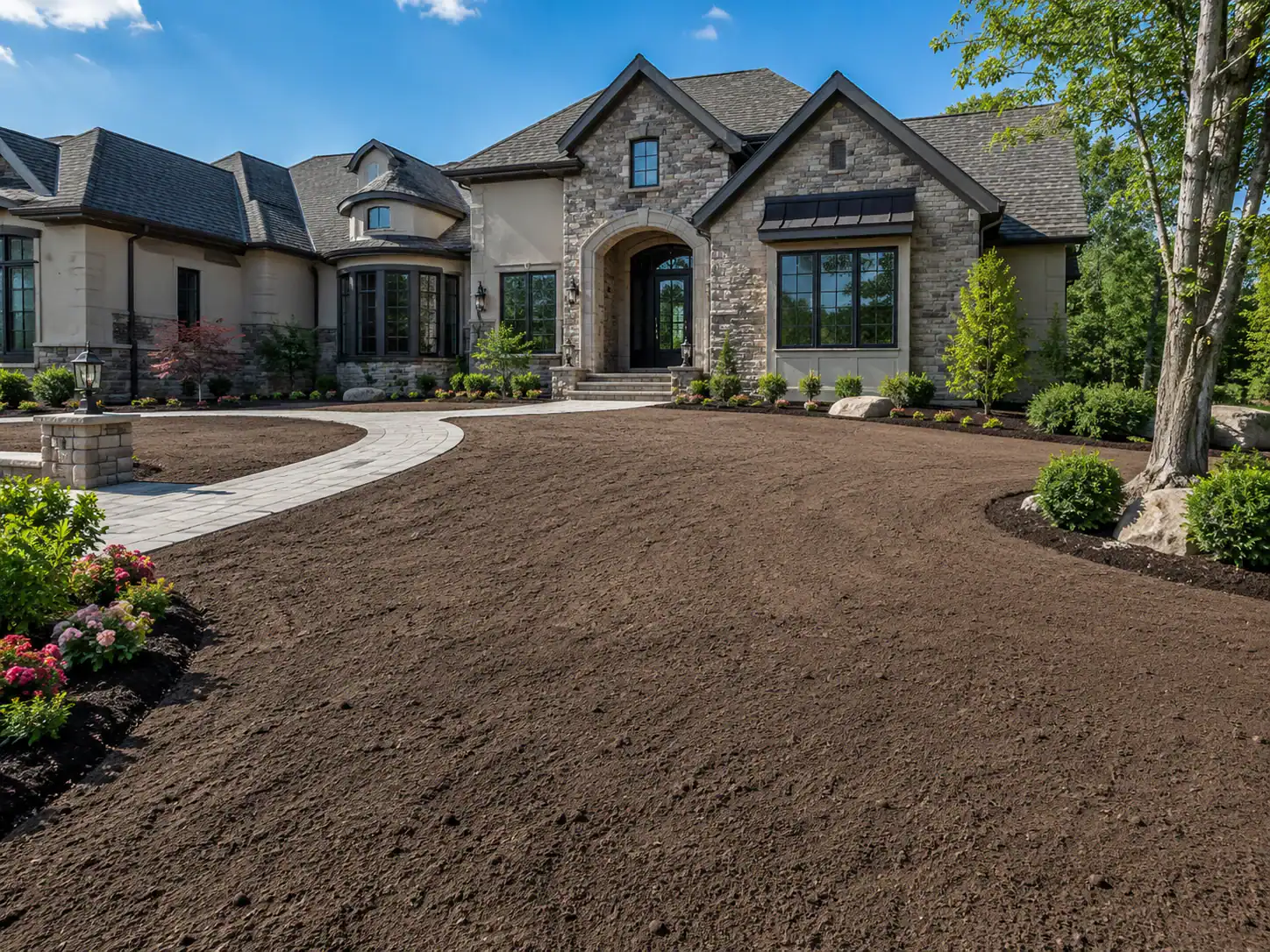
It starts with a free estimate. We look at your lawn’s size, soil condition, thatch depth, and any visible stress patterns bare patches near the water’s edge, thinning under the tree canopy, areas that dry out fast despite regular irrigation. That assessment shapes how we approach your property, because a half-acre lot near Timber Point Road isn’t treated the same as a smaller inland yard.
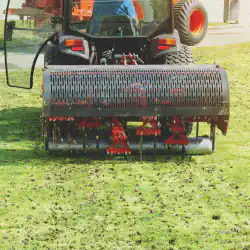
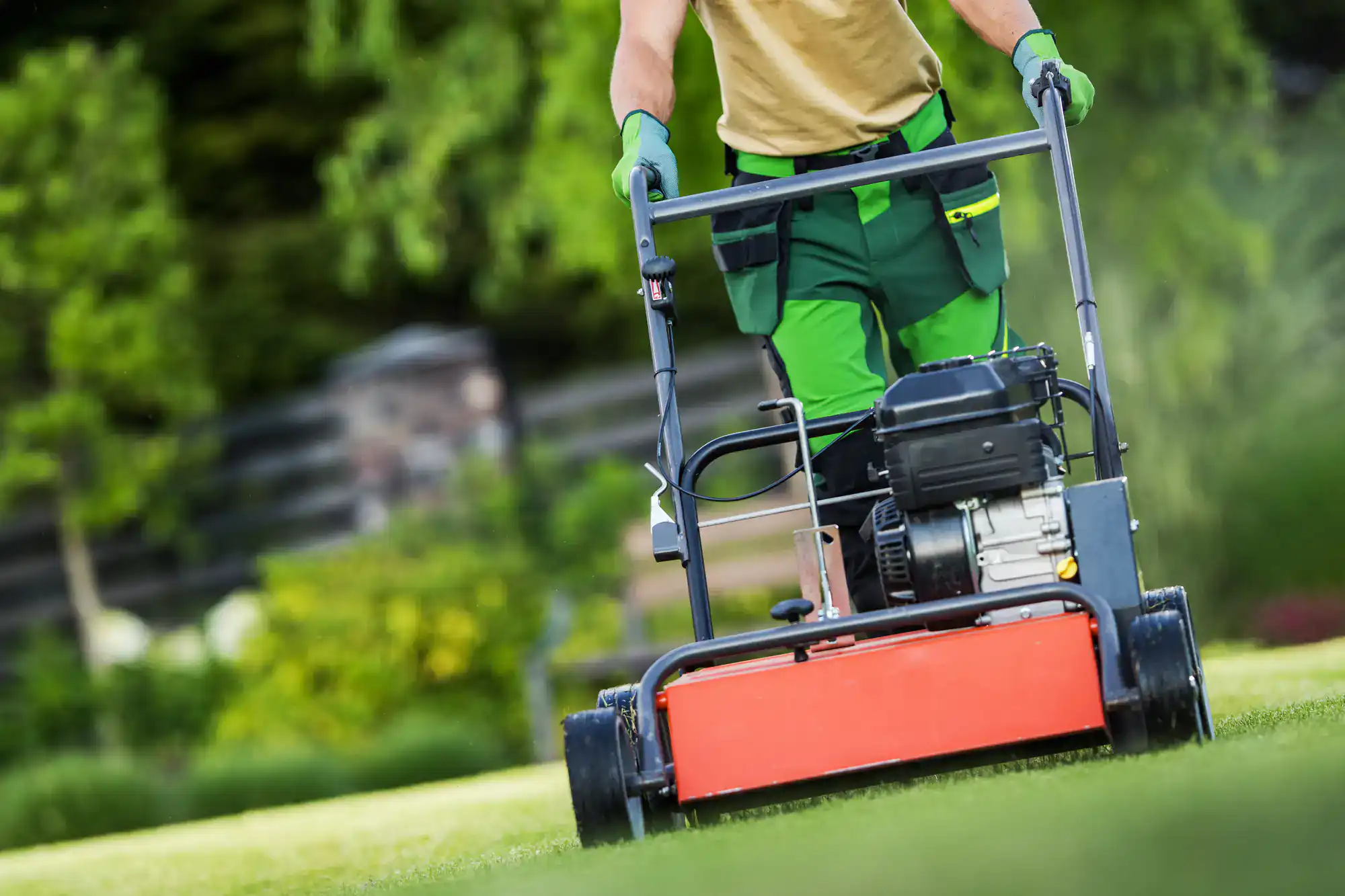
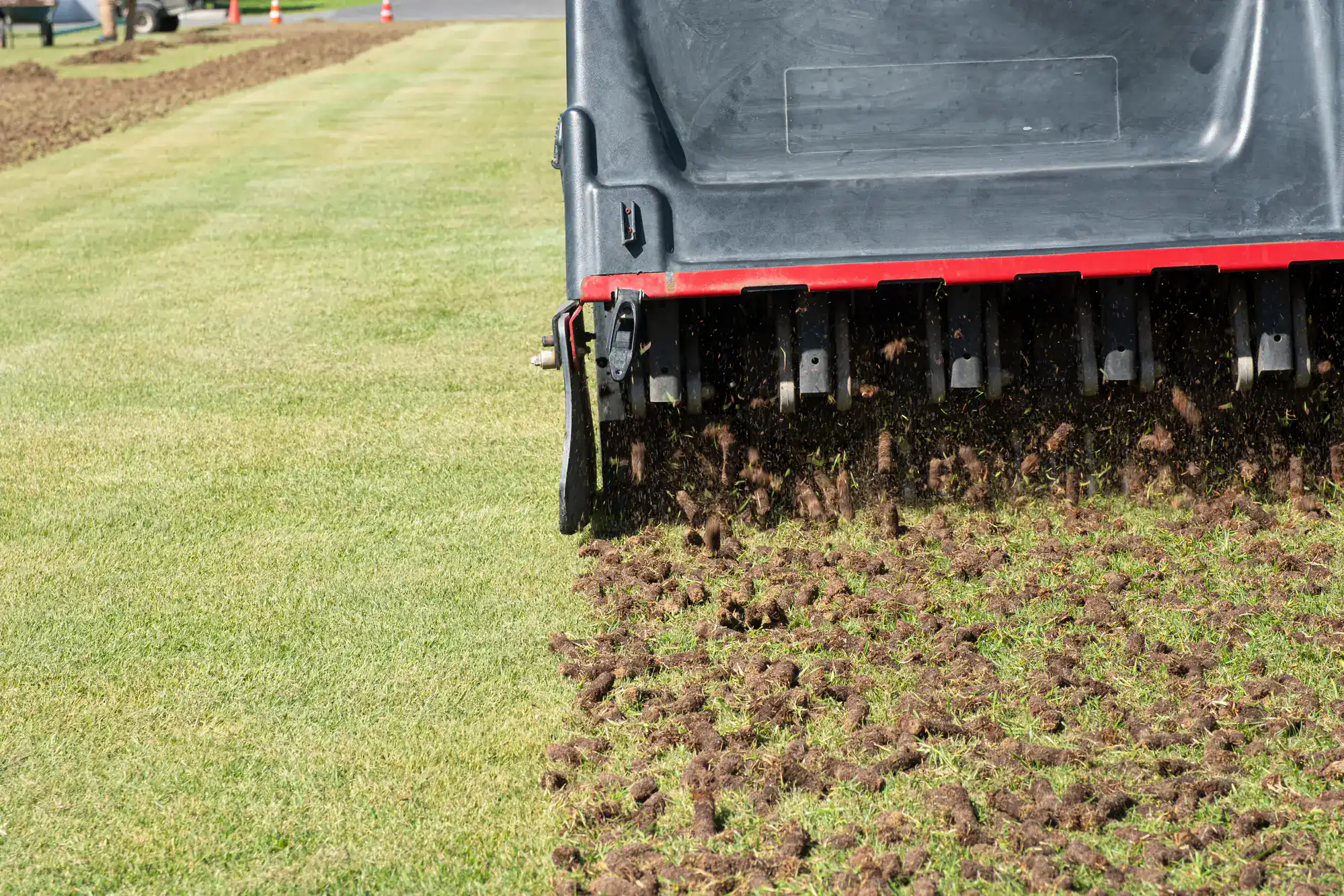
On service day, we run a hydraulic aerator across your lawn. This is a commercial-grade machine not the drum-style unit available at rental centers. It drives tines three to four inches deep, which matters on Great River’s sandy South Shore soils where the compaction layer sits beneath a hydrophobic thatch surface that shallow equipment simply bounces off. You’ll see soil cores small plugs of turf and soil scattered across the lawn when we’re done. Leave them. They break down in two to four weeks, return organic matter to the surface, and help decompose the thatch layer that was causing the problem in the first place.
If you’re pairing aeration with overseeding, that seed goes down immediately after. The open channels created by the aerator give seed direct contact with soil the single biggest factor in whether it germinates or not. Fall is the window that works for Long Island’s cool-season grasses, and the maritime influence of the Great South Bay gives the South Shore a slightly moderated temperature range, but the sandy soils here cool faster than inland. Timing matters, and we’ll tell you exactly where you stand when you call.
Ready to get started?
The biggest difference between us and most other aeration services in the Islip area isn’t the price it’s the machine. Standard rental aerators and the drum-style units used by many lawn care operators typically penetrate one and a half to two inches on compacted ground. On Great River’s sandy South Shore soils, where the thatch layer dries into a hydrophobic crust and the real compaction zone sits below it, that depth doesn’t reach the problem. You get holes in the thatch and not much else.
Our hydraulic aerator drives three to four inches deep. It adjusts pressure dynamically, which means it works effectively on the surface-compacted sandy soils common throughout the South Shore soils that cause lighter machines to skip and bounce rather than penetrate. That depth is what creates genuine decompression, opens real channels for water and nutrients, and gives overseeded grass a path to actual soil contact. It’s also why homeowners who’ve tried renting an aerator and seen no improvement often see a real difference after one visit from us.
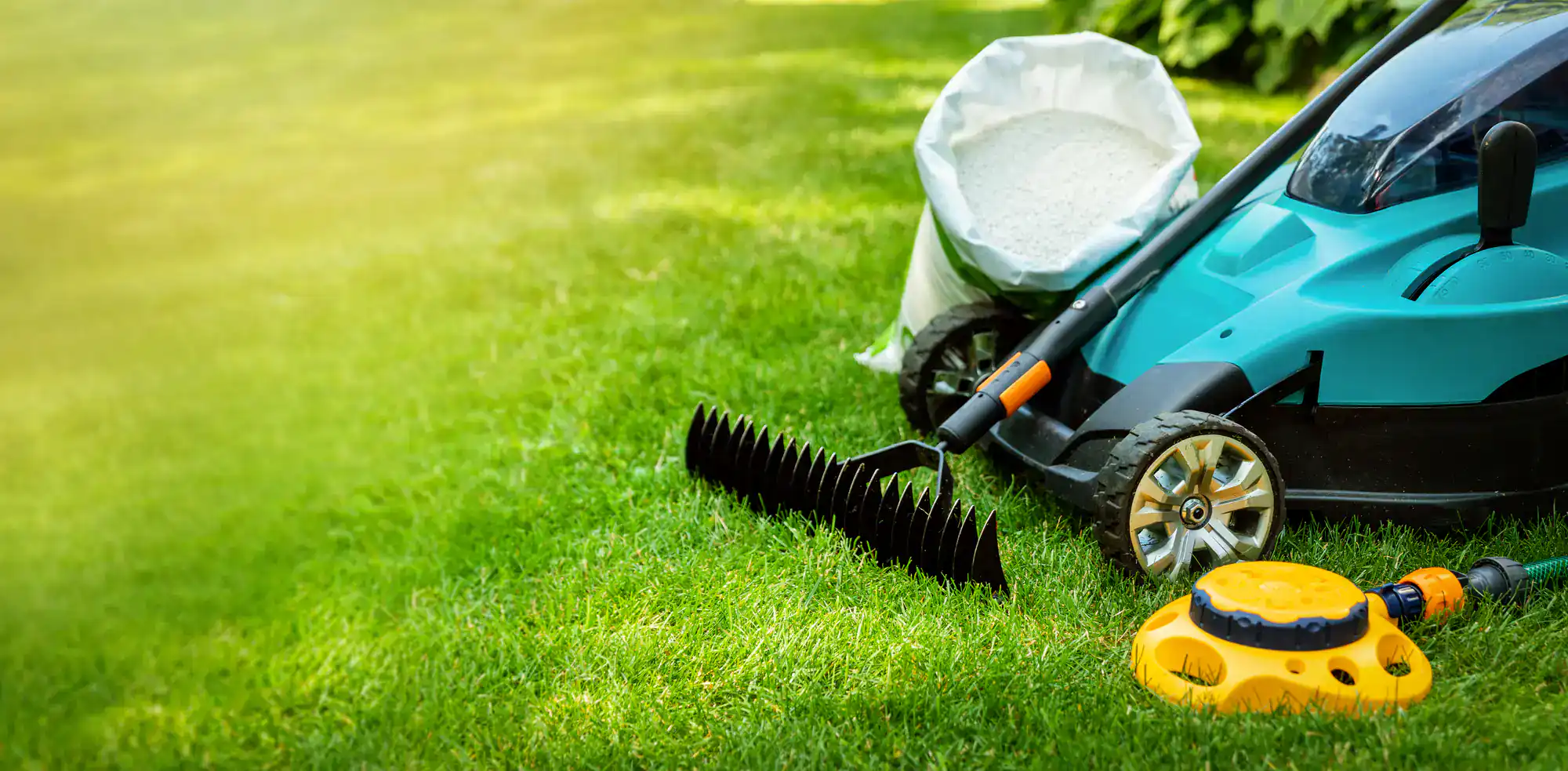
Core aeration pairs naturally with overseeding and fertilization. If your lawn has bare patches common on larger Great River properties near the water or along the tree line adjacent to the Connetquot River State Park Preserve aeration is the prerequisite that makes overseeding work. We also offer aeration as part of broader seasonal lawn programs for homeowners who want a complete approach to turf health, not just a one-time fix.
It’s a fair question, because sandy soil and clay soil compact differently and a lot of South Shore homeowners assume their lawn doesn’t need aeration because the ground drains freely. The issue isn’t drainage. It’s the thatch layer that builds up on top of sandy soil over time. Once that layer dries out, it becomes hydrophobic meaning it actively repels water even though the sand below it would absorb it fine. Water runs off, fertilizer washes away, and the root zone stays dry and nutrient-starved no matter how much you put down.
Core aeration punches through that surface barrier. It creates channels that bypass the thatch and deliver water, air, and nutrients directly to the root zone. On Great River’s Plymouth loamy sand soils the predominant soil type along the South Shore this is especially effective because the sand below the compacted surface is naturally free-draining. Once you open it up, it works the way it’s supposed to. The hydraulic aerator we use is specifically built to penetrate deeply enough to reach that layer, which is something standard rental equipment often can’t do on South Shore soils.
Spike aeration pushes soil aside to create holes. Core aeration removes a plug of soil entirely. That distinction matters more than most people realize. When you push soil aside whether with a spike aerator or those spike-soled sandals sold at garden centers you’re compressing the soil around each hole. On the sandy, surface-compacted soils common in Great River, that means you’re actually increasing compaction in the areas surrounding each spike hole. The net result is often worse than doing nothing.
Core aeration creates genuine decompression. The plug is gone, the surrounding soil has room to expand, and the open channel allows water and nutrients to move through the soil profile without restriction. If you’ve tried spike aeration in the past and didn’t see improvement, that’s likely why. It’s not that aeration doesn’t work it’s that spike aeration doesn’t do what core aeration does. They’re not the same service, and on South Shore soils specifically, the difference in outcome is significant.
For the cool-season grasses that grow on most Great River lawns tall fescue, Kentucky bluegrass, and perennial ryegrass fall is the right window. Late August through October gives you warm soil temperatures for germination, cooling air temperatures that reduce stress on new growth, and a full growing season ahead before summer heat arrives. It’s the combination that makes fall aeration and overseeding so much more effective than spring treatments.
One thing worth knowing about the South Shore specifically: the maritime influence of the Great South Bay moderates temperature extremes, which can extend the effective window slightly compared to inland communities. But the sandy soils here cool faster in fall than heavier soils further north, which means the germination window can close earlier than you’d expect. Waiting until late October or November significantly reduces the chance that overseeded grass establishes before winter. If you’re thinking about it, the time to schedule is earlier in the fall, not later and our fall schedule fills up as the season moves in.
Right after aeration, your lawn will have soil cores small plugs of turf and soil scattered across the surface. It won’t look pristine for a couple of weeks, and that’s completely normal. For homeowners in Great River with high property standards and significant investment in their landscapes, it’s worth knowing upfront so there’s no concern when you see it.
Those plugs are doing something useful. They contain soil microbes and organic matter that break down over two to four weeks under normal conditions, returning nutrients to the surface and helping to decompose the thatch layer that was causing your compaction problems in the first place. Don’t rake them up or bag them that removes one of the key benefits of the service. Within a month, they’re gone, the lawn looks normal, and the underlying soil is in significantly better shape. If you’re overseeding at the same time, you’ll start seeing new growth filling in bare patches within two to three weeks of germination.
Aeration actually makes fertilizing near the bay safer and more effective at the same time. Here’s why: when soil is compacted and covered with a thatch layer, fertilizer can’t penetrate to the root zone. It sits on the surface and washes off with rain or irrigation, running toward the Connetquot River or the Great South Bay instead of feeding your grass. That runoff is a documented issue in this area nitrogen pollution from residential properties along the South Shore has been a named, politically active concern affecting bay water quality for years.
Core aeration opens the soil so fertilizer actually reaches the roots, which means more of what you apply stays in your lawn and less ends up in the watershed. We’re licensed by the New York State DEC and operate in compliance with state fertilizer laws, including restrictions on phosphorus use near waterways. Working with a licensed applicator in Great River isn’t just about getting better results it’s about applying responsibly in a community where what goes into the ground has a direct path to the water.
Aeration pricing in the Islip area generally runs from around $100 to $150 for smaller residential lots, and higher for larger properties. Great River is a community with some of the largest residential lots in Suffolk County properties along Timber Point Road, near the Connetquot River, and adjacent to the Bayard Cutting Arboretum often run well above a quarter acre, and pricing reflects that. For a property in that range, you’re typically looking at $150 to $350 or more depending on lot size, condition, and whether you’re adding overseeding.
What’s worth thinking about is what you’re already spending. If you’re running a fertilization program and your lawn isn’t responding, you’re paying for treatments that aren’t reaching the root zone. A single aeration service that unlocks 30 to 40 percent more fertilizer uptake efficiency doesn’t just improve your turf it makes every dollar you’ve already been spending work the way it was supposed to. For a Great River property valued at $1 million or more, the return on that investment isn’t hard to calculate. Request a free estimate and we’ll give you an exact number for your specific lawn.
Useful Links
Other Services we provide in Great River