
Hear from Our Customers
Kyllinga doesn’t respond to standard weed killers. That’s not a theory it’s biology. Kyllinga is a sedge, not a broadleaf weed or a grass, and the products sitting on shelves at any hardware store near Patchogue simply don’t have meaningful activity against it. So if you’ve treated your lawn and watched the problem come back every summer, that’s why. It wasn’t your effort. It was the product.
When kyllinga is properly identified and treated with the right professional-grade chemistry applied at the right time, in the right sequence you get your lawn back. The dark green patches stop spreading. The weed thins out and dies back. And the turf that was being crowded out finally has room to recover.
For Patchogue specifically, this matters more than most places. The low-lying areas near Great South Bay, the streets that sit close to Patchogue Lake or the canal system, the yards that stay wet after a nor’easter those are the exact conditions kyllinga is built for. A lawn that drains slowly or sits near coastal moisture is a lawn under constant kyllinga pressure. Getting control of it isn’t just about appearance. It’s about stopping a weed that, left alone, will keep expanding every season.
We’re Lawn Master, a locally owned, lawn-specific company based in Port Jefferson Station, serving homeowners across Suffolk County including Patchogue, North Patchogue, and East Patchogue. We’re not a national brand with a local phone number. We’re a company where the person making decisions about your lawn actually knows this county, its soil conditions, and the specific challenges that come with maintaining turf on the south shore.
Kyllinga control requires a New York State DEC Commercial Pesticide Applicator License Category 3a, Ornamental and Turf to access and apply the professional-grade herbicides that actually work. We hold that license. That’s not a marketing point; it’s the legal and practical reason why what we apply produces results that over-the-counter products don’t.
If you’re in a neighborhood near the bay, near Canaan Lake, or anywhere in the Patchogue-Medford area where drainage is a recurring issue, you’re dealing with conditions that require someone who understands them not a franchise running a generic program. We’ve been treating kyllinga in Patchogue yards for years, and we know exactly how this weed behaves in your specific soil and water conditions.
The first step is identification. Kyllinga and nutsedge are both sedges, but they’re different plants and treating one with a program designed for the other produces incomplete results. Before any application goes down, we confirm the species present in your lawn. That distinction matters more than most homeowners realize, and it’s something most generalist providers skip entirely.
Once the species is confirmed, we begin treatment during kyllinga’s active growing window late May through late August in Suffolk County. On Patchogue’s south shore, sandy soil warms faster in spring than it does in inland towns like Hauppauge or Commack, which means the treatment window can open slightly earlier here. Getting that timing right is part of what makes the program work.
Because kyllinga spreads through an underground rhizome network, a single application isn’t enough for an established infestation. The rhizomes survive one spray and resume growth from surviving root tissue. A properly structured program runs a minimum of two to three applications spaced four to six weeks apart each one hitting the plant while it’s actively growing and most vulnerable. After the weed is eliminated, the bare and thin areas it leaves behind need attention too. We include overseeding and turf recovery as part of the process, not an afterthought, because bare patches in a Patchogue lawn near the water are just an open invitation for the next round of kyllinga seeds already sitting in your soil.
Ready to get started?
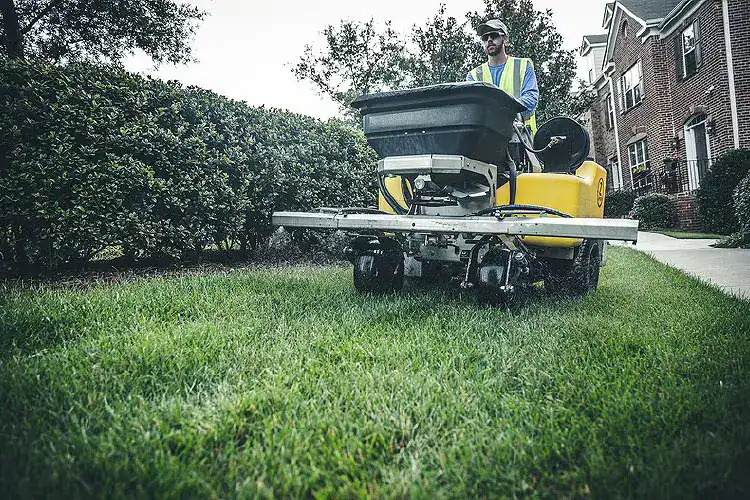
What we apply for kyllinga control in Patchogue lawns is halosulfuron-methyl or sulfentrazone professional-grade herbicides that require a NYSDEC Category 3a license to purchase and use commercially. These are not available at retail. They’re not a stronger version of what’s on a hardware store shelf. They’re a different category of product entirely, and they’re the reason a professional program produces results that DIY attempts don’t.
Every application we make is in compliance with Suffolk County Local Law 41-2007, which establishes pesticide-free buffer zones around public drinking water supply wells. Given that Patchogue sits above the Long Island sole-source aquifer and given the proximity to Great South Bay, Patchogue Lake, and the Patchogue River environmental compliance here isn’t a formality. It’s a real consideration that gets factored into every job we do.
The program is built around your lawn’s specific infestation level, lot conditions, and drainage situation. Homes near the water or in low-lying areas of North Patchogue may require a more aggressive initial schedule than properties on better-draining ground. After treatment, the restoration phase overseeding, soil support, and cultural recommendations is included in the program because eliminating kyllinga without recovering the turf just leaves you with a different problem. Our goal is a healthy, dense lawn that resists reinfestation, not just a dead patch where kyllinga used to be.

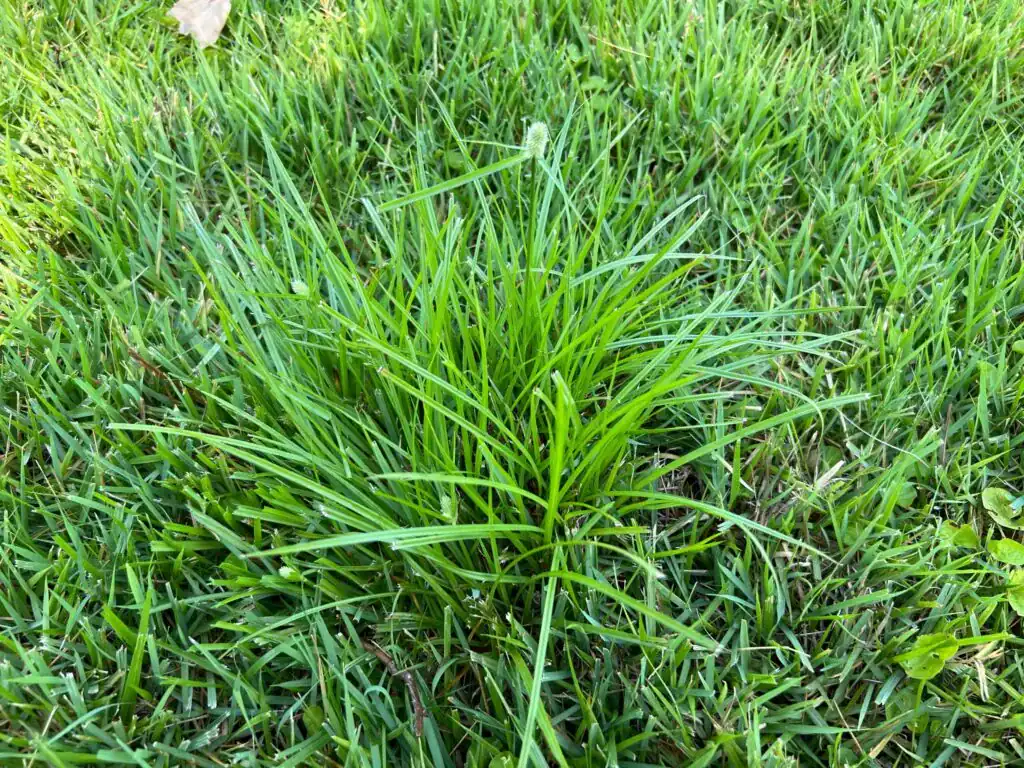
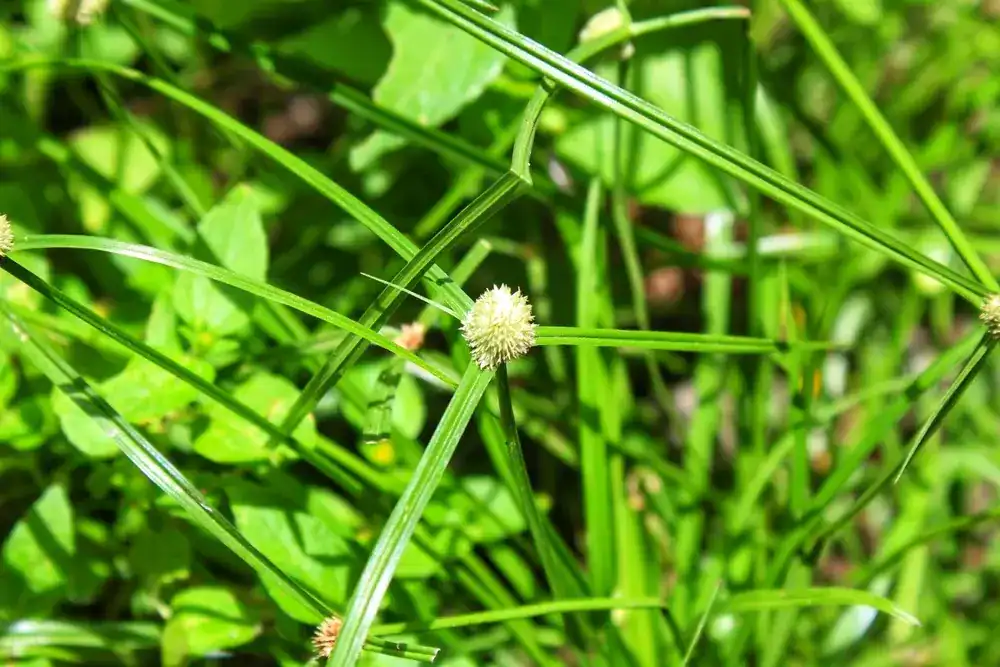
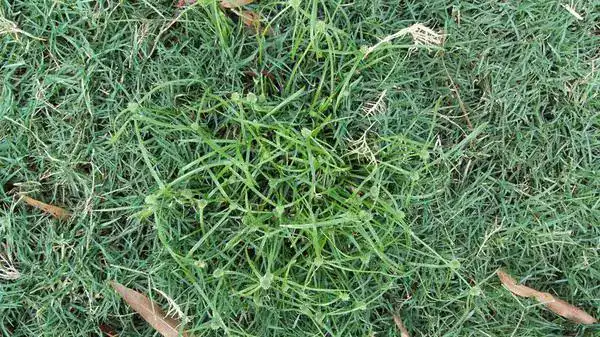
They look similar at a glance both are sedges, both grow faster than your turf in summer, and both stay greener during dry stretches when cool-season grass slows down. But they’re different plants. Kyllinga typically has a shorter, denser growth habit and produces a small, round or oval seed head at the tip of the stem. Nutsedge grows taller and produces a more branched, star-shaped seed head. The triangular stem is common to both, which is why the old “sedges have edges” identification tip applies to each.
The distinction matters for treatment. While there’s overlap in the herbicides that address both, the timing, rate, and program structure can vary depending on which species or which combination of species is present in your lawn. In Patchogue, where the moist, low-lying conditions near the bay and the canal system favor both sedge types, getting the identification right before the first application is the step that determines whether the program works or just produces partial results.
Because kyllinga survives a single treatment through its rhizome network an underground system of root stems that a one-time application damages but doesn’t fully eliminate. The visible plant above ground may die back, but the rhizomes below the surface survive and push new growth the following season. That’s the most common reason homeowners treat kyllinga in July and assume it’s gone, only to find it back in the same spots or larger spots the next summer.
There’s also the seed bank to consider. A single kyllinga plant can produce roughly 5,000 seeds per year, and those seeds remain viable in the soil for multiple seasons. Even if you eliminated every living plant, the seeds already in your soil are waiting for the right conditions to germinate. In Patchogue’s low-lying, moisture-retaining areas near the bay and waterways, those conditions are present every growing season. A program that accounts for both the rhizome network and the seed bank with properly spaced follow-up applications is the only approach that produces lasting results.
The herbicides with documented efficacy against kyllinga are halosulfuron-methyl (sold under the trade name Sedgehammer) and sulfentrazone (sold under the trade name Dismiss). Both are effective when applied correctly, during the plant’s active growing window, and in a properly sequenced multi-application program.
You cannot buy professional-grade formulations of these products at any hardware store or home improvement center in Patchogue or anywhere in New York. Purchasing and applying them commercially requires a New York State DEC Commercial Pesticide Applicator License, Category 3a. There are consumer-grade products with similar active ingredients available at retail, but they’re formulated at lower concentrations and without the adjuvants and carrier systems that make professional applications effective. That’s the structural reason why store-bought treatments produce disappointing results on kyllinga it’s not a matter of applying more product or trying harder. The product category itself is the limiting factor.
Yes, and in Patchogue specifically, the risk is higher than in most inland Suffolk County towns. Kyllinga spreads through both rhizomes underground root stems that expand laterally from an established plant and seeds, which are light enough to travel by wind, foot traffic, mowing equipment, and water movement. That last one is particularly relevant in Patchogue.
The canal system, the streets that sit close to Great South Bay, and the low-lying areas near Patchogue Lake and the Patchogue River experience periodic flooding and water movement during nor’easters and coastal storm events. Kyllinga seeds can travel with that water from one property to another, which is why you’ll sometimes see infestations appear in yards that had no visible kyllinga the previous season. If your neighbor has an untreated infestation and your lawn is in a low-lying area with similar moisture conditions, you’re in a higher-risk situation. Treating your own lawn promptly and maintaining dense, healthy turf after treatment is the most effective defense against seeds arriving from outside your property.
For a moderate to established infestation, a minimum of two to three applications is the standard each one spaced four to six weeks apart during the active growing window, which runs from late May through late August on Long Island. The first application damages the visible plant and begins working on the root system. The follow-up applications target regrowth from surviving rhizomes and any new seedlings that have germinated since the first treatment.
In Patchogue, where south shore soils warm faster in spring than inland areas, the first-application window can open slightly earlier than it does in towns like Hauppauge or Commack. Timing the first application correctly when kyllinga is actively growing and metabolically primed to absorb the herbicide is one of the factors that determines how much work the follow-up applications have to do. A well-timed first application reduces the burden on subsequent ones. The total number of applications in any given season depends on infestation severity, lawn size, and how the plant responds after the first treatment, which we assess before each follow-up visit.
Kyllinga shows up across Long Island, but south shore communities like Patchogue face consistently higher pressure than inland or north shore towns. The reason is straightforward: kyllinga is a moisture-loving sedge that thrives in warm, wet, poorly drained soil. The conditions along the south shore low-lying lots near Great South Bay, clay-influenced soil that holds water after heavy rain, high water tables in areas near the canal system and Patchogue Lake, and the periodic flooding that comes with coastal nor’easters are exactly what kyllinga is built for.
Penn State Extension and Rutgers have both documented kyllinga’s northward expansion into the Northeast over the past decade, and Long Island’s south shore sits directly in that expansion corridor. Patchogue’s position on the bay, combined with its mix of sandy and moisture-retaining soils, makes it one of the more active kyllinga markets in Suffolk County. That doesn’t mean every lawn in Patchogue has it but if you have low spots, drainage issues, or areas that stay wet longer than the rest of your yard, those are the areas to watch first.
Useful Links
Other Services we provide in Patchogue