
Hear from Our Customers
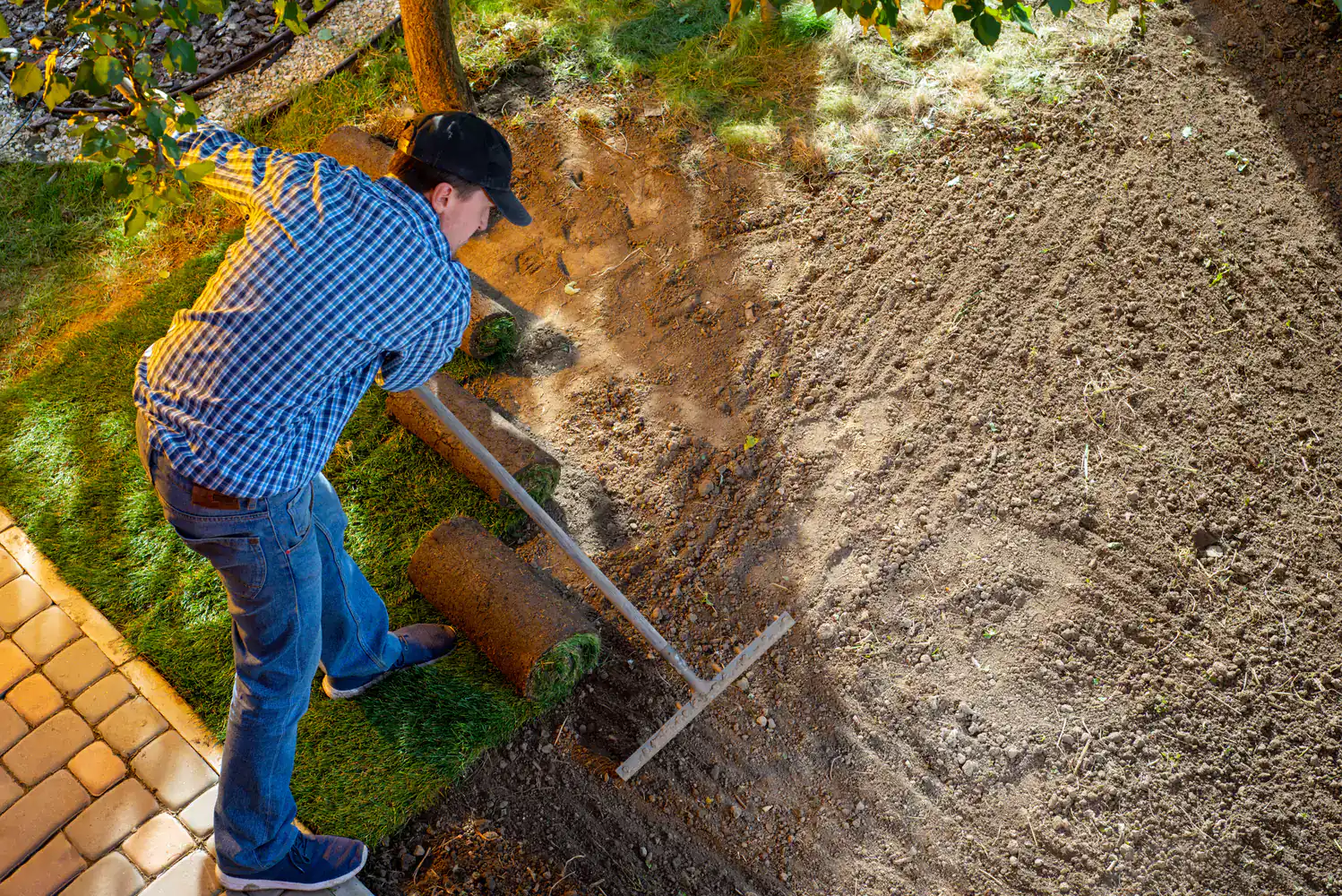
A real lawn renovation doesn’t just fill in the bare spots it changes what’s happening underneath them. When the soil is prepared correctly, the pH is balanced, and the right grass varieties go down, you end up with turf that can actually survive a Patchogue summer instead of burning out by August.
The sandy loamy soils throughout Patchogue compound the nutrient problem significantly. Nutrients leach through quickly, so what you apply in spring is largely gone before the heat of July arrives. A complete lawn rebuild addresses both the salt stress and the soil composition at the foundation level not with a bag of seed and some fertilizer, but with real soil preparation that gives grass a fighting chance in conditions that would otherwise keep winning.
Most homeowners in the Patchogue area don’t realize how much the Great South Bay influences their lawn’s health. That salt air isn’t just a nuisance it’s an ongoing stressor that requires a different approach to turf management than inland properties need. We account for that from the start.
We’ve been doing this in Patchogue and throughout Suffolk County since 1994. Not as a franchise following a national program, but as a locally operated company that has spent three decades working the specific soils, seasonal patterns, and turf challenges that come with the South Shore.
The sandy loamy soils in Patchogue, the salt stress from the Great South Bay, the crabgrass pressure along Montauk Highway, the moss creeping into shaded village corners none of that is new to us. We’ve seen it on hundreds of properties across this area, and we know what actually fixes it versus what just delays the problem for another season.
When you call us, you’re not getting a customer service rep reading from a script. You’re getting a company that has been accountable to the Patchogue community for over 30 years and whose reputation depends entirely on whether your lawn actually comes back.
Every renovation we do starts with an honest assessment of what you’re actually dealing with. That means looking at soil condition, pH levels, weed pressure, and the specific damage pattern because a lawn in East Patchogue with sandy soil and thin coverage needs a different approach than one in the village with moss in the corners and crabgrass coming up through the cracks.
Once we understand what’s going on, we eliminate the existing problem weeds, dead turf, invasive species like nutsedge or bentgrass before anything else happens. Seeding into a lawn that still has active weed pressure is one of the most common reasons renovations fail. We don’t skip this step.
From there, we prepare the soil properly, correct the pH if needed, and power seed with grass varieties that are appropriate for Long Island’s coastal climate. Timing matters here too. The fall window roughly late August through October is when soil temperatures on the South Shore are ideal for cool-season grass establishment, weed pressure drops off naturally, and rainfall patterns support germination. We plan around that window, not around what’s convenient. After seeding, we walk you through what to expect during establishment so there are no surprises.

Ready to get started?
We offer complete lawn renovation services not the scaled-back version where someone aerates, throws down seed, and calls it a renovation. What we do includes weed and invasive species elimination, soil assessment and pH correction, full soil preparation, professional-grade power seeding with climate-appropriate grass varieties, and follow-up guidance through the establishment period. For properties with severe damage or complete turf loss, we also offer full new lawn installation from bare soil.
We specifically handle nutgrass and bentgrass control as part of the renovation process two of the most stubborn turf invasions in Suffolk County that most companies either ignore or can’t effectively treat. If those are part of your problem, they get addressed before anything else goes down.
All pesticide applications are performed by NYSDEC-licensed applicators, and we operate in full compliance with Suffolk County Local Law 41-2007, which governs pesticide application near drinking water wells throughout the county. For Patchogue homeowners near the Great South Bay corridor, that compliance isn’t a formality it matters. Renovation costs in this area typically run $0.75 to $4.00 per square foot depending on the scope, which puts a standard 5,000 to 10,000 square foot property in the $7,500 to $22,500 range. That’s a real number, and it’s worth knowing before you call.
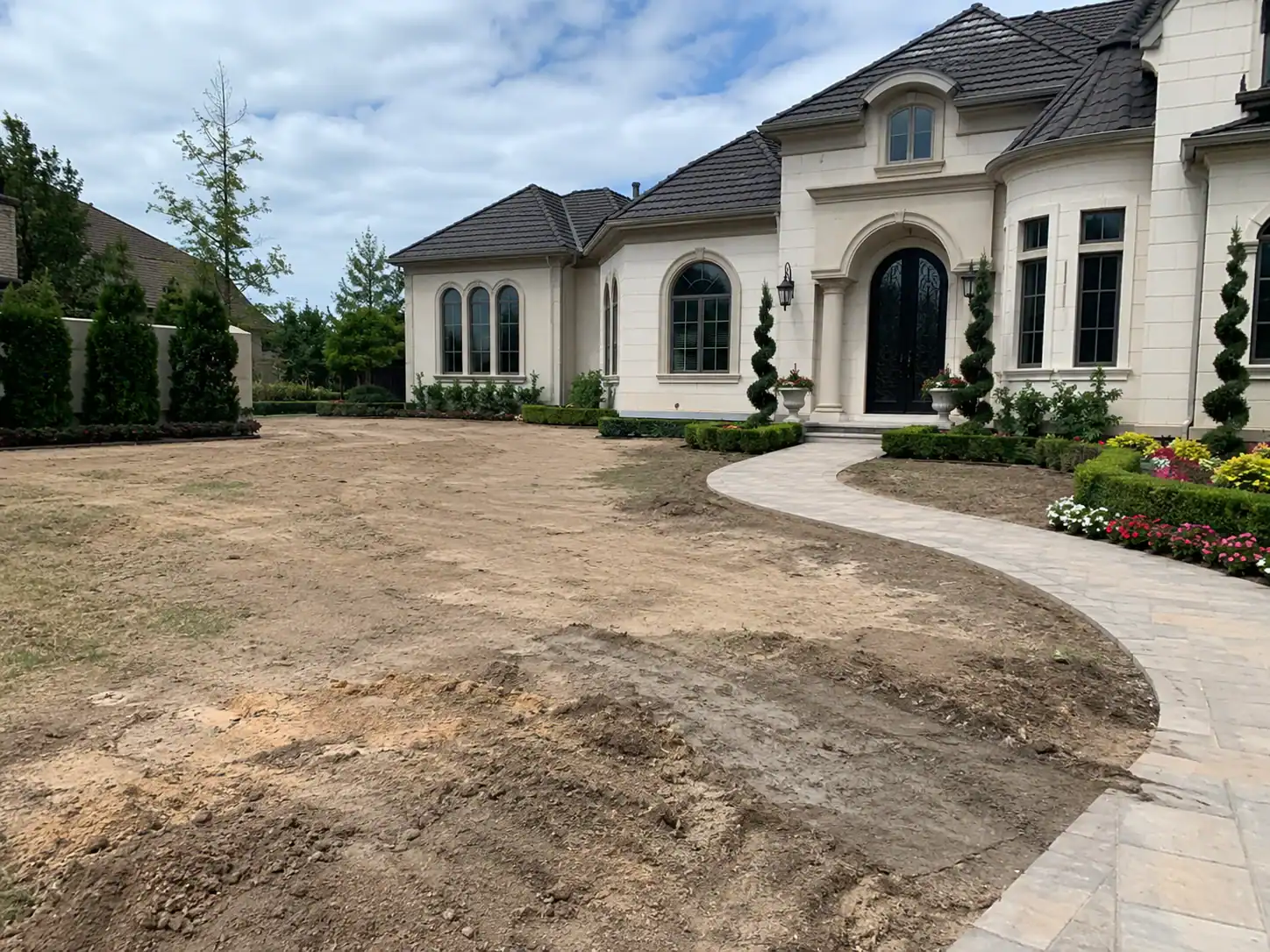
The most likely answer is that the problem isn’t how much you’re watering or fertilizing it’s that your soil isn’t holding onto what you’re putting into it. The dominant soil type throughout Patchogue is Haven Loam, which has a sandy composition that drains quickly and leaches nutrients before your grass roots can fully absorb them. You can fertilize in April and have almost nothing left in the soil by late June.
On top of that, if your property is anywhere near the Great South Bay or Patchogue Bay, salt air is actively stressing your turf in ways that aren’t visible until the damage is already done. Salt deposits on grass blades pull moisture out of the plant, and salt accumulation in the soil disrupts how nutrients are absorbed at the root level. Fertilizing and watering a lawn with compromised soil chemistry is like refilling a bucket with a hole in it. A proper lawn renovation addresses the soil itself not just what you put on top of it.
Overseeding is when you spread seed over an existing lawn typically after aeration to thicken up turf that’s already reasonably healthy but a little thin. It works well when the underlying grass is still viable and the soil is in decent condition. Lawn renovation is a different process entirely. It’s for lawns where the existing turf is too far gone, too weed-dominated, or too damaged to recover through overseeding alone.
If your lawn has significant bare patches, heavy weed coverage, invasive species like nutsedge or crabgrass, or has thinned out to the point where more weeds than grass are growing, overseeding into that situation will almost always fail. The weeds outcompete new seedlings, and the underlying soil problems that caused the decline in the first place are never addressed. A complete lawn renovation eliminates what’s there, prepares the soil correctly, and starts fresh which is the only approach that actually holds in the long run for a lawn in the condition you’re describing.
Fall is the best window specifically late August through October. During this period, soil temperatures on Long Island’s South Shore are in the 50 to 65 degree range that cool-season grasses need for strong germination. Crabgrass and other annual weeds are dying off naturally, which means less competition for new seedlings. Rainfall patterns during this period also tend to support establishment better than the dry heat of midsummer.
Patchogue’s coastal position actually extends this window slightly compared to inland communities, because temperatures moderate more gradually near the water. That’s a small advantage, but it’s real. Spring is a secondary option for targeted repairs and smaller bare areas, but full renovations in spring come with a tradeoff you can’t use crabgrass pre-emergent if you’re seeding, which means you’re starting the season without weed protection. If your lawn needs a complete rebuild, fall is the right time to do it, and booking early gives you the best scheduling options before the window fills up.
For most residential properties in the Patchogue area, a complete lawn renovation runs between $0.75 and $4.00 per square foot depending on the scope of work involved. A standard 5,000 to 10,000 square foot lawn typically falls in the $7,500 to $22,500 range. The variation in price comes down to what condition the lawn is in, what weed or invasive species control is needed before seeding, whether soil amendment is required, and the overall size and complexity of the property.
It’s worth framing this in context: Patchogue home values have climbed significantly, with median prices in the $535,000 to $587,000 range. A lawn renovation at that investment level is not a large percentage of your property’s value but a neglected, weed-covered lawn does have a measurable impact on curb appeal and what comparable properties look like in your neighborhood. The cost of doing it right once is almost always less than the cumulative cost of repeated failed fixes over several seasons.
Moss is fixable, but only if you treat it as a soil signal rather than just a surface problem. Moss doesn’t grow because you have shade it grows because the soil conditions in shaded areas have become hostile to grass. That usually means some combination of low pH, compaction, poor drainage, or nutrient depletion. In Patchogue’s sandy, potentially acidic soils, these conditions develop gradually and go unnoticed until moss has already established itself in the corners and edges of the yard.
Overseeding a moss-infested area without correcting the underlying soil conditions is a waste of time and money. The new grass won’t compete effectively, and the moss will return. A proper renovation approach for moss-affected areas includes soil testing, pH correction with lime if needed, aeration to relieve compaction, and seeding with shade-tolerant grass varieties that are actually suited to those conditions. When the soil is right, grass can hold its own even in lower-light areas and moss stops winning.
Both are handled as part of our renovation process and honestly, skipping this step is one of the main reasons lawn renovations fail. Crabgrass is a well-documented problem throughout Patchogue, particularly in thin, stressed turf along high-traffic corridors. It thrives exactly where lawns are already struggling, and if it’s not eliminated before seeding, it will crowd out new grass seedlings before they ever have a chance to establish.
Nutsedge commonly called nutgrass is a different challenge entirely. It’s not a grass, it’s a sedge, and it doesn’t respond to standard broadleaf herbicides. Most lawn care companies either don’t treat it specifically or apply the wrong product and see minimal results. We offer targeted nutgrass control as a distinct part of the renovation process. Both the crabgrass elimination and the nutsedge treatment happen before any seed goes down, because putting new grass into soil that still has active weed pressure is the fastest way to end up back where you started.
Useful Links
Other Services we provide in Patchogue