
Hear from Our Customers
If you’ve been fertilizing your Patchogue lawn for a couple of seasons and it still looks thin, patchy, or just flat-out tired the fertilizer isn’t the problem. The ground is. Sandy and loamy soils throughout Patchogue and East Patchogue develop a compacted surface layer combined with a thatch mat that acts like a lid. Water beads off. Nutrients sit on top. Roots stay shallow. You keep spending money on a lawn that can’t absorb what you’re giving it.
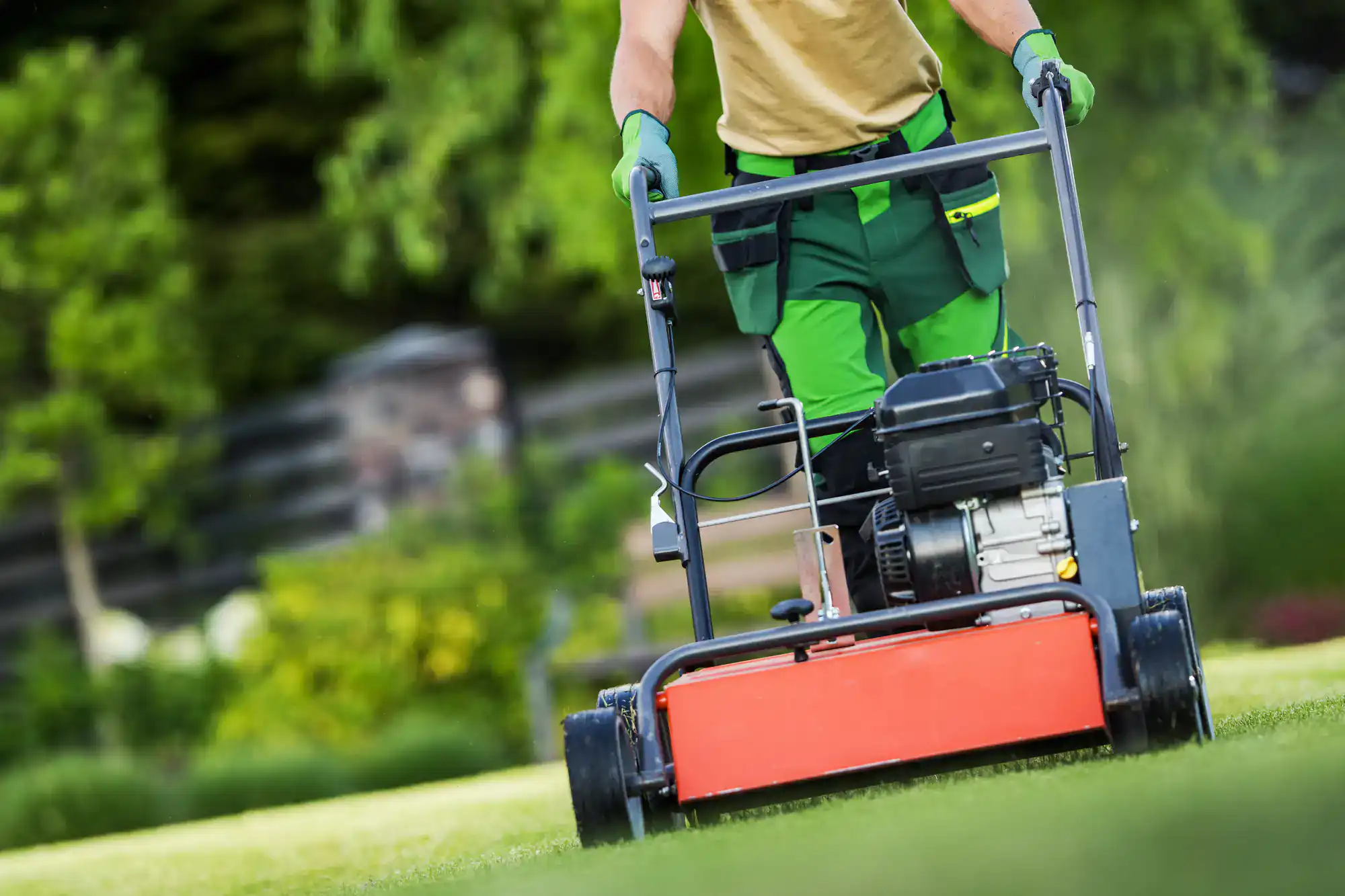
Core aeration removes that lid. A machine pulls out small plugs of soil typically every few inches across the entire lawn and those holes create direct pathways for water, air, and fertilizer to reach the root zone. Fertilizer uptake efficiency increases 30 to 40 percent after a proper aeration. That’s the difference between a program that works and one that just costs money.
For Patchogue specifically, there’s another layer to this. Salt air off the Great South Bay weakens grass year-round, keeping root systems shallow and turf less resilient. Elevated coastal humidity promotes fungal diseases dollar spot, brown patch, red thread that thrive in dense, poorly aerated turf. Aeration improves air circulation at the soil level, which directly reduces the moisture buildup in the thatch layer where those pathogens breed. If your lawn struggles every summer and never fully recovers in fall, compaction and poor airflow are almost always part of the reason.
Lawn Master is a locally owned, full-service lawn care company based in Suffolk County. No franchises, no national call centers, no subcontractors who’ve never seen your neighborhood. The people doing the work know Patchogue and the South Shore and we know the difference between the sandy coastal soils near the Great South Bay and the heavier inland soils up near Medford or Coram.
That distinction matters. Patchogue lawns don’t behave like lawns in Smithtown or Hauppauge. The soil profile is different, the salt air exposure is different, and the thatch and compaction patterns that develop here require equipment and timing calibrated to this environment not a generic regional template.
We hold a New York State DEC Pesticide Applicator License, which is a legally required credential for any commercial applicator in New York. In a bay community like Patchogue, where fertilizer runoff and water quality near the Great South Bay are real concerns, that license means trained applicators who know the rules and follow them not just a sticker on a truck.
Most lawn aeration services on Long Island use drum-style or tow-behind aerators the same machines available for rent at local hardware stores. On recently worked or softer soil, they do a passable job. On the compacted, sandy-loam soils common throughout Patchogue, North Patchogue, and East Patchogue, they barely break the surface. Standard equipment typically penetrates 1.5 to 2 inches. That’s not deep enough to reach the actual compaction layer in south shore soils.
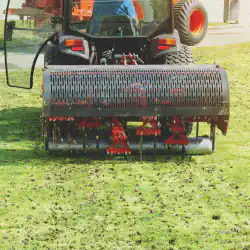
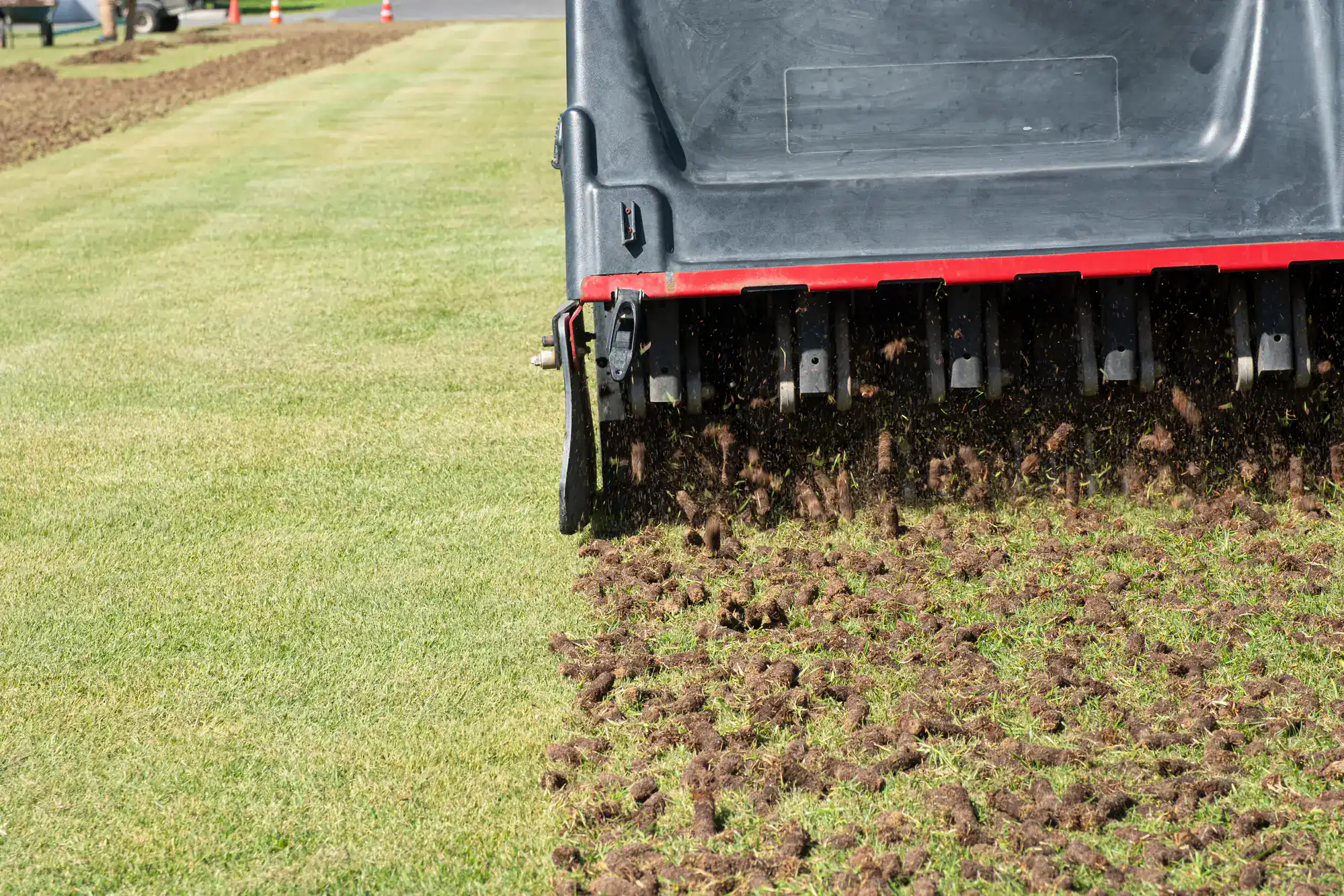
We use a hydraulic aerator. It’s a commercial-grade machine that drives tines 3 to 4 inches deep, adjusting pressure dynamically based on soil resistance. That depth is what actually relieves compaction not just pokes holes in the thatch. If you’ve tried DIY aeration with rental equipment and been underwhelmed, the machine was the problem, not the service.
After aeration, soil cores dark cylindrical plugs about the size of a wine cork will be scattered across your lawn. Leave them. They break down within 2 to 4 weeks, returning organic matter and beneficial microbes back into the surface. If you’re pairing aeration with overseeding, fall is the right window late August through October when soil temperatures are still warm enough for germination and the cool air gives new grass the best possible start. For Patchogue’s cool-season grasses like tall fescue and Kentucky bluegrass, that timing isn’t a suggestion. It’s the window.
Ready to get started?
Core aeration is the foundation, but it works best as part of a sequence. After the hydraulic aerator opens the soil, overseeding directly into those holes gives grass seed the direct soil contact it needs to germinate. On the sandy, thatch-covered ground common in East Patchogue and throughout the village, seed scattered on an un-aerated surface has almost no chance. Germination rates following core aeration run 30 to 50 percent higher than seeding on compacted ground. That’s why lawns that have been overseeded for years without improvement finally start filling in once aeration is part of the plan.
Our aeration program pairs naturally with fertilization. If your lawn is already on a fertilization schedule, aeration is what makes that investment pay off. Compacted soil blocks nutrients before they ever reach the root zone. Aeration removes that barrier. The fertilizer you’ve already been applying starts doing what it was supposed to do.
For properties near the bay or along low-lying streets in Patchogue, there’s an added benefit worth knowing: a properly aerated lawn absorbs water instead of shedding it. That means less runoff toward storm drains and less nitrogen and phosphorus making its way into the Great South Bay something Patchogue residents who care about water quality will recognize as more than just a lawn care outcome. All applications are handled by NYS-licensed applicators, compliant with New York’s fertilizer restrictions near waterways.
Yes and it’s one of the most important things you can do for a south shore lawn specifically. Sandy and loamy soils like those throughout Patchogue and East Patchogue don’t compact the same way heavy clay does, but they develop a different problem: a surface compaction layer combined with a thatch mat that acts as a water-repellent barrier. Rain and irrigation water bead off the surface instead of penetrating to the root zone. Fertilizer does the same.
Core aeration physically removes plugs of soil from that compacted layer, creating direct openings for water, air, and nutrients to reach the roots. The hydraulic equipment we use drives tines 3 to 4 inches deep which matters on sandy coastal soils where the compaction zone sits lower than standard rental equipment can reach. If your lawn has been underperforming despite regular care, the sandy soil isn’t the problem. The compaction sitting on top of it is.
For most Patchogue lawns, fall is the right window late August through October. The cool-season grasses that dominate lawns along the South Shore, including tall fescue, Kentucky bluegrass, and perennial ryegrass, respond best to aeration and overseeding when soil temperatures are still warm from summer but air temperatures have cooled down. That combination gives new seed the best germination conditions and gives your existing grass time to recover before winter.
Patchogue’s position on the Great South Bay means the bay influence keeps fall temperatures slightly moderated compared to inland Suffolk County communities which can extend the effective seeding window a bit. But the window still closes. Once soil temperatures drop too low, new seed won’t establish properly and you’re waiting another year. Spring aeration is a secondary option for severely compacted properties, but fall is where you’ll see the best results from a full aeration and overseeding program.
This is the most common frustration we hear from homeowners on the South Shore, and the answer is almost always the same: the fertilizer never reached the root zone. Compacted soil with a thatch layer on top acts as a physical barrier. Nutrients sit on the surface, wash off with the next rain, and never do the job you paid for. You can have a solid fertilization program and still end up with a thin, patchy lawn if the soil underneath is blocking everything from getting through.
Core aeration is the mechanical fix that changes this. Once the soil is opened up, fertilizer uptake efficiency increases by 30 to 40 percent. The program you already have starts working the way it was designed to. For homeowners in East Patchogue especially where sandy soils are well-documented for producing nutrient-challenged, thin turf aeration isn’t an add-on to your lawn care routine. It’s what makes the rest of it worth doing.
Core aeration removes a plug of soil from the ground, creating a genuine opening in the compaction layer. Spike aeration pushes a solid tine into the soil without removing anything it just displaces the soil sideways. On Patchogue’s sandy and loamy coastal soils, that displacement actually increases compaction around each hole rather than relieving it. You end up with a lawn full of small punctures surrounded by denser soil than you started with.
Core aeration is the only mechanical method that actually decompresses the soil. The plugs left on the surface after the job are the proof that’s real soil removed from the compaction zone, not just pushed aside. If a company is offering spike aeration as a cheaper alternative on Long Island’s south shore soils, it’s not a deal. It’s a service that works against the goal you’re trying to accomplish.
Overseed immediately after aeration don’t wait. The open holes created by the aerator are the best seedbed your lawn will ever have. Grass seed needs direct contact with soil to germinate, and those holes provide exactly that. On the thatch-covered, compacted ground typical of Patchogue lawns, seed scattered without aeration sits on top of the thatch layer and either washes away or fails to make soil contact at all. That’s why overseeding without aerating first almost never produces the results homeowners are hoping for.
When you time it right late August through October for the South Shore’s cool-season grasses you get warm soil temperatures for germination, cooling air to reduce stress on new growth, and a full fall growing season ahead. Germination rates in aerated ground run 30 to 50 percent higher than in un-aerated soil. If you’ve thrown seed at your lawn before and watched it go nowhere, the missing step was almost certainly aeration first.
If you’re seeing water pool on your lawn or stream toward the street after a rain, the instinct is to blame drainage. In most Patchogue yards, the real cause is compaction. The surface soil is dense enough that it can’t absorb water at a normal rate compaction can reduce water infiltration by up to 50 percent. So the water has nowhere to go except across the surface and into the storm drain.
For properties near the village waterfront or along low-lying streets close to the Great South Bay, that runoff carries whatever’s on your lawn nitrogen, phosphorus, any applied fertilizer directly toward the bay. Patchogue residents who follow the Shorefront Park living shoreline work and the ongoing bay water quality conversation understand why that matters. A properly aerated lawn absorbs water instead of shedding it, which is better for your grass and better for the bay.
Useful Links
Other Services we provide in Patchogue