
Hear from Our Customers
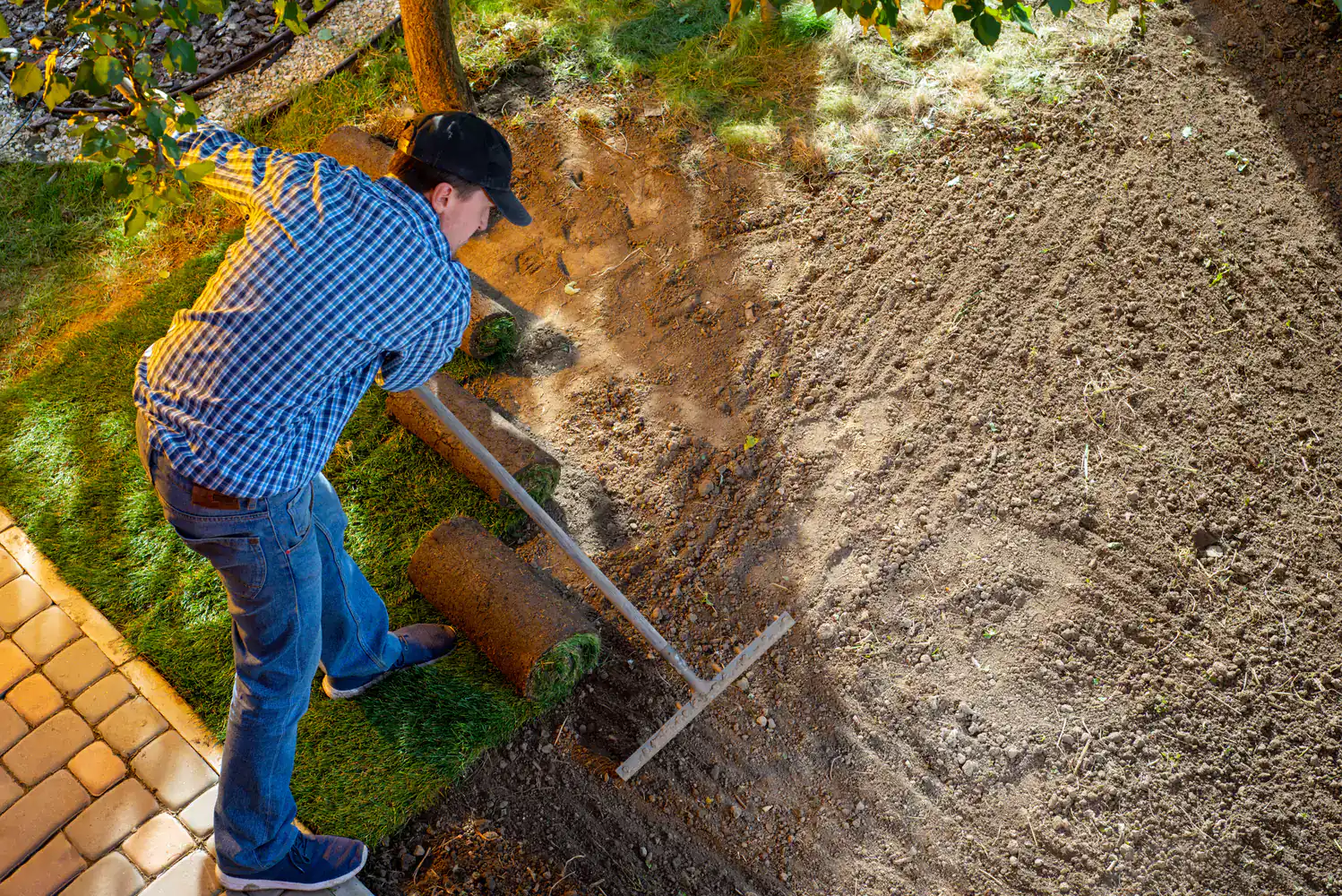
Kings Park sits on North Shore glacial moraine soil heavier, slower to warm in spring, and more prone to compaction than what you’d find on the South Shore. That matters because compacted soil is one of the biggest reasons lawns in this area decline and never fully recover, no matter how much seed or fertilizer gets thrown at them. When the ground can’t breathe, roots can’t grow. And when roots can’t grow, nothing holds.
A lot of homes in Kings Park were built in the 1960s and 70s. That means the lawn has been through decades of foot traffic, drought summers, and probably a grub cycle or two that nobody caught until the damage was already done. Japanese beetle larvae feed on roots from below and by the time you see the brown patches, the root system is already gone. You can’t overseed your way out of that. The soil has to be addressed first.
Once a real renovation is done aeration, weed elimination, power seeding with the right grass variety for your specific conditions, starter fertilizer the difference is visible within weeks. You get a lawn that fills in evenly, holds through summer, and doesn’t hand you the same problem again next fall. That’s what this is supposed to look like.
Matt Shaker has been doing lawn work on Long Island since 1994. That’s not a marketing number it means he’s been through enough Long Island summers, enough grub cycles, and enough North Shore soil conditions to know exactly what works here and what doesn’t. He holds NYSDEC Commercial Applicator certification, which matters especially in Kings Park given the proximity to the Nissequogue River watershed and Suffolk County’s pesticide regulations near protected waterways.
We operate out of Port Jefferson Station, about 15 minutes east of Kings Park along the North Shore corridor. This isn’t a company dispatching crews from Nassau County or running a franchise call center. We’re a local operator who works in the same soil, the same climate, and the same conditions you’re dealing with in Kings Park and who’s accountable because of it.
The focus here has always been renovation first. Not maintenance dressed up as renovation. Not a fertilizer program with a seeding add-on. A complete rebuild when that’s what the lawn actually needs.
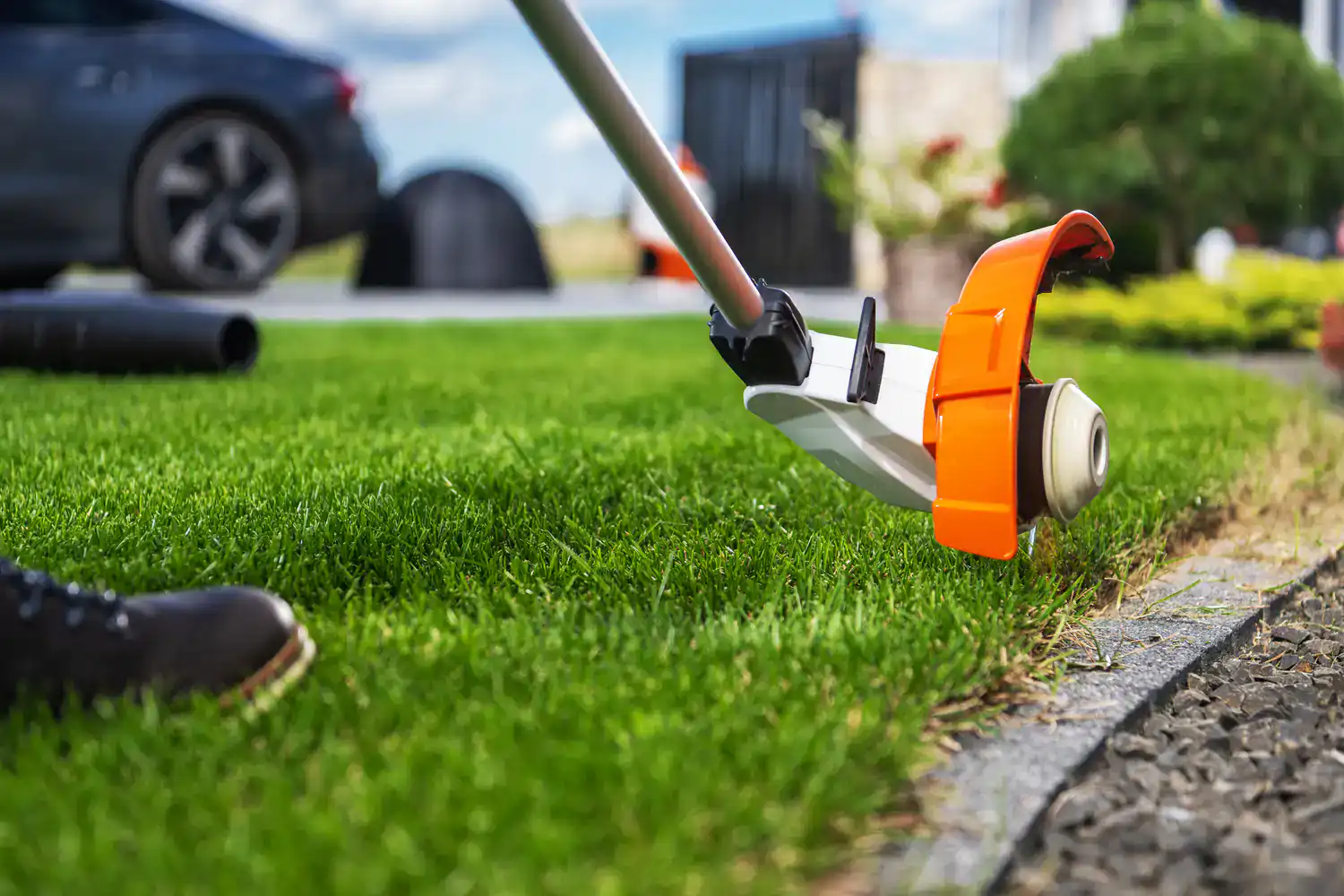
It starts with an honest assessment of what’s actually wrong. Bare patches, thin turf, weed invasion, grub damage each one has a different cause, and the fix depends on understanding which problem you’re actually dealing with. In Kings Park, that often means looking at soil compaction from decades of use, checking for grub activity that may have destroyed the root zone, and identifying any nutsedge or bentgrass that’s moved in and taken over.
From there, the process is soil preparation first. That means aeration to break up compaction, weed control where needed including treatment for nutgrass and bentgrass, which are common in the heavier soils of the North Shore and grading any areas where drainage has become an issue. The soil has to be ready before a single seed goes down.
Then comes power seeding with grass varieties suited to your specific conditions. Properties near the wooded edges of Sunken Meadow State Park or along the Nissequogue River corridor often need shade-tolerant blends. Open, sun-exposed properties closer to the bluffs may need something different. Starter fertilizer goes down with the seed, and from there it’s about timing the fall renovation window in Kings Park runs late August through mid-October, when soil temperatures are right and weed competition is low. That window matters, and it closes faster than most homeowners expect.

Ready to get started?
Our renovation work covers the full scope of what a failing lawn in Kings Park actually needs. That includes soil aeration, targeted weed control (nutsedge and bentgrass control specifically, not just a blanket spray), power seeding with variety selection based on your property’s sun exposure and soil type, and starter fertilization timed to support germination. For lawns with significant grub damage, the process includes root zone assessment and soil preparation before any seeding begins because seeding into damaged soil is how you end up back at square one.
For properties near the Nissequogue River or within the broader watershed area, all pesticide applications follow NYSDEC certification requirements and comply with Suffolk County Local Law 41-2007, which governs pesticide use near public drinking-water wells. That’s not a talking point it’s a legal and environmental baseline that not every company operating in Kings Park can confirm they meet.
New lawn installation is also available for properties where the lawn is too far gone for renovation alone. If the damage is severe enough that a rebuild from scratch is the right call, that capability is here. The same equipment, the same process, and the same expertise that goes into a new installation goes into a complete renovation because at a certain point, the line between the two is just a matter of degree.
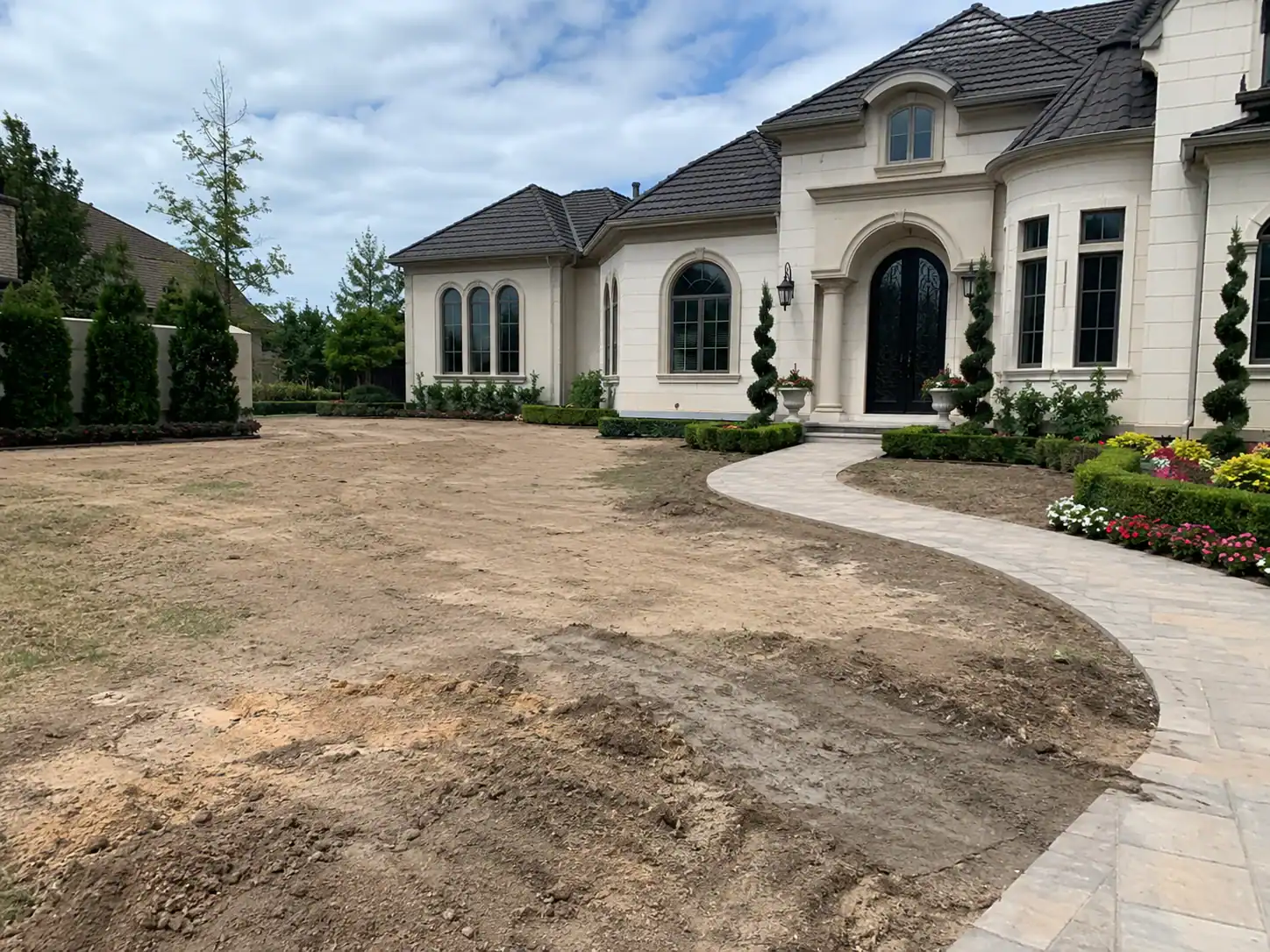
Overseeding means spreading seed over existing turf. It works when the lawn is thinning but the soil underneath is still in decent shape. Renovation is what you do when the soil itself is the problem compaction, weed invasion, grub damage, or years of decline that have left the root zone unable to support new growth. In Kings Park, where a lot of the housing stock dates back 40 to 60 years and the North Shore’s glacial moraine soils compact more readily than sandy South Shore soils, overseeding alone often fails because the seed never gets proper soil contact and the underlying issues stay in place.
A real renovation addresses the soil first. That means aeration, weed control, and in some cases, grading or amendment before seed ever goes down. The result is turf that actually establishes and holds not a temporary green-up that fades by the following summer. If you’ve overseeded before and it didn’t stick, that’s usually the reason why.
Fall is the right window specifically late August through mid-October. Soil temperatures in the 50 to 65°F range are ideal for germinating cool-season grasses like tall fescue and Kentucky bluegrass blends, which are the standard for Long Island lawns. Fall also works in your favor because crabgrass and other summer weeds are dying back, which means less competition for new seedlings trying to establish.
On the North Shore, the glacial moraine soils in Kings Park warm and cool more slowly than the sandy soils on the South Shore, which actually extends the fall window slightly compared to some other parts of Long Island. That said, once soil temperatures drop below 50°F, germination slows significantly and that can happen faster than you’d expect once October arrives. Spring renovation is possible for patching winter damage, but full renovations in spring come with more risk from crabgrass pressure and summer heat stress on young turf. Fall is the window, and it fills up.
Yes, and it needs to be addressed before seeding, not after. Nutsedge what most people call nutgrass is a perennial weed that spreads through underground tubers. It thrives in the heavier, moisture-retaining soils that are common across Kings Park and the broader North Shore glacial moraine. If you try to seed over a lawn with active nutsedge, you’ll get new grass coming in alongside the nutsedge, and within a season or two the nutsedge wins.
The right approach is to treat the nutsedge as part of the pre-renovation weed control phase, before any seed goes down. We specifically offer nutsedge and bentgrass control as part of the renovation process both are common in this area, and both require targeted treatment rather than a standard broadleaf herbicide. Once the weed pressure is under control and the soil is properly prepared, the new turf has a real chance to establish without being immediately outcompeted. Skipping this step is one of the main reasons DIY renovation attempts in this area fall short.
The honest range for a complete lawn renovation on Long Island runs roughly $0.75 to $4.00 per square foot, depending on the scope of work. For a typical Kings Park property with 5,000 to 8,000 square feet of lawn area, that puts a full renovation somewhere in the range of $3,750 to $32,000 with most residential projects landing in the middle of that range based on the level of damage, whether grub remediation is needed, and how much weed control is required before seeding can begin.
What affects cost most is what’s underneath the surface. A lawn that needs aeration, nutsedge treatment, and power seeding is a different job than one that also has significant grub damage, drainage issues, or years of compaction that require more aggressive soil preparation. The assessment at the start of the process is what determines the actual scope. With median home values in Kings Park running over $600,000, most homeowners here understand that a renovation done right is an investment in the property not just a lawn expense.
It can but it requires the right grass variety and realistic expectations about what shade-heavy conditions demand. Properties along the borders of Sunken Meadow State Park and the Nissequogue River State Park corridor deal with significant mature tree canopy, root competition from established woodland trees, and heavy leaf litter in fall that can smother new seedlings if it’s not managed. Standard tall fescue blends handle moderate shade reasonably well, but in areas with dense canopy cover, shade-tolerant variety selection becomes critical.
The renovation process for a wooded or park-adjacent property in Kings Park accounts for these site-specific factors. That means selecting appropriate grass varieties for the light conditions, addressing soil compaction caused by tree root systems, and providing guidance on fall leaf management that protects the new turf during its first season. A lawn near the park edge isn’t impossible to renovate it just needs to be approached differently than an open, sun-exposed lot. Getting the variety selection wrong is one of the most common reasons renovations in shaded areas fail.
Grub-damaged turf can absolutely be renovated but the damage has to be assessed honestly first. Japanese beetle and Oriental beetle grubs are a consistent problem in Kings Park and across Suffolk County. They feed on grass roots from below, and by the time you see irregular brown patches that peel back from the soil, the root zone is already gone in those areas. The turf itself is dead, not dormant. Watering it won’t bring it back.
For moderate grub damage patches scattered across an otherwise functional lawn renovation with aeration, soil preparation, and power seeding is the right call. For severe damage where large sections of the lawn have lost their root system entirely, the line between renovation and new installation gets thin, and sometimes a full rebuild is the more practical and cost-effective path. The key is not assuming the answer before the assessment. What looks like total loss from the surface is sometimes more contained once you get into the soil, and what looks like a few patches is sometimes more widespread. Either way, the process starts with understanding what you’re actually dealing with and that’s where the renovation conversation begins.
Useful Links
Other Services we provide in Kings Park