Hear from Our Customers
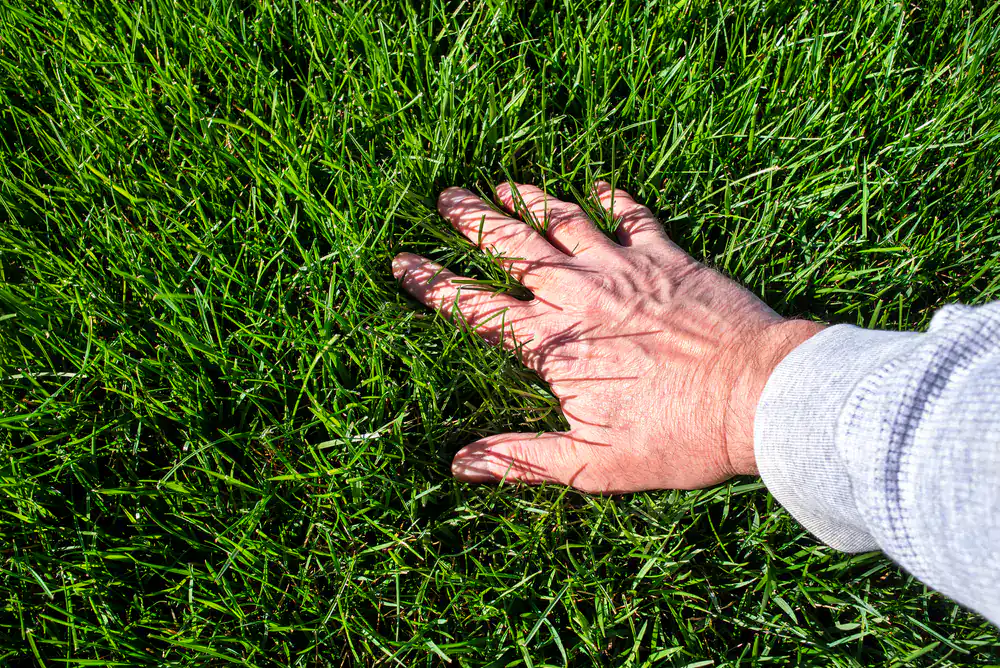
If your lawn has been thin, yellow, or weed-heavy despite regular fertilizing, the problem probably isn’t your fertilizer. It’s your soil. When pH drops below the optimal range which happens naturally in Kings Park’s coastal, sandy soils nutrients like nitrogen and phosphorus become chemically locked up. Your grass can’t access them no matter how much product goes down. That’s not a fertilizer problem. That’s a pH problem.
Kings Park homes are predominantly built on lots from the 1960s and 70s, many of which had topsoil stripped during construction and replaced with fill. After 50 or 60 years of Long Island winters, rainfall, and lawn treatments, those soils have drifted well into acidic territory. The result is a lawn that looks like it’s struggling because it is.
Once pH is corrected and brought into the 6.2–7.0 range that Long Island turf actually needs, the difference is real. Grass fills in thicker. Fertilizer starts doing what it’s supposed to. Weeds and moss which thrive in acidic conditions lose the edge they’ve had over your turf. And every dollar you spend on lawn care going forward actually delivers results, instead of going to waste in soil that can’t support them.
We’re based in Port Jefferson Station about 15 minutes east of Kings Park along Route 25A. That proximity matters. It means our team operates in the same North Shore environment, deals with the same coastal sandy soils, and understands the seasonal rhythms that affect every lawn in this part of Suffolk County.
This isn’t a national chain applying a generic program built for somewhere else. We’re a local Suffolk County operation that approaches every lawn as a system soil first, then everything else. Our program-based model means your lawn gets managed over time, with seasonal reminders and a real person on the other end of the phone when you have questions.
Kings Park is a community where homeowners tend to stay long-term. People who take pride in their properties and expect a service provider to actually know what they’re doing. That’s the standard we hold ourselves to.

It starts with a professional soil test. There’s no reliable way to know your soil’s pH by looking at it, and guessing at lime quantities or skipping the test entirely is how lawns end up worse than they started. A proper soil test tells you the exact pH, what it needs to reach the optimal range, and how much lime or amendment is required for your specific soil profile.
Once the test results are in, we apply lime at the right rate for your lawn’s conditions. In Kings Park, fall is the optimal window for lime application. The freeze-thaw cycle through a North Shore winter physically works the lime into the soil, so by the time spring growth kicks in, the pH correction has already had time to take hold. Homeowners who wait until spring to address a struggling lawn are already a season behind.
After treatment, soil pH should be retested every two to three years. pH doesn’t stay corrected permanently especially in Kings Park’s sandy, fast-draining coastal soils, which are more prone to acidic drift than heavier inland soils. Our program-based approach keeps that cycle on track, so you’re not starting over from scratch every few years without realizing it.
Ready to get started?
Lawn pH treatment in Kings Park, NY isn’t a single product applied once and forgotten. It’s a process that starts with diagnosis and follows through to correction and monitoring. The soil test comes first it identifies your current pH, your soil’s composition, and the specific lime type and quantity needed to bring things into balance. From there, we apply lime professionally and at the right seasonal window for Long Island’s climate.
Kings Park’s proximity to the Long Island Sound and the Nissequogue River watershed adds an environmental dimension that matters here. When soil pH is off and grass can’t absorb the nutrients being applied, that excess fertilizer doesn’t just sit there it leaches into groundwater or runs off toward the waterways that Kings Park residents actually use. Getting pH right isn’t just about a better-looking lawn. It’s about making sure what goes down actually stays in the ground and feeds your grass.
All applications comply with New York State NYSDEC requirements, including neighbor notification protocols that apply throughout Suffolk County. Our technicians are certified applicators not unlicensed operators. And because this is a program-based service, not a one-time transaction, pH is retested on the appropriate cycle so corrections hold and your lawn keeps responding the way it should.
The most common signs are a lawn that stays thin or yellowed despite regular fertilizing, persistent moss or clover moving in, and grass that just won’t seem to thicken up no matter what you do. These aren’t random problems they’re what happens when soil pH has drifted too low and nutrients are getting locked out of the root zone.
In Kings Park specifically, the odds are high that your soil is more acidic than it should be. The coastal, sandy soils along the North Shore naturally trend acidic, and most homes in the area were built on lots where the original topsoil was disturbed during construction decades ago. Without a professional soil test, you’re guessing. A test gives you the actual number and once you know where your pH stands, you know exactly what needs to happen next.
This is one of the most common frustrations among homeowners who’ve been doing everything right on the surface. The issue is that fertilizer can only do its job when soil pH is in the right range. When pH drops below 6.0 which is common in Long Island’s naturally acidic soils nitrogen, phosphorus, and potassium become chemically unavailable to grass roots. The nutrients are technically in the soil, but your grass can’t access them.
Think of it this way: you’ve been spending money on fertilizer that your lawn can’t use. Correcting the pH doesn’t just improve things going forward it unlocks the benefit of everything you’ve already been applying. For Kings Park homeowners who’ve invested years into lawn care with underwhelming results, a professional soil pH test is often the first real answer they’ve gotten.
Fall is the professional standard for lime application on Long Island, and it’s the right window for Kings Park lawns specifically. When lime is applied in late summer through October, the freeze-thaw cycle of a North Shore winter does the work of integrating it into the soil. By the time your lawn comes out of dormancy in spring, the pH correction has already had time to take effect.
Applying lime in spring isn’t wrong, but it means you’re a full season behind. Your grass is already trying to grow, and the soil chemistry still hasn’t been addressed. Summer applications are generally not recommended lime shouldn’t go down when turf is stressed or dormant from heat. If you’re noticing problems with your lawn right now, the smartest move is to get a soil test done and schedule fall treatment before that window closes.
You can, but there are real risks to doing it without a soil test first. The biggest one is over-application. Adding too much lime pushes your soil alkaline, which creates a different set of nutrient lockout problems and alkaline soil is harder to correct than acidic soil. Consumer-grade pH test kits also don’t tell you how much lime is needed to reach the target range, which means you’re still guessing at the dose even if the test gives you a rough pH reading.
In Kings Park’s sandy coastal soils, where drainage is fast and conditions vary between bluff-area properties, the Main Street corridor, and inland neighborhoods, a one-size approach doesn’t hold up. Professional soil testing accounts for your specific soil composition and calculates the correct lime type and quantity for your actual conditions not a generic estimate. Getting it right the first time is cheaper than correcting an overcorrection.
It’s a fair question, and it’s one that matters more in Kings Park than in a lot of other communities. The Nissequogue River runs directly through Nissequogue River State Park right next to Kings Park and it’s the only major river on Long Island that drains into the Long Island Sound. Nutrient runoff from lawns is a documented contributor to water quality issues in these kinds of ecosystems.
Here’s the connection: when soil pH is off and grass can’t absorb the fertilizer being applied, that excess nitrogen and phosphorus has to go somewhere. It leaches into the groundwater or runs off toward nearby waterways. Correcting your soil pH so that fertilizer is actually absorbed by your grass is one of the most practical things you can do to reduce that runoff. It’s not a trade-off between a healthy lawn and a healthy waterway done right, you get both.
The general standard is every two to three years, but in Kings Park, the sandy, fast-draining coastal soils can drift back toward acidic faster than heavier inland soils. Water moves through sandy soil quickly, which means lime gets displaced more readily and pH correction doesn’t hold as long as it might in a denser soil profile. That’s why monitoring matters not just a one-time fix.
Our program-based model keeps this on schedule. Rather than waiting until your lawn starts showing symptoms again which by that point usually means a full season of reduced performance the program includes reminders to retest at the right interval. It’s a straightforward cycle: test, correct, monitor, repeat. For homeowners in an established community like Kings Park who are in their homes for the long term, that kind of ongoing management is what actually keeps a lawn performing year after year, not just recovering from the last problem.
Useful Links
Other Services we provide in Kings Park