
Hear from Our Customers
Compacted soil is quiet. It doesn’t announce itself it just slowly chokes everything you’ve put into your lawn. Fertilizer sits on the surface and washes off. Water pools instead of soaking in. Grass thins out in patches and never fully recovers no matter how much you water or feed it. Core aeration breaks that cycle by pulling plugs from the soil and opening up channels where air, water, and nutrients can actually reach the root zone.
For Kings Park lawns specifically, this matters more than most homeowners realize. The North Shore’s freeze-thaw cycles running from December through March just off Long Island Sound work the soil tighter every season. Add the foot traffic that comes with active families, kids, dogs, and regular backyard use, and you’ve got compaction building year after year beneath a lawn that looks like it should be doing better than it is.
Once those channels are open, everything else you’re already spending on lawn care starts working harder. Fertilizer reaches the roots. Irrigation penetrates to depth. Overseeding germinates in real contact with soil instead of sitting on a mat of thatch. The results aren’t immediate, but by the following season, the difference in turf density, color, and resilience is visible and it compounds over time with a consistent annual program.
We’ve been working Kings Park lawns since 1987. That’s not a tagline it’s a track record that covers every drought, wet spring, pest cycle, and soil condition this part of Long Island has produced in nearly four decades. We know the difference between what a lawn near Sunken Meadow State Park needs versus one closer to the Commack border, and we know it from experience, not guesswork.
Every job is handled by a licensed pesticide professional not seasonal labor sent out with a machine and a checklist. New York State requires commercial applicators to pass written exams, log verified field experience, and renew their certification every three years. We hold that standard on every visit, which matters most when you’re commuting into the city and no one’s home to supervise the work.
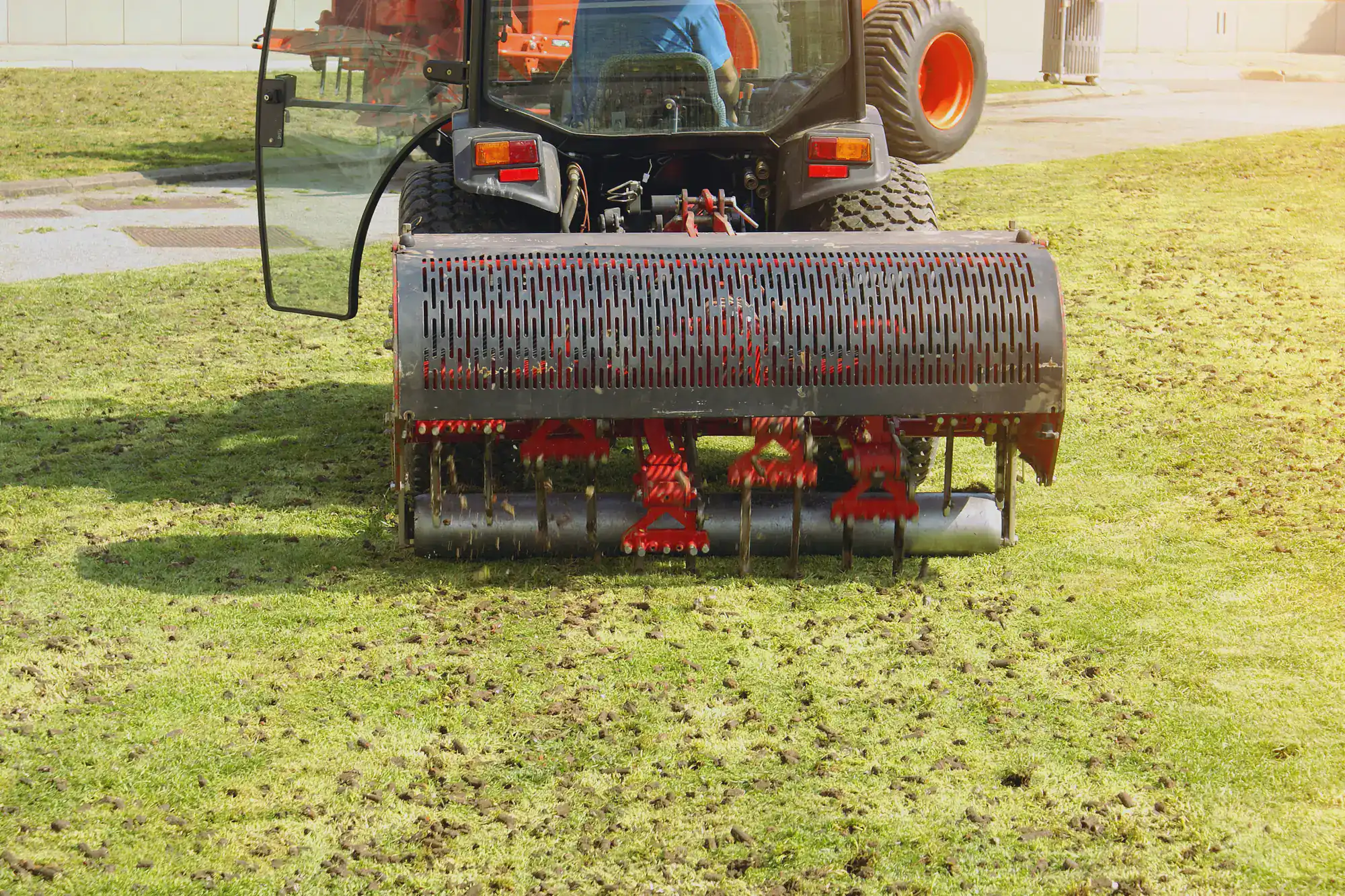
Five fully wrapped trucks, a proprietary fertilizer blend formulated specifically for Long Island soil chemistry, and hydraulic aerators that outperform anything you can rent this is what a real, invested lawn care operation looks like after 37 years in Kings Park.
It starts with a real assessment of your lawn not a glance from the truck. A licensed technician walks the property, evaluates the soil condition, identifies compaction zones, and looks at the grass varieties present. Kings Park lawns are dominated by cool-season grasses like tall fescue, Kentucky bluegrass, and perennial ryegrass. Each one has specific timing needs, and the assessment determines what your lawn actually requires before anything gets scheduled.
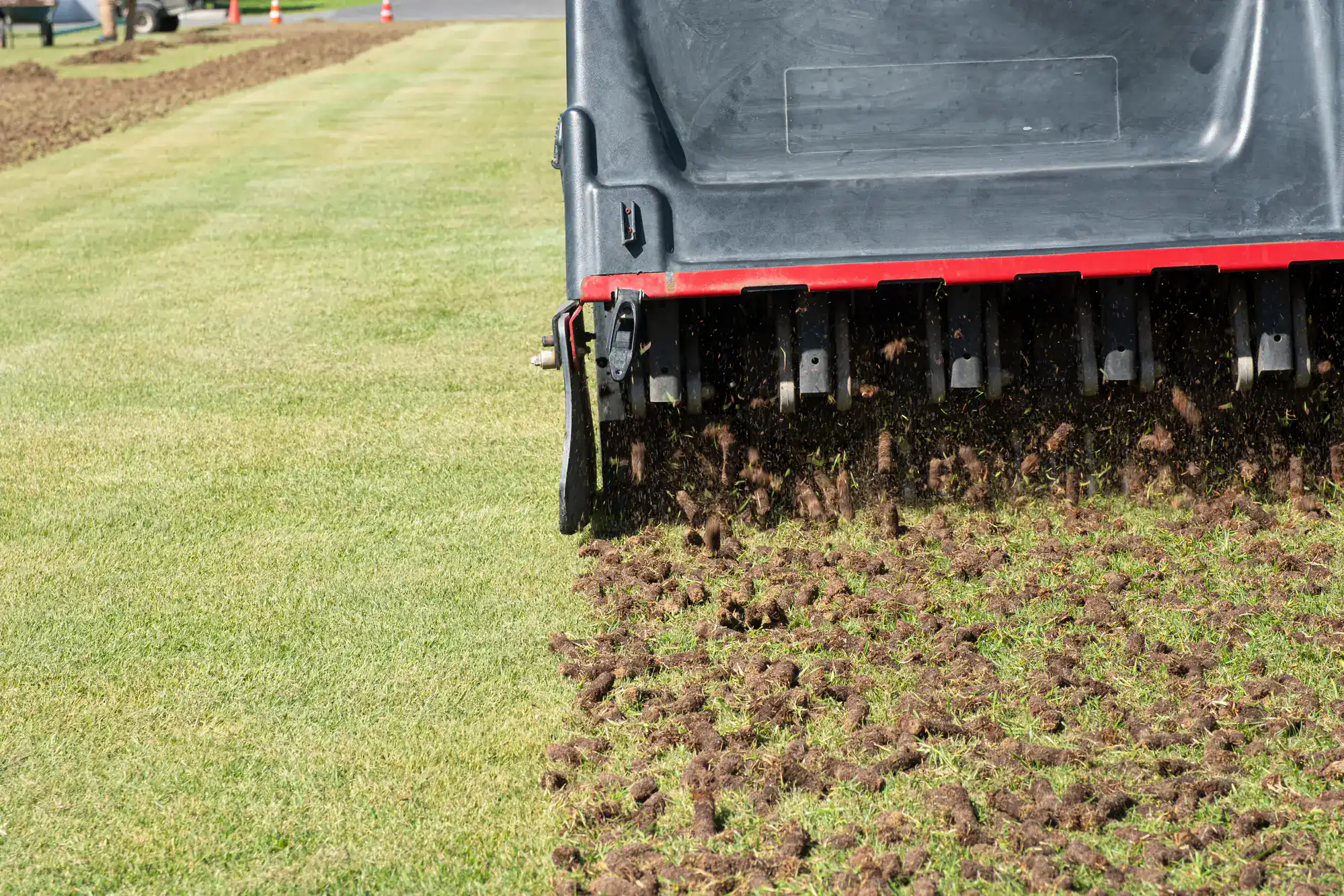
From there, we run hydraulic core aerators across the lawn machines that pull clean, consistent plugs at real depth, even through the heavier, clay-influenced soils found in the inland sections of Kings Park. The cores get left on the surface to break down naturally, returning organic matter to the soil as they decompose. If overseeding is part of the program, it goes down immediately after aeration while the channels are open and seed-to-soil contact is at its best.
Timing is everything here. The optimal window for Kings Park lawns is late August through October soil temperatures are still warm enough for germination, the air is cooling, and the grass is in its most active fall growth phase. Suffolk County’s fertilizer ban kicks in on November 1, so any fall program that includes starter fertilizer has a hard deadline. We plan around that window, and we don’t leave customers scrambling in late October trying to get on a schedule that’s already full.
Ready to get started?
Our aeration programs aren’t pulled from a menu. Each one is built around what a specific lawn in a specific condition actually needs because a property on the northern edge of Kings Park near Callahan’s Beach has different drainage, shade, and soil dynamics than one a mile south toward the Commack line. That distinction matters when you’re deciding between a single aeration pass and a full renovation that includes overseeding and a custom fertilizer application.
The custom-blended fertilizer we use is formulated specifically for our operation developed to match the nutrient demands and soil chemistry of Suffolk County lawns. When you combine that with hydraulic aeration that opens clean channels into the root zone, every dollar of that application is working at full capacity instead of sitting on the surface waiting for rain to move it somewhere useful.
For lawns that need more than maintenance thin turf, bare patches, or soil that’s been compacted for years we also handle full lawn restoration and new lawn installs from seed, using hydraulic seeders that establish real, even coverage. Whether your Kings Park lawn needs an annual tune-up or a ground-up rebuild, the program is built around where it actually is, not where it’s supposed to be.
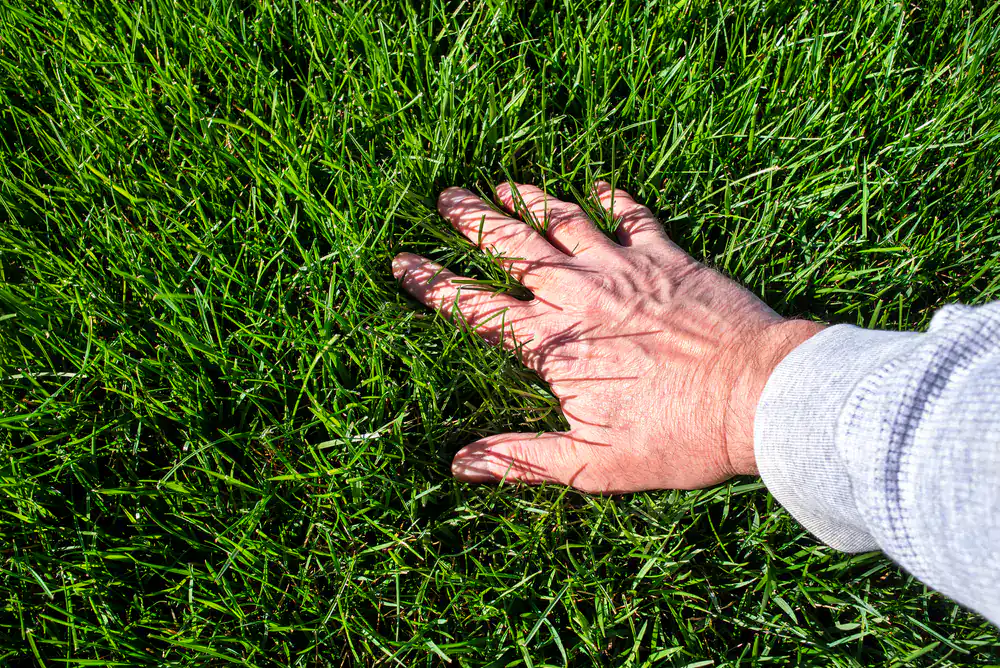
For the cool-season grasses that make up the vast majority of Kings Park lawns tall fescue, Kentucky bluegrass, perennial ryegrass fall is the right window. Late August through October gives you warm soil temperatures for seed germination, cooling air to reduce stress on new growth, and the grass’s most active root development phase of the year. That combination is hard to replicate at any other point in the season.
Spring aeration is possible, but it comes with a real complication: if pre-emergent weed control has already been applied, aerating afterward breaks the barrier and opens the door for crabgrass and other weeds to establish. A licensed professional can sequence those services correctly so you’re not trading weed prevention for aeration timing. The short answer is fall and in Kings Park specifically, that means getting on a schedule before Suffolk County’s November 1 fertilizer ban closes the window on any program that includes a starter fertilizer application after overseeding.
There’s a simple test you can do today. After watering your lawn, push a standard 6-inch screwdriver into the soil. If it won’t go 3 inches without real effort, your soil is compacted. Given Kings Park’s seasonal freeze-thaw cycles, the active outdoor lifestyle of most households in the hamlet, and the compacting effect of years of mowing on the same turf, a significant number of lawns here will fail that test even ones that look reasonably healthy from the curb.
The symptoms show up above ground too. If your lawn has thin or bare patches that don’t respond to fertilizer, if water runs off the surface instead of soaking in, or if the grass looks dull and stressed despite regular care, compaction is usually the underlying cause. These aren’t problems that more fertilizer or more watering will fix. The soil itself needs to be opened up before anything else you’re spending on lawn care can do its job properly.
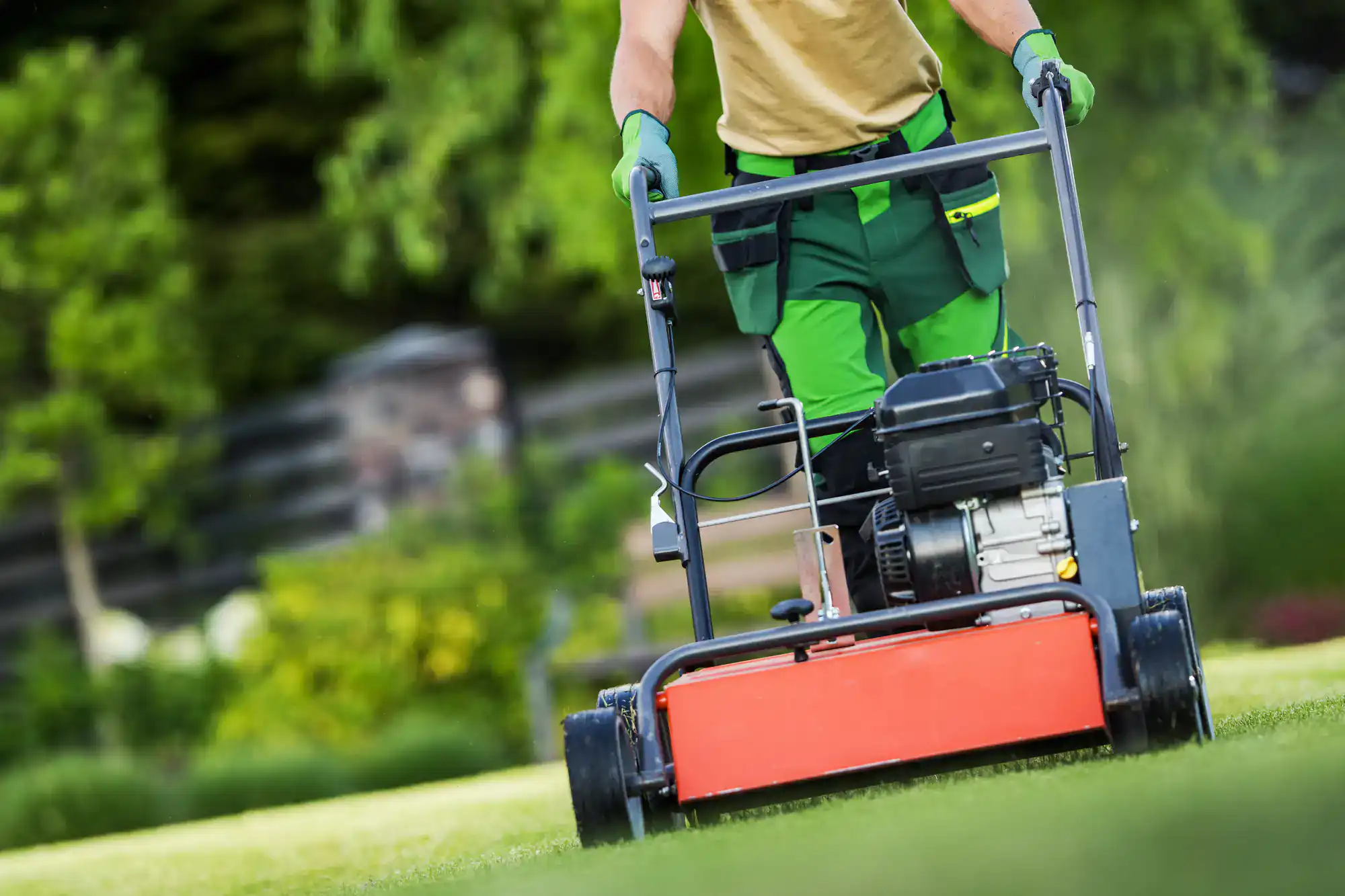
Consumer aerator rentals are built for light use on cooperative soil. They work reasonably well on loose, sandy soil that’s already in decent shape. But Kings Park’s North Shore soils particularly the heavier, clay-influenced zones found in the inland sections of the hamlet compact in ways that lighter machines simply can’t address effectively. The tines don’t penetrate consistently, the cores are shallow, and the decompression effect on the root zone is minimal compared to what a professional hydraulic machine delivers.
Our hydraulic core aerators apply consistent downward pressure across the full pass, pulling clean plugs at real depth regardless of soil resistance. The difference is visible when you look at the cores on the surface deeper, cleaner, and more evenly spaced than what a rental produces. Over a full season, that depth difference translates directly into better root development, better water infiltration, and better response to fertilizer. It’s not a subtle distinction it’s the reason professional aeration produces results that a Saturday afternoon rental doesn’t.
The regulation that affects timing most directly is Suffolk County’s fertilizer ban, which prohibits any fertilizer application to lawns between November 1 and April 1. Violations carry fines of up to $1,000. This doesn’t restrict aeration itself you can aerate outside that window but it does create a hard deadline for any fall program that combines aeration with overseeding and a starter fertilizer application. If that full sequence isn’t completed before October 31, the fertilizer piece has to wait until spring, which changes the outcome for newly seeded areas.
For Kings Park homeowners planning a fall lawn renovation, this means the practical window is compressed into late August through October. That’s not a long runway, and our schedule fills accordingly. The licensed professionals on every Lawn Master job are fully aware of and compliant with Suffolk County’s fertilizer regulations which is not something you can assume about every lawn care operator advertising in the area. Working with a licensed, established company means the timing is handled correctly without you having to track the calendar yourself.
Usually both, and they work best together. Aeration alone opens the soil and improves conditions, but if the turf is already thin or bare, there’s nothing there to fill back in on its own. Overseeding immediately after aeration while the channels are freshly opened puts seed in direct contact with soil rather than sitting on top of thatch or hardpan. That contact is what drives germination rates, and it’s why aeration and overseeding done together produce significantly better results than either service done independently.
For Kings Park lawns with mature trees oaks and maples are common throughout the hamlet’s wooded residential streets thin turf under the canopy is a persistent problem. Tree roots compete aggressively for water and nutrients, and the shade reduces photosynthesis. Aeration in those zones helps, but shade-tolerant seed varieties and a follow-up fertilizer application are usually part of the picture too. Our licensed technicians assess each area individually and recommend what that specific section of your lawn actually needs rather than applying the same treatment across the whole property.
For a typical residential property in Kings Park, professional core aeration generally runs in the range of $150 to $400 depending on lawn size, soil condition, and whether overseeding or fertilizer is included in the program. Properties with significant compaction, large square footage, or areas requiring restoration work may fall toward the higher end. The only way to get an accurate number is a site assessment lawn size and condition vary too much across the hamlet for a flat rate to mean anything useful.
What’s worth thinking about is what you’re protecting. With median home values in Kings Park sitting between $614,000 and $700,000, the cost of professional aeration is a small fraction of the asset it maintains. Compacted soil that goes unaddressed means wasted fertilizer, poor irrigation efficiency, and turf that slowly deteriorates to the point where full renovation which costs significantly more than annual maintenance becomes the only option. Annual aeration by a licensed professional with the right equipment isn’t an expense that compounds. It’s the investment that keeps every other lawn care dollar you spend from going to waste.
Useful Links
Other Services we provide in Kings Park