
Hear from Our Customers
Most homeowners in Patchogue who are frustrated with their lawn aren’t doing anything wrong they’re just dealing with soil that’s working against them. The glacial outwash plain that runs along Long Island’s South Shore produces sandy loam soil that compacts surprisingly fast under mowing equipment and regular foot traffic. Once it’s compacted, water beads off the surface instead of soaking in. Fertilizer sits on top and washes away. Grass thins out. And no amount of watering fixes it, because the problem isn’t above the surface it’s underneath it.
Core aeration changes that by pulling small plugs of soil out of the ground, which opens up channels for air, water, and nutrients to actually reach the root zone. For properties near the Great South Bay and the Patchogue River waterfront, there’s an added layer: salt-air exposure from the bay stresses grass roots and makes shallow root systems even more vulnerable. Aeration gives those roots room to grow deeper, which means better drought tolerance, better color, and a lawn that holds up through Long Island summers instead of burning out by July.
The results aren’t subtle. Within one growing season, you’ll typically see thicker turf, better color, and grass that responds to fertilizer the way it’s supposed to. Everything you’ve already been putting into your lawn starts working harder because the soil is finally open enough to use it.
We’ve been working in Suffolk County since 1987. That’s not a tagline it means our team has spent decades learning the specific conditions that affect lawns in Patchogue and across the South Shore, including the sandy coastal soil, the salt exposure near the bay, and the seasonal timing that makes or breaks a fall aeration program in this area. Every job is handled by a licensed pesticide professional, not a seasonal crew. That matters both for results and for accountability, especially on properties that drain toward the Great South Bay and the waterways connected to it.
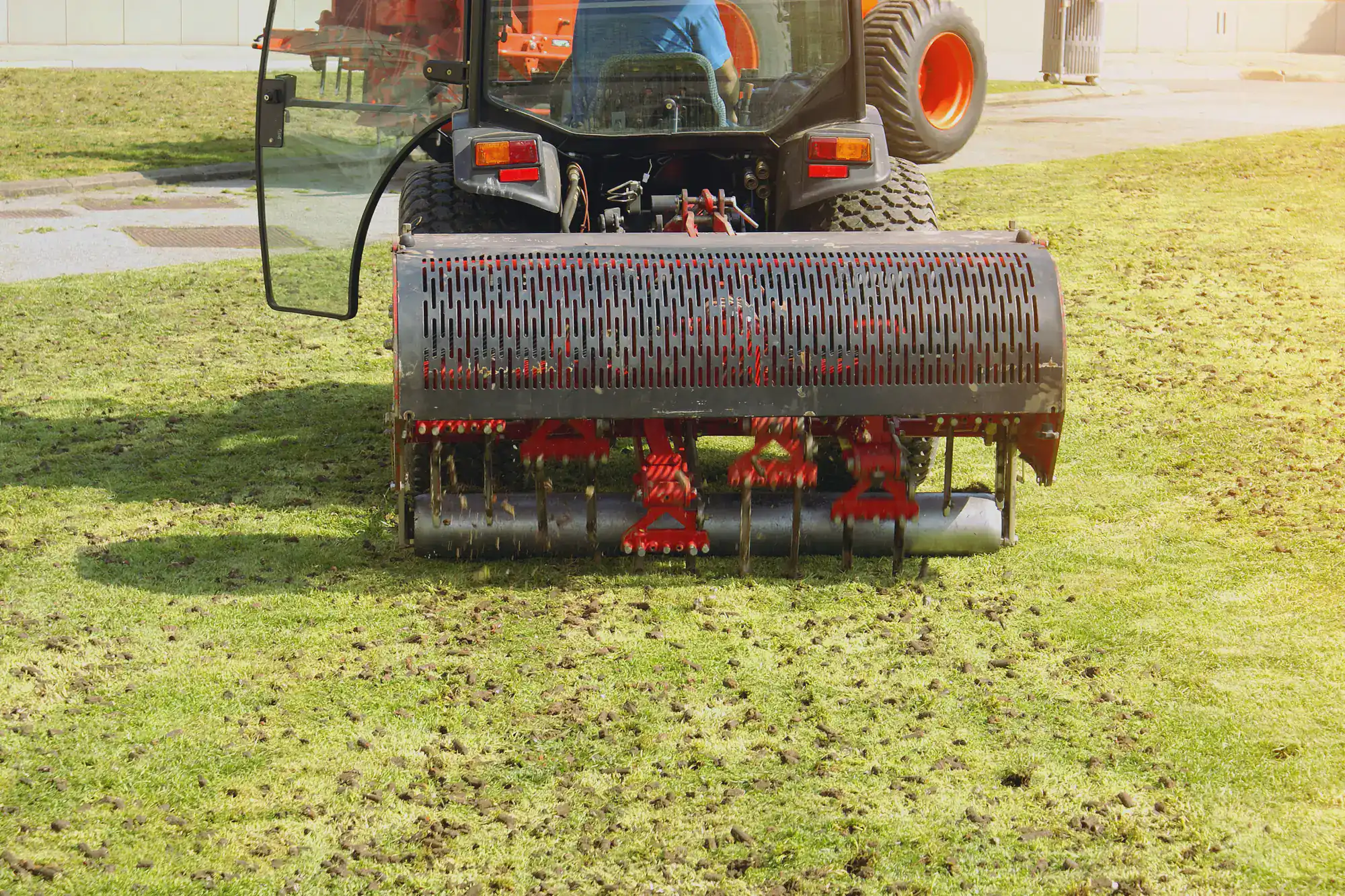
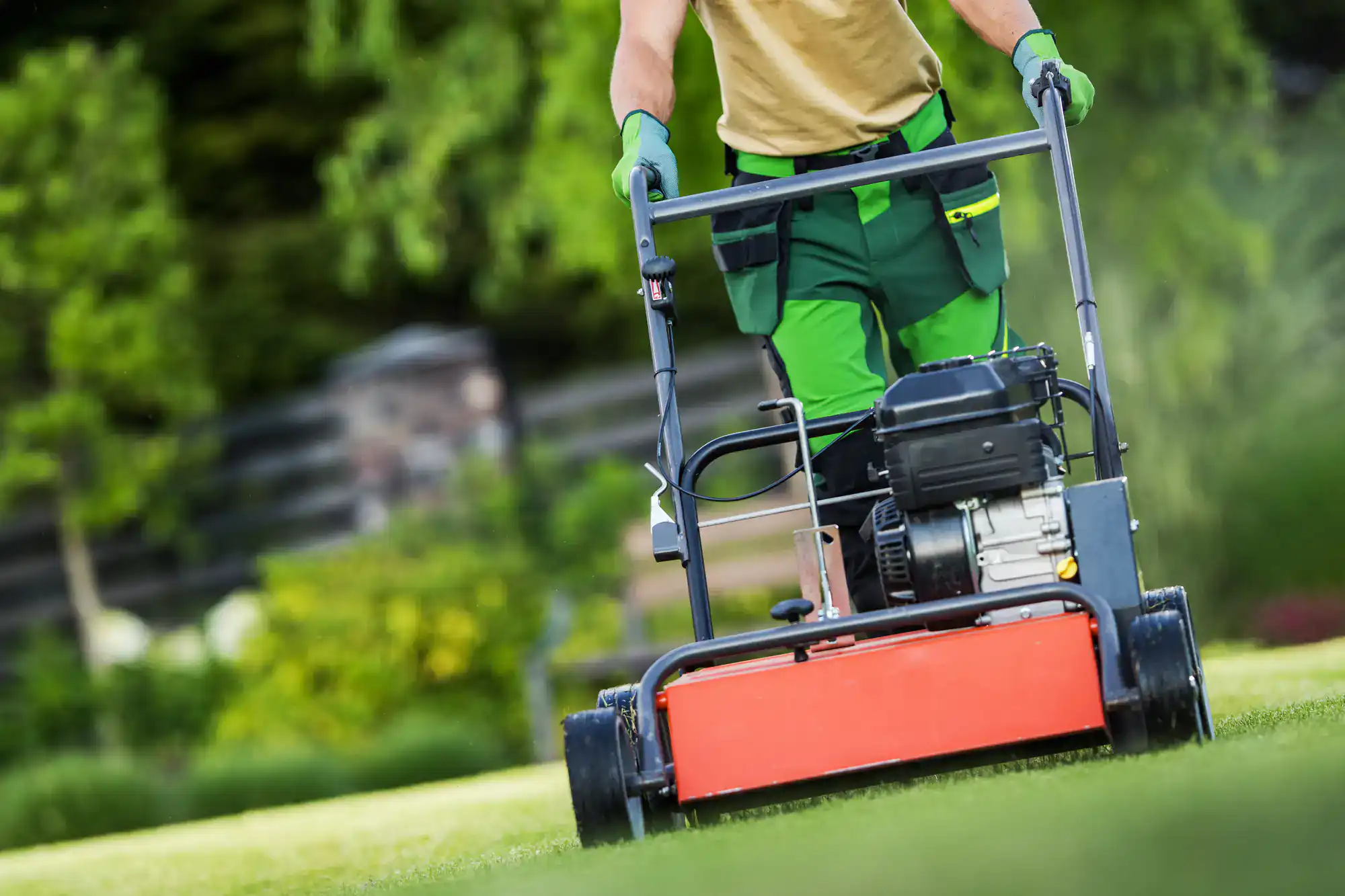
The equipment we use is professional-grade hydraulic aerators, not the kind of machine you’d rent at a hardware store. The fertilizer is a custom blend made specifically for our programs not a wholesale product pulled off a shelf. And because every program is tailored to your specific property, you’re not getting a generic treatment designed for someone else’s lawn in a different part of Long Island. You’re getting a plan that accounts for what your soil in Patchogue actually needs.
It starts with a look at your actual lawn not a clipboard checklist, but a real assessment of what the soil is doing. Compaction shows up in specific ways: water pooling after rain, thin or patchy turf that doesn’t respond to fertilizer, grass that looks stressed even when you’re watering regularly. A licensed professional walks the property, identifies what’s going on beneath the surface, and determines what the lawn actually needs before any equipment comes out.
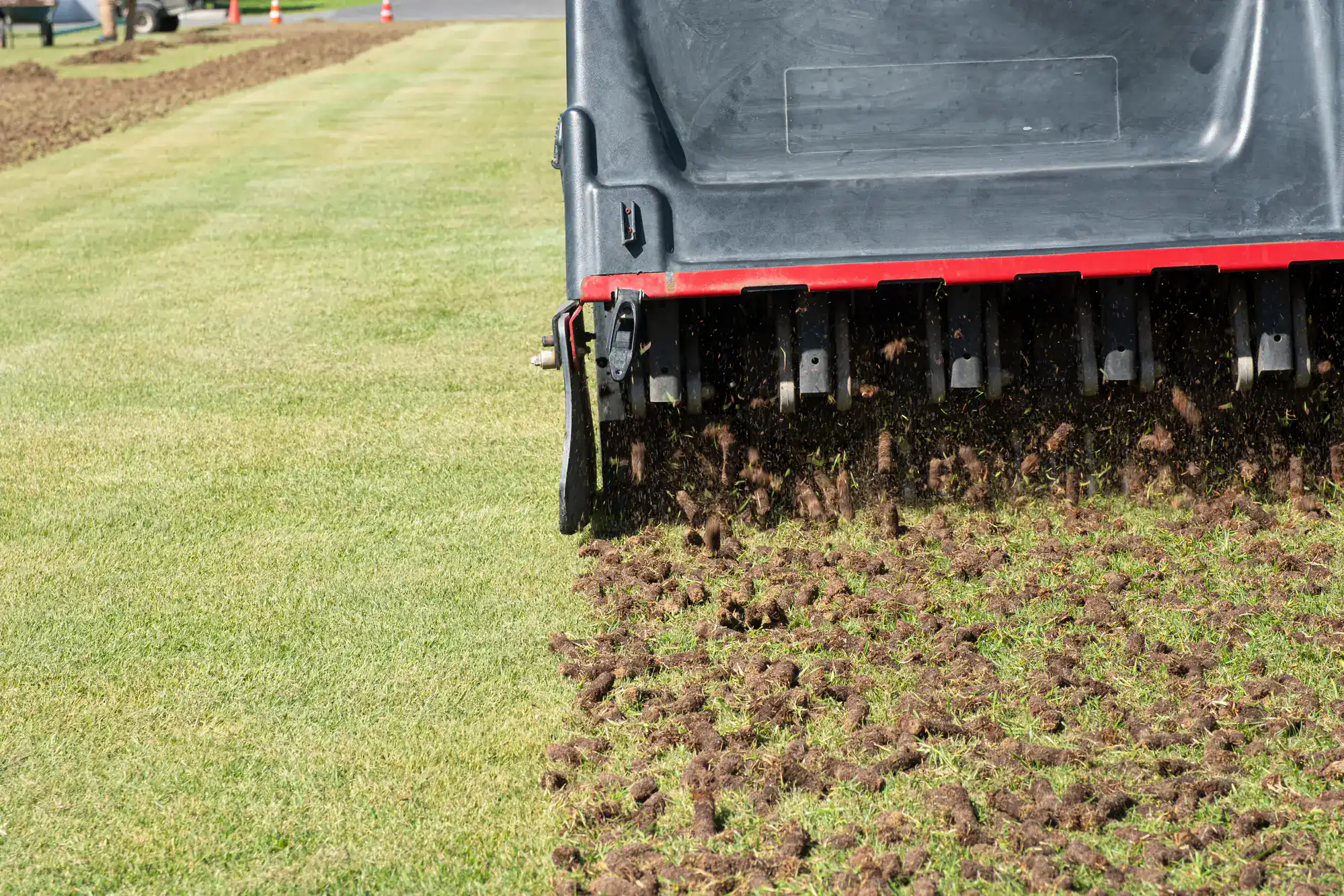
From there, the hydraulic core aerator goes to work. It pulls plugs of soil roughly three-quarters of an inch wide and three inches deep across the entire lawn. Those plugs break down on the surface over the following weeks, returning organic matter to the soil. The channels they leave behind are where the real work happens: water penetrates instead of running off, fertilizer reaches the root zone, and if overseeding follows, seed-to-soil contact improves dramatically.
Timing matters here more than most people realize. In Patchogue, the optimal window for cool-season lawns is late August through October. That’s when soil temperatures are still warm enough for effective aeration and recovery, and it leaves enough time to fertilize before Suffolk County’s November 1 fertilizer ban kicks in. Miss that window and you’re waiting another full year for the best results. We plan around that deadline it’s built into how the fall schedule is structured.
Ready to get started?
What you get with us isn’t a package off a menu. Every program is tailored to the specific conditions of your property lot size, soil compaction level, grass type, sun exposure, and how close you are to the waterfront. Properties near Shorefront Park or along the Patchogue River corridor tend to deal with more salt stress and need a different approach than a property further north near the Patchogue-Medford school district boundary. That kind of local nuance is exactly what 37 years of working in this area produces.
Our core aeration service uses hydraulic equipment that outperforms anything available at a rental counter deeper penetration, cleaner core removal, and more consistent results across the full lawn. When combined with overseeding, we use hydraulic seeders that ensure real seed-to-soil contact rather than seed sitting on top of thatch. The custom-blended fertilizer we apply after aeration is formulated specifically for programs like this, calibrated to the nutrient needs and soil chemistry common in Suffolk County’s coastal properties.
For Patchogue homeowners curious about lawn aeration cost, pricing for residential properties typically ranges from $75 to $300 depending on lawn size and condition and a custom quote is always available. The more useful question is what the cost of not aerating looks like: wasted fertilizer, wasted water, and a lawn that never quite responds the way it should. On a property worth $500,000 or more in today’s Patchogue market, that’s an expensive problem to leave unaddressed.
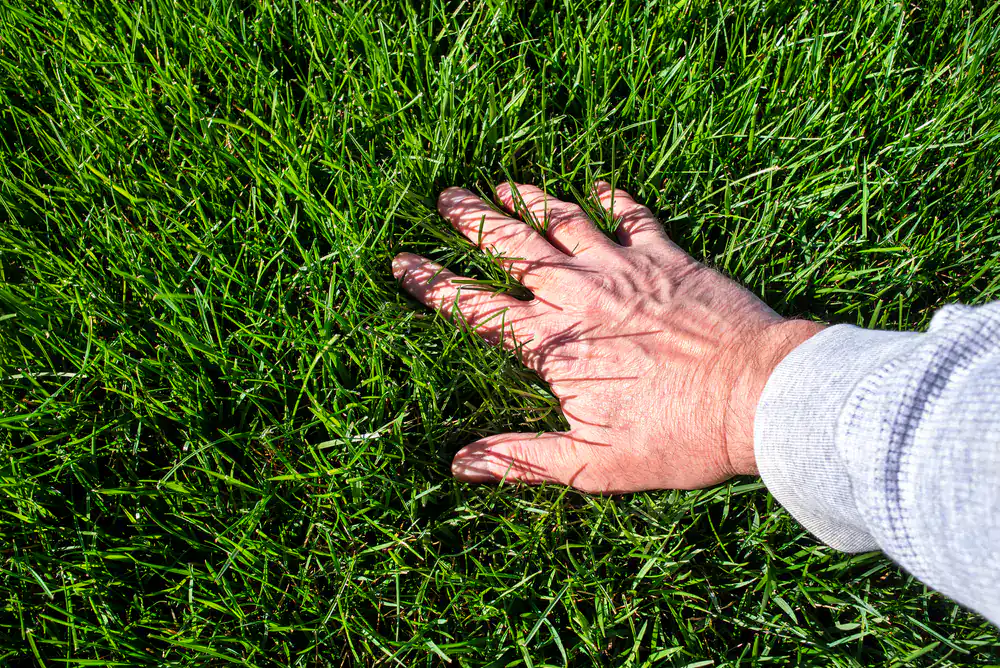
For most Patchogue lawns, fall is the right window specifically late August through October. The lawns throughout this area are predominantly cool-season grasses like tall fescue, Kentucky bluegrass, and perennial ryegrass, which are actively growing in the fall and recover quickly from the aeration process. Soil temperatures are still warm enough for effective core removal, and the grass has time to fill in before winter sets in.
There’s also a hard deadline to plan around in Suffolk County: the fertilizer ban takes effect November 1. That means your aeration, overseeding, and fall fertilization all need to be completed before that date or you’re waiting until spring to finish the sequence. Spring aeration is possible, but it’s complicated by pre-emergent herbicide timing aerating after a pre-emergent application breaks the weed barrier you just paid to put down. Fall is cleaner, more effective, and produces better results for Patchogue’s soil and grass types. Book early, because the fall schedule fills up.
Sandy soil actually compacts more than most people expect, and Patchogue’s glacial outwash soil is a good example of why. It drains fast sometimes too fast but under the weight of mowing equipment and regular foot traffic, it compacts into a dense layer that water can’t penetrate. When that happens, the soil becomes hydrophobic: instead of absorbing irrigation and rainfall, it sheds water off the surface. You end up with a lawn that looks drought-stressed even when you’re watering it consistently.
Clay-heavy soils compact differently and need aeration for different reasons, but sandy coastal soil on Long Island’s South Shore has its own specific compaction problem that responds very well to core aeration. The channels opened by a hydraulic aerator allow water and nutrients to reach the root zone instead of running off, which is exactly what Patchogue’s soil needs. If your lawn near the bay or along the South Shore has thin patches, poor color, or water that pools and then disappears without soaking in, compaction is almost certainly part of the problem.
There’s a simple test you can do right now: take a standard screwdriver and push it into your lawn. If it goes in easily to a depth of about six inches, your soil is in reasonable shape. If you have to force it or it stops at two or three inches, you’ve got compaction. You can also look for a few other signs water that pools after rain and then runs off instead of soaking in, grass that feels spongy or bouncy underfoot (that’s thatch buildup), thin or bare patches that don’t respond to fertilizer, or turf that goes brown and stressed faster than you’d expect in summer heat.
In Patchogue, the combination of sandy coastal soil, salt-air exposure from the Great South Bay, and the regular wear that comes with active residential use creates conditions where compaction and thatch accumulation happen faster than in more inland parts of Suffolk County. If your lawn checks two or more of those boxes, aeration is almost certainly part of the answer. A licensed professional can walk your property and give you a straight assessment before recommending anything.
You can rent one, but the equipment you’ll find at a local rental counter is a consumer-grade machine built for light residential use. It produces shallower core removal, less consistent tine spacing, and reduced effectiveness in compacted or sandy soil which is exactly the soil type you’re dealing with in Patchogue. On a lawn that’s been compacted for a few seasons, a rental machine may not penetrate deeply enough to actually break the compaction layer, which means you’re doing the work without getting the results.
Professional hydraulic core aerators go deeper, pull cleaner cores, and cover the lawn more consistently. The difference shows up in the results within one growing season thicker turf, better fertilizer response, and grass that holds up through summer instead of thinning out. There’s also the timing and sequencing piece: knowing when to aerate relative to pre-emergent applications, overseeding windows, and Suffolk County’s November 1 fertilizer deadline takes experience. If you’re going to invest the time, it’s worth doing it with equipment and expertise that actually delivers.
Aeration on its own is genuinely useful it relieves compaction, improves drainage, and makes your existing fertilizer and watering more effective. But if your lawn has thin areas, bare patches, or turf that’s been struggling for a few seasons, combining aeration with overseeding is significantly more effective than either service alone. The reason is simple: when the aerator pulls cores out of the ground, it creates direct seed-to-soil contact points that are far more receptive to germination than seeding onto an intact, thatch-covered surface.
For Patchogue lawns that have dealt with salt stress, summer heat, or years of compaction, overseeding after aeration is often what turns a struggling lawn into one that actually fills in and holds. We use hydraulic seeders that get seed into the soil rather than sitting on top of it a meaningful difference in germination rates. The fall window, late August through October, is the right time for both services together in this area, giving cool-season grass seed the warm soil temperatures it needs to establish before winter.
Salt-air deposition from the Great South Bay is a real and underappreciated factor for properties near the Patchogue River, Shorefront Park, and the waterfront areas of the village. Salt stress affects grass at the root level it draws moisture out of the plant, reduces the lawn’s ability to absorb nutrients, and leads to shallower root systems that are more vulnerable to drought, heat, and compaction. The result is often a lawn that looks noticeably worse closer to the water, even when it’s getting the same care as the rest of the yard.
Core aeration helps directly by giving stressed, shallow roots more room to grow deeper deeper roots are more resilient to both salt exposure and the summer heat stress that Long Island’s South Shore lawns face. When aeration is paired with the right overseeding and a fertilizer program calibrated to coastal soil chemistry, the difference in those waterfront-facing areas is usually visible within a season. It’s not a cosmetic fix it’s addressing the actual soil and root conditions that salt air creates over time. A licensed professional who knows Patchogue’s waterfront properties can assess what your specific lawn needs and build a program around it.
Useful Links
Other Services we provide in Patchogue