
Hear from Our Customers
Most lawns in Great River aren’t failing because of neglect. They’re failing because the program treating them wasn’t built for this environment. Sandy outwash soil drains nutrients before roots can absorb them. Salt air rolling off the Great South Bay pulls moisture from grass blades and disrupts how the root system takes up what little nutrition is left. A generic fertilizer schedule doesn’t account for any of that and the results speak for themselves every summer.
When your lawn is on the right program, the difference is visible and it holds. Turf that used to thin out by July stays dense through the heat. Bare patches from last season fill in. Weeds that kept coming back stop getting a foothold. Because the soil is being managed correctly not just fed on a calendar the results carry over from one season to the next instead of resetting every spring.
For homeowners in Great River, where property values are high and the standard of the surrounding landscape is genuinely elevated, a lawn that looks like it belongs is not a luxury. It’s the baseline. We help you get there and stay there.
We’ve been treating Suffolk County lawns since 1987. That’s not a tagline it means our team has worked through every drought cycle, every pest wave, every regulatory change, and every soil challenge Long Island’s South Shore has produced over nearly four decades. Great River and the Town of Islip have been part of our service area the entire time.
Every technician on our team holds a New York State DEC pesticide applicator license. That’s a state-regulated credential requiring real training and a passing exam not something every operator in the local market can say. Our fertilizer is custom-blended specifically for Lawn Master, formulated for Long Island’s sandy soil rather than a generic national formula that treats every lawn the same regardless of where it sits.
Five fully wrapped, professionally branded trucks run throughout Suffolk County. You know exactly who is on your property. So does your neighbor.
It starts with understanding what you’re actually working with. Great River properties vary more than people expect a lawn on River Road with full southern exposure toward the bay faces different conditions than one tucked under mature tree canopy near Connetquot River State Park Preserve. Sun exposure, shade, soil drainage, salt proximity, existing weed pressure all of it factors into what your program looks like before a single product is applied.
From there, treatments are scheduled and timed around what the lawn needs and what Suffolk County law requires. The county’s fertilizer blackout runs from November 1 through April 1, so fall timing matters the window between Labor Day and the end of October is genuinely the most important stretch of the lawn care year on Long Island. Core aeration and overseeding in early September, followed by a properly timed fall fertilizer application, sets up your lawn for the following spring better than anything done in summer.
Throughout the season, our program adjusts. If grub pressure shows up, we address it. If nutsedge is spreading in a low spot near the property edge, there’s a targeted treatment for it. The goal is a lawn that improves year over year not one that looks okay in May and falls apart by August.
Ready to get started?
Our programs cover the full range of what South Shore lawns require not just fertilization, but the treatments that make fertilization actually work. That includes core aeration with hydraulic equipment that pulls deeper cores than consumer-grade machines, overseeding with appropriate cool-season varieties, lime applications to correct the soil acidity common in Great River’s sandy coastal soils, and grub control timed to Long Island’s Japanese beetle cycle.
For lawns dealing with nutsedge or bentgrass two of the most stubborn problems in moist, sandy South Shore soil we offer targeted control that most generic programs don’t touch. These aren’t add-ons for edge cases. They’re common issues in this area, and leaving them untreated means watching them spread season after season regardless of how well everything else is managed.
If your lawn needs more than maintenance if it’s been damaged, neglected, or never properly established we also handle full lawn restoration and new lawn installation from seed. That means one company takes you from bare or damaged ground to a finished, maintained lawn without handing you off to someone else. For Great River homeowners making a long-term investment in their property, that continuity matters.
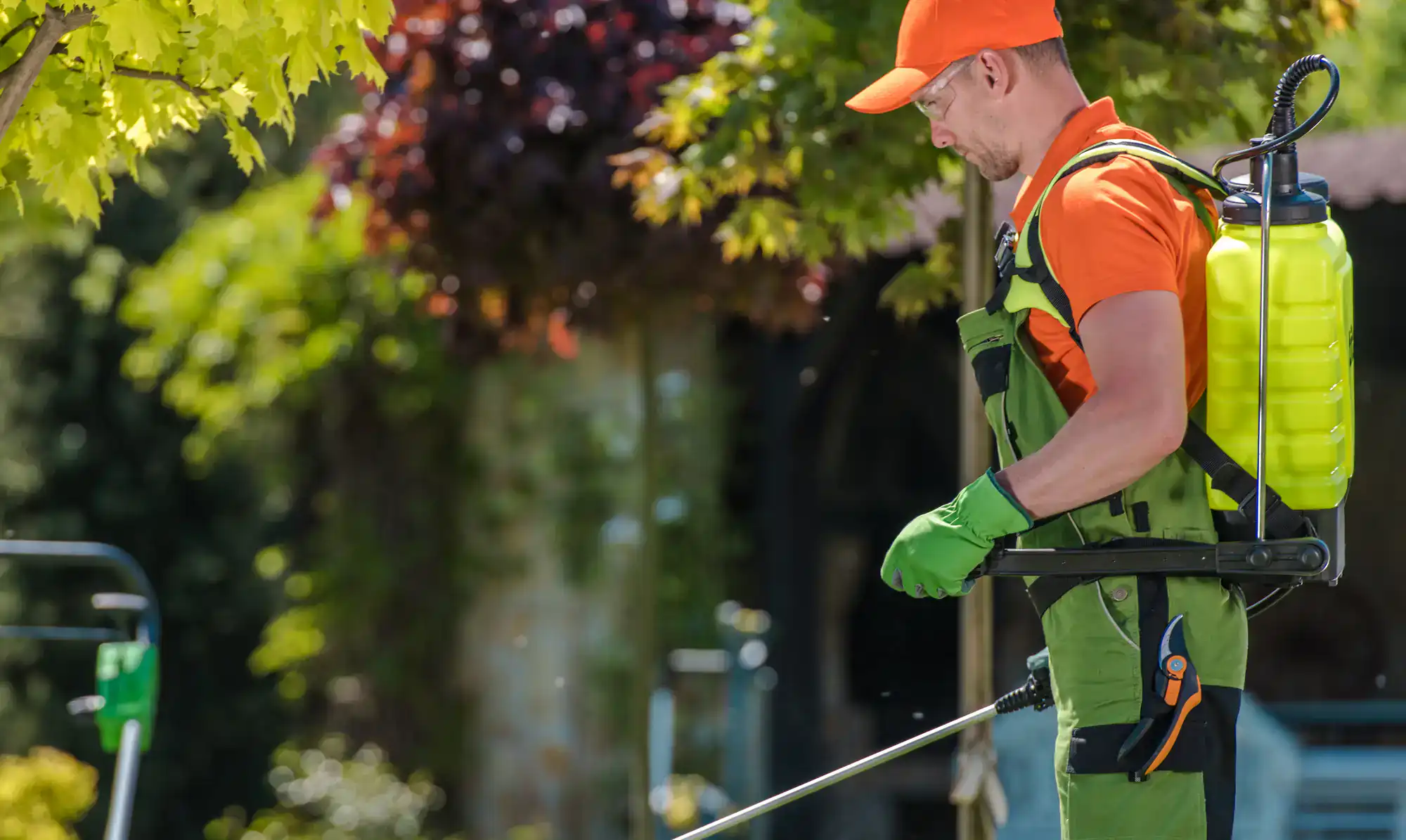
No and this is one of the more important things to understand if you’re hiring a lawn care company in Suffolk County. Under Suffolk County Local Law 41-2007, fertilizer applications are prohibited from November 1 through April 1. Violations carry fines up to $1,000. The law exists because Long Island sits over a sole-source aquifer meaning all drinking water on the island comes from groundwater and nitrogen from fertilizer applied to dormant lawns leaches straight through the soil into that water supply.
Any company offering to fertilize your Great River lawn in December or March is either unaware of the law or willing to ignore it on your property. Either way, that’s not a company you want applying products to your lawn. We schedule all applications in full compliance with the blackout period, which also means the fall window September through late October gets treated with the priority it deserves.
This is one of the most common frustrations on the South Shore, and the answer almost always comes back to soil and salt. Sandy outwash soil which dominates Great River and the surrounding area drains water and nutrients faster than most fertilizer programs account for. If the product being applied isn’t formulated for slow release in sandy conditions, the nutrients wash through before the root system can use them. You get a green flush in spring and a struggling lawn by July.
Salt air from the Great South Bay compounds the problem. Salt deposits on grass blades draw moisture out, and salt accumulation in the soil disrupts how roots take up nutrients even when those nutrients are present. A program that doesn’t account for Great River’s specific coastal exposure is going to underperform every summer regardless of how often it’s applied. The fix is a custom-formulated fertilizer, correct timing, and soil management not just more product on the same schedule.
In New York State, any business applying pesticides or herbicides to turf is required to hold a NYS DEC pesticide applicator license specifically a Category 3A or 3B commercial certification. Earning that license requires completing a 30-hour training course and passing a state exam. It’s not optional, and it’s not just a formality. It determines whether the person treating your lawn understands product selection, application rates, environmental regulations, and what happens when something goes wrong.
The practical difference shows up in outcomes. A licensed applicator knows which herbicide is appropriate for nutsedge versus broadleaf weeds, how to time a pre-emergent correctly for soil temperature rather than calendar date, and what the phosphorus restrictions under New York State law require. An unlicensed operator applying a generic product without that training is guessing and your lawn, your soil, and the aquifer under your property are absorbing the results. Every Lawn Master technician holds this license. It’s verifiable, and it matters.
If your lawn has areas that stay soggy after rain, feels spongy underfoot, or has thinned out in spots that used to be dense, aeration is almost certainly overdue. Core aeration pulls plugs of soil from the lawn, breaking up compaction and opening pathways for water, air, and nutrients to reach the root zone. In Great River’s sandy soil, compaction builds up gradually especially in high-traffic areas and once it sets in, even a well-designed fertilizer program can’t fully compensate.
Fall is the right time for this on Long Island. Cool temperatures and consistent rainfall in September and October create ideal conditions for new seed to germinate and establish before winter. Aeration followed by overseeding in early September gives new grass roughly six to eight weeks of solid growing conditions before the ground cools. If you wait until spring, you’re fighting crabgrass germination and summer heat before the new turf has a chance to develop. The fall window is short getting the timing right makes a real difference.
The most honest answer is accountability and local knowledge. National chains operate on volume large territories, rotating technicians, and standardized programs that get applied the same way in Great River, NY as they do in suburban Ohio. When something goes wrong, you’re calling a regional call center. The person who answers has no connection to the technician who treated your lawn, and the technician may not be back next visit.
We’ve been operating in Suffolk County since 1987. Our team knows Long Island’s soil, knows the county’s fertilizer regulations, and knows what South Shore conditions actually do to cool-season turf. Our fertilizer is custom-blended for Long Island not a national formula. The trucks are fully wrapped and identifiable. And when you call, you reach people who are actually familiar with your area. For Great River homeowners who’ve been through a national chain and ended up with a lawn that looked worse after a year of service, that local accountability is usually the deciding factor.
Yes and this is something most lawn treatment companies in the area can’t say. We handle full lawn restoration and new lawn installation from seed, not just ongoing maintenance of lawns that are already in decent shape. If your lawn has been damaged by a previous provider, wiped out by grubs, overtaken by weeds, or simply neglected to the point where there’s more bare ground than grass, restoration is a real option.
The process starts with an honest assessment of what’s there and what it will take to bring it back. In Great River, that often means addressing soil pH first sandy coastal soils tend toward acidity, and seeding into acidic soil without correcting it first is a common reason restoration attempts fail. From there, the right seed variety, proper seedbed preparation, and a realistic timeline get established before anything goes down. The goal is a lawn that’s built correctly from the ground up, then maintained with the same program going forward so you’re not back in the same situation two years from now.
Useful Links
Other Services we provide in Great River