
Hear from Our Customers
Hauppauge has a lot going for it good schools, established neighborhoods, mature trees lining nearly every street. Those same mature trees drop leaf litter all fall and winter, and leaf litter is exactly where deer ticks overwinter and wait. Add in the moisture from Hauppauge’s notoriously high water table and underground springs, and you’ve got conditions that are genuinely favorable for tick populations year-round.
The wooded edge between your lawn and the tree line is where most of the activity happens. Ticks don’t hang out in the middle of your grass they sit at the border, in the shaded beds, under the deck, along the fence. That’s where our professional program targets, and that’s the difference between actually reducing exposure versus just spraying the open lawn and hoping for the best.
When our treatment is working, you stop finding ticks on your dog after a walk around the yard. Your kids play outside without you doing a full inspection every time they come in. That’s not a small thing especially in a county where over half of ticks have been found to carry Lyme disease.
We’ve been operating in Suffolk County since 1987, and that means something real in Hauppauge. Our team has been treating properties in this community through every season, every tick surge, and every shift in how this area has grown and changed. The Long Island Innovation Park brought tens of thousands of workers to the area. The neighborhoods around Blydenburgh filled in. We were already here, and we’ve stayed.
Every technician we send to your property is NYSDEC-licensed certified by New York State to apply commercial pesticides legally and correctly. That matters more than most people realize, because a lot of companies in this market send unlicensed crews. You won’t get that here.
This isn’t a franchise with a call center somewhere else. We’re a Suffolk County company with five fully wrapped trucks, owner-level accountability on every job, and a reputation built one lawn at a time over nearly four decades in Hauppauge and the surrounding communities.
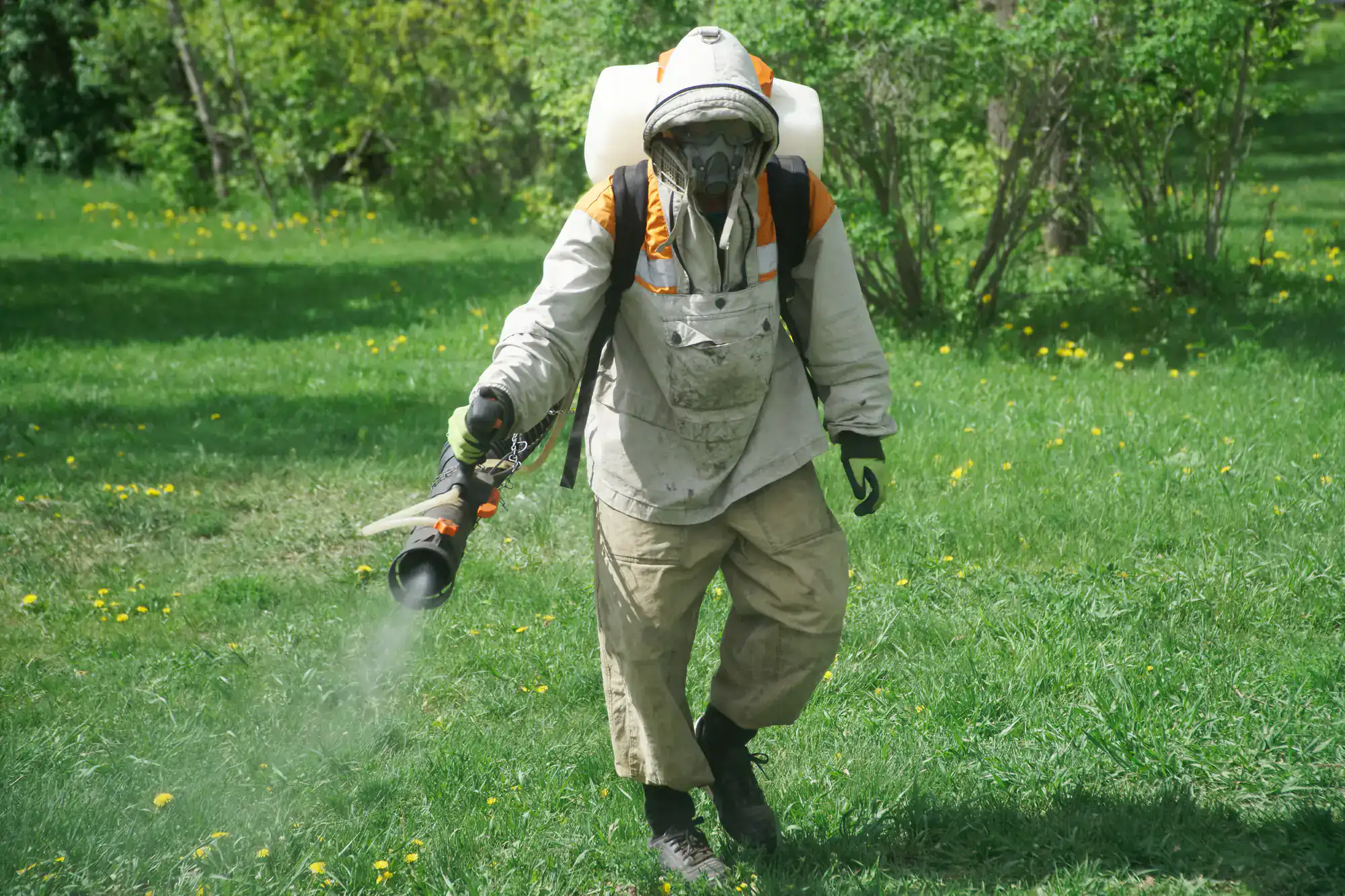
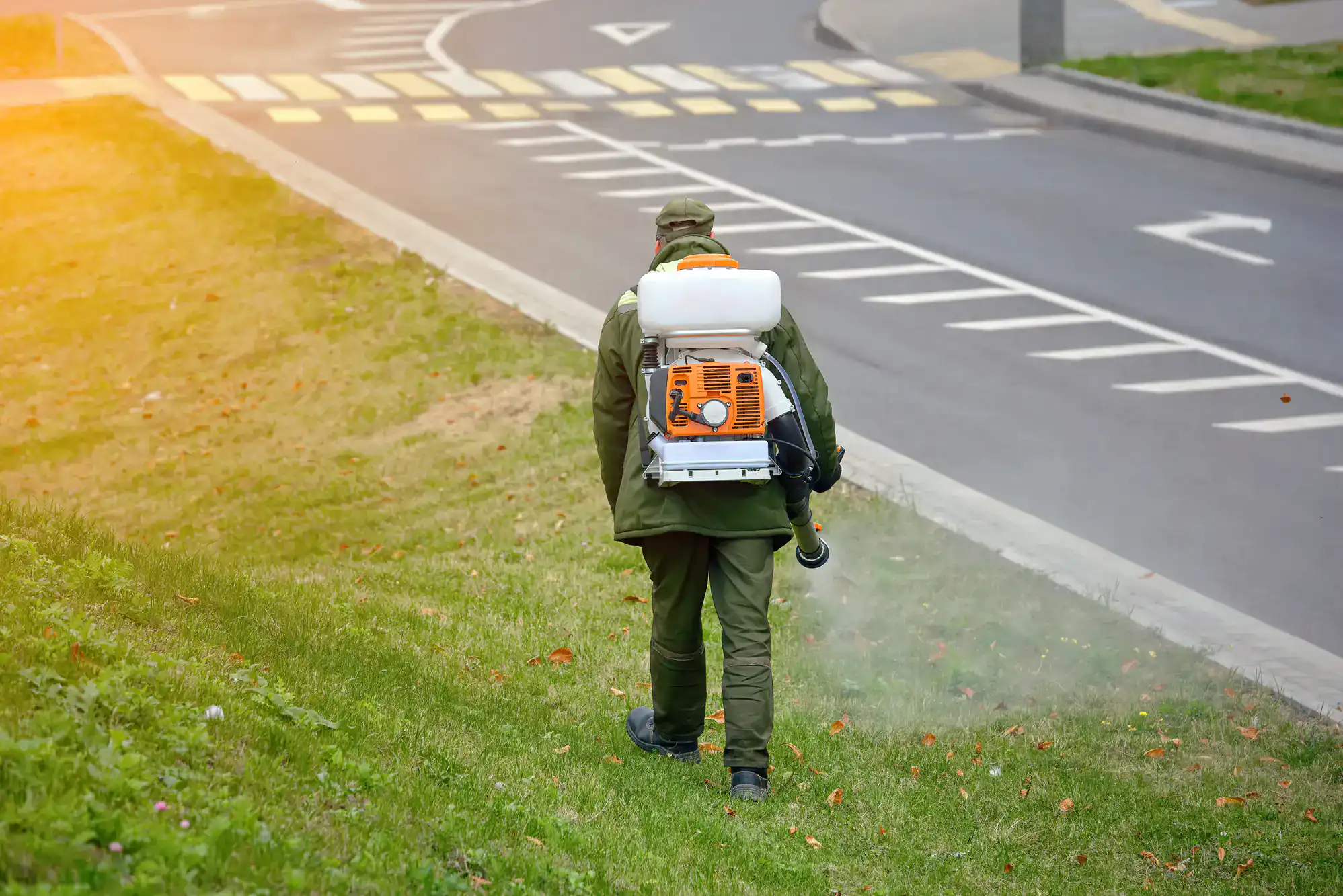
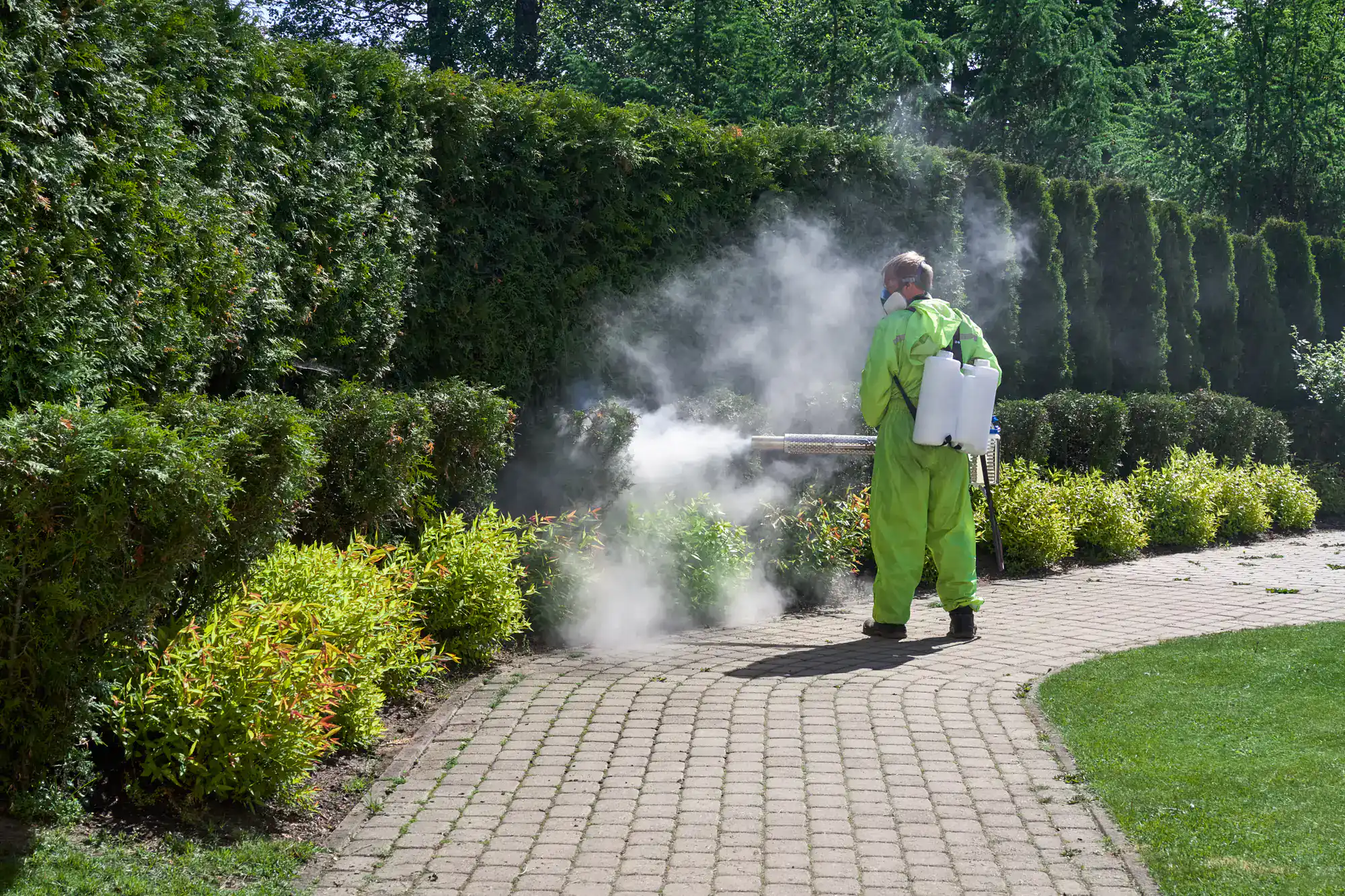
It starts with us understanding your specific property. A Hauppauge yard that borders wooded land near the Nissequogue River corridor needs a different approach than a fully open lot. The licensed technician who shows up will assess your yard’s actual risk zones wooded transitions, ornamental beds, shaded areas, fence lines, under decks before a single drop of product is applied. We build the program around what your yard actually looks like, not a one-size template.
From there, treatment follows a seasonal schedule timed to Long Island’s real tick calendar. In Hauppauge’s climate zone, ticks become active as early as late March or early April. That’s when the first application goes down before nymphal ticks peak in May and June, which is the highest-risk window of the year. Applications continue every three to four weeks through the active season, with a fall treatment in September or October to knock down adult tick populations before they overwinter.
After each visit, you’ll get a notification and the yard is typically safe to re-enter within 30 to 60 minutes of drying. Online invoicing means no chasing anyone down for paperwork. The goal is a program that runs smoothly in the background while you get your yard back.
Ready to get started?
The products we use in a professional flea and tick program are not what you’ll find at a hardware store. Professional-grade treatments include Insect Growth Regulators IGRs that disrupt the flea reproductive cycle at the larval stage. Store-bought sprays don’t include these. That’s why DIY treatments often knock back what’s visible but don’t stop the next generation from hatching two weeks later.
For ticks specifically, our focus in Hauppauge is on the harborage zones that match this area’s landscape: wooded rear yards, moist soil edges near the underground spring-fed areas the town is literally named for, leaf litter accumulation under mature trees, and the transition zones between maintained lawn and natural growth. Properties near Blydenburgh County Park or along the Nissequogue corridor receive particular attention to those wooded borders, where deer and small mammals deposit ticks on a daily basis.
New York State requires that all commercial pesticide applications be performed by or under the direct supervision of a NYSDEC-certified applicator. Every Lawn Master technician meets that standard. If you’ve had a company out before and aren’t sure whether the person who showed up was actually licensed, that’s worth asking because in Suffolk County, not every company sending workers to your yard can say yes.
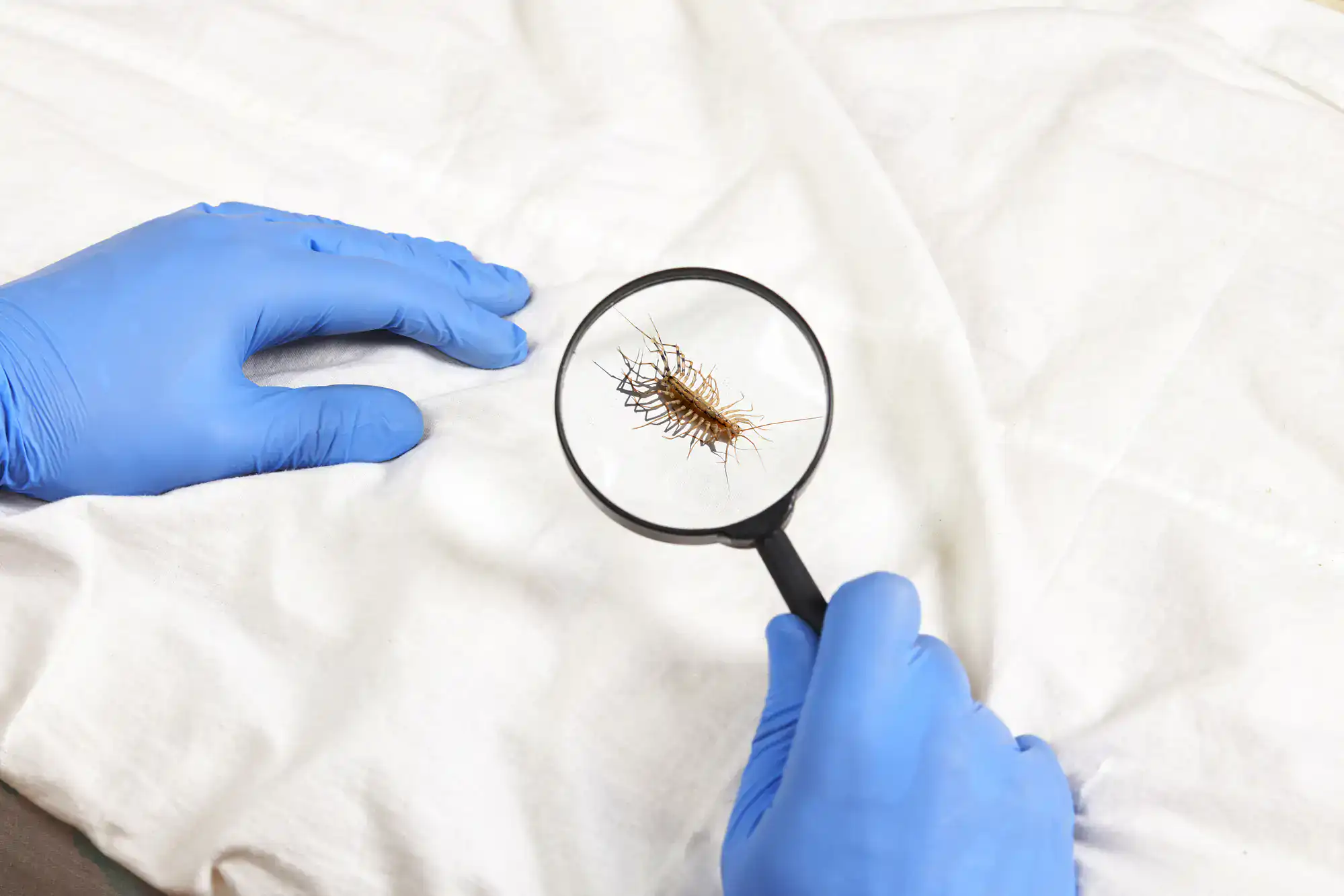
Yes and it’s not just near the park entrance. The entire wooded corridor that runs through northern Hauppauge, including the land adjacent to Blydenburgh and along the Nissequogue River, is active deer and small mammal habitat. Those animals are the primary hosts for tick larvae and nymphs, and they move through residential yards regularly. Hikers and dog walkers on the Stump Pond Loop trail have specifically flagged ticks as one of the main challenges on that trail and those same ticks don’t stop at the park boundary.
If your property has any wooded border, backs up to a fence line with natural growth behind it, or is within a half-mile of that corridor, your tick pressure is meaningfully higher than the Suffolk County average. A seasonal professional program not a one-time spray is what actually creates a sustained barrier in that kind of environment.
For a property in Hauppauge, a full seasonal program typically runs from early April through October that’s roughly four to six applications depending on your yard’s specific risk level and how active the season is. A single treatment is not enough. Tick activity in this climate zone doesn’t stop after one spray, and the protective window for most professional products is four to six weeks before a reapplication is needed to maintain coverage.
The most critical window is May through June, when nymphal deer ticks are at peak activity. Nymphs are roughly the size of a poppy seed nearly impossible to spot before they’ve already been attached long enough to potentially transmit Lyme disease. Getting your program started in early April means you have coverage in place before that window opens, which is where the real prevention happens. Waiting until you find a tick on your dog to call is already behind the curve.
The products we apply are targeted to specific harborage zones not broadcast-sprayed across your entire yard indiscriminately. After application, the treated areas need time to dry, which typically takes 30 to 60 minutes depending on conditions. Once dry, the yard is safe for children and pets to use normally.
It’s worth putting the risk in perspective. The documented Lyme disease infection rate among ticks on Long Island is over 50 percent in some studies. Babesiosis another tick-borne illness has been found in nymphal ticks at rates more than double those seen in neighboring Connecticut. The risk of leaving a Hauppauge yard untreated in tick season is considerably higher than the risk of a properly applied professional treatment. A licensed applicator knows how to use these products correctly that’s exactly what the NYSDEC certification process is designed to ensure.
A standalone pest control company comes out, sprays for ticks, and leaves. They’re not looking at your lawn health, your thatch depth, your soil moisture, or the conditions that make your yard attractive to ticks in the first place. We handle both sides of the problem because we’re a lawn care company that also holds NYSDEC pesticide certification.
Ticks thrive in specific conditions: overgrown thatch, excess moisture, low turf density, neglected ornamental beds. Hauppauge’s high water table and mature tree canopy mean those conditions develop easily if a lawn isn’t being properly maintained. When your lawn is aerated, properly fertilized, and maintained at the right density, it naturally reduces the habitat ticks need to survive close to your house. The pest management and the lawn care reinforce each other and you’re not paying two separate companies to work on the same property without talking to each other.
Earlier than most people think. Hauppauge sits in USDA hardiness zone 7b with a humid subtropical climate, which means spring arrives faster here than in colder parts of New York State. Deer ticks can become active when ground temperatures reach around 40 degrees Fahrenheit which in a typical Hauppauge spring can happen in late March or early April, well before most homeowners are thinking about pest control.
The mistake most people make is waiting until they find a tick or until it’s obviously warm outside. By then, nymphal tick season is already approaching or underway. Starting your program in early April puts you ahead of the highest-risk period rather than reacting to it. If you have a dog that spends time outdoors or kids who play in the yard, getting the first application down before May is the single most impactful thing you can do for the whole season.
New York State law requires that commercial pesticide applications including tick control treatments be performed by or under the direct supervision of a NYSDEC-certified commercial pesticide applicator. That certification requires completing a 30-hour training program, passing a state exam, and renewing the license every three years. It’s not a formality it’s a legal requirement, and it exists because the products being applied are regulated for good reason.
In practice, not every company operating in Hauppauge follows this. Some send workers who are not certified to apply the products they’re carrying. That’s both a regulatory violation and a quality issue an uncertified applicator doesn’t have the training to identify the right harborage zones, select the appropriate products, or apply them at the correct rates for your specific property. When you hire us, every technician on your job is NYSDEC-licensed. That’s not a bonus feature it’s the baseline standard the state requires, and it’s one worth verifying with any company you’re considering.
Useful Links
Other Services we provide in Hauppauge