Hear from Our Customers
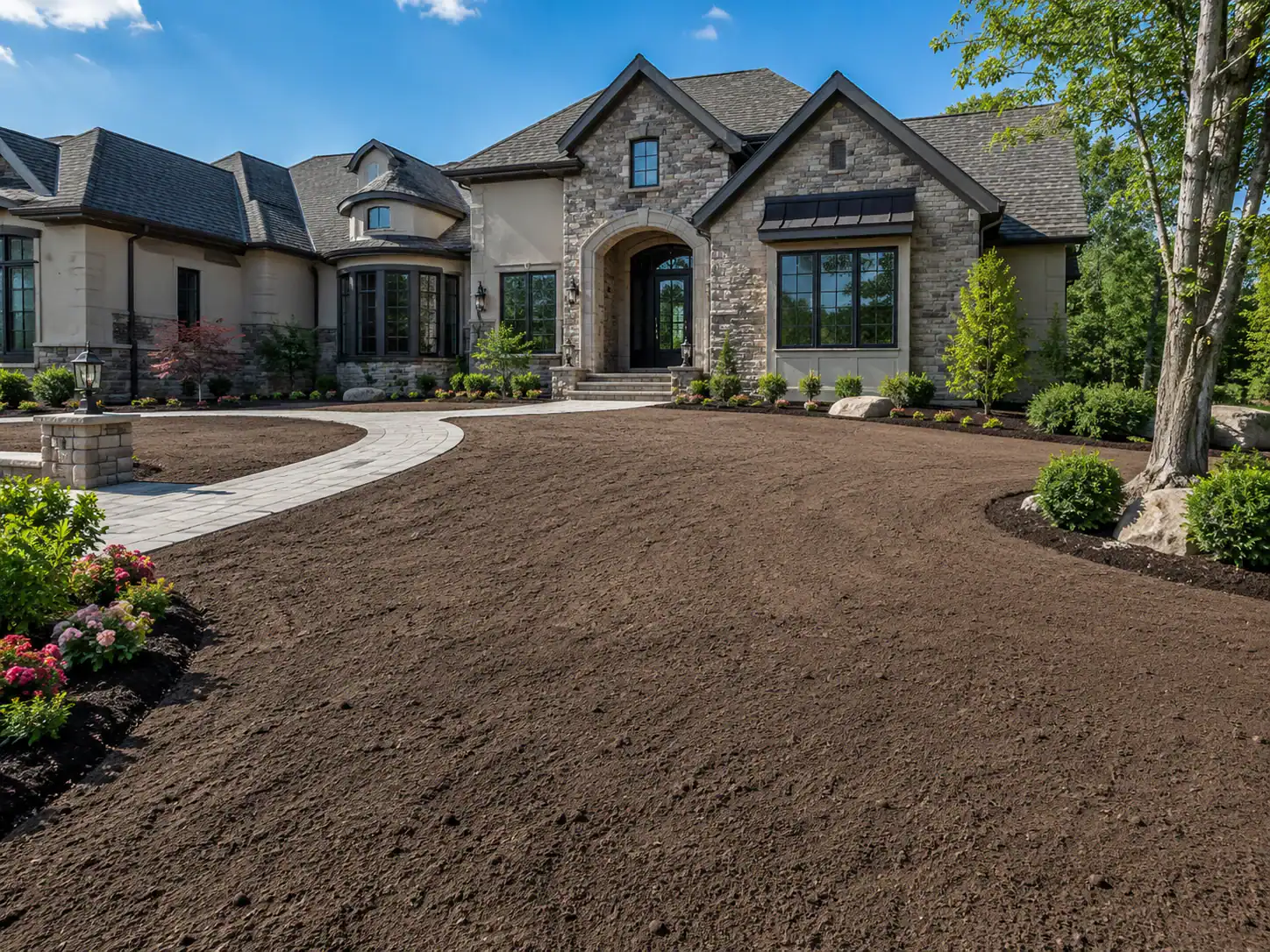
A restored lawn in Kings Park isn’t just greener it’s structurally healthier. The bare patches fill in. The thin, stressed areas thicken up. And because the underlying problem was corrected, it stays that way through summer heat, fall rain, and the next growing season after that.
Kings Park sits on some of the most variable soil on Long Island. Some properties have clay-heavy ground that holds water, compacts under foot traffic, and suffocates roots from below. Others have sandy loam that drains too fast and can’t hold nutrients long enough for turf to establish. Neither type responds well to surface-level treatment bag fertilizer, broadcast seed, or a quick aeration pass because the real problem is underground. When we correct soil conditions first, everything applied on top actually works.
The mature tree canopy throughout Kings Park adds another layer of complexity. Established oaks, maples, and other large deciduous trees create chronic shade stress on the turf below, leading to the thin, patchy grass that homeowners on older residential streets deal with year after year. Shade-tolerant overseeding and targeted soil improvement can address this but only if it’s done with the right species selection and at the right time of year for Long Island’s growing calendar.
We’ve been a NYS-licensed lawn care operation in Suffolk County since 1986. That’s not a marketing number it’s a track record of working through every soil type, every drought cycle, and every turf disease pattern Long Island has thrown at a lawn over nearly four decades.
We’ve worked throughout Kings Park and the surrounding North Shore communities long enough to know that a lawn on a shaded street near Nissequogue River State Park has different needs than one on an open lot closer to Route 25A. That kind of local familiarity doesn’t come from a training manual. It comes from showing up, season after season, and doing the work in the same neighborhoods where we’ve built our reputation.
When you call Lawn Master, you’re reaching a local Suffolk County operation not a regional call center routing your job to whoever’s available. We know the soil in Kings Park. We know the seasons. And we know when a lawn can be saved and when it genuinely needs something more.
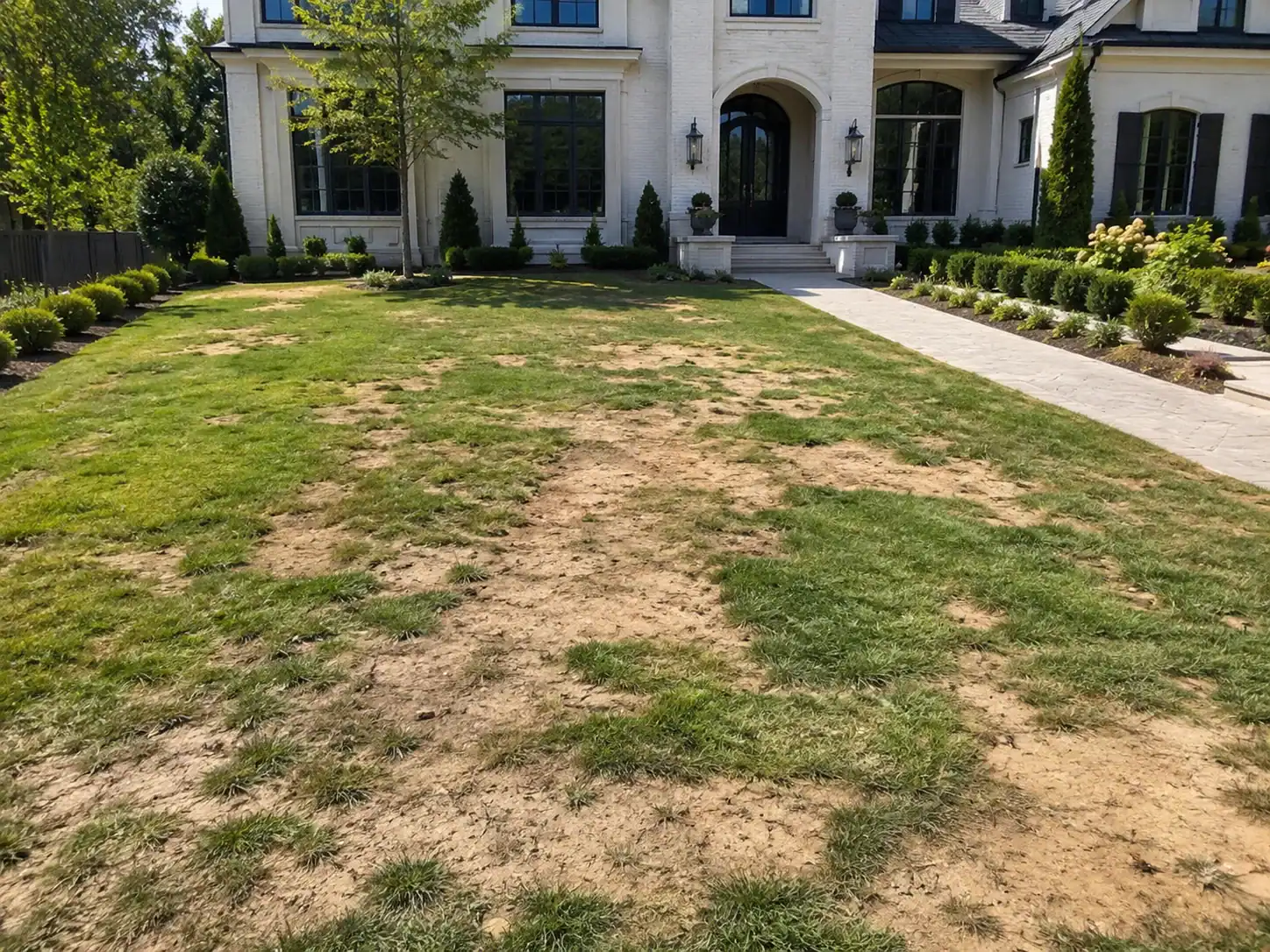
It starts with a real assessment not a quick walk-around before the crew unloads the truck. We look at what’s actually happening: soil compaction levels, thatch depth, pH balance, signs of grub or fungal damage, shade patterns, and drainage behavior. In Kings Park, where clay soil and sandy loam can exist on the same property, that diagnostic step isn’t optional it’s the whole reason the treatment works.
Once we understand what’s driving the decline, we correct the soil conditions before we do anything else. That typically means core aeration to break up compaction, targeted amendments to adjust pH or organic matter, and thatch management where buildup is restricting water and nutrient movement. For bare or thinning areas, we use slice seeding a technique that cuts directly through thatch and deposits seed into the soil where it can actually germinate, rather than sitting on the surface and washing away.
Timing matters more than most homeowners realize. On Long Island’s North Shore, the optimal window for seeding and restoration is late August through mid-October. Soil temperatures are still warm enough to support germination, but the brutal summer heat has passed. New York State also prohibits nitrogen fertilizer applications between November 1 and April 1 a regulation we build into every restoration plan from the start, so your lawn gets what it needs within the right window and nothing is wasted.
Ready to get started?
This distinction matters because the two services are not interchangeable and choosing the wrong one costs you time and money. Lawn restoration in Kings Park means bringing an existing lawn back to health: diagnosing the root cause of decline, correcting the soil, and reviving the turf you already have through techniques like core aeration, slice seeding, overseeding, and targeted nutrient correction. If your lawn still has viable grass plants even if they’re stressed, patchy, or thinning restoration is almost always the right path.
Lawn renovation is different. That’s when the lawn is structurally beyond recovery fully dead, weed-dominated to the point of no return, or so severely damaged that starting over makes more practical sense than trying to revive what’s there. We’ll tell you honestly which one applies to your property. If restoration is the answer, we restore. If your lawn genuinely needs a full rebuild, we’ll say so and walk you through that process separately.
For Kings Park homeowners, restoration most commonly addresses compaction from years of foot traffic on aging residential lots, drought stress from consecutive hot summers, bare patches from grub or fungal damage, and chronic thinning under the North Shore’s mature tree canopy. Each of these has a specific fix and because Kings Park sits adjacent to Nissequogue River State Park and drains toward Long Island Sound, we apply every treatment with responsible nutrient loading and water-quality-safe practices built in.
The honest answer is: most lawns can be saved and most homeowners who think they need a full replacement actually don’t. If your lawn still has living grass plants, even in isolated areas, that’s a foundation worth working with. Bare patches, thinning turf, and stress-related decline are restoration problems, not replacement problems.
The cases where replacement genuinely makes sense are when the lawn is completely dead across the majority of the property, when weed coverage has overtaken viable turf beyond recovery, or when a structural issue grading, drainage failure, or severe root competition has made it impossible for grass to survive without addressing the underlying cause first. For most Kings Park homeowners dealing with compaction from foot traffic on older residential streets, drought stress, shade thinning under mature trees, or patchy regrowth after a rough summer, restoration is the right call. We’ll assess your lawn honestly and tell you exactly what you’re working with before any work begins.
Restoration means bringing your existing lawn back to health. The grass is still there it’s just stressed, thin, compacted, or struggling because of a soil or environmental problem that hasn’t been addressed. The process involves diagnosing the cause, correcting the soil conditions, and reviving the turf through aeration, slice seeding, overseeding, and nutrient correction. You keep the lawn you have; you just fix what’s making it fail.
Renovation means tearing out the existing lawn and starting over. It’s the right move when the lawn is too far gone to recover fully dead, dominated by weeds, or structurally compromised in a way that restoration can’t solve. The two services serve different situations, and applying the wrong one is an expensive mistake. If you’re not sure which one your lawn needs, that’s exactly what the initial assessment is for. We’ll look at what’s actually there and give you a straight answer.
On Long Island’s North Shore, the best window for lawn restoration particularly for seeding and overseeding is late August through mid-October. Soil temperatures during this period are still warm enough to support germination, typically staying above 50°F, while the intense summer heat that stresses cool-season turf has passed. Fall establishment also gives new grass roots time to develop before winter, which means a stronger, more resilient lawn the following spring.
Spring is a secondary window April through May works for certain restoration steps but fall is consistently more reliable for seeding results in this region. One thing to keep in mind: New York State prohibits nitrogen fertilizer application between November 1 and April 1, so any restoration plan that includes fertilization needs to be timed accordingly. We build that into the schedule from the start so nothing is applied outside the legal window and every treatment lands when it’s most effective.
Recurring bare or dead patches almost always point to an unresolved underlying condition not bad luck or bad seed. The most common culprits in Kings Park are soil compaction in high-traffic areas on residential properties, chronic shade stress under the mature tree canopy that covers many older streets in the area, grub damage from Japanese beetle larvae feeding on root systems, and localized drainage problems in areas with clay-heavy soil that holds water too long after rain.
If you’ve seeded the same spot two or three times and it keeps failing, the seed isn’t the problem. The environment that seed is being asked to grow in hasn’t been fixed. That’s why our process starts with a diagnostic assessment rather than jumping straight to treatment. Once we identify what’s actually causing the recurring failure whether it’s compaction, pH imbalance, pest activity, or a drainage issue specific to your property we address that first. Then the seed has a real chance to establish and hold.
You’ll typically see germination from slice seeding or overseeding within 14 to 21 days under good conditions adequate soil moisture, temperatures in the right range, and no major stress events. Visible thickening and coverage in bare areas usually becomes apparent within four to six weeks. Full establishment, where the new turf is dense enough to handle normal foot traffic and mowing, generally takes one full growing season.
That said, the timeline varies depending on what was wrong with the lawn in the first place. A lawn that needed significant soil correction pH adjustment, compaction relief, or organic matter improvement will take longer to show results than one that just needed overseeding in a few thin spots. In Kings Park, where soil variability between properties is real and meaningful, we give you an honest timeline based on your specific conditions after the assessment not a generic estimate that doesn’t account for what we actually find.
Yes and it should. Kings Park sits adjacent to Nissequogue River State Park, and the Nissequogue River empties directly into Long Island Sound less than two miles from residential neighborhoods. What gets applied to lawns in this area doesn’t stay there it moves through the soil and eventually reaches the watershed. That’s not a hypothetical; it’s a documented concern that Suffolk County and New York State have both addressed through regulation and public education.
Our restoration programs are designed with that in mind. We follow New York State’s fertilizer blackout period no nitrogen applications between November 1 and April 1 and we calibrate nutrient loading based on what your soil actually needs rather than applying maximum rates on a fixed schedule. For Kings Park homeowners who are conscious of the environmental responsibility that comes with living near the Sound and the river estuary, that approach isn’t an upsell it’s just how responsible lawn restoration in this area should be done.
Useful Links
Other Services we provide in Kings Park