
Hear from Our Customers
If brown patches keep showing up every July, or the same spots die off every spring no matter how much you reseed, the problem isn’t your seed or your effort. It’s an active fungal disease living in your soil and it’ll keep coming back until someone actually identifies it and treats it correctly.
Living near the Connetquot River and the Great South Bay, Great River deals with elevated ambient humidity that most inland Suffolk County properties never experience. Nighttime moisture stays high, morning dew lingers longer, and grass blades stay wet well past sunrise. That’s the exact environment where brown patch thrives and it can destroy a large section of lawn in a matter of days before you even notice it spreading.
The sandy glacial outwash soils common throughout Great River’s South Shore also make dollar spot a persistent problem. These soils drain fast, stress turf during dry stretches, and create the low-nitrogen conditions that dollar spot exploits aggressively. Once you get a proper diagnosis and a targeted fungicide application matched to what’s actually in your lawn, you stop the cycle and your grass has a real chance to recover and hold.
We are a New York State DEC licensed commercial pesticide applicator serving Great River and Suffolk County and that license isn’t a marketing detail. Under New York State law, no business can apply pesticides for hire without it. Earning it means passing state exams, meeting experience requirements, and renewing every three years with continuing education. It also means legal access to restricted-use professional fungicide formulations that aren’t available at any retail store, including the home improvement centers over in East Islip.
That distinction matters in a community like Great River, where general tree services and lawn maintenance companies also offer lawn care but rarely lead with fungicide expertise or licensed applicator credentials. When you hire us, you’re getting someone who can actually identify what disease is in your lawn, select the right chemistry for it, and apply it at the right rate and time not someone running a generic spray program on a fixed schedule.
Every application comes with written documentation: what was applied, at what rate, and when. That’s required by New York State DEC regulations, and it’s the kind of accountability that matters when your property sits near the Connetquot River watershed.
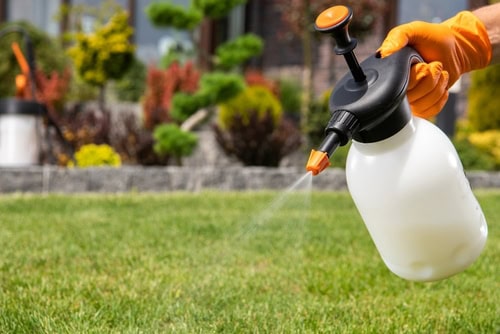
It starts with an on-site assessment of your lawn’s actual condition. Brown patch, dollar spot, and red thread don’t look the same, don’t behave the same, and don’t respond to the same fungicide chemistry. Applying the wrong product to the wrong disease is a waste of your money and time and it’s exactly what happens when someone skips the diagnosis step. We identify the specific pathogen before anything gets sprayed.
Once the disease is confirmed, the treatment plan is built around it. That means selecting a professional-grade fungicide formulation matched to the identified pathogen, applying it at the correct rate for your lawn’s size and condition, and timing the application to the environmental window when it’ll be most effective. In Great River, that timing matters more than in most communities the elevated humidity from the bay and river, the mature tree canopy shading large portions of many lots, and the sandy South Shore soils all factor into when and how treatments are applied.
For lawns with a history of recurring disease, a preventative program is usually the smarter move. Brown patch doesn’t wait for you to notice it by the time the circular patches appear during a humid July night, the disease has already been active for days. Preventative applications timed to Great River’s specific seasonal disease windows stop outbreaks before they start. After every visit, you receive full written documentation of what was applied a legal requirement for licensed commercial applicators in New York State, and a straightforward record for your own files.
Ready to get started?
We offer fungicide treatment covering the three diseases most common on Long Island’s South Shore: brown patch, dollar spot, and red thread. Each one shows up differently, peaks at different points in the season, and requires a different approach. Brown patch is the summer threat it hits hardest when nighttime temperatures stay above 70°F and humidity is elevated, conditions that are structurally more common in Great River than in landlocked communities further north or inland. Dollar spot runs from late spring through fall, feeding on the low-nitrogen, drought-stressed turf that Great River’s fast-draining sandy soils produce. Red thread peaks in spring and again in fall when temperatures cool to the 60–75°F range and nitrogen is deficient and it spreads fast, with spores traveling up to eight feet from a single infected area.
The fungicide products we use are restricted-use professional formulations the same active ingredients used on golf courses and professional athletic turf that are not available at retail regardless of what you’re willing to spend. Access to those products is a direct function of holding a New York State DEC commercial pesticide applicator license. We also rotate fungicide chemistries between applications to prevent resistance from building up, which is something DIY applications with store-bought products almost never do correctly.
If your lawn has shaded areas under mature trees common on Great River’s larger, estate-scale lots those areas get specific attention, because low airflow and limited sunlight create fungal hotspots that a blanket spray program misses entirely. The goal is targeted treatment where disease pressure is actually elevated, not a uniform application across the whole property.
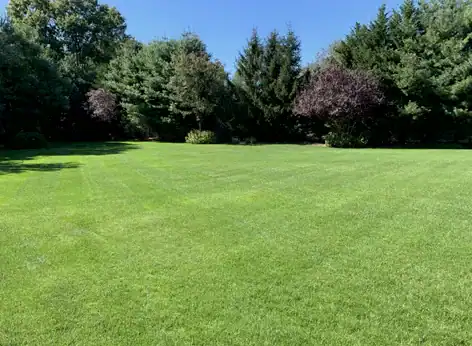
Brown patch is caused by the fungus Rhizoctonia solani, and it thrives in exactly the conditions Great River produces every summer: nighttime temperatures above 70°F, elevated humidity, and grass blades that stay wet for extended periods. Because Great River is essentially surrounded by water the Connetquot River to the west and the Great South Bay to the south ambient moisture levels here are structurally higher than in inland Suffolk County communities. That means the disease window is longer and the conditions more favorable than most homeowners realize.
The reason it keeps coming back is that the fungal pathogen remains in the soil between seasons. Reseeding the damaged areas without treating the underlying disease just gives the pathogen new grass to infect. A curative fungicide application using a professional-grade formulation matched to Rhizoctonia solani breaks the cycle. For lawns with a documented history of annual brown patch outbreaks, a preventative program timed to the weeks before conditions peak is usually more effective and more cost-efficient than waiting for the damage to appear and responding after the fact.
Dollar spot is a fungal disease caused by Clarireedia jacksonii, and it produces small, straw-colored patches roughly the size of a silver dollar though multiple patches can merge into larger damaged areas if left untreated. It’s particularly aggressive on Long Island’s South Shore because the conditions here match its preferred environment almost perfectly: sandy, fast-draining soils that stress turf during dry periods, warm days with cool nights, and heavy morning dew that keeps grass wet.
The sandy glacial outwash soils throughout Great River drain quickly, which means turf can become nitrogen-deficient during dry stretches and nitrogen-deficient turf is significantly more vulnerable to dollar spot than a well-fed lawn. The disease is active from late spring through fall, which means it can show up multiple times in a single season if conditions stay favorable. Treating it correctly requires confirming that dollar spot is actually what you’re dealing with not red thread or another cool-season disease that looks similar and then applying a fungicide chemistry that targets it specifically. A licensed applicator can make that call on-site before any product goes down.
Red thread is caused by the fungus Laetisaria fuciformis, and it has a distinctive appearance that sets it apart from brown patch and dollar spot: infected grass takes on a pinkish or reddish tint, and if you look closely you can see thin, thread-like pink strands extending from the grass blades. It typically appears in spring May through June on Long Island and again in fall when temperatures drop back into the 60–75°F range and nitrogen levels in the soil are low.
What makes red thread particularly frustrating is how fast it spreads. Spores can travel up to eight feet from a single infected area, which means a small patch can cover a significant section of lawn quickly if conditions stay favorable. Great River’s cool, moisture-laden spring and fall seasons moderated by the bay and river can extend the red thread window longer than in inland communities where temperatures swing more dramatically. The good news is that red thread responds well to targeted fungicide treatment when it’s correctly identified. The key is confirming it’s red thread before selecting the product, because the chemistry that works on red thread isn’t the same as what you’d use for brown patch.
In New York State, you can legally apply pesticides to your own property without a license. The issue isn’t legality it’s effectiveness. The fungicide products available at retail contain lower concentrations of active ingredients, often the wrong chemistry for the specific disease present, and are applied by homeowners at inconsistent rates and timing. The professional-grade formulations that actually perform at the level of a golf course or athletic field turf program are restricted-use products. You cannot purchase them regardless of budget or intent unless you hold a New York State DEC commercial pesticide applicator license.
Beyond product access, the diagnosis step is where most DIY attempts fall apart. Brown patch, dollar spot, and red thread look different enough to a trained eye, but they’re easy to confuse when you’re looking at a stressed lawn for the first time. Applying a brown patch fungicide to a dollar spot outbreak or vice versa wastes money and leaves the actual disease untreated. There’s also the resistance issue: applying the same product repeatedly builds fungal strains that no longer respond to it. We rotate chemistries to prevent that from happening, which is something homeowners using store-bought products almost never do correctly.
This is a legitimate concern for Great River homeowners, and it’s one of the reasons hiring a licensed applicator specifically matters here. The Connetquot River Watershed Action Plan is an active Suffolk County initiative addressing nutrient runoff and water quality in the Connetquot River system. Responsible pesticide application near that waterway isn’t just a preference it’s something the broader community has a documented stake in.
A licensed commercial pesticide applicator is required by New York State DEC regulations to apply products at the correct rate, under appropriate weather conditions, and with full written documentation of every application. That combination correct rate, correct timing, proper record-keeping significantly reduces the risk of runoff compared to a homeowner applying excessive amounts of the wrong product at the wrong time. Our applications are targeted to the areas where disease pressure is actually present, not broadcast across the entire property indiscriminately. For properties near the river or bay, that targeted approach is both the professionally responsible choice and the environmentally appropriate one.
It depends on the disease history of your lawn and whether you’re running a preventative program or responding to an active infection. For a lawn with no prior disease history and no obvious current symptoms, a single preventative application timed to the peak disease window may be sufficient. For lawns in Great River with a documented history of annual brown patch outbreaks which is common given the elevated humidity from the Connetquot River and the bay a two-application preventative program timed to the weeks before and during peak summer conditions gives much stronger protection.
Active infections typically require a curative application followed by a follow-up treatment to confirm suppression, since fungal diseases can rebound if conditions remain favorable and the pathogen isn’t fully controlled. Lawns with multiple disease pressures say, red thread in spring and brown patch in summer may need separate treatments timed to each disease’s seasonal window. After an on-site assessment, we’ll give you a straightforward recommendation based on what’s actually present in your lawn and what the seasonal conditions in Great River are likely to bring. There’s no fixed program that fits every property the recommendation comes from the diagnosis, not the other way around.
Useful Links
Other Services we provide in Great River