
Hear from Our Customers
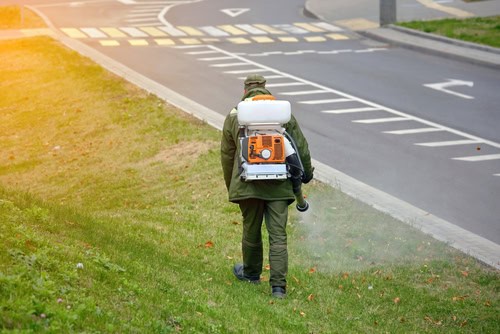
The same brown patches showing up in the same spots every July aren’t a watering problem. They’re not a soil problem. They’re a disease problem and if you’ve been reseeding those areas every fall and watching them die again the following summer, the disease was never treated in the first place. That cycle ends when the right diagnosis comes first.
Living along the Great South Bay means your lawn faces a fungal environment that inland towns like Coram or Holbrook simply don’t deal with at the same intensity. The maritime air keeps overnight moisture elevated all summer, your sandy soil warms faster than most people expect, and that combination creates near-perfect conditions for brown patch to take hold before most homeowners even realize the season has started. When we properly identify the disease and treat it with the right chemistry at the right time, you stop losing the same ground every year.
Dollar spot is another one that gets misread constantly in Patchogue. Those silver-dollar-sized brown patches in dry, stressed areas of your lawn aren’t drought damage they’re a fungal disease that thrives specifically in the nitrogen-deficient conditions that sandy South Shore soils create. Watering more makes it worse. Treating the actual disease, and addressing what’s making your turf vulnerable to it, is what actually turns it around.
Lawn Master holds a New York State DEC commercial pesticide applicator license. That’s not a marketing claim it’s a verifiable legal credential that required passing state examinations, meeting experience requirements, and maintaining continuing education every renewal cycle. It also means we can legally purchase and apply restricted-use fungicide formulations that aren’t available at the Home Depot on Medford Avenue or the Lowe’s on Sunrise Highway. If the company treating your lawn can’t show you that license, they’re not legally permitted to apply the products that work on established fungal disease.
We serve Suffolk County, and Patchogue is squarely in that territory. Our applicators know the South Shore’s sandy soils, the Great South Bay’s humidity patterns, and the specific disease windows that hit coastal lawns harder and earlier than most homeowners anticipate. That local knowledge isn’t incidental it’s what makes our timing and chemistry decisions actually accurate for your lawn, not just a generic schedule applied regardless of what’s happening on the ground.
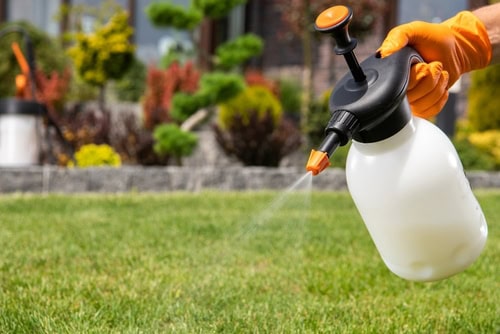
The process starts with identifying what’s actually in your lawn. Brown patch, dollar spot, and red thread are the three most common fungal diseases on Patchogue lawns, and they look similar to the untrained eye but they require different fungicide chemistries, different application timing, and different supporting steps. Applying the wrong product doesn’t just fail. It gives the disease more time to spread while you’re waiting to see results that aren’t coming.
Once we identify the pathogen, we select the right fungicide based on the specific disease present, the current stage of infection, and the environmental conditions in your lawn at that moment. In Patchogue, that means accounting for where you are in the summer humidity window, what your soil’s nitrogen levels look like, and whether conditions favor a curative approach, a preventative one, or both. Brown patch treatment is timed to the coastal heat window typically late June through mid-August here. Dollar spot treatment accounts for the nutrient leaching that sandy South Shore soils are prone to. Red thread is addressed in the spring and fall cool-season windows before it spreads.
Every application is documented in writing what was applied, at what rate, on what date, and under what conditions. New York State requires this of licensed commercial applicators, and you receive that record after every visit. It tells you when it’s safe for your kids and pets to be back on the lawn, and it gives you a paper trail that matters if you ever sell the property.
Ready to get started?
The fungicide formulations we use are restricted-use products legally available only to NYS-licensed commercial applicators. These are the same active ingredient classes used on golf courses and professional athletic turf, including systemic compounds that move through the plant and address disease at the root zone, not just the surface. The over-the-counter products at retail stores contain lower concentrations in contact-only formulations. If you’ve treated your lawn yourself and the disease came back, this is a significant part of why.
Fungicide resistance is also a real issue that most homeowners and even some service providers don’t account for. Applying the same chemistry repeatedly throughout the season gives fungal populations the opportunity to adapt. Our programs rotate modes of action using different fungicide classes across applications to prevent resistance from developing in your lawn’s specific disease population. This is a professional-level practice that requires both the knowledge to plan it and the licensed access to execute it.
For Patchogue homeowners with a documented history of recurring brown patch or dollar spot, we offer a preventative program that gets ahead of the disease before visible symptoms appear. By the time you can see the damage, the infection has typically been active for days or weeks. Preventative treatment, timed to Patchogue’s specific coastal disease pressure windows, costs less than emergency curative treatment and far less than a full lawn renovation after years of untreated disease.
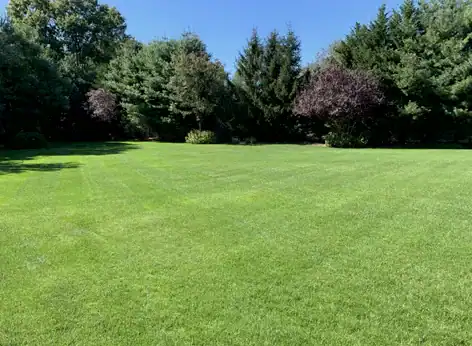
Recurring brown patches in the same locations are almost always a sign of an active or persistent fungal disease most commonly brown patch, caused by Rhizoctonia solani. The disease doesn’t disappear on its own at the end of summer. It goes dormant in the soil and reactivates as soon as conditions favor it again, which in Patchogue means late June when nighttime temperatures climb above 70°F and the Great South Bay’s maritime humidity keeps moisture levels elevated overnight.
The reason it keeps hitting the same spots comes down to two things: the disease was never properly treated, and those areas of your lawn likely have conditions shade, compaction, reduced airflow, lower soil drainage that make them more hospitable to fungal activity. We can identify the specific pathogen, apply the right fungicide chemistry to address the active infection, and recommend supporting cultural changes that reduce how vulnerable those areas are going into the following season.
They’re three distinct fungal diseases that look similar but behave differently and require different treatments. Brown patch creates large, irregular circular areas of tan or brown grass and is most aggressive during Patchogue’s humid summer window typically late June through mid-August when overnight temperatures hold above 70°F. Dollar spot produces smaller, silver-dollar-sized patches and is driven by nitrogen deficiency, which is a persistent issue in Patchogue’s sandy soils that leach nutrients faster than turf can absorb them. Red thread shows up as pink or reddish thread-like strands on grass blades and peaks in spring and fall when temperatures are in the 60–75°F range.
Each disease requires a different fungicide chemistry and different timing. Applying a product designed for brown patch to an active red thread infection, or treating dollar spot without addressing the underlying nitrogen deficiency, will not produce lasting results. Correct diagnosis before treatment is the only approach that actually works and it’s the only approach we take.
No and this is one of the most common and costly mistakes Patchogue homeowners make. If you’re overseeding bare or damaged areas in the fall without treating the fungal disease that caused the damage, you’re putting new seed directly into infected soil. The disease will kill the seedlings before they can develop root systems strong enough to survive. You’ll be back in the same position the following spring, wondering why the seed didn’t take.
The correct sequence is to treat the disease first, confirm the infection is no longer active, and then overseed during Patchogue’s fall window typically September into early October. That timing also happens to align with optimal germination conditions for cool-season grasses on Long Island: soil temperatures are still warm enough for germination, air temperatures are cooler, and the aggressive summer disease pressure has subsided. Skipping the treatment step and going straight to seed is just restarting the same cycle.
Yes. Under New York State law, any business applying pesticides including fungicides for hire must be registered with the NYS Department of Environmental Conservation and employ at least one certified commercial pesticide applicator. That certification requires passing core and category-specific state examinations, meeting experience or education thresholds, and renewing every three years with continuing education credits. It is a legal requirement, not a voluntary credential.
The practical consequence of this for Patchogue homeowners is significant. Licensed applicators are the only individuals legally permitted to purchase, possess, and apply restricted-use pesticides the professional-grade formulations that actually work on established fungal disease. An unlicensed operator can only use general-use products available at retail, which are less concentrated and less effective against active infections. NYS law also requires licensed applicators to notify neighbors before commercial lawn applications and to provide written documentation of every treatment. If your current lawn care provider can’t show you a valid NYS DEC commercial applicator license, they are not legally authorized to do this work.
Sandy and sandy/loamy soils dominate Patchogue’s residential areas, and they create two specific problems that increase fungal disease pressure. First, they warm faster than inland soils, which means Patchogue lawns enter the brown patch risk window earlier in the summer than homeowners typically expect sometimes by two to three weeks compared to towns further north like Coram or Selden. Second, sandy soils leach nutrients quickly, which means turf is chronically underfed unless fertilization is managed carefully. Nitrogen-deficient turf is significantly more susceptible to both dollar spot and red thread.
This creates a compounding cycle that’s common in Patchogue: the soil drains nutrients before the grass can use them, the turf becomes stressed and weakened, and the weakened turf becomes an easy target for fungal infection. Addressing the disease without understanding the soil conditions that are making the lawn vulnerable means you’re treating the symptom without correcting what’s feeding it. Our approach accounts for both.
For lawns with a history of recurring brown patch or dollar spot, a preventative program is genuinely worth considering. Here’s the practical reason: by the time you can see fungal disease symptoms the circular brown areas, the straw-colored patches the infection has typically been active for several days to a couple of weeks. Significant damage has already been done. A curative treatment at that point stops the spread, but it doesn’t undo the turf that was already lost.
Preventative fungicide applications are timed to get ahead of Patchogue’s specific disease pressure windows before nighttime temperatures consistently exceed 70°F for brown patch, and before the dry, nitrogen-stressed conditions that trigger dollar spot set in during mid-summer. In a coastal village where the Great South Bay’s humidity makes those windows arrive reliably every year, preventative treatment is less about whether disease will show up and more about whether you’re ready for it when it does. It also costs less than emergency curative treatment and far less than the lawn renovation that becomes necessary after years of untreated recurring disease.
Useful Links
Other Services we provide in Patchogue