
Hear from Our Customers
If your property backs up to wooded land, sits near the Nissequogue River, or borders one of Smithtown’s many preserved areas, you already know the drill. You find a tick on the dog. Then one on your kid. Then you start wondering whether your backyard is actually safe to use. That’s not a small thing and it’s not a problem a can of Home Depot spray is going to solve.
Professional flea and tick control changes what your yard actually feels like to use. Kids play outside without you counting the minutes until you can check them over. The dog goes out without you bracing for what you might find later. That shift from anxious to comfortable is what a properly executed treatment program delivers. In Smithtown, where the deer population is dense, the wooded corridors run deep, and three separate tick species are documented and active, that shift requires more than a perimeter spray from a franchise that doesn’t know this town.
What you get with a program designed for your specific property is consistent, seasonal protection that accounts for the real conditions on your lot not a generic plan built for an average suburban yard somewhere else on Long Island.
We’ve been serving Smithtown and Suffolk County since 1987. That’s not a marketing line it means the people treating your property have been working in this specific landscape, with these specific conditions, longer than most of the competitors you’ll find in a Google search have been in business. When Alternative Earthcare calls Smithtown “one of the worst areas in the country for tick-borne disease,” that’s not news to us. We’ve been treating properties along the Nissequogue River corridor, near Blydenburgh County Park, and throughout the Kings Park and St. James communities for decades.
Every job is handled by a licensed pesticide professional not a laborer handed a spray tank. New York State requires NYSDEC Commercial Pesticide Applicator certification for anyone doing this work commercially, and every Lawn Master technician holds it. That credential requires real training, a state exam, and ongoing renewal. It’s not a badge we print on a truck it’s the standard we’ve held since day one.
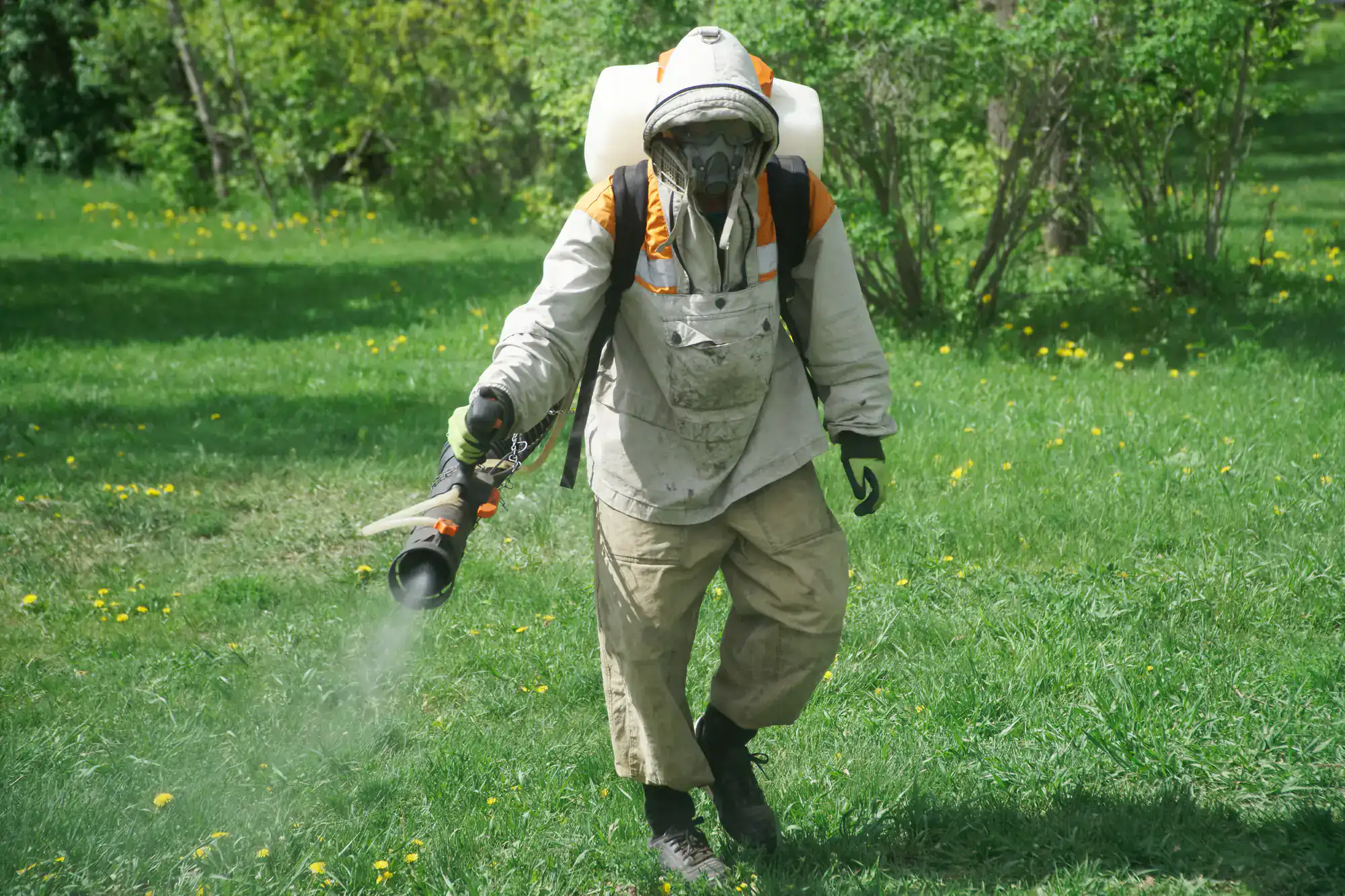
It starts with understanding your property not just spraying the perimeter and calling it done. Smithtown lots vary significantly. A home near Caleb Smith State Park Preserve on West Jericho Turnpike faces different tick pressure than a property in Nesconset with a more open yard. A wooded backyard in Kings Park that borders Nissequogue River State Park needs a different approach than a manicured lot in the Smithtown hamlet. Before any product goes down, we identify the high-risk zones on your specific property transition areas between lawn and wooded edges, leaf litter zones, ornamental beds, stone walls, and anywhere wildlife is likely moving through.
From there, treatment is applied by a licensed professional using commercial-grade products, including Insect Growth Regulators that break the flea reproductive cycle something you won’t find in anything sold at a retail store. Applications are timed around the actual tick activity calendar for the North Shore: early spring when adult blacklegged ticks wake up, peak nymph season in May and June when the smallest and most dangerous ticks are most active, and again in the fall when adult ticks surge before winter.
You’ll get seasonal reminders so nothing slips through the cracks, and payment is handled online no chasing invoices, no hassle. The goal is that you stop thinking about this and start actually using your yard again.
Ready to get started?
Smithtown isn’t a typical Long Island suburb when it comes to tick and flea pressure. The town has 25 parks, four state parks, and four beaches and thousands of acres of preserved natural land that serve as permanent, untreatable tick reservoirs directly adjacent to residential neighborhoods. Caleb Smith State Park Preserve, Sunken Meadow State Park, Blydenburgh County Park, and Nissequogue River State Park don’t get treated. The deer, mice, and other wildlife that carry ticks move freely between those preserved areas and your yard. That’s the reality of living here, and it’s why a custom-designed program matters more in Smithtown than almost anywhere else in Suffolk County.
Every program we build is tailored to the conditions on your actual property. That means identifying where ticks and fleas are most likely to harbor on your lot, applying the right products at the right time of year, and accounting for the wildlife pressure that’s specific to your location within the town. If you’re in the Village of Nissequogue, near the river, that’s a different profile than if you’re in Commack or Nesconset. The treatment reflects that.
We also handle full lawn care fertilization, aeration, seeding which means the health of your turf is part of the equation, not an afterthought. Dense, well-maintained grass with proper drainage is less hospitable to ticks and fleas than thatch-heavy, moisture-retaining turf. You’re not just getting pest control. You’re getting a yard that’s better maintained from the ground up.
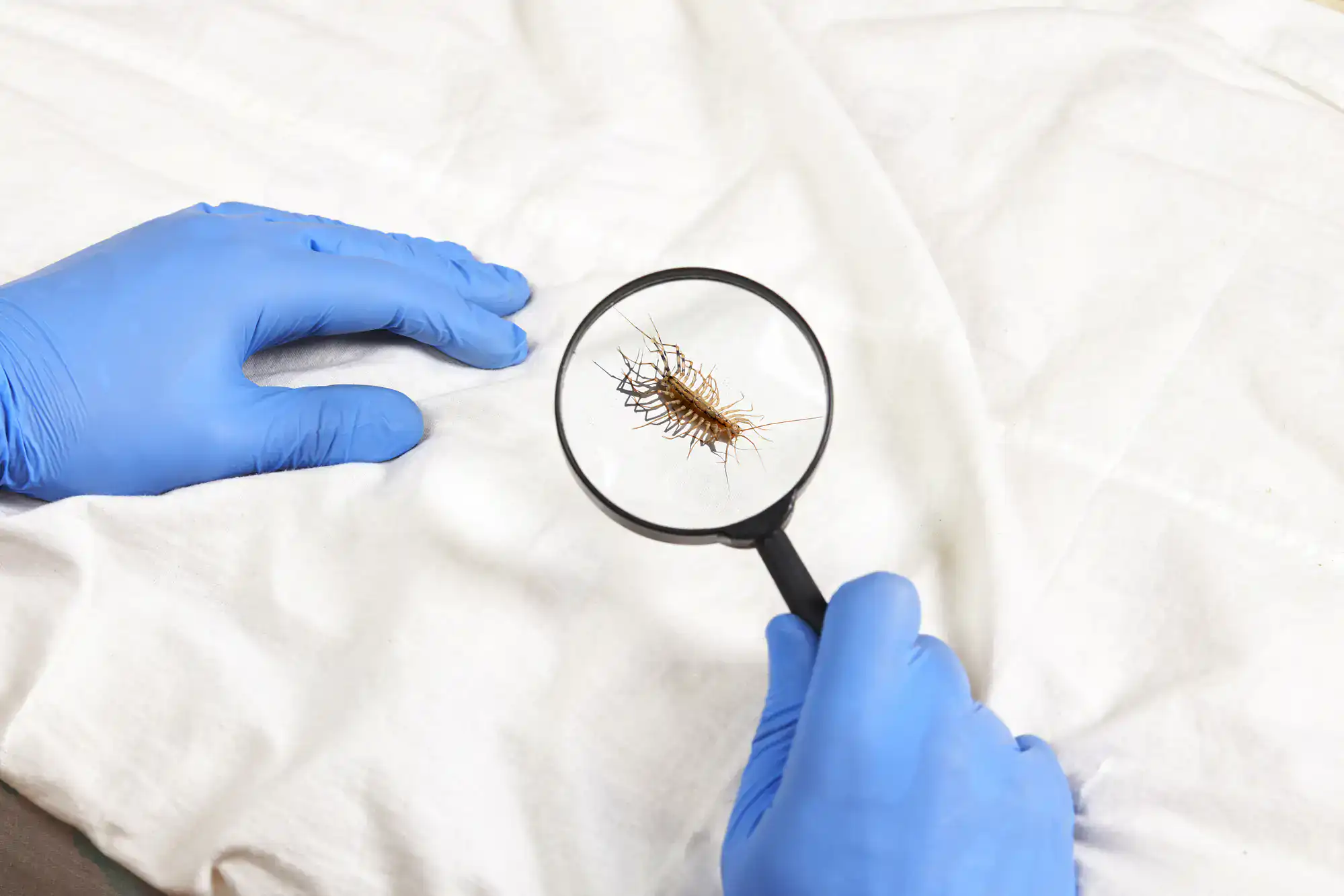
It’s legitimately one of the more serious tick environments on Long Island and that’s not an exaggeration used to sell you something. Alternative Earthcare, a company that’s been treating properties in this area since 1996, explicitly describes Smithtown as “one of the worst areas in the country for the spread of tick-borne diseases.” A Columbia University study found that 56% of Long Island ticks carry Lyme disease, and the Suffolk County Department of Health believes rates along the North Shore may be even higher than that figure.
The reason Smithtown specifically carries elevated risk comes down to geography. The Nissequogue River runs through the center of town, creating a continuous wildlife corridor from Blydenburgh County Park all the way to Long Island Sound. Caleb Smith State Park Preserve and Nissequogue River State Park together account for hundreds of acres of undeveloped land directly adjacent to residential neighborhoods land that can’t be treated and that continuously replenishes tick populations. If your property is anywhere near these areas, you’re dealing with sustained tick pressure, not a seasonal inconvenience.
The biggest difference most people don’t know about is Insect Growth Regulators, or IGRs. These are compounds that interrupt the flea reproductive cycle at the larval stage preventing eggs from developing into biting adults. They’re rarely found in anything sold at retail. Store-bought concentrates treat what’s alive right now. Professional-grade products treat what’s alive now and break the cycle that would replenish the population in three to four weeks.
Beyond the products themselves, there’s the application. Knowing where to treat on your specific property the shaded edges, the leaf litter zones, the transition areas between lawn and wooded borders is what determines whether a treatment actually works. A licensed applicator who’s assessed your Smithtown property knows that the stone wall on the north side of your yard or the overgrown area near your back fence is where the problem is concentrated. Spraying the open lawn and calling it done is what most DIY attempts look like, and it’s also why most DIY attempts fail.
Earlier than most people think. Adult blacklegged ticks the ones that carry Lyme disease become active as soon as temperatures consistently hit 35 to 40 degrees Fahrenheit. On Smithtown’s North Shore, that can happen as early as late February or March in a mild year. Most homeowners don’t start thinking about tick control until they find one on their dog in May, but by then the nymphal tick population the smallest, hardest-to-see, and most dangerous stage is already at peak density.
The practical answer for Smithtown properties is to have your first treatment down by early April, before nymph season starts in earnest. From there, applications every four to six weeks through the active season, with a fall round in September or October to address the second adult tick surge before winter. Smithtown’s North Shore location means falls can stay mild longer than inland communities, which extends that fall activity window. A program that accounts for the full season not just summer is what actually keeps your yard protected.
This is one of the most common questions, and it’s a fair one. The short answer is yes once the treatment has dried, the treated areas are safe for children and pets. Drying time is typically 30 to 60 minutes depending on conditions, and your technician will let you know the specific window for your application.
What matters here is that the products are applied by a licensed professional who is trained in targeted application meaning product goes where it needs to go, at the right concentration, and not indiscriminately across areas where it doesn’t need to be. NYSDEC Commercial Pesticide Applicator certification requires training in exactly this: how to apply effectively while minimizing unnecessary exposure. In a town like Smithtown, where families moved here specifically for the schools and the outdoor lifestyle the parks, the trails, the yards the goal is to make your outdoor space safer, not to introduce a different concern. A properly applied professional treatment does exactly that.
Pet flea prevention and yard flea control solve two different problems. The medication your dog or cat takes protects the animal it kills fleas that jump on them. What it doesn’t do is reduce the flea population living in your yard, in your lawn’s thatch layer, or in the shaded areas around your foundation and landscaping. Those fleas are still there, still reproducing, and still capable of coming inside on you, your kids, or your guests not just your pets.
In Smithtown specifically, the wildlife pressure makes this especially relevant. Raccoons, opossums, rabbits, and deer move through residential yards regularly particularly in neighborhoods near Blydenburgh County Park, the Nissequogue corridor, or any of the town’s wooded preserves. Every one of those animals can deposit flea eggs in your yard on a single pass. Your dog’s flea collar doesn’t address that. A yard treatment program does, by targeting the flea population at its source and breaking the reproductive cycle before it becomes an infestation inside your home.
A single treatment will knock down the active population on your property but it won’t hold for the season. Tick and flea treatments typically provide four to six weeks of effective protection per application. After that window, populations begin to rebuild, especially in a town like Smithtown where the pressure is continuous rather than seasonal. The parks, the river corridor, the deer moving through your yard these are ongoing sources, not one-time events.
A recurring program typically three to six applications timed to the actual activity peaks of each tick and flea species is what gives you consistent, season-long protection rather than a brief window of relief followed by the same problem returning. Think of it the same way you think about lawn fertilization: one application in April doesn’t carry you through October. The same logic applies here. The good news is that a well-structured program takes the thinking out of it entirely you get reminders, scheduled visits, and a yard that stays protected without you having to track it yourself.
Useful Links
Other Services we provide in Smithtown