
Hear from Our Customers
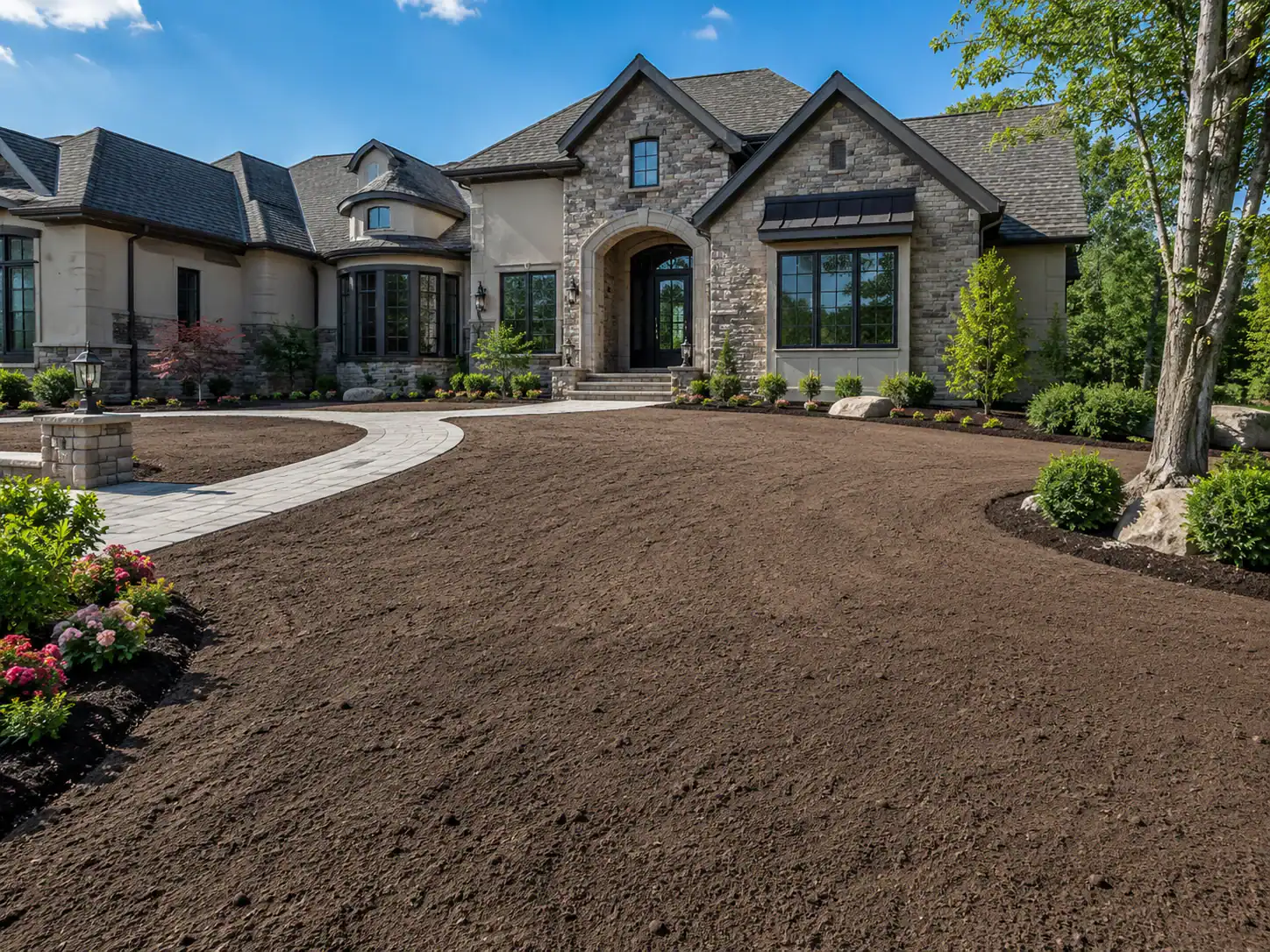
Most lawns in Smithtown don’t fail because of bad seed or bad luck. They fail because the soil underneath never got addressed. Decades of foot traffic, construction compaction from the town’s 1960s–1980s build-out era, and Long Island’s naturally variable soil profiles sandy loam in some areas, clay-heavy and dense in others create conditions where grass simply cannot sustain itself no matter how much you water or fertilize. Once the soil is corrected, the lawn follows.
What you end up with is turf that actually holds through the summer stress period instead of thinning out every July. Cool-season grasses like tall fescue and Kentucky bluegrass the standard across Smithtown’s residential neighborhoods thrive in Long Island’s spring and fall but take a beating in the heat. When the soil pH is balanced, compaction is relieved, and the right seed varieties are established, that summer vulnerability drops significantly. You stop reseeding the same spots every year.
For properties near the Nissequogue River or along the North Shore in villages like Head of the Harbor, salt accumulation in the soil adds another layer to the problem. Grass in those areas often needs targeted amendment and salt-tolerant varieties before any restoration work will stick. That’s the kind of site-specific detail that separates a real restoration from a bag of seed and a prayer.
We’ve been working on Long Island lawns since before most Smithtown homeowners bought their current houses. That’s 38 seasons of diagnosing grub outbreaks, drought damage, brown patch, compaction, and pH failures on the exact soil types and in the exact climate conditions that affect properties here. This isn’t a franchise running a national playbook. We’re a Suffolk County-based team that knows the difference between a lawn near Caleb Smith State Park Preserve and one in an older Kings Park neighborhood, and we treat them accordingly.
Every applicator on our team holds a valid NYS DEC pesticide applicator license which matters when your restoration plan includes grub control, fungicide treatment, or targeted weed suppression. We’re also fully registered with the Town of Smithtown’s Department of Public Safety under Chapter 195 and carry the required minimum insurance coverage. That compliance isn’t a footnote it’s what separates a legitimate restoration from a crew that disappears when something goes wrong.
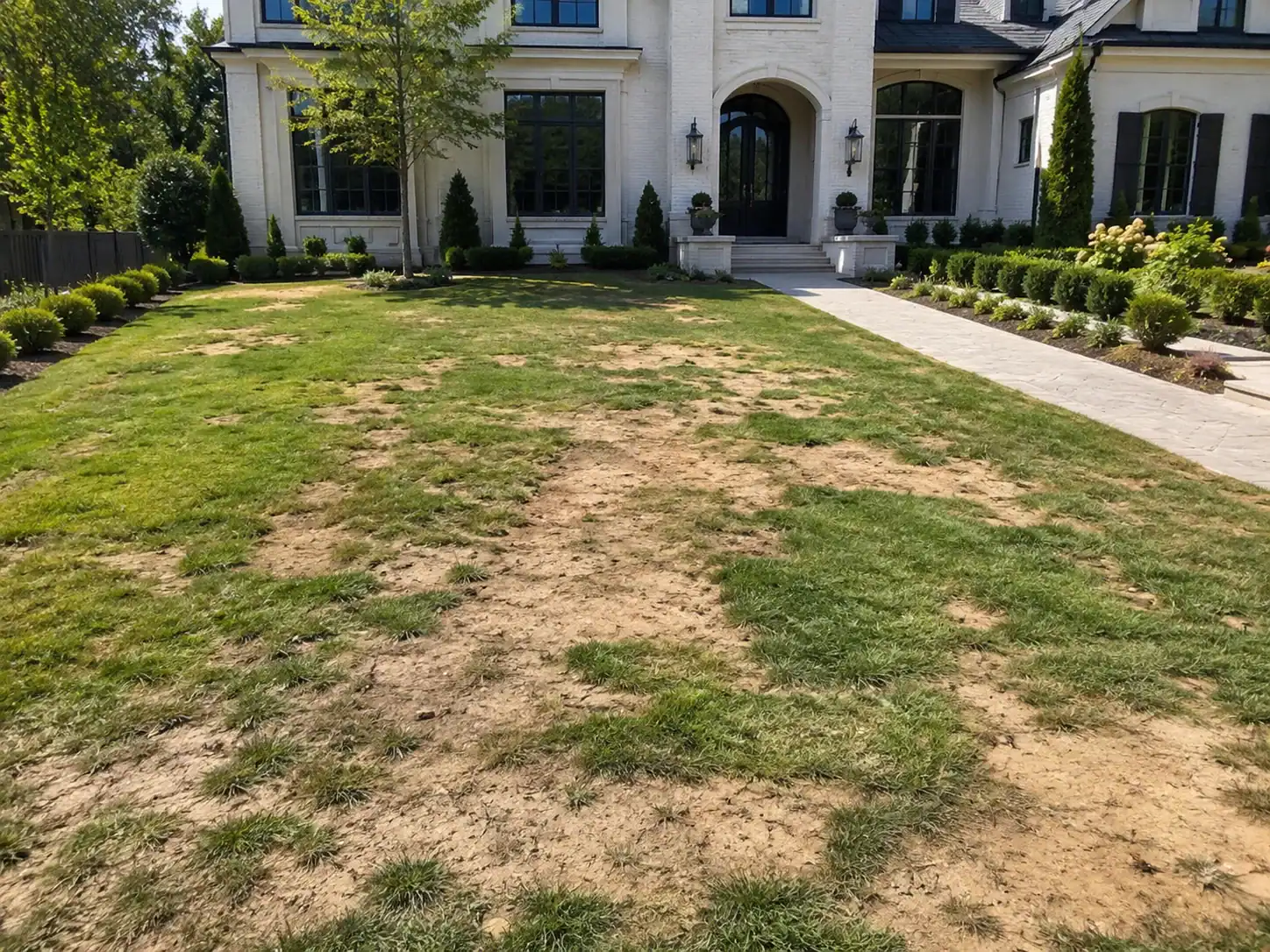
It starts with a proper diagnosis. Before anything gets applied to your lawn, we assess the soil testing pH and nutrient levels, measuring thatch depth, evaluating compaction, and checking for pest activity like grub damage. Smithtown’s older residential properties, many built during the suburban expansion of the 1960s and 70s, commonly have subsoils that were compacted during construction and never fully recovered. That compaction is often the invisible reason a lawn keeps failing. We find it before we treat it.
Once we know what we’re working with, soil correction comes first. That might mean lime or sulfur to bring pH into the 6.0–7.0 range that cool-season grasses need, organic matter amendment to restore depleted soil, or core aeration to break up compaction and open the root zone to water and air. Only after that foundation is set do we move into slice seeding a mechanical process that cuts directly into the soil and places seed at the right depth for germination. It dramatically outperforms broadcast overseeding on Long Island’s compacted and clay-heavy soils.
Timing matters more than most people realize. The prime restoration window in Smithtown runs from late August through mid-October, when soil temperatures support cool-season germination and summer stress has passed. We plan around that window deliberately. If you’re coming to us in spring, we’ll manage the secondary window carefully including pre-emergent timing so new seed isn’t competing with crabgrass pressure before it has a chance to establish.
Ready to get started?
Lawn restoration means bringing your existing lawn back to health correcting the soil, relieving compaction, reestablishing turf density, and addressing whatever caused the damage in the first place. It is not the same as lawn renovation, which involves tearing out the existing lawn and rebuilding from scratch. Most Smithtown homeowners with thinning, patchy, or damaged lawns don’t need renovation. They need restoration, and that distinction matters both for your budget and for the outcome.
What a full restoration program from us includes depends on what your lawn actually needs which is why the diagnostic step isn’t optional. Common components include soil testing and pH correction, core aeration, slice seeding with region-matched cool-season grass varieties, thatch management, and a targeted fertilization plan calibrated to your soil’s specific deficiencies. For lawns with active grub damage a real and documented issue across Suffolk County pest remediation is addressed before seeding begins, because seeding into an active infestation produces nothing.
If your assessment does reveal that the damage is too extensive for restoration a full lawn destroyed by severe grub pressure, construction disturbance, or years of total neglect we’ll tell you that directly and walk you through what a renovation program looks like instead. No upselling a rebuild when a restoration will do the job. And no overselling a restoration when the lawn genuinely needs to start over.
Restoration means rehabilitating the lawn you already have correcting soil conditions, relieving compaction, overseeding thin or bare areas, and addressing whatever caused the damage. The existing root system and soil profile are preserved and improved. Renovation means the existing lawn is removed entirely and the area is rebuilt from scratch, usually because the damage is too severe or widespread to recover from through corrective treatment alone.
For most Smithtown homeowners, restoration is the right call. The town’s residential stock skews toward mature properties homes built in the 1960s through 1980s where the lawn has been in place for decades and the underlying soil just needs correction, not replacement. If your lawn has viable coverage in some areas, an intact root system, and no catastrophic structural damage to the soil, restoration will get you where you want to go. We’ll tell you clearly during the assessment which path makes sense for your specific property and we won’t recommend renovation when restoration will produce the same result.
In most cases, yes even lawns that look completely dead can be brought back. Grass that has gone brown and dormant from summer drought, disease, or grub damage often still has a viable root system below the surface. The lawn isn’t dead; it’s stressed. The question is whether the underlying soil conditions can support recovery, and that’s exactly what a proper diagnostic assessment determines.
The lawns most likely to need full renovation rather than restoration are those where the damage is structural where an entire root system has been destroyed by a severe, untreated grub infestation, or where construction activity has stripped or contaminated the soil profile. Those situations do exist in Smithtown, particularly on properties that have undergone additions or landscaping overhauls. But they’re the exception, not the rule. Most damaged Smithtown lawns we assess are strong candidates for restoration, and we’ll give you an honest read on which category yours falls into before any work begins.
If your restoration is done during the prime fall window late August through mid-October you can expect to see germination within 10 to 21 days depending on seed variety and soil temperature. By the time the growing season winds down in November, a well-executed restoration typically shows meaningful coverage across previously bare or thin areas. Full establishment, where the new turf has developed a strong root system and blended uniformly with existing grass, usually takes one full growing season.
Spring restorations follow a similar timeline but come with more variables. Crabgrass pressure is the main one if pre-emergent herbicide timing isn’t managed carefully around a spring seeding, crabgrass can outcompete new turf before it establishes. We manage that timing deliberately. What you should not expect from any legitimate restoration provider is a fully dense, uniform lawn in four weeks. Anyone promising that is overselling. What you can expect from a properly executed program is steady, visible progress and a lawn that holds the following summer instead of reverting to the same problem.
Restoration cost depends on the size of the lawn, the extent of the damage, and what the diagnostic assessment reveals about soil conditions. A smaller Smithtown property with moderate thinning and manageable compaction will cost significantly less than a larger lot in Nissequogue or Head of the Harbor with severe grub damage, pH imbalance, and extensive bare patch coverage. There’s no honest way to give a flat number without knowing what you’re working with.
What we can tell you is what drives cost: soil testing and amendment, aeration equipment, slice seeding machinery, seed quality, and any pest remediation required before seeding begins. These are not optional shortcuts they’re the steps that determine whether the restoration holds. A cheaper quote that skips soil correction or uses broadcast seeding instead of slice seeding will cost you more in the long run when the lawn fails again by the following summer. The estimate we provide is itemized and specific to your property no vague packages, no surprise add-ons after the work starts.
This is one of the most common frustrations we hear from homeowners across Smithtown, Kings Park, and Nesconset and the answer is almost always the same: the seed is going down on soil that can’t support it. If your soil pH is outside the 6.0–7.0 range that cool-season grasses need, nutrients become unavailable to the roots regardless of how much fertilizer you apply. If the soil is compacted which is extremely common in Smithtown’s older residential neighborhoods where construction equipment compacted subsoils during development water and air can’t reach the root zone, and new seedlings die before they establish.
Broadcast overseeding on top of compacted, pH-imbalanced soil produces a temporary green-up that fails by the following summer. Every time. The fix isn’t more seed it’s correcting the conditions that are preventing the seed from working. Once soil pH is balanced, compaction is relieved through aeration, and seed is placed at the right depth through slice seeding, the lawn establishes properly and holds. That’s the difference between a seasonal patch job and an actual restoration.
Yes and it’s an important part of the process for many Smithtown properties. Japanese beetle and European chafer grub populations are a documented issue across Suffolk County, and the damage they cause often isn’t visible until late summer when large sections of turf can be pulled back from the soil like a loose carpet. By that point, the root system has already been destroyed beneath the surface. Seeding into an active or recently active grub infestation without addressing the pest first is a waste of time and money.
Grub remediation requires a licensed pesticide application which is why NYS DEC applicator licensing matters here. Our team is fully licensed to apply the treatments needed to address grub pressure before restoration work begins. Smithtown’s mix of mature residential properties and proximity to wooded areas near Sunken Meadow State Park and Nissequogue River State Park creates real Japanese beetle pressure in many neighborhoods. If grub activity is identified during your diagnostic assessment, we address it as the first step then build the restoration program on top of soil that’s actually ready to support new growth.
Useful Links
Other Services we provide in Smithtown