
Hear from Our Customers
Smithtown’s sandy loam drains fast. That’s not a complaint it’s just the reality of living on the North Shore. The problem is that most fertilizer programs aren’t designed around it. A heavy application in spring sounds like a good idea until the nutrients wash straight through before the roots ever see them. You end up with a lawn that greens up for a few weeks and then stalls out by June and you’re left wondering what went wrong.
A program built for this specific soil delivers lighter, more calibrated applications timed to how your lawn actually absorbs nutrients. That means more consistent color through the summer, fewer thin patches, and less of that frustrating cycle where you spend money and see mediocre results. For properties in Kings Park, Nesconset, or anywhere along the North Shore corridor, that difference is visible from the street.
The oak canopy that makes so many Smithtown neighborhoods feel the way they do also creates real challenges acidic soil from years of leaf litter, reduced sunlight in the back half of the yard, competition from tree roots at the surface level. A fertilization program that doesn’t account for those conditions is going to underperform. One that does gives you the kind of lawn your property deserves.
We’ve been working Smithtown and Suffolk County lawns since 1987. That’s not a number thrown in to sound impressive it’s what it actually takes to understand how North Shore soil behaves across seasons, how Smithtown’s microclimates differ from the rest of Long Island, and what separates a program that works from one that just looks good on paper.
Every visit is handled by a licensed pesticide professional. Not a seasonal crew, not a rotating technician who’s never seen your property before. Someone who knows what we’re applying, why we’re applying it, and what your lawn specifically needs. That matters whether you’re in the Village of the Branch, Fort Salonga, or anywhere else in Smithtown.
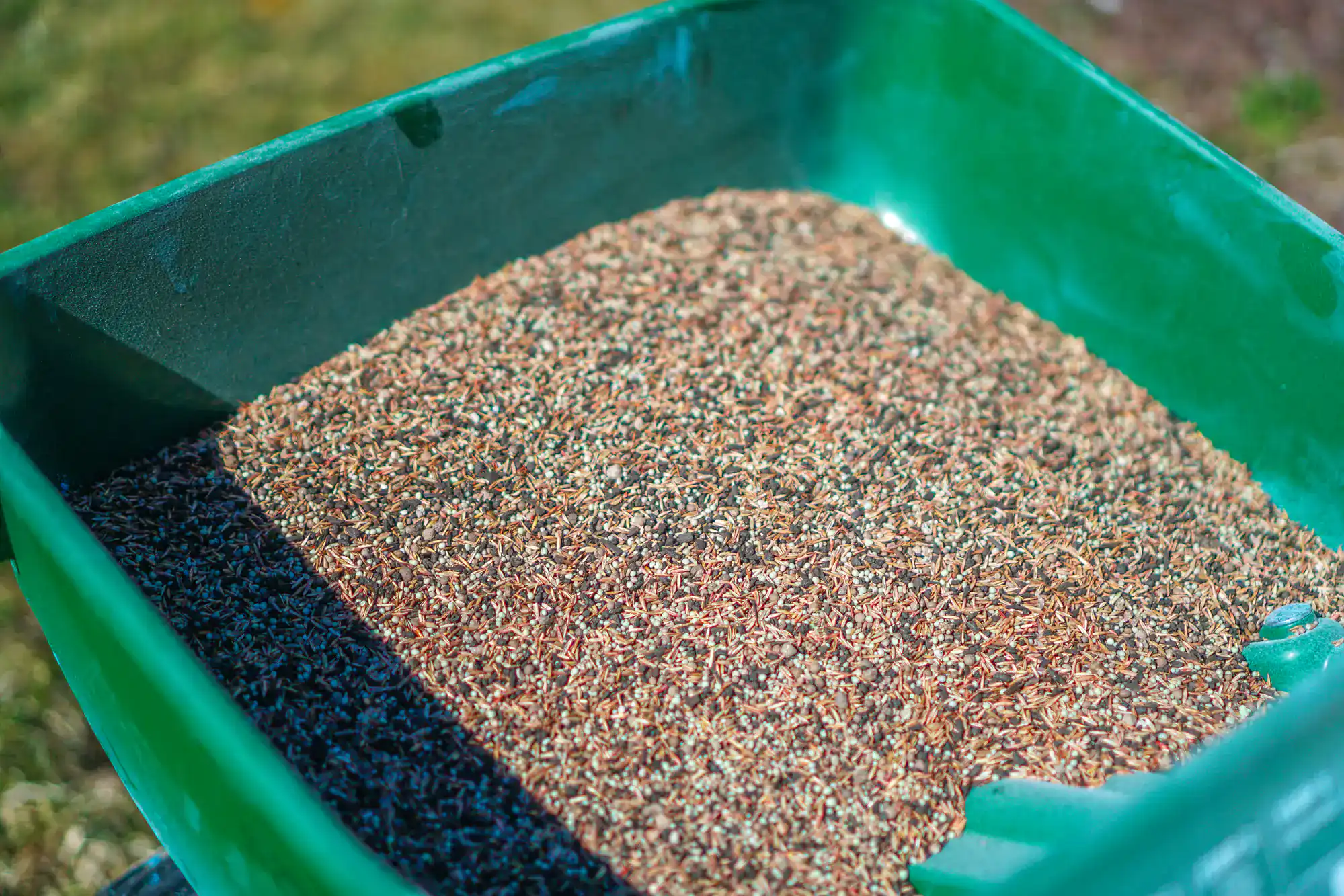
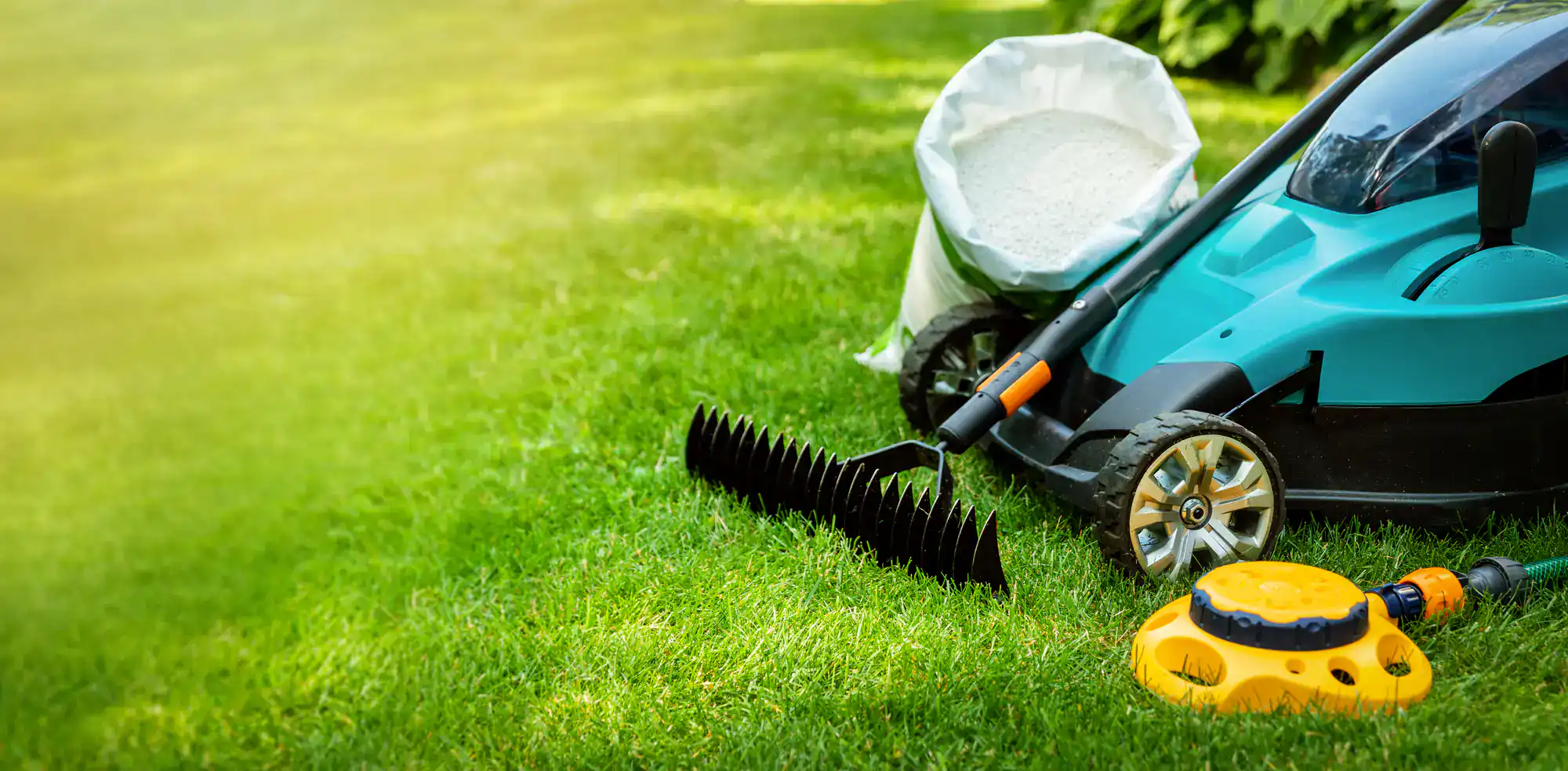
The fertilizer itself is custom-blended specifically for our programs not pulled off a commercial shelf. Combined with hydraulic aerators, hydraulic seeders, and a fleet of five fully wrapped trucks, this is what a serious, long-running lawn care operation looks like in practice.
It starts with understanding what you’re working with. Smithtown lawns aren’t uniform a shaded property in Nissequogue with mature oaks overhead has different needs than a sun-exposed colonial in Commack or a newer build near the Hauppauge border. Before anything gets applied, the conditions on your specific property drive the plan.
From there, applications are timed around Suffolk County’s fertilizer calendar which runs from April 1st through October 31st under county law. Early spring kicks off with pre-emergent crabgrass control and the first fertilizer application. Late summer and early fall are the most critical window of the year: that’s when we perform core aeration and overseeding, and when fall fertilization builds the root reserves that determine how your lawn comes back in spring. Every step is handled by a licensed professional who knows the timing, the rates, and the products required to stay compliant with New York State and Suffolk County regulations.
If your lawn has specific problem areas thin spots under the oaks, crabgrass along the driveway edge, grub damage from last summer we address those as part of the program, not as separate add-ons you find out about after the fact. The goal is a lawn that holds up through Smithtown’s summers and comes back strong every spring.
Ready to get started?
The fertilizer we use isn’t available at a hardware store. It’s a custom-blended formula made specifically for our programs calibrated for the sandy loam soil conditions common throughout Smithtown and the surrounding North Shore communities. That distinction matters more than most homeowners realize until they’ve spent a few seasons watching off-the-shelf products underperform.
Beyond fertilization, our program covers what Smithtown lawns actually need to stay healthy year-round: pre-emergent and post-emergent weed control for crabgrass and broadleaf weeds, preventive grub control timed to early summer before damage occurs, core aeration with hydraulic equipment that pulls deeper plugs than standard tow-behind aerators, and overseeding with cool-season grass blends suited to the North Shore’s transitional climate. Nutgrass and bentgrass two of the most stubborn weed problems in Suffolk County are also within scope, and require specific products and timing that most generalist companies don’t have experience with.
For lawns that are beyond a tune-up, we also handle full restoration and new lawn installation from seed using hydraulic seeders. Suffolk County’s fertilizer application ban runs November 1st through April 1st, with a $1,000 fine for violations every application in our program is scheduled to stay well within those legal boundaries, with all the neighbor notification and phosphorus compliance requirements handled by the licensed professionals doing the work.
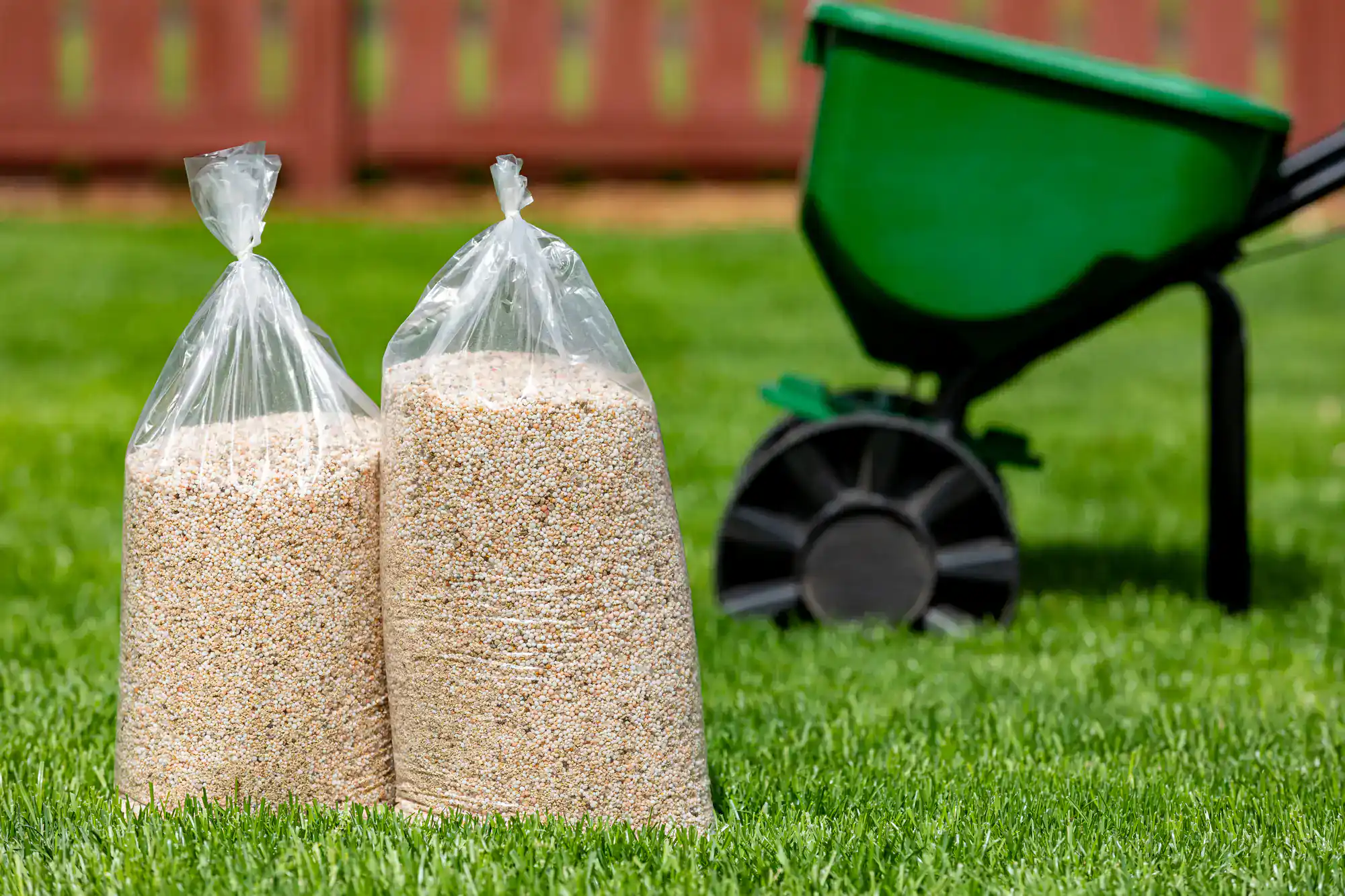
For most Smithtown lawns, a well-structured program runs four to five applications between April and late October the legal window under Suffolk County’s fertilizer ban, which prohibits applications from November 1st through April 1st. That schedule typically includes an early spring application with pre-emergent crabgrass control, a late spring follow-up, a carefully timed summer application that avoids peak heat stress on cool-season grasses, and one or two fall applications that build root reserves heading into winter.
The specific timing matters more than the number of applications. Smithtown’s sandy loam soil drains quickly, which means heavy, infrequent doses tend to leach out before the roots can absorb them. A program calibrated for North Shore soil conditions delivers lighter applications at the right intervals which is why a custom-built program consistently outperforms a generic five-step plan.
Smithtown sits in what’s considered a transitional zone for turf hot enough in summer to stress cool-season grasses, but cold enough in winter to rule out warm-season varieties. Tall fescue and fine fescue blends are generally the best fit for North Shore properties because they handle both summer heat and cold winters better than other cool-season options like Kentucky bluegrass or perennial ryegrass alone.
That grass type affects fertilization in a few specific ways. Fescue blends need nitrogen during the cooler months early fall is actually the most important fertilization window of the year for these grasses, not spring. Applying heavy nitrogen in midsummer when fescue is already heat-stressed is one of the most common mistakes homeowners and inexperienced companies make on Long Island lawns. A program designed around the actual grass type on your property avoids that cycle and produces more consistent results through every season.
Yes. Suffolk County prohibits lawn fertilization from November 1st through April 1st, and the fine for a violation is $1,000. The restriction exists primarily to protect groundwater Suffolk County relies entirely on a sole-source aquifer system for drinking water, and fertilizer runoff during the dormant season contributes to nitrogen loading in that aquifer and in local waterways like the Nissequogue River, which runs through Smithtown.
This is one of the clearest reasons to work with a licensed, compliant company rather than a cheaper operator who may not know or follow the law. Every application in our program is scheduled within the legal window, with the right products, at the right rates. Beyond the county ban, New York State also restricts high-phosphorus fertilizers unless a soil test indicates a deficiency or a new lawn is being established another compliance detail that licensed professionals handle as a matter of course.
There are a few common culprits in Smithtown specifically. Grub damage is one of the most frequent Japanese beetle grubs feed on grass roots from late summer through fall, and the damage often doesn’t become visible until the following spring when the dead patches are already established. Many homeowners mistake it for drought stress or disease and treat the wrong problem. Preventive grub control in early summer, before the eggs hatch, is what stops this before it starts.
Shade from mature oaks is another major factor, particularly in neighborhoods like Fort Salonga, Nissequogue, and Kings Park where the tree canopy is dense. Grass in heavily shaded areas competes with tree roots for nutrients and struggles to fill in without the right grass variety and a fertilization approach that accounts for lower light conditions. Soil compaction is also common in older Smithtown neighborhoods core aeration with deep-pulling hydraulic equipment opens up the root zone and gives overseeding a real chance to take hold.
In New York State, any business applying pesticides which includes herbicides used for weed control for hire is required to register with the NYSDEC and employ at least one certified commercial applicator. That certification requires passing a Core General Standards exam plus a category-specific exam covering turf and ornamental applications, with recertification every three years. It’s not a formality it’s a meaningful test of knowledge about application rates, product safety, and environmental compliance.
An unlicensed operator may be applying products at the wrong rates, using products not labeled for residential turf, or skipping required neighbor notification procedures that apply to certain spray applications in Nassau and Suffolk counties. Beyond the quality issue, the liability sits with you as the homeowner if something goes wrong on your property. Working with a licensed company isn’t just about getting better results it’s about making sure the work being done on your lawn is legal, calibrated, and handled by someone who’s actually accountable for it.
The honest answer is that most established Smithtown lawns benefit from both, and the timing of when you do it matters as much as whether you do it. Fertilization feeds the grass that’s already there. Aeration and overseeding address the underlying structure compaction, thin coverage, bare areas that fertilization alone can’t fix. If your lawn looks decent in May but thins out or goes patchy by August, that’s usually a sign the root zone needs attention, not just more product on top.
For North Shore lawns, the window for aeration and overseeding runs from mid-August through late September. That timing aligns with cooler soil temperatures that give cool-season grasses the best chance to germinate and establish before winter. Lawns that get aerated and overseeded in that window followed by a proper fall fertilization before the November 1st county cutoff come back noticeably stronger the following spring. If your lawn has been getting fertilized for years without aeration, that’s likely the missing piece.
Useful Links
Other Services we provide in Smithtown