Hear from Our Customers
There’s a specific kind of frustration that comes from reseeding the same dead spots in your Holtsville lawn every fall and watching them die again the following July. If that’s your situation, you’re not dealing with a watering problem or a fertilizer problem. You’re dealing with a fungal disease that hasn’t been correctly identified or treated, and new seed cannot establish in soil where active pathogens are still present.
Holtsville’s warm, humid summers create near-perfect conditions for brown patch, dollar spot, and red thread the three most common fungal diseases on Long Island cool-season turf. When nighttime temperatures climb toward 70°F and humidity sits at 80% or higher, brown patch can spread across a lawn in days. If your home has an in-ground sprinkler system and most homes throughout Holtsville do and it’s running in the evening, you may be feeding the problem every night without realizing it.
The sandy loam soils that dominate central Suffolk County drain quickly and leach nitrogen faster than heavier soils. That nitrogen deficiency makes your turf significantly more susceptible to dollar spot, one of the most damaging fungal diseases in residential lawns. Once we treat the disease correctly with the right chemistry, at the right time, matched to what’s actually in your lawn the patches stop coming back. That’s the outcome. That’s what this service is built around.
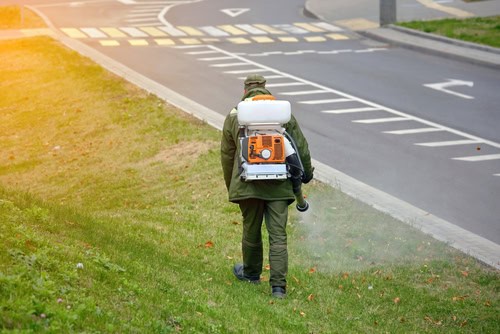
We are a New York State DEC licensed commercial pesticide applicator serving Holtsville and the surrounding central Suffolk County area. Our license isn’t a marketing claim it’s a legal credential, verifiable through the NYSDEC’s public records, that requires passing state exams, meeting experience requirements, and completing continuing education every three years to maintain.
What that license actually means for you: access to restricted-use fungicide formulations that are simply not available at any retail store in the 11742 zip code or anywhere else. The professional-grade products used on Long Island golf courses and athletic fields the ones that actually work on severe brown patch and dollar spot cannot be purchased by homeowners or unlicensed operators. That’s not a preference gap. It’s a legal one.
We operate out of Port Jefferson Station, within the Town of Brookhaven the same municipal jurisdiction that governs the majority of Holtsville. That shared territory means real familiarity with the soil conditions, seasonal disease windows, and regulatory requirements specific to this part of Suffolk County. This isn’t a franchise covering a zip code from a regional call center. It’s a licensed professional who knows Holtsville.
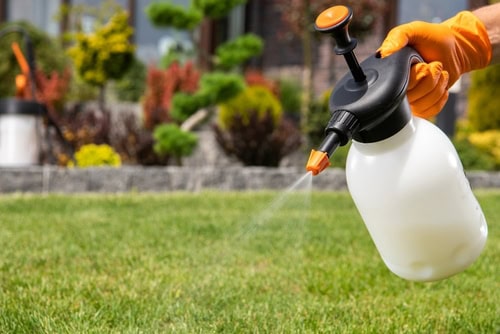
The process starts with identifying what’s actually wrong. Brown patch, dollar spot, and red thread look different, behave differently, and respond to different fungicide chemistries. Treating the wrong disease or spraying a broad-spectrum product without knowing what you’re dealing with is exactly why consumer programs and generic spray services produce inconsistent results. Before anything gets applied to your lawn, we identify the specific pathogen.
Once the disease is confirmed, we match the fungicide program to it. That means selecting the right active ingredient for the specific pathogen, applying it at the right rate, and timing it to Holtsville’s actual seasonal conditions not a national calendar. Brown patch in central Suffolk County peaks during the humid stretch from late June through August. Dollar spot and red thread are most active in the cooler shoulder seasons, typically April through May and again in September and October. The application window matters as much as the product itself.
Throughout the treatment program, we rotate fungicide chemistries to prevent resistance development a step that most consumer programs skip entirely. You’ll also receive written documentation after every application: the product name, EPA registration number, application rate, and date of service. That’s a legal requirement under NYSDEC regulations for licensed commercial applicators, and it means you always know exactly what was applied to your property and when.
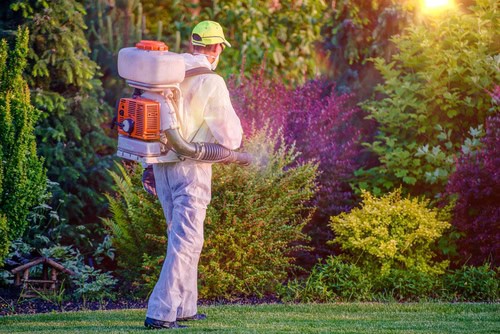
Ready to get started?
Our fungicide treatment program covers the three diseases most commonly found in Holtsville lawns: brown patch, dollar spot, and red thread. Each one is endemic to Long Island’s cool-season turf growing on sandy, coastal-influenced soils and each one requires a different treatment approach. Brown patch needs a fast-acting contact or systemic fungicide applied during active heat and humidity. Dollar spot responds to systemic chemistry timed around nitrogen availability in the soil. Red thread, which spreads quickly through close-proximity lawns, needs early intervention before it moves beyond the initial infection zone.
For homeowners in communities like Summerfield where 400 homes sit on quarter-acre to one-third-acre lots and individual lawn maintenance is each homeowner’s responsibility red thread is a particular concern. Fungal spores don’t respect property lines, and densely landscaped neighborhoods with similar turf types and irrigation schedules create conditions where disease spreads from one lawn to the next with very little resistance.
Every application we make on your Holtsville property complies with New York State’s neighbor notification requirements and comes with full written documentation. Because Holtsville straddles both the Town of Brookhaven and the Town of Islip, we’re familiar with the regulatory environment on both sides of that boundary so nothing gets missed, and every application is done by the book.
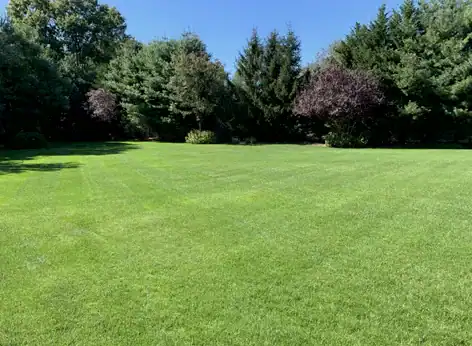
Brown patch is caused by the fungus Rhizoctonia solani, and it thrives in exactly the conditions Holtsville gets every summer nighttime temperatures near or above 70°F combined with high humidity. Central Suffolk County’s warm, humid summers create a disease window that can last from late June all the way through August, and once it starts, it spreads fast.
The most common reason it keeps coming back year after year is that the underlying pathogen never gets fully addressed. Homeowners reseed in fall, the new grass looks fine through spring, and then the same fungus still present in the soil and thatch reactivates when summer heat returns and kills the new growth all over again. If your Holtsville home has an in-ground sprinkler system running in the evening, that’s likely accelerating the cycle. Keeping grass blades wet overnight during warm weather is one of the most reliable ways to trigger brown patch. A licensed fungicide application timed to Holtsville’s specific disease window combined with a shift in irrigation timing breaks that cycle for good.
They’re three different diseases caused by three different pathogens, and they look and behave differently in your lawn. Brown patch shows up as large, roughly circular tan or brown patches sometimes with a darker outer ring and spreads quickly during hot, humid weather. Dollar spot creates small, silver-dollar-sized dead spots scattered across the lawn and is most active in spring and fall when temperatures are moderate and nitrogen levels in the soil are low. Red thread appears as pink or reddish threads extending from the grass blade tips and is often mistaken for drought stress or poor fertilization.
The reason this distinction matters is that each disease responds to different fungicide chemistry. Applying the wrong product or a generic broad-spectrum spray may suppress symptoms temporarily without actually eliminating the pathogen. On Long Island’s sandy soils, where nitrogen leaches out quickly and turf is already under stress, getting the diagnosis right before selecting a treatment is the difference between a lawn that recovers and one that keeps cycling through the same problem every season.
You can try, but there’s a real limitation that has nothing to do with effort or technique. Consumer fungicide products available at retail stores are formulated to comply with homeowner-use restrictions, which means they contain lower concentrations of active ingredients than professional-grade formulations. The restricted-use pesticides that licensed commercial applicators like us can access the same products used on golf courses and athletic fields across Long Island are simply not available for purchase by homeowners or unlicensed operators. That’s not a matter of preference. It’s a legal restriction.
Beyond chemistry access, the other challenge with DIY treatment is timing and diagnosis. Applying a fungicide at the wrong growth stage of the disease, or applying the wrong product for the specific pathogen present, produces limited results. Many homeowners who’ve tried consumer products on their Holtsville lawns report that the disease slows briefly and then returns because the active pathogen in the soil was suppressed but not eliminated. A licensed professional program uses the right chemistry, applied at the right time, with resistance-preventing rotation built in.
It very likely is if it’s running in the evening or overnight. Fungal diseases like brown patch require extended periods of leaf wetness to develop and spread and an irrigation system that keeps grass blades wet through warm summer nights creates exactly that environment. This is one of the most common and overlooked disease drivers in Holtsville, where in-ground front and rear sprinkler systems are a standard feature in homes throughout the hamlet, including communities like Summerfield.
The fix is straightforward: shift your irrigation schedule to early morning, ideally between 4 and 8 a.m. That way, the grass dries off during the day rather than staying wet overnight. It won’t eliminate an active fungal infection on its own, but it significantly reduces the conditions that allow it to spread. When we evaluate your lawn, irrigation timing is part of the diagnostic conversation not just an afterthought. Treating the disease without addressing what’s feeding it is a short-term fix at best.
It depends on what disease is present, how advanced the infection is, and what time of year you’re starting treatment. For an active brown patch infection caught early, a single targeted application combined with a follow-up preventative treatment may be sufficient. For a lawn that’s been cycling through the same disease for multiple seasons or one where multiple diseases are present a full-season program with rotated chemistries is the more effective approach.
In Holtsville specifically, the disease calendar runs longer than many homeowners expect. Brown patch is active from late June through August. Dollar spot can be present from late spring through early fall. Red thread peaks in April and May and again in September and October. That means a lawn can be under fungal pressure for the better part of seven or eight months out of the year. A program designed around Holtsville’s actual seasonal conditions not a generic national schedule is going to produce better results than a one-time application timed to when the problem became visible.
Yes, and it’s one of the reasons red thread tends to show up in clusters within densely landscaped neighborhoods. The fungus spreads via spores that can travel up to eight feet from a single infected area through foot traffic, mowing equipment, and air movement. In a community like Summerfield, where homes sit on quarter-acre to one-third-acre lots with similar turf types and comparable irrigation setups, the conditions for neighborhood-wide spread are present every spring and fall when temperatures are in the 60 to 75°F range.
The important thing to understand about red thread is that it’s frequently misidentified. The pink or reddish threads extending from the grass blade tips look enough like drought stress or nitrogen deficiency that many homeowners spend money on fertilizer or water more frequently neither of which resolves the underlying fungal infection. A licensed fungicide application targeting Laetisaria fuciformis, the pathogen responsible for red thread, stops the spread at the source. Catching it early before it moves across the lawn or into neighboring properties is significantly less expensive than treating an advanced infection that’s already covered a large area.
Useful Links
Other Services we provide in Holtsville