
Hear from Our Customers
A lot of Holtsville homeowners come to us after watching their lawn get worse every summer thinner in the shaded spots, patchy near the street, weedy in the areas that used to look decent. They’ve tried a bag of seed from the hardware store. Maybe a national program. Nothing stuck. That’s not a lawn problem. That’s a soil problem, and it’s one of the most common things we see throughout central Suffolk County.
Holtsville’s soil profile Haven Loam over sandy subsoil drains fast. Too fast, in some cases. Nutrients leach out before the grass can use them, and when July and August heat hits, cool-season turf running on an empty tank just doesn’t survive. Add in the mature tree canopy on streets throughout Holtsville, and you’ve got shade, surface root competition, and acidic soil from years of leaf decomposition all working against your lawn at once. These aren’t random problems. They’re predictable, and they’re fixable.
When the underlying conditions get corrected pH balanced, compaction relieved, the right seed variety in the ground with actual soil contact the lawn responds. You get density back. Color comes back. The bare patches fill in. And because the work starts at the root level, the results hold through the following season instead of fading by June.
We’ve been a NYS-licensed lawn care operation serving Suffolk County since the late 1980s. That kind of tenure isn’t a marketing angle it’s just what happens when you consistently do the work right. We’ve restored lawns throughout the Sachem Central School District area, including neighborhoods in and around Holtsville, Holbrook, Farmingville, and Lake Ronkonkoma. We know this soil. We know this climate. And we know the difference between a lawn that needs restoration and one that needs something more.
What that means for you is a diagnosis you can trust before a single dollar gets spent. We hold a New York State pesticide applicator license, we comply with Suffolk County’s fertilizer regulations, and we test soil before recommending any amendment program. That’s not a checkbox it’s the only responsible way to approach lawn restoration in a county where the regulations exist for a reason and the soil chemistry varies block by block throughout Holtsville and the surrounding communities.
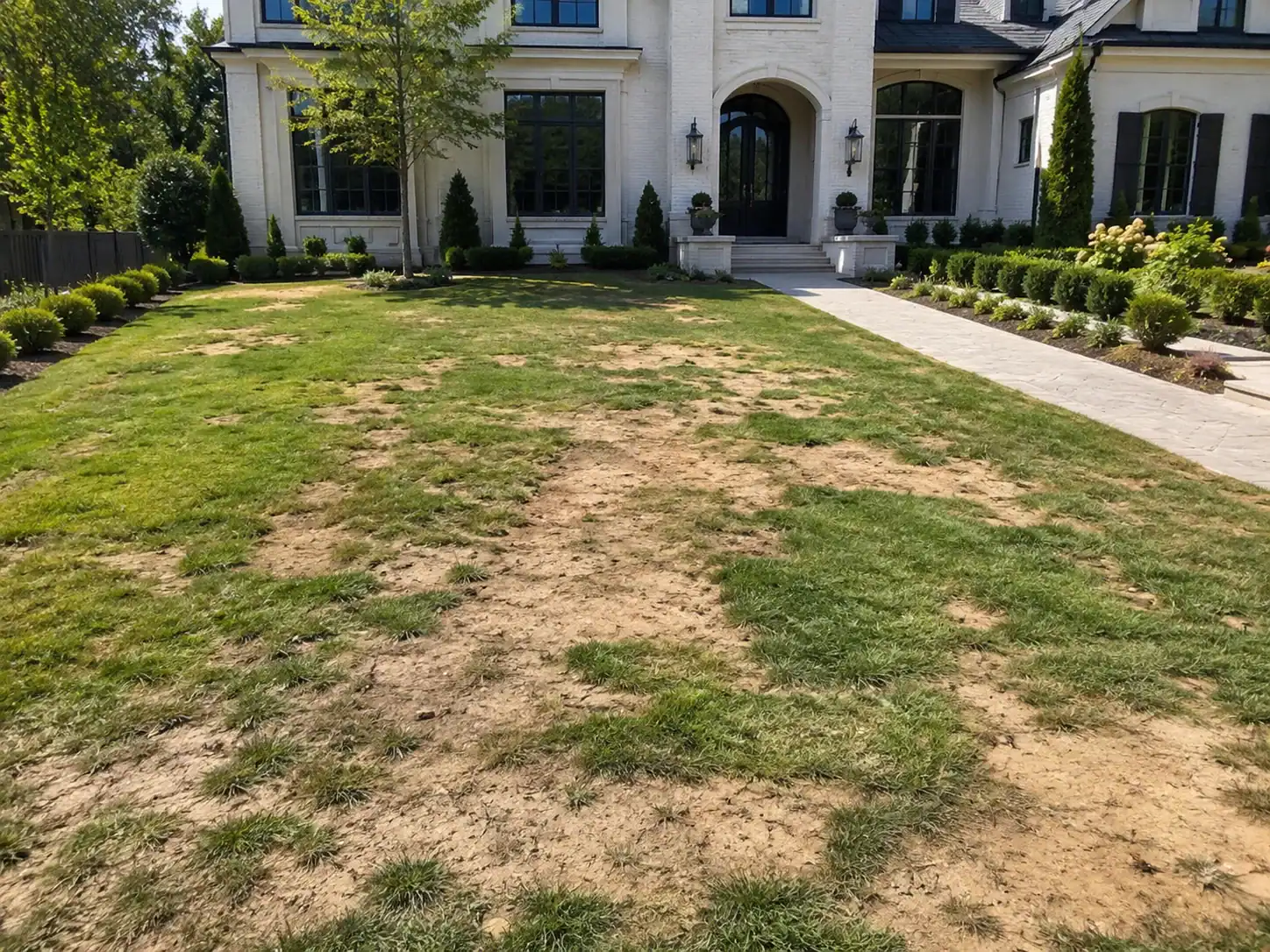
It starts with an on-site assessment. Before anything gets applied or seeded, we look at your lawn’s actual condition soil pH, compaction, thatch depth, the grass species that are still present, weed pressure, and what’s driving the damage. In Holtsville, that often means accounting for shaded areas under mature trees, spots where sandy subsoil has dried out repeatedly, or patches that took grub damage and never recovered. The assessment tells us what your lawn actually needs, not what a generic program assumes it needs.
From there, we build the restoration sequence. For most lawns, that means core aeration to break up compaction, soil correction to bring pH into the right range often with lime, given how acidic Holtsville’s tree-heavy lots tend to get and slice seeding to get new grass into direct soil contact. Slice seeding isn’t surface broadcasting. The machine cuts through thatch and deposits seed where it can actually germinate. The difference in results is significant.
Timing matters more than most homeowners realize. The best window for lawn restoration in Suffolk County is September through early October soil is warm, air temperatures drop, and you’re still inside the legal fertilization window before Suffolk County’s November 1st blackout takes effect under Local Law 41-2007. We plan your program around that window so you’re not waiting another full year to see results.
Ready to get started?
Lawn restoration in Suffolk County near Holtsville isn’t a single treatment it’s a corrective sequence. What’s included in your program depends entirely on what the assessment finds, but the core tools are consistent: soil testing, pH correction, core aeration, slice seeding with the right cool-season blend for your specific conditions, and a calibrated nutrition program that accounts for how quickly Suffolk County’s sandy soils lose nutrients between applications.
For shaded lawns and there are plenty of them on Holtsville’s tree-lined streets we use fine fescue blends that are built for low-light, root-competitive environments. For lawns with heavy weed pressure, particularly crabgrass and nutsedge (both thrive in sandy, fast-draining soils), we address the weed problem as part of the restoration plan, not as an afterthought. And because New York State prohibits phosphorus in lawn fertilizers unless a soil test confirms a deficiency, every program we build starts with documentation, not assumptions.
One thing worth being clear about: lawn restoration is the right approach when your existing turf can be brought back to health. If your lawn is truly beyond saving large-scale damage, complete turf loss, or significant grading issues that’s a renovation, and it’s a different process entirely. We’ll tell you which one your lawn actually needs, and if it’s a full rebuild, we’ll point you in that direction rather than sell you a restoration program that won’t get you where you want to go.
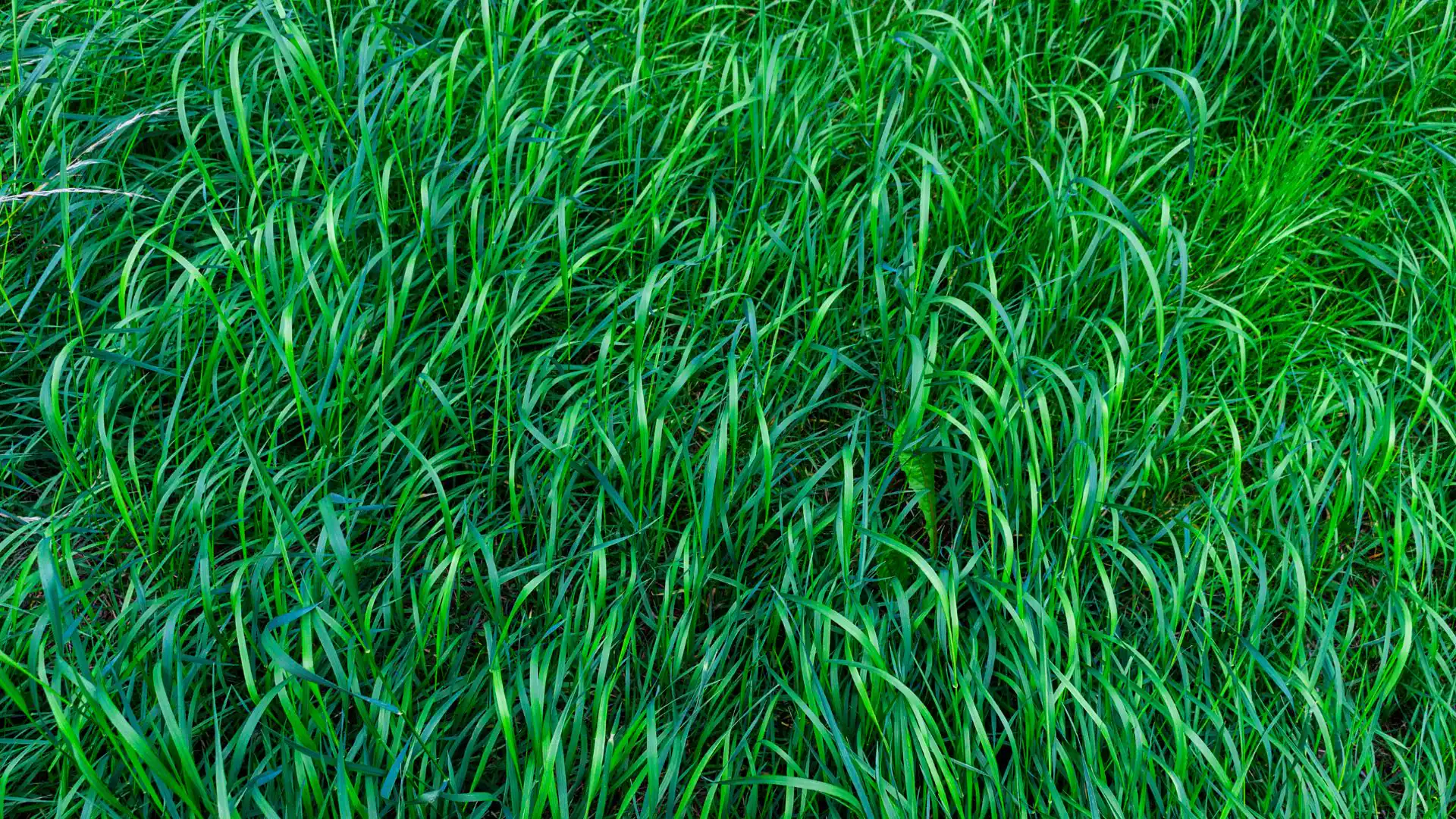
Restoration means your existing lawn still has something worth saving grass plants, root structure, and soil that can be corrected and improved. The goal is to bring what’s already there back to full health through aeration, soil correction, overseeding, and a targeted care program. Renovation is a different conversation entirely. It means the lawn is past the point of recovery complete turf loss, severe grading problems, or damage so extensive that starting from scratch is the only path forward. Renovation involves killing off what remains, regrading if needed, and rebuilding from bare soil.
The honest answer for most Holtsville homeowners is that their lawn falls into the restoration category, even when it looks pretty rough. Patchy, thin, weedy, or summer-scorched lawns are almost always restorable. If your assessment reveals that a full rebuild is the right call, we’ll tell you that directly and walk you through what renovation looks like. We don’t sell restoration programs to lawns that need something else.
If your restoration program is timed correctly which in Holtsville means slice seeding in September or early October you’ll typically see germination within 10 to 21 days, depending on the seed variety and soil temperature. Turf density continues to improve through the fall and into the following spring as the root system establishes. By the next summer, a properly restored Holtsville lawn should be significantly thicker, more resilient, and far better equipped to handle Long Island’s heat and humidity than it was before.
What slows results down is poor timing. Seeding too late in the fall after soil temperatures drop below 50°F means slow or failed germination. Seeding in summer means competing with heat stress and weed pressure simultaneously. The fall window between Labor Day and late October is the sweet spot, and it lines up with Suffolk County’s fertilizer regulations, which prohibit applications after November 1st. Getting the timing right is one of the biggest differences between a restoration program that works and one that doesn’t.
Recurring bare or thin spots in the same locations almost always point to an underlying condition that hasn’t been addressed. In Holtsville, the most common culprits are compacted soil, low pH from acidic leaf litter under mature trees, or sandy subsoil that dries out faster than the rest of the lawn during July and August heat. If the same patches fail every summer, surface seeding over them isn’t going to change anything the conditions that killed the grass last year are still there.
Grub damage is another common cause of recurring patches in central Suffolk County. White grubs feed on grass roots through late summer and fall, and the damage often doesn’t become fully visible until the following spring when the dead areas don’t green up with the rest of the lawn. A proper assessment will identify whether grub activity is part of the picture and factor that into the restoration plan. Treating the symptom without finding the cause is how homeowners end up calling us after two or three failed attempts elsewhere.
Yes, and it’s one of the most important timing factors to understand before starting any lawn restoration program in Holtsville or anywhere in Suffolk County. Under Local Law 41-2007, fertilizer applications are prohibited from November 1st through April 1st, with fines of up to $1,000 for violations. That doesn’t mean restoration work stops entirely during that period aeration and seeding can still happen in early spring but the nutrition component of any restoration program needs to be completed before the blackout window closes in the fall.
This is exactly why the September through October window is so critical. It’s the optimal period for slice seeding and overseeding from a turf science standpoint, and it’s also the last opportunity to apply a post-seeding starter fertilizer before the blackout takes effect. A restoration program that misses that window either has to wait until spring for the nutrition piece or risks a violation. We plan every program with these dates built in it’s not an afterthought, it’s part of how we sequence the work.
Restoration cost depends on the size of your lawn, the extent of the damage, and what the soil assessment reveals. A straightforward program for a quarter-acre lot which is typical for properties in neighborhoods like Summerfield or on the residential streets throughout Holtsville generally involves soil testing, core aeration, slice seeding, and a corrective fertilization treatment. The scope expands if significant pH correction is needed, if weed pressure requires pre-treatment, or if multiple problem areas need targeted attention.
What we can tell you is that restoration is consistently less expensive than renovation. A full lawn rebuild regrading, killing existing turf, laying sod or starting from bare seed runs significantly higher than a corrective restoration program on a lawn that still has viable turf to work with. The assessment we do before recommending anything is what determines which path makes financial sense for your specific property. That’s the conversation we have on-site, not over the phone with a generic quote.
Yes, but it requires a different approach than restoring a lawn in full sun. Shaded lawns in Holtsville deal with three compounding problems: reduced light, surface root competition from mature trees, and acidic soil caused by years of leaf litter decomposition. Standard turf-type tall fescue or Kentucky bluegrass blends don’t perform well in those conditions they thin out and stay thin regardless of how much seed you put down.
The fix starts with the right seed selection. Fine fescue blends creeping red, chewings, and hard fescue varieties are genuinely shade-tolerant and handle root-competitive environments far better than the blends most homeowners buy off the shelf. Combine that with lime to correct soil acidity, core aeration to open up the root zone, and slice seeding to get the new seed into actual soil contact, and shaded lawns respond well. They may never look like a lawn in full sun, but they can be dense, healthy, and presentable which is exactly what most homeowners on Holtsville’s tree-lined streets are looking for.
Useful Links
Other Services we provide in Holtsville