Hear from Our Customers
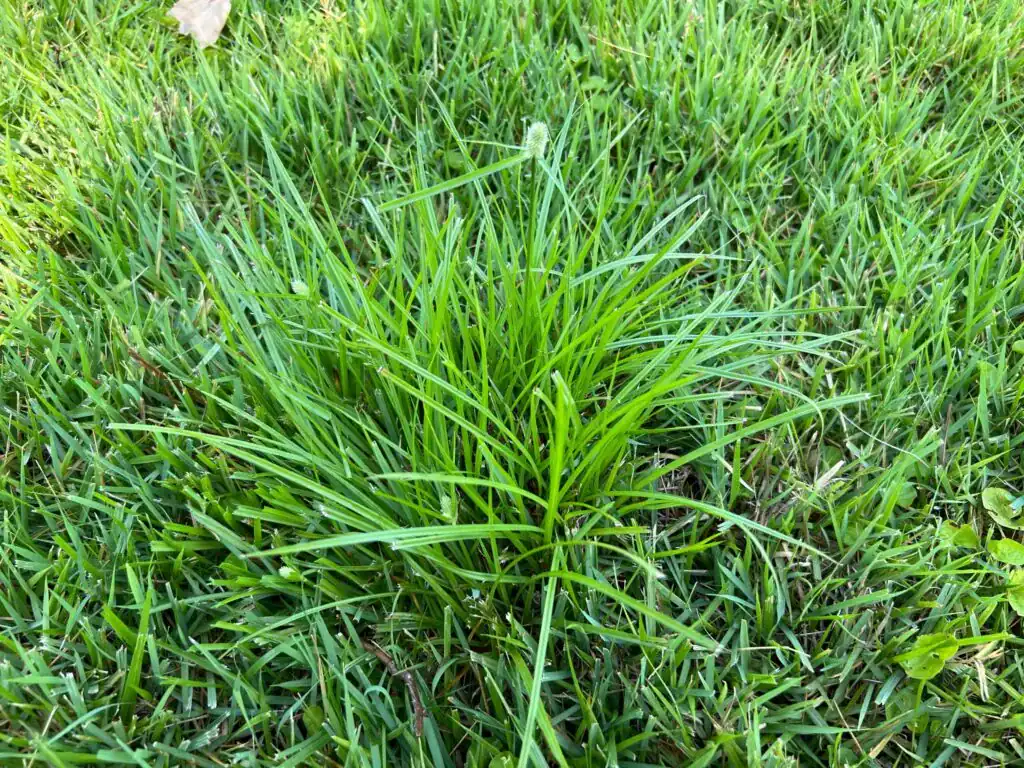
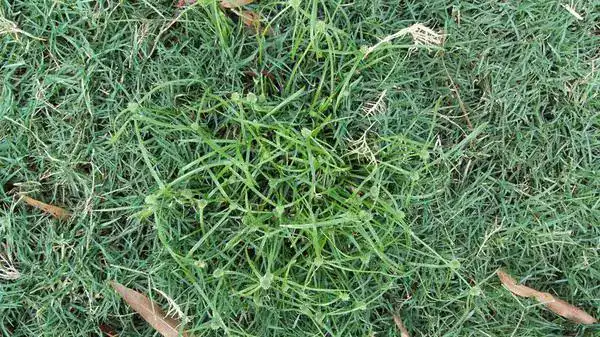
Kyllinga doesn’t just look bad it spreads. That low-growing, darker-green mat creeping across your Holtsville lawn isn’t slowing down on its own, and the longer it goes untreated, the more ground it claims. Once it’s properly eliminated, you get your lawn back: consistent color, consistent texture, and no more patches that make the whole yard look off.
For Holtsville homeowners, especially those in Summerfield Estates where irrigation systems run on automatic schedules, that moisture-rich soil is exactly the environment kyllinga exploits. Overwatered turf gives this weed a competitive edge over your desirable grass and without addressing both the weed and the conditions feeding it, you’re treating symptoms instead of the problem.
Compacted soil is another factor that shows up repeatedly in central Suffolk County lawns. When drainage is poor and water sits near the surface, kyllinga moves in and holds its ground while your cool-season turf struggles. A properly executed kyllinga control program doesn’t just knock the weed back it gives your lawn the foundation to fill back in and stay that way.
We’re based in Port Jefferson Station about 15 to 20 minutes north of Holtsville via North Ocean Avenue and operate exclusively in Suffolk County. That matters because kyllinga control isn’t a service you can deliver well from a distance or through a franchise template. The soil conditions, the irrigation habits, the drainage challenges in central Long Island’s residential neighborhoods like Holtsville these are things we learn by working here, not by reading about them.
Every application we make in Holtsville is done under a NYSDEC Commercial Pesticide Applicator License, Category 3a. That’s the license required to purchase and apply the professional-grade herbicides halosulfuron-methyl and sulfentrazone that actually work on established kyllinga. It’s also why what you can buy at a home improvement store on Route 83 isn’t going to get you the same result.
Suffolk County’s pesticide buffer zone regulations under Local Law 41-2007 are part of every job we do. We check SCDHS compliance maps before any application not as a formality, but because it’s the right way to operate in a county where the aquifer is a real community concern.
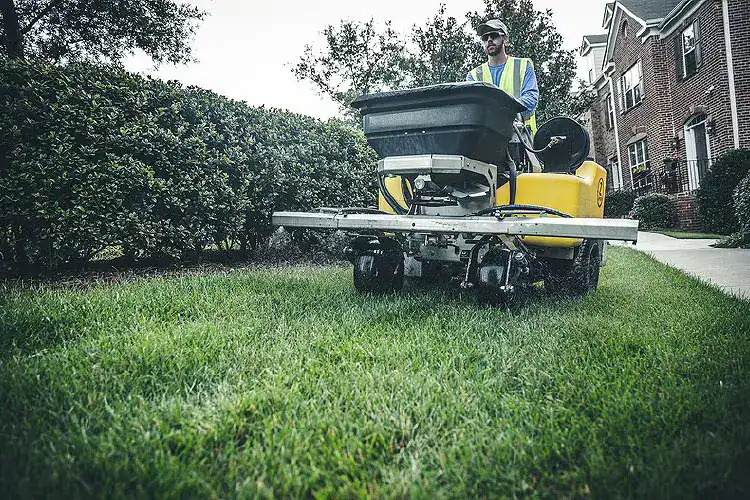
It starts with identification. Kyllinga and nutsedge are both sedges, but they’re different plants and treating them as if they’re the same is one of the most common reasons Holtsville homeowners end up back at square one. Before anything gets applied to your lawn, the specific sedge species present is confirmed. That determines the right herbicide, the right rate, and the right timing.
From there, the first application goes down during active growth typically late May through early June in the Long Island climate, when kyllinga is metabolically active and most vulnerable to sedge-specific chemistry. This is critical. An application made too early in spring, before the plant is actively growing, moves through the system poorly and leaves the rhizome network largely intact underground.
Because kyllinga spreads through both rhizomes and seed, a single application almost never finishes the job. A follow-up treatment is scheduled four to six weeks later to target any regrowth from surviving root tissue. Most established infestations in Holtsville require two to three applications across the summer to get genuine control. After the weed is eliminated, the bare areas it leaves behind get overseeded and restored because a dead weed patch is just an open invitation for the next problem to move in.
Ready to get started?
This isn’t a single-spray service. Our kyllinga control program includes on-site species identification, a minimum of two targeted herbicide applications spaced four to six weeks apart during the active growing season, and post-treatment recommendations for overseeding and soil restoration in treated areas. Every application uses professional-grade sedge-active chemistry the kind that requires a licensed applicator to purchase and use, not the retail products available at the home improvement stores along the LIE corridor.
For Holtsville properties with in-ground irrigation particularly in communities like Summerfield Estates the program also includes a review of irrigation habits that may be contributing to kyllinga’s spread. Chronically moist soil doesn’t just invite the weed in; it makes it harder to eliminate and easier for it to return. Adjusting watering schedules and addressing low-drainage areas in your lawn is part of a complete approach, not an add-on.
Suffolk County’s pesticide buffer zone requirements under Local Law 41-2007 are checked and documented for every property before treatment begins. If your Holtsville property falls within or near a designated well buffer zone, that’s identified upfront not discovered after the fact. Every job is fully compliant with NYSDEC and SCDHS regulations, and that documentation exists for your records if you ever need it.
Kyllinga survives winter as an underground rhizome network. Even when the visible plant tissue dies back in the fall, those roots are still alive beneath the surface and they resume growth the following spring right where they left off, often spreading wider than the previous year. A single herbicide application that kills the top growth doesn’t reach deep enough into that root system to stop regrowth.
On top of that, kyllinga produces thousands of seeds per plant each season. Even if you eliminate the existing colony, the seed bank already in your Holtsville soil continues to generate new plants. That’s why a multi-application program spaced across the summer is the standard approach not a sales tactic, just the reality of how this weed is structured. In Holtsville’s warm, humid summers, kyllinga has a long active window to work with, which is why timing and follow-through matter as much as the product being used.
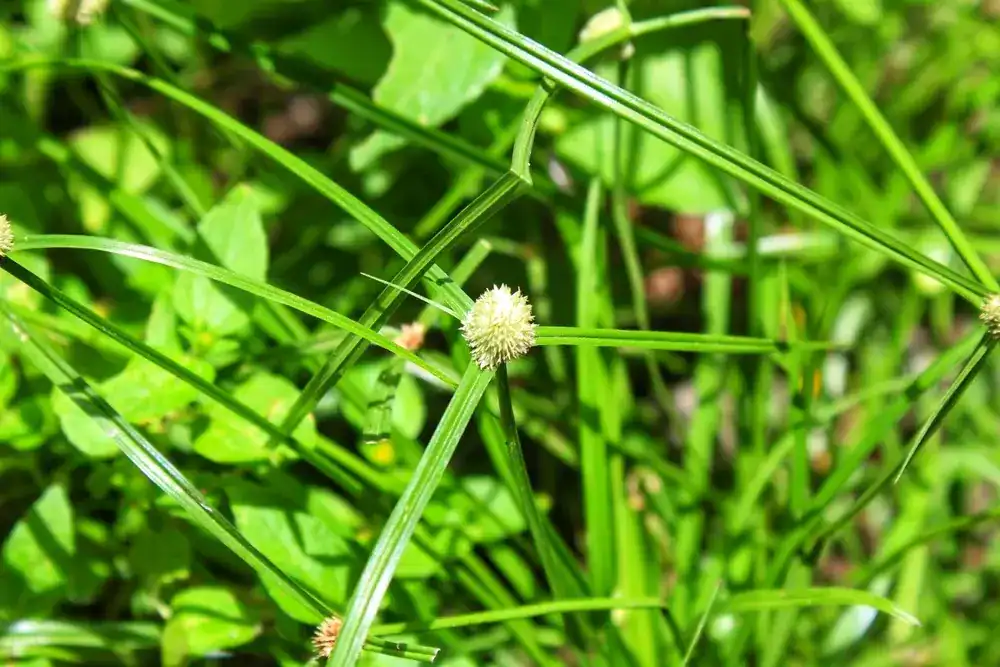
It matters more than most people realize. Both are sedges, both thrive in moist soil, and both are resistant to the broadleaf weed killers most homeowners try first. But kyllinga and nutsedge are different genera with different growth habits kyllinga tends to grow lower and form a dense mat, while nutsedge grows more upright. They also have different seed head structures, which is one of the cleaner ways to tell them apart in the field.
From a treatment standpoint, both respond to halosulfuron-methyl and sulfentrazone, but the specific product selection, application rate, and timing can differ based on which species is present and how established the infestation is. A provider who calls everything “nutsedge” without looking closely is guessing and if they’re applying the wrong program, you’ll see partial results at best. Correct identification before any product goes down is the foundation of effective sedge control in Holtsville lawns.
You can buy some retail sedge products without a license, but they’re not the same formulations used in professional programs. The professional-grade herbicides that deliver consistent results on established kyllinga halosulfuron-methyl (Sedgehammer) and sulfentrazone (Dismiss) in commercial concentrations require a NYSDEC Commercial Pesticide Applicator License, Category 3a, to purchase and apply. That’s a regulatory requirement, not a marketing distinction.
The retail versions available at home improvement stores in and around Holtsville are lower-concentration formulations that often produce incomplete results on mature infestations with established rhizome networks. That’s frequently why homeowners who’ve already tried something still have the problem. Beyond product access, Suffolk County’s Local Law 41-2007 also establishes pesticide-free buffer zones around public drinking water supply wells something a licensed professional checks and documents before every application, and something a DIY applicator may not even be aware of.
The optimal window for kyllinga treatment in Holtsville runs from late May through late August the period when the plant is actively growing and metabolically vulnerable to sedge-active herbicides. The first application is most effective when timed to early active growth, typically late May to early June on Long Island, when soil temperatures have risen enough to push the plant into full growth mode. Applications made before this window, when the plant is still dormant or barely active, move through the system poorly and leave the rhizome network largely untouched.
A follow-up application four to six weeks after the first targets any regrowth from surviving root tissue. Most established Holtsville infestations benefit from two to three applications across the summer for genuine control. If you miss the active growing season entirely or if you wait until fall when the plant is heading toward dormancy you’re looking at another full year before the next effective treatment window opens up.
Wet, low-lying areas are exactly where kyllinga establishes most aggressively, and yes those infestations tend to be denser and more entrenched than kyllinga growing in drier parts of the lawn. The moisture advantage those areas provide is what gives kyllinga a competitive edge over desirable turf grasses in the first place. Treating the weed without addressing the drainage or irrigation conditions feeding it is a short-term fix at best.
For properties near the man-made lakes in Summerfield Estates or in any Holtsville neighborhood with poor surface drainage, a complete approach includes both the herbicide program and a review of what’s keeping that soil consistently wet whether it’s an irrigation zone running too long, a grading issue, or compacted soil that’s not draining properly. Eliminating kyllinga from a chronically wet area and then restoring the turf with appropriate overseeding gives your Holtsville lawn a real chance to hold that ground long-term instead of watching the weed return the following season.
For most established infestations in Suffolk County, two to three applications spaced four to six weeks apart during the active growing season is the realistic range. A single application can suppress visible growth, but kyllinga’s rhizome network almost always survives one treatment and regenerates new growth within a few weeks. The follow-up application is what targets that regrowth before it has a chance to re-establish.
The exact number depends on how long the infestation has been present, how large it is, and what the soil and moisture conditions look like on your specific property. A lawn in Holtsville that’s had kyllinga spreading unchecked for two or three seasons is going to need more follow-through than one where it was caught early. After the weed is eliminated, overseeding the bare areas it leaves behind is an important final step thin turf with no competition is exactly the kind of opening kyllinga exploits to come back the following year.
Useful Links
Other Services we provide in Holtsville