Hear from Our Customers
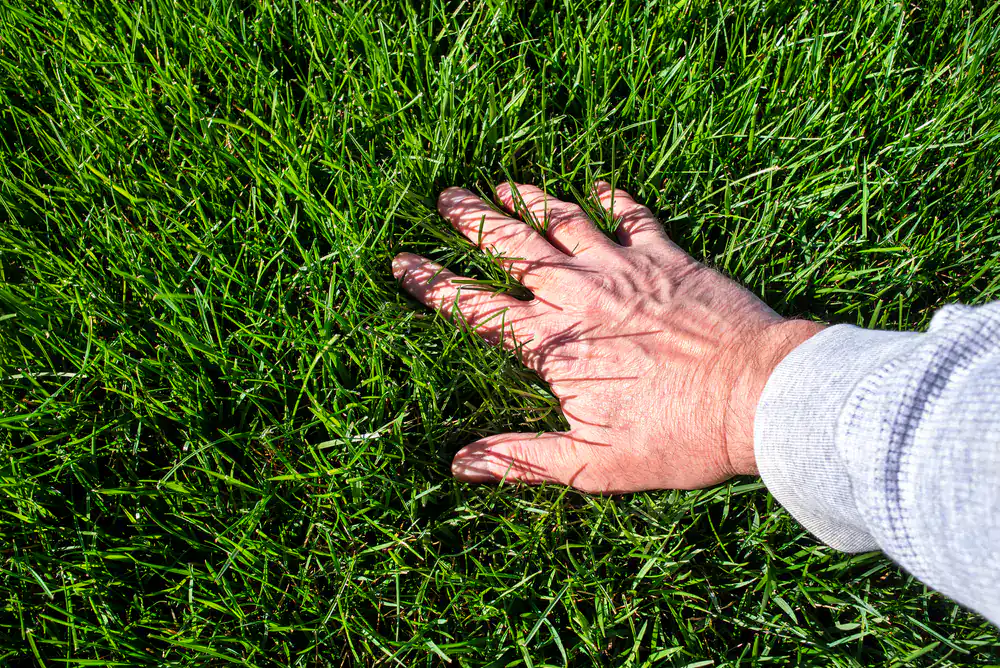
When your soil pH is sitting below 6.0 which is the default condition for most untreated lawns in Holtsville nitrogen, phosphorus, and potassium become chemically unavailable to grass roots. It doesn’t matter how often you fertilize or how good the product is. The nutrients are there. The grass just can’t access them. Correcting pH doesn’t just fix a number on a test it unlocks everything you’ve already been spending money on.
Holtsville’s soil is naturally set up to drift acidic. The Haven Loam that runs through central Suffolk County is sandy and porous, which means calcium and magnesium the minerals that buffer soil acidity leach out faster than in heavier soils. Add in the mature tree coverage that’s common across Holtsville’s older ranch-style neighborhoods, and you’ve got decomposing leaf litter adding organic acids to the soil year after year. Even lawns that were limed a few years back have likely drifted below the target range without anyone noticing.
Once pH is corrected to the 6.3–6.5 range that Long Island turf actually needs, the difference shows up fast. Grass thickens, color improves, and weeds that thrive in acidic conditions plantain, ground ivy, moss start losing ground. The lawn you’ve been trying to grow was always there. The soil chemistry just wasn’t letting it through.
We’re based in Port Jefferson Station about 10 to 15 minutes from Holtsville via I-495 and Nicolls Road. This isn’t a national franchise routing calls through a regional hub. We’re a local company that works in Holtsville and across Suffolk County every day, on the same Haven Loam soils, under the same tree canopies, in the same climate that affects your lawn.
When you call, you reach Carol a real person who handles appointments and accounts directly. No automated queue, no callback runaround. That accessibility matters, especially when you’ve dealt with companies that show up without explanation and disappear just as fast.
We’re fully registered with NYSDEC and operate in compliance with Suffolk County’s fertilizer regulations. Every pH correction we perform is based on a professional soil test not a guess, not a one-size-fits-all program. From Summerfield’s quarter-acre lots to the older ranch-style neighborhoods near Waverly Avenue in Holtsville, our approach is always calibrated to what your specific lawn actually needs.
It starts with a professional soil test. This is the step most homeowners skip and it’s the reason DIY lime applications either don’t work or make things worse. A proper soil test measures your current pH, your soil’s buffering capacity, and the exact amount of lime needed to reach the target range. Without it, you’re estimating. With it, you know.
Once the test results are in, we apply lime at the precise rate your lawn requires. For most Holtsville properties, fall is the optimal window September through November. That timing isn’t arbitrary. The combination of fall rain, winter freeze-thaw cycles, and spring moisture works the lime into the soil profile over the off-season, so that by the time your cool-season grasses break dormancy in March and April, the pH correction is already in place. Fertilizer applied that spring actually gets absorbed. That’s the difference.
After the initial correction, soil pH should be retested every two to three years. Holtsville’s sandy, porous soil and the ongoing leaf decomposition from tree-heavy lots mean pH drift is a real and recurring condition not a one-time fix. We keep that on a schedule so you’re not discovering the problem again three years from now when your lawn starts declining.
Ready to get started?
Professional lawn pH treatment through us starts with a complete soil analysis not just pH, but phosphorus, potassium, and nutrient availability across your entire lawn profile. In some cases, the test reveals that your soil already has adequate nutrient levels and fertilizing isn’t even necessary yet. That kind of information saves money and prevents over-application, which matters in Suffolk County where local law restricts nitrogen runoff to protect Long Island’s groundwater.
We apply lime at a calibrated rate based on your test results, targeting the 6.3–6.5 pH range that Long Island turf performs best in. The type and quantity of lime used depends on your soil’s specific buffering chemistry something a hardware store kit simply cannot determine. For Holtsville lawns with significant shade from mature trees, application rates and placement are adjusted accordingly, since shaded areas often show more severe acidification than open sections of the same lawn.
Our service is delivered by NYSDEC-registered applicators who understand the local conditions specific to central Suffolk County. Follow-up retesting is built into our ongoing program, so pH correction doesn’t become something you forget about until the results disappear. If your lawn is in the Sachem school district area, near Buckley Road, or anywhere in the 11742 ZIP code, the soil profile and seasonal timing considerations are the same and our approach is built around exactly that.
The most common signs are a lawn that stays thin or yellow despite regular fertilizing, persistent weed pressure from plants like plantain or ground ivy, and patchy growth that doesn’t respond to overseeding. These symptoms show up in a lot of Holtsville yards particularly in older neighborhoods where the lawn has been fertilized for years without anyone ever checking the soil pH underneath all of it.
The only way to know for certain is a professional soil test. Visual symptoms tell you something is wrong, but they don’t tell you how far off your pH is or how much lime is needed to correct it. A complete soil analysis gives you the actual numbers current pH, buffering capacity, and nutrient availability so the correction is precise rather than approximate. Most Holtsville lawns that we test for the first time come back in the 4.8 to 5.5 range, which is significantly below the 6.3 to 6.5 target for healthy Long Island turf.
Long Island’s dominant soil type Haven Loam is sandy and porous by nature. That means water moves through it quickly, and as it does, it carries away calcium and magnesium, the minerals that naturally buffer soil against acidity. In heavier clay-based soils found in other parts of the Northeast, those minerals stick around longer. On Long Island, they leach out faster, and the soil drifts acidic as a result.
In Holtsville specifically, the tree coverage across established residential neighborhoods adds another layer to the problem. Decomposing leaves and organic matter from deciduous trees contribute organic acids to the soil every fall. Over time, even a lawn that was properly limed several years ago will drift back below the target range especially in shaded areas where organic matter accumulates. This is why pH correction isn’t a one-time event on Long Island. It’s a recurring maintenance need, typically every two to three years depending on your specific lawn conditions.
You can, but without a soil test first, you’re guessing at both the type of lime and the amount and getting either one wrong creates its own set of problems. Under-liming leaves the pH too low and the nutrient lockout continues. Over-liming pushes the soil alkaline, which locks out iron and manganese and causes a different set of deficiency symptoms that look almost identical to what you started with.
Beyond the quantity issue, different soils require different lime rates to achieve the same pH change. Holtsville’s Haven Loam has a specific buffering capacity that determines how much lime it takes to move the needle by one point. A hardware store test strip gives you a rough pH reading but tells you nothing about buffering capacity, which means even a reasonably accurate pH reading leads to an inaccurate lime calculation. Professional soil testing accounts for all of that and gives you a precise application rate not a range, not a guess.
Fall is the optimal window specifically September through November. When lime is applied in the fall, it has the entire off-season to work its way into the soil profile. The combination of fall rainfall, winter freeze-thaw cycles, and spring snowmelt integrates the lime gradually, so that when cool-season grasses like tall fescue and Kentucky bluegrass break dormancy in March and April, the pH correction is already in place and spring fertilizer can be fully absorbed from the first application.
Spring lime application is possible but puts you behind from the start your grass is already actively growing before the lime has had time to work. Summer application is generally not recommended because heat-stressed turf can’t benefit from pH correction, and lime applied to dry, stressed grass increases the risk of burn. For Holtsville homeowners, the fall scheduling window also lines up well with core aeration, which opens up the soil and helps lime reach the root zone more efficiently. If you’ve been thinking about addressing your lawn’s pH, fall is the time to act on it.
Yes and this is one of the more practical reasons to prioritize pH correction. When soil pH is in the correct range, your grass can access the nutrients already present in the soil. In some cases, a complete soil analysis reveals that phosphorus and potassium levels are already adequate, which means fertilizing those nutrients isn’t necessary at all until the next test cycle. You only find that out through testing.
This has a direct connection to Suffolk County’s fertilizer regulations, which restrict nitrogen application to protect Long Island’s groundwater. When pH is corrected and your lawn can actually absorb what’s applied, you need less fertilizer to achieve the same results which means less nitrogen escaping into the porous sandy substrate under Holtsville’s lawns and less potential for runoff into local waterways. The Holtsville Ecology Center at 249 Buckley Road was built on a reclaimed landfill as a reminder of what happens when what goes into the ground isn’t managed carefully. Getting pH right is one of the most straightforward ways to make your lawn care more efficient and more responsible at the same time.
The timeline depends on how far off the pH was to begin with and when the lime was applied. For fall applications, the most noticeable improvement typically shows up in the following spring growing season that’s when the corrected pH is in place, fertilizer starts absorbing properly, and the grass begins responding the way it should. If you’ve been fertilizing and overseeding without results for a few seasons, that spring is usually when the difference becomes obvious.
For lawns that were significantly acidic in the 4.8 to 5.0 range that’s common in untreated Holtsville yards a single lime application may bring pH up to the low 6s, with a follow-up application the next fall completing the correction to the 6.3 to 6.5 target. Severely depleted soils don’t always correct in one cycle, and pushing too much lime at once can cause its own problems. We correct gradually and retest, which is exactly how our process is structured. You’re not waiting forever to see improvement, but you’re also not over-correcting and creating a new problem in the process.
Useful Links
Other Services we provide in Holtsville