
Hear from Our Customers
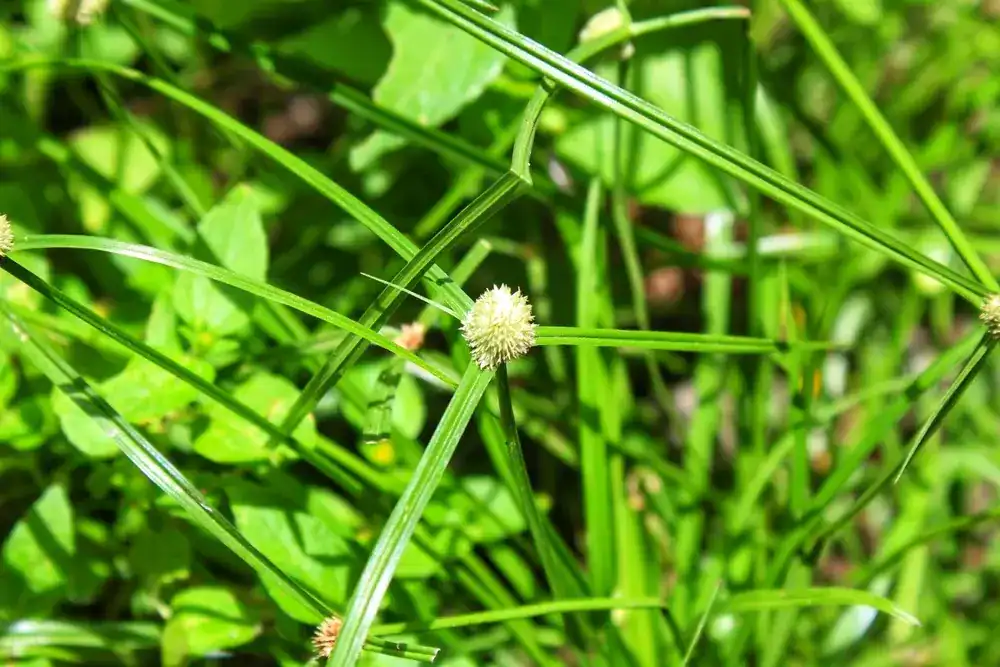
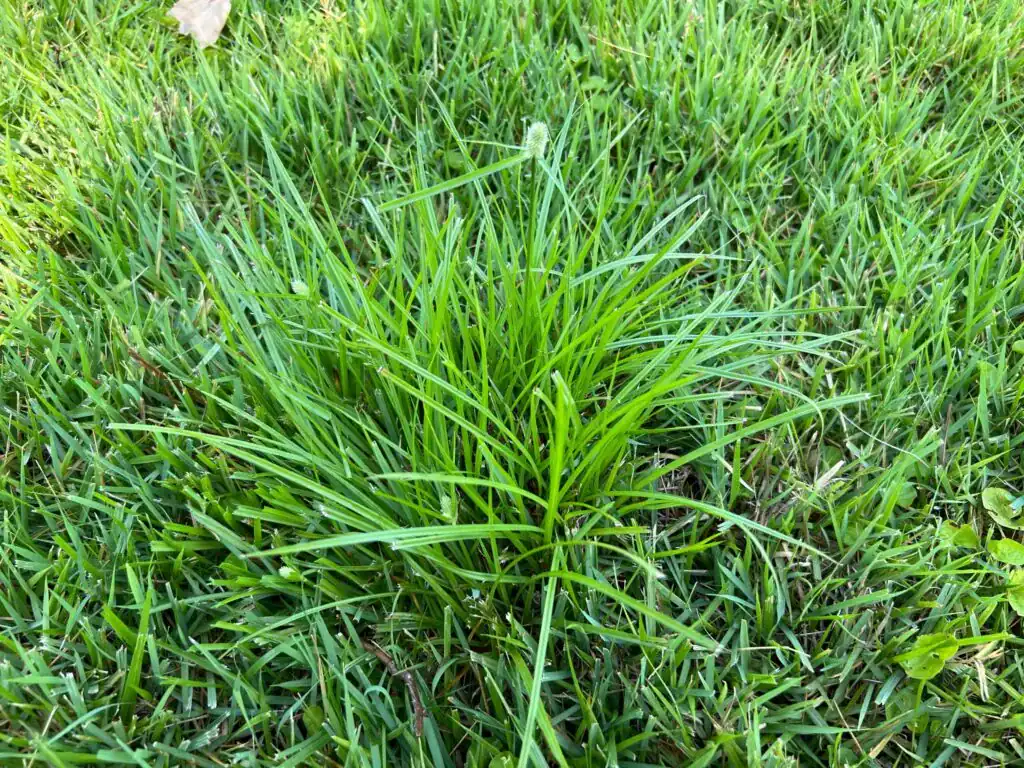
When kyllinga is properly eliminated, the most obvious change is uniformity. No more dark green mat crowding out your turf in July while everything else slows down in the heat. Your lawn stops looking like two different yards fighting for the same space and starts looking like one clean, consistent surface again.
For Coram homeowners, that result takes a little more than chemistry. A lot of lawns in this part of central Brookhaven sit on sandy loam soils that drain unevenly, especially when irrigation systems are running through the summer. Kyllinga thrives in those persistently moist pockets and if the watering schedule doesn’t change, the weed comes back even after treatment. The programs we run here account for that. We’re not just spraying and leaving.
There’s also the Pine Barrens factor. Coram sits right at the edge of the Long Island Central Pine Barrens, which means the aquifer recharge zone is underneath your property. Every application we make is fully compliant with Suffolk County Local Law 41-2007 and NYSDEC licensing requirements not because it’s a selling point, but because it’s the law and it matters here more than it does in most other parts of Long Island.
We’re a locally owned Suffolk County lawn specialist based out of Port Jefferson Station about 8 miles up Route 112 from Coram. That’s not a coincidence. We work regularly in Coram and the surrounding central Brookhaven communities, which means we’re familiar with the soil conditions along Middle Country Road, the drainage patterns in the older post-war neighborhoods, and the specific weed pressure that comes with being this close to the Pine Barrens.
We hold the New York State DEC Commercial Pesticide Applicator License, Category 3a, which is required by law to purchase and apply the professional-grade herbicides that actually work on kyllinga. That’s not a credential we mention to sound impressive it’s the reason we can do what your previous lawn service couldn’t. The products that eliminate kyllinga aren’t available at a hardware store, and they aren’t legal to apply without this license.
We’re a lawn renovation and transformation specialist. Kyllinga is exactly the kind of problem that tests whether a company actually knows what it’s doing and we’ve built our reputation in Suffolk County on getting it right. For consistent year-round results, our full lawn treatment program in Coram ties everything together.
It starts with identification. Kyllinga and nutsedge are both sedges, they look similar, and they both require sedge-specific chemistry but they don’t always respond identically to the same program. Before any product goes down, we confirm what you’re dealing with. Green kyllinga, false green kyllinga, yellow nutsedge the treatment plan depends on getting that right first. Most generalist lawn services skip this step entirely.
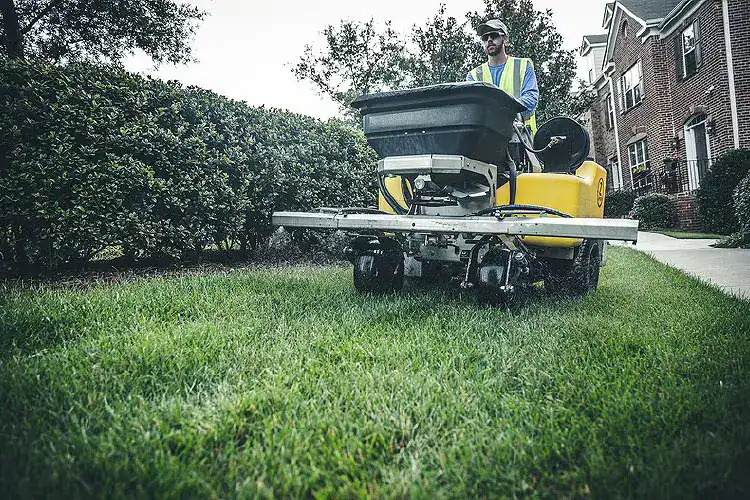
Once we’ve confirmed the species, we apply professional-grade herbicide typically halosulfuron-methyl or sulfentrazone during kyllinga’s active growth window. In Coram, that window runs from late May through late August. Timing matters because the plant has to be actively growing to absorb and translocate the herbicide through its system. An application made too early in spring or too late in the fall is significantly less effective, and you’ll be waiting a full season for another shot.
One application is not the end of the program. Kyllinga spreads through an underground rhizome network that a single treatment won’t destroy. We structure our programs around a minimum of two to three applications, spaced four to six weeks apart, to work through that root system over the course of the season. After the kyllinga is gone, we address the bare areas it leaves behind because an unseeded patch is just an open invitation for the next round of weeds.
Ready to get started?
Every kyllinga control program we run in Coram is built around the specific conditions of your property. That includes soil type, irrigation habits, drainage patterns, and how far the infestation has spread. A small isolated patch requires a different approach than a kyllinga colony that’s taken over a third of the lawn and the program we put together for your yard reflects that.
Because Coram’s residential neighborhoods include a significant number of homes built in the post-war decades, many of the lawns we work on have compacted soils from years of foot traffic and mowing without regular aeration. Compaction reduces water infiltration and creates the near-surface moisture that kyllinga loves. Where it’s warranted, we incorporate core aeration and overseeding recommendations alongside the herbicide program because closing the bare patches with dense, healthy turf is what keeps the kyllinga from re-establishing.
We also factor in the aquifer sensitivity that comes with being adjacent to the Long Island Central Pine Barrens. All applications are made in full compliance with NYSDEC licensing requirements and SCDHS pesticide buffer zone regulations under Suffolk County Local Law 41-2007. If your property is near a well or within a buffer zone in central Brookhaven, we know the rules and we follow them. That’s something any licensed applicator working in Coram should be doing and something you should confirm before hiring anyone.
This is the most common frustration we hear from Coram homeowners, and the answer is straightforward: the products available at retail stores aren’t formulated to kill sedge. Kyllinga is not a grassy weed and it’s not a broadleaf weed it’s a sedge, a member of the Cyperaceae family. The broadleaf killers that target dandelions and clover have no meaningful activity against it. Neither do the crabgrass pre-emergents or the grassy weed controls you’d find at a home improvement store on Middle Country Road.
The herbicides that actually work on kyllinga primarily halosulfuron-methyl and sulfentrazone require a New York State DEC Commercial Pesticide Applicator License to purchase and apply in professional-grade formulations. That’s not a technicality. It’s a legal and structural gap between what’s available to a licensed applicator and what’s available to a homeowner. No amount of research or effort closes that gap the products simply aren’t sold to unlicensed buyers at the concentrations needed to be effective. If you’ve tried and failed, that’s why.
A properly structured kyllinga control program requires a minimum of two to three applications, spaced four to six weeks apart during the active growing season. In Suffolk County, that window runs from late May through late August. One application will visibly damage the above-ground plant tissue, but it won’t destroy the underground rhizome network and that network is what regenerates new growth within weeks of a single treatment.
The number of applications your specific lawn needs depends on how established the infestation is and how well the first treatments are absorbed. A recently established patch with limited rhizome spread may respond well after two applications. A colony that’s been expanding for multiple seasons, which is common in the older residential neighborhoods in central Brookhaven, may need a full three-application program to achieve lasting control. We assess the infestation at each visit and adjust accordingly we’re not running a fixed schedule regardless of what we see.
It matters, and the distinction is worth getting right before any treatment begins. Both kyllinga and nutsedge are sedges, both look similar to untrained eyes, and both require sedge-specific herbicide chemistry that isn’t available at retail. But they’re not the same plant, and while there’s meaningful overlap in how they respond to professional herbicides, the treatment program timing, product selection, application rate should be based on a confirmed identification, not a guess.
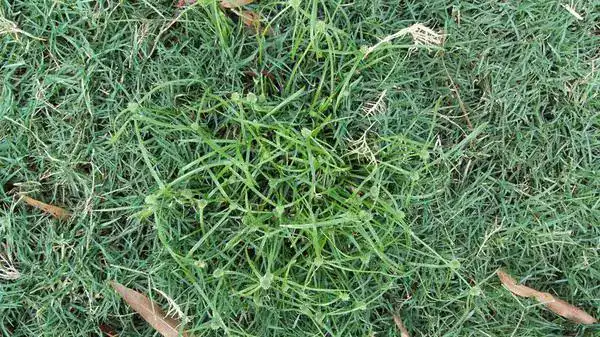
Kyllinga tends to grow lower and denser than nutsedge, forming a tight mat that stays close to the soil surface. Nutsedge grows taller and more upright, with a distinctive V-shaped stem cross-section. In practice, a lot of Coram homeowners have been told by a generalist lawn service that they have nutsedge when what they actually have is green kyllinga or false green kyllinga a species that has expanded northward into Long Island over the past decade. The treatment may partially overlap, but starting with the correct identification gives you a more targeted and effective program from the first application.
Yes, and it happens more often than most homeowners realize. Kyllinga spreads through two mechanisms: an underground rhizome network that expands outward from an established colony, and seed production up to 5,000 seeds per plant per year, with seeds that remain viable in the soil for multiple seasons. In Coram’s densely settled residential neighborhoods, where properties are in close proximity and mowing equipment travels between yards, seeds can move from an untreated neighboring lawn into yours relatively easily.
This is one of the reasons early intervention matters. A small patch that’s treated promptly is a contained problem. A small patch that’s ignored through one or two growing seasons can colonize a significant portion of your lawn and potentially seed into adjacent properties. If you’re seeing kyllinga establish in an area of your yard that borders a neighbor’s lawn particularly in a moist or low-lying area near a property line that’s a likely entry point. Treating your lawn won’t control what’s on your neighbor’s side, but it does protect your turf from further spread and keeps the infestation from becoming a full-scale renovation project.
Almost certainly, yes especially if you’re running a system through the summer. Kyllinga thrives in persistently moist soil, and in-ground irrigation systems that run too frequently or for too long create exactly those conditions. This is a very common pattern in central Brookhaven, where homeowners run irrigation to compensate for the sandy loam soils that dry out quickly in July and August. The result is a lawn that’s either drought-stressed in the dry spots or chronically overwatered near the heads and kyllinga is very good at finding and exploiting those wet zones.
Herbicide alone won’t solve the problem permanently if the irrigation schedule doesn’t change. If you treat the kyllinga and then continue running the same watering program that helped it establish in the first place, you’re creating conditions for reinfestation. As part of our kyllinga control programs for Coram lawns, we look at irrigation as part of the picture and provide specific recommendations for adjusting your schedule and improving drainage where possible. Eliminating the weed and eliminating the conditions that invited it in are two different things both matter for lasting results.
When it’s done by a licensed applicator who knows the local regulations, yes. Coram sits adjacent to the Long Island Central Pine Barrens, which overlies the Long Island sole-source aquifer the primary drinking water source for Suffolk County. The Suffolk County Department of Health Services maintains pesticide-free buffer zones around public drinking water supply wells under Local Law 41-2007, and the Pine Barrens region carries heightened environmental oversight that any responsible applicator working in this area needs to understand.
We hold the NYSDEC Commercial Pesticide Applicator License, Category 3a, and operate exclusively in Suffolk County. Every application we make in Coram is fully compliant with SCDHS buffer zone regulations and state licensing requirements. The herbicides we use halosulfuron-methyl and sulfentrazone are registered for turf use in New York and applied at labeled rates by a licensed professional. If your property is near a well or within a designated buffer zone in central Brookhaven, that’s something we account for before the first application, not after. This is a real and locally specific concern in Coram, and it’s one of the clearest reasons to verify licensing before hiring any lawn care provider in this area.
Useful Links
Other Services we provide in Coram