
Hear from Our Customers
A lot of Coram homeowners have tried a lawn care service before. Maybe it was a national chain that sent a different technician every visit and left the backyard untouched. Maybe it was a low-cost local crew that fertilized on the same schedule regardless of what was actually happening with the grass. Either way, the results didn’t stick and now you’re back to square one, or worse.
The problem usually isn’t the lawn. It’s the program. Coram sits right at the edge of the Long Island Pine Barrens, which means the soil underneath most properties here is sandy, fast-draining, and quick to leach nutrients before the grass ever gets to use them. A standard fertilizer applied at a standard rate on that kind of soil isn’t just ineffective it’s wasteful, and in a community this close to the aquifer recharge zone, it’s the kind of over-application that responsible companies avoid entirely.
When your lawn gets a program calibrated for what’s actually under your feet the right product, the right timing, the right rate the difference shows up fast. Thicker turf, fewer bare patches, weeds that stop coming back season after season. And for Coram properties where the front yard runs straight to the road with no sidewalk to break it up, that difference is visible every single day.
We’ve been treating lawns in Coram and across Suffolk County since 1987, operating out of Port Jefferson Station about 8 miles up Route 112 from central Coram. That’s not a franchise territory assignment. This is the area we’ve worked in continuously for nearly four decades, through every drought year, every grub outbreak, and every season Long Island has thrown at a lawn.
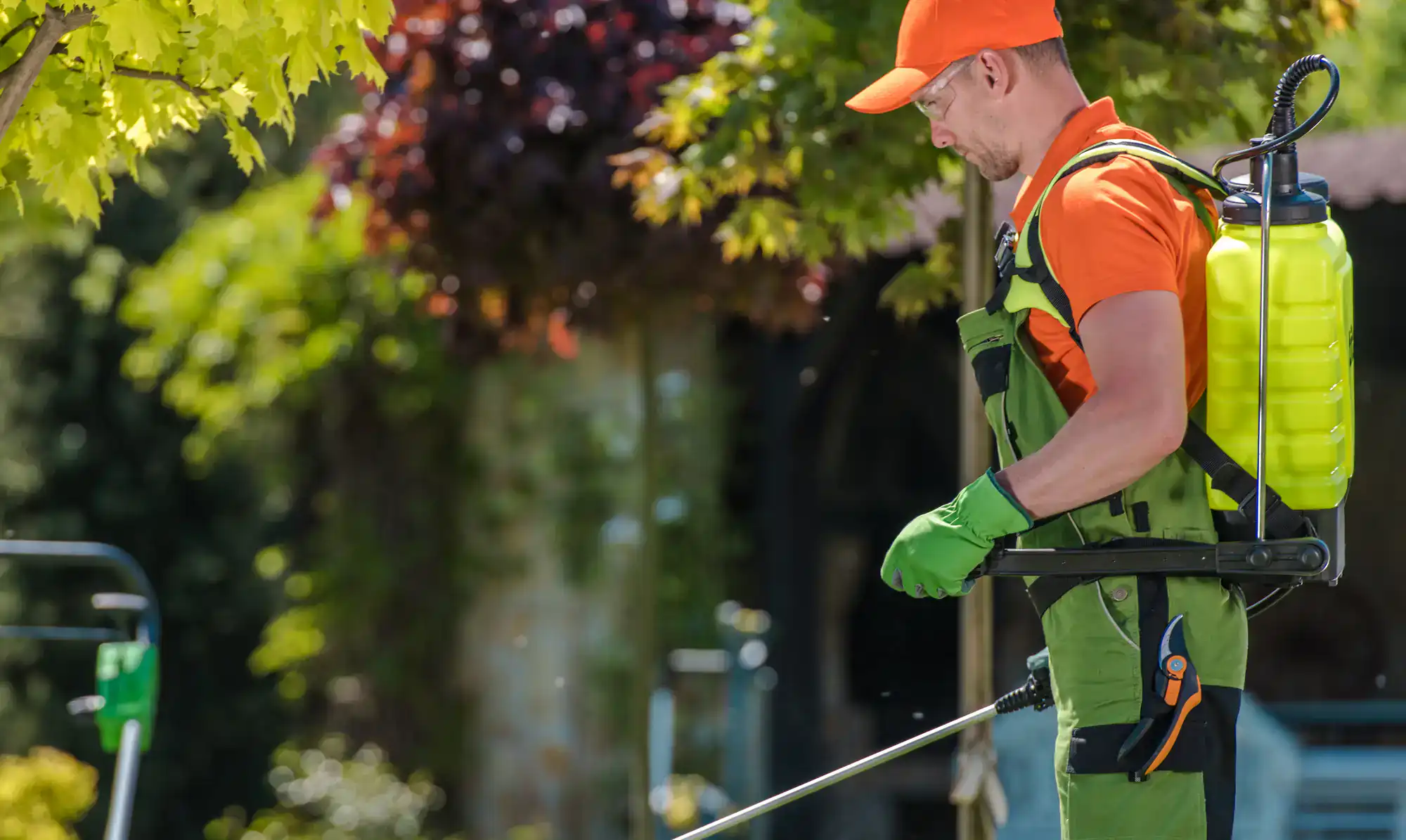
Every technician on our crew is a licensed NYS DEC pesticide applicator not labor hired to follow a checklist, but trained professionals who understand what we’re applying and why. Our trucks are fully wrapped and branded, so you always know who’s on your property. And the fertilizer we use on your lawn isn’t pulled off a distributor shelf it’s a custom blend formulated specifically for us and calibrated for Long Island’s soil chemistry.
From the Longwood school district neighborhoods to the properties bordering the Pine Barrens, we’ve treated lawns across Coram’s full range of conditions. That familiarity isn’t something you can fake.
It starts with an assessment of your specific property not a glance from the truck, but an actual look at what’s going on with your grass. Grass type, sun and shade exposure, weed pressure, visible compaction or bare areas, any history of grub damage. Coram’s housing stock skews toward homes built around 1979, which means most lawns here have had 40 to 50 years to accumulate compaction, thatch, and nutrient depletion. That context matters before a single product gets applied.
From there, we build a treatment program around what your lawn actually needs. The fertilizer applications are timed to Suffolk County’s seasonal windows starting in spring once soil temperatures are consistently warm enough for the grass to absorb nutrients, running through the active growing season, and wrapping up before the November 1st county fertilizer blackout that prohibits applications through April 1st. That blackout exists for a reason, and every application we make is scheduled with it in mind.
If your lawn needs more than a maintenance program if there’s compaction that needs hydraulic core aeration, thin areas that need professional overseeding, or damage that requires full restoration that gets worked into the plan too. You won’t be handed off to a different company for the hard stuff. We handle it all, with the same licensed crew and the same professional equipment, start to finish.
Ready to get started?
The core of what we do is a customized fertilization and weed control program but “customized” here means something specific. It means the fertilizer blend we use on your lawn was formulated for Long Island’s sandy, fast-draining soils, not generic turf in a generic climate. It means pre-emergent crabgrass control timed to the actual spring soil temperature window in central Suffolk County, not a calendar date that works somewhere else. It means targeted treatment for the weeds that actually show up in Coram yards nutsedge, bentgrass, and crabgrass being the most persistent rather than a broadcast approach that misses the problem.
For lawns dealing with compaction which is most Coram properties given the age of the housing stock we use hydraulic core aeration that pulls deeper, more consistent plugs than the light equipment most competitors use. Pair that with professional overseeding using hydraulic seeders, and you’re getting seed-to-soil contact that actually produces germination, not seed sitting on top of hardened ground.
Grub control is also a standard part of the conversation for Coram properties. Japanese beetle and Oriental beetle grubs are widespread throughout central Suffolk County, and Coram’s sandy soils are particularly hospitable to them. Catching grub pressure early before it turns into brown patches that look like drought stress is one of the more valuable things a professional program does that a DIY approach almost always misses until the damage is already done.
Suffolk County Local Law 41-2007 prohibits lawn fertilization from November 1st through April 1st. That’s not a guideline it’s a law with fines up to $1,000 for violations. The reason it exists is straightforward: cool-season grasses go dormant when soil temperatures drop below 55°F, and fertilizer applied to a dormant lawn doesn’t feed the grass it leaches directly into the groundwater. In Coram, which sits adjacent to the Central Pine Barrens aquifer recharge zone, that matters more than in most parts of Long Island.
The practical window for fertilization in Coram typically opens in mid-April, once soil temperatures have consistently climbed enough for active grass growth. Fall September through late October is actually the most important treatment window of the year for cool-season lawns. The soil is still warm, the air is cooler, and the grass is in its peak growth phase. Any company that doesn’t account for these specific timing windows isn’t running a program built for this area.
National lawn care chains operate on volume. The same program, the same product, the same schedule applied across thousands of properties in dozens of different states. That model works fine for the company’s margins. It doesn’t work well for a Coram lawn sitting on sandy outwash soil next to the Pine Barrens, where nutrient leaching is fast and groundwater sensitivity is high.
A custom program starts with what’s actually happening on your property the grass type, the soil condition, the weed pressure, the shade pattern from whatever tree canopy has grown up over the past 40 or 50 years. We use a fertilizer blend formulated specifically for Long Island’s soil chemistry, not a generic commercial product. The application rates and timing are calibrated to what this soil profile needs, not what works on average across a national footprint. That’s the difference between a program that produces results and one that keeps you calling back with the same problems every spring.
Brown patches in summer on a Coram lawn can come from a few different places, and misidentifying the cause is one of the most common reasons homeowners waste money on the wrong treatment. The two most frequent culprits are drought stress and grub damage and they can look nearly identical on the surface.
Drought stress happens when Coram’s sandy soils dry out faster than the grass can recover, especially during the hot inland summers that don’t get the coastal moderation that beachfront communities enjoy. Grub damage, on the other hand, is happening underground Japanese beetle and Oriental beetle larvae feeding on grass roots, leaving sections of turf with nothing anchoring them to the soil. You can actually roll back grub-damaged turf like a loose carpet. If the brown patches are pulling up easily, that’s a grub problem, not a watering problem. A professional assessment in late spring before peak grub activity can identify the pressure early and treat it before the damage shows up in July and August.
For most Coram properties, core aeration is genuinely one of the higher-value services you can do for your lawn not because it sounds good, but because of what’s actually happening in the soil. The median home in Coram was built around 1979, which means the lawn has had four to five decades of foot traffic, mowing, and natural settling to compact the upper soil profile. Compacted soil blocks water infiltration, restricts air movement, and limits root development. No amount of fertilizer fully overcomes it.
Core aeration physically removes plugs from the soil, opening channels for water, air, and nutrients to reach the root zone. We use hydraulic core aerators the professional-grade equipment that pulls deeper and more consistent plugs than the tow-behind or walk-behind units that many local competitors use. The difference matters most when you’re following aeration with overseeding, because seed-to-soil contact drives germination. If the ground is still effectively sealed, the seed sits on the surface and fails. Fall is the right window for this in Coram soil temperatures are still warm enough for germination, and the cooler air reduces seedling stress.
Nutsedge commonly called nutgrass is one of the most frustrating weed problems on Long Island, and Coram’s sandy, well-drained soils are exactly the kind of environment it thrives in. It’s not a grass, it’s a sedge, which means standard broadleaf weed controls don’t touch it. If you’ve been applying generic weed killer and watching the nutgrass come back every summer, that’s why.
Effective nutsedge control requires a targeted treatment applied at the right growth stage typically when the plant is actively growing and before it has set new nutlets in the soil. Treating it too early or too late significantly reduces effectiveness. It also typically takes more than one season to get ahead of an established nutsedge population, because the underground nutlets can remain viable in the soil for years. A professional program that identifies nutsedge specifically and treats it on the right schedule will make consistent progress. A generic program that doesn’t account for it will keep delivering the same result you’ve already been getting.
New York State requires anyone applying pesticides or herbicides to lawns including weed killers and grub controls to hold a valid NYS DEC pesticide applicator license. This involves completing a 30-hour training course and passing a state exam. It’s a legal requirement, not an optional credential. The problem is that it’s not always enforced at the point of hiring, which means unlicensed operators work in the market and homeowners don’t always know.
In Coram specifically, this matters beyond just the quality question. The hamlet sits adjacent to the Central Pine Barrens aquifer recharge zone the same groundwater system that supplies Long Island’s drinking water. An unlicensed applicator who doesn’t understand product rates, application timing, or the county’s fertilizer blackout period isn’t just a risk to your lawn. They’re a risk to the water supply that the entire region depends on. You can verify a company’s pesticide applicator license directly through the NYS DEC’s online license lookup. Any legitimate lawn care company operating in Coram should be able to give you their license number without hesitation and our technicians carry theirs on every job.
Useful Links
Other Services we provide in Coram