
Hear from Our Customers
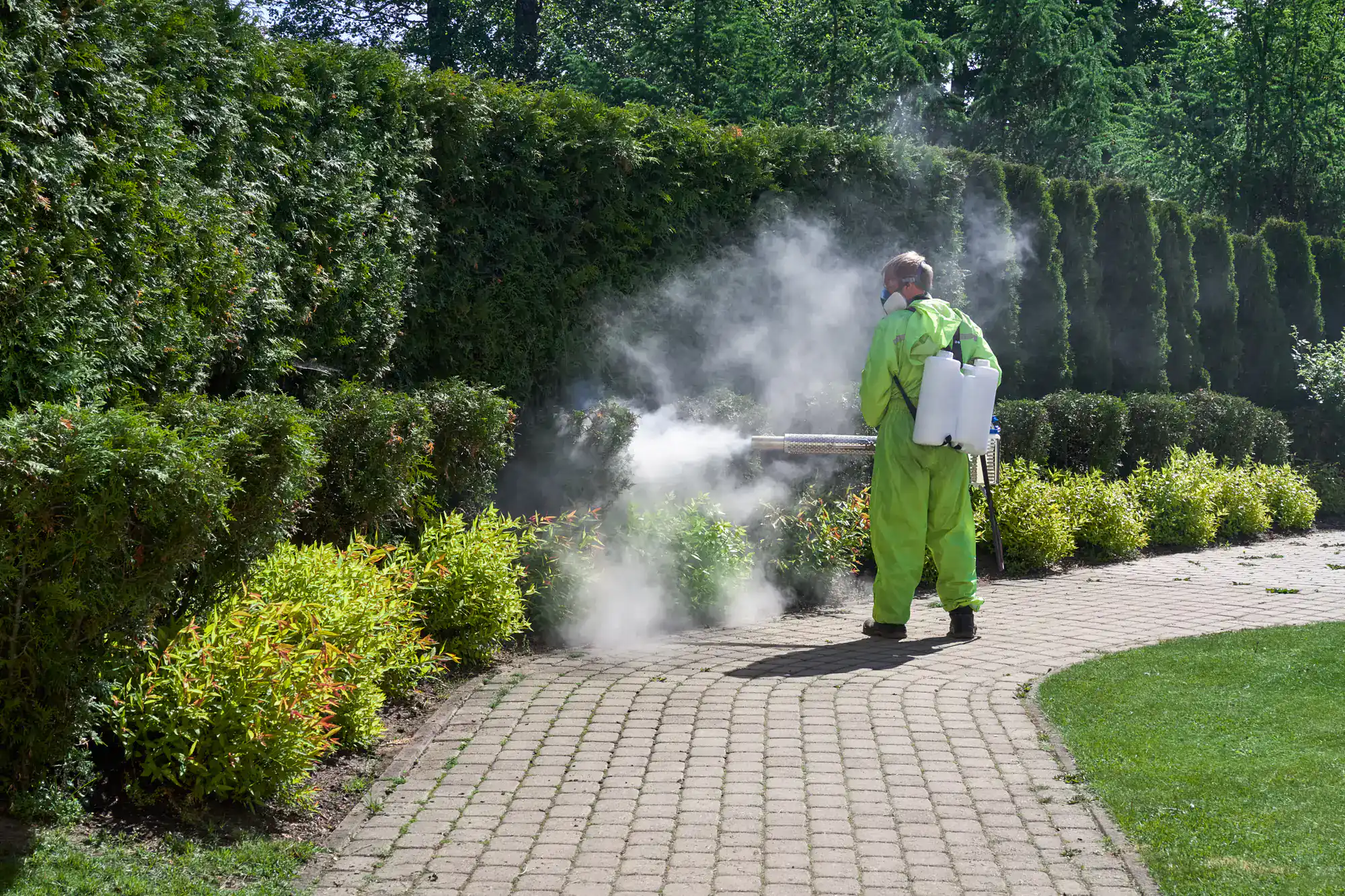
Finding a tick on your kid after they played in the backyard is not a small thing. It’s the kind of moment that changes how you feel about your own property. And in Coram, where residential lots routinely back up to mature oaks, pine stands, and land that borders the Central Pine Barrens, that risk is not theoretical it’s documented. Columbia University found that more than 56% of ticks on Long Island carry Lyme disease. Suffolk County reports roughly 500 confirmed cases per year, with actual numbers believed to be significantly higher due to underreporting.
What a proper flea and tick control program actually does is reduce the population living and reproducing in your yard not just knock back what’s visible on the surface. Our professional-grade products reach the harborage zones that store-bought sprays don’t touch: the shaded lawn edges, the leaf litter along your fence line, the transition zone where your yard meets the tree line. Those are the spots where ticks concentrate, and those are exactly where we focus every application.
The other piece most homeowners don’t think about is how lawn health connects to pest pressure. Thatch buildup, poor drainage, and overgrowth all create the moist, shaded conditions that fleas and ticks thrive in. When your lawn is properly maintained aerated, fertilized, and healthy it becomes a less hospitable environment for pests in the first place. That’s an advantage you only get when the same company handles both.
We’ve been operating in Suffolk County since 1987. That’s not a tagline it means we were treating lawns in Coram, Selden, Centereach, and Middle Island before most of today’s franchise pest control operators existed. When our technician shows up at your Coram property, they’re not reading off a script built somewhere else. We know the landscape here, the tick pressure patterns specific to properties adjacent to the Pine Barrens, and what it actually takes to protect a yard that sits near preserved woodland.
Every technician we send is NYSDEC-licensed meaning they’ve completed the state’s required 30-hour pesticide training and passed the certification exam. That’s not the standard at every company you’ll find online. Many send unlicensed workers to apply restricted-use products on properties where children and pets spend time. We don’t operate that way.
The owner is directly involved in every job. There’s no regional manager reviewing numbers from a spreadsheet there’s real accountability at every visit, on every Coram property, every time.
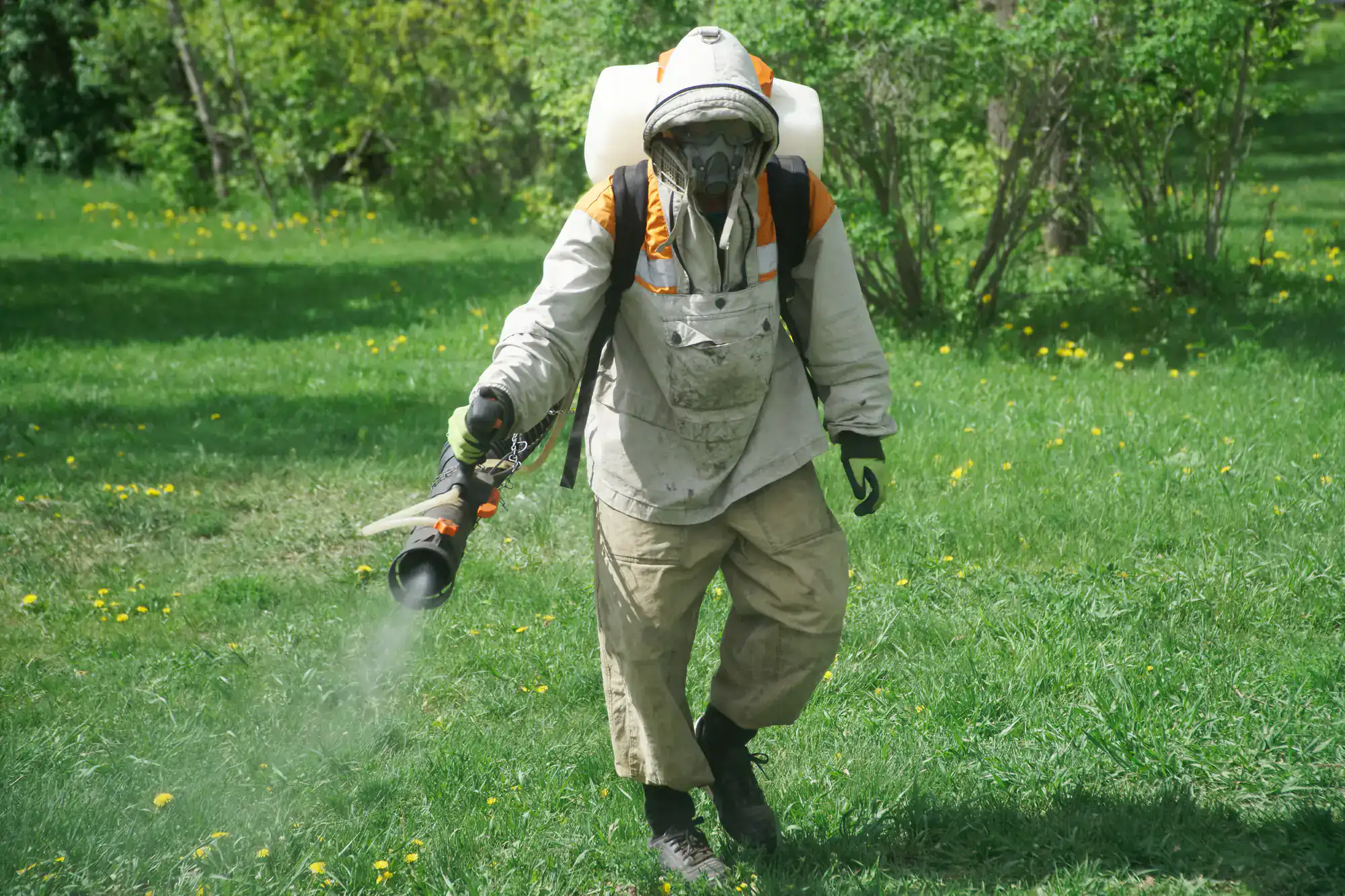
It starts with a property assessment. Before we apply any product, your yard is evaluated for the conditions that drive flea and tick pressure wooded borders, shaded lawn areas, leaf litter margins, ornamental bed edges, and any transition zones where maintained turf meets natural growth. In Coram, that last one matters more than most people realize. The closer your property sits to preserved woodland or Pine Barrens-adjacent land, the more critical it is to treat that boundary correctly, not just spray the open lawn.
From there, we build your program around Long Island’s actual tick calendar not a generic national schedule. Treatment begins in early April, before nymphal deer tick populations peak in May and June. Those nymphs are poppy-seed-sized and nearly impossible to spot before they bite, which is exactly why getting ahead of the peak matters. Applications continue every three to four weeks through the summer maintenance window, then pick back up in fall when adult deer ticks surge again from September through November.
Each application takes roughly 30 to 60 minutes to dry, after which the yard is safe for kids and pets. You’ll receive seasonal reminders so nothing falls through the cracks, and billing is handled online no chasing anyone down, no paper invoices sitting on the counter.
Ready to get started?
The typical Coram property a ranch or split-level on a generous lot with mature oaks and pines, often with a wooded border or ornamental plantings along the fence line creates a specific set of tick and flea harborage conditions. Our programs are designed around that reality. We target the areas where pests actually live: shaded lawn edges, leaf litter accumulation zones, brush borders, ornamental bed perimeters, and the critical transition zone between your maintained yard and any adjacent woodland.
Flea control addresses both the yard environment and the conditions that allow flea populations to establish and cycle. Our professional-grade products include Insect Growth Regulators that interrupt the flea life cycle at the larval stage something over-the-counter yard sprays simply don’t contain. If you’ve tried store-bought products and kept seeing fleas come back, that’s usually why.
For tick control, our program runs from early spring through late fall, timed to the two documented activity peaks for deer ticks on Long Island the nymphal surge in May and June, and the adult surge in September and November. Lone star ticks, which are specifically associated with the scrub oak environments found along the Pine Barrens boundary near Coram, extend that active window further. All of this is handled under one roof by licensed professionals who have been doing this work in central Brookhaven for nearly four decades.
Coram sits at the western boundary of the Central Pine Barrens federal documentation literally describes the preserved zone as beginning in Coram and extending eastward across Long Island. That matters because the scrub oak and pitch pine understory of the Pine Barrens is documented habitat for lone star ticks specifically, in addition to the deer ticks that carry Lyme disease. Properties on the eastern and southern edges of Coram, or any lot that backs up to wooded land, are essentially adjacent to an unlimited reservoir population that continuously repopulates your yard throughout the active season.
Columbia University found that more than 56% of ticks on Long Island carry Lyme disease, and Suffolk County’s Department of Health has noted that infection rates in central and eastern Suffolk where Coram sits may be even higher than the overall Long Island average. For a Coram homeowner with a wooded lot, that’s not a distant statistic. It’s your yard.
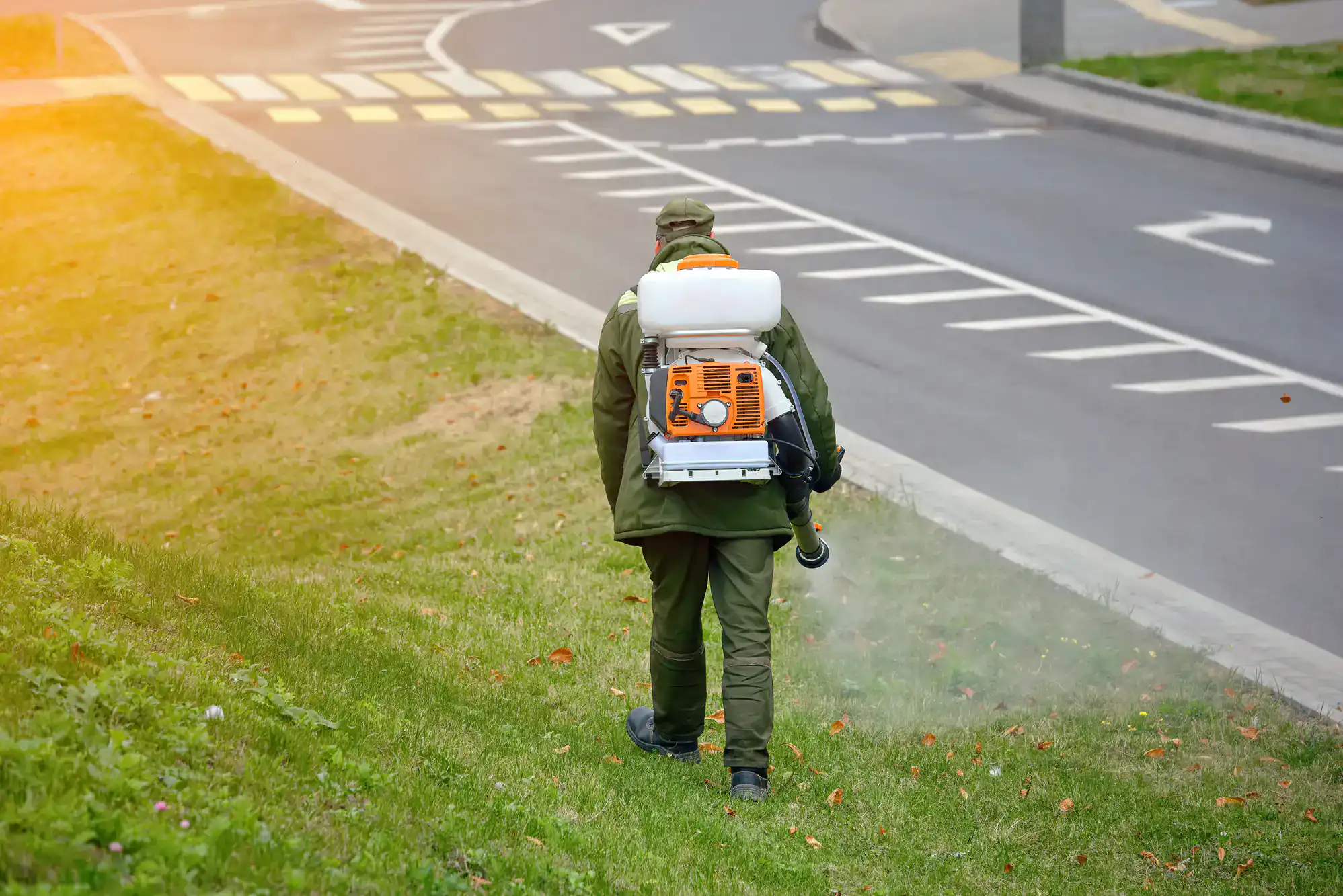
This is the most common concern homeowners raise before scheduling, and it deserves a straight answer. Licensed applicators don’t broadcast-spray your entire yard. We apply product in targeted zones the tick harborage areas along wooded edges, leaf litter margins, ornamental bed borders, shaded lawn areas, and fence lines. The open lawn your kids play on is not the primary target, because that’s not where ticks live in meaningful numbers.
After application, the yard is safe for re-entry once the product has dried typically 30 to 60 minutes. Every technician we send is NYSDEC-certified, which means they’ve completed the state’s required pesticide training and passed a certification exam. We know what to apply, where to apply it, and at what concentration. The risk of a properly managed, targeted professional application is not comparable to the risk of leaving a tick-infested yard untreated in a community where more than half of local ticks carry Lyme disease.
The short answer is that consumer-grade products don’t contain what professional products do and they’re not designed to break the pest life cycle, only suppress what’s currently active. Fleas in particular are a multi-stage problem. The eggs, larvae, and pupae living in your lawn’s thatch layer are not affected by most over-the-counter contact sprays. Without an Insect Growth Regulator targeting those immature stages, you’re treating the adults while the next generation is already developing underneath.
For ticks, the issue is often application coverage. Store-bought sprays get applied to open lawn areas, but ticks concentrate in the shaded transition zones the leaf litter along your fence, the edge where your yard meets the tree line, the base of ornamental plantings. Those are the spots that require targeted, professional-grade treatment. If you’ve treated your Coram yard multiple times with retail products and keep seeing fleas or ticks come back, the product isn’t the only problem it’s where and how it’s being applied.
On Long Island, tick season has two documented peaks. The first runs from April through June, when nymphal deer ticks are at their highest density. These nymphs are poppy-seed-sized small enough that most people never spot them before they bite and this is the window when Lyme disease transmission risk is highest. Treatment should begin in early April, before that population peaks, not after you’ve already found one on your dog.
The second peak runs from September through November, when adult deer ticks surge again. These adults are capable of transmitting Lyme disease, babesiosis, anaplasmosis, and Powassan virus. Lone star ticks, which are specifically associated with the scrub oak environments along Coram’s Pine Barrens boundary, extend the active window from spring through late fall. A full seasonal program typically involves applications every three to four weeks across both peak windows, with a summer maintenance application in between. Each treatment provides roughly four to six weeks of protection, which is why consistent scheduling matters more than any single application.
A standalone pest control company sprays your yard and leaves. What they can’t do is address the lawn conditions that make your property more hospitable to fleas and ticks in the first place. Thatch buildup, poor drainage, and overgrown borders all create the moist, shaded microhabitats where tick and flea populations establish and cycle. If those conditions aren’t addressed, you’re managing a symptom while the underlying environment stays the same.
We handle both sides of that equation. The same company that aerates your soil, applies custom-blended fertilizer, and maintains your turf health is also applying your flea and tick treatments. A properly maintained lawn good drainage, reduced thatch, healthy turf density is a genuinely less hospitable environment for pests. That’s not a claim a dedicated pest control company can make, because they don’t touch the lawn. For Coram homeowners dealing with the specific combination of Pine Barrens-adjacent woodland, mature tree canopy, and the leaf litter and moisture conditions that come with it, that integrated approach makes a real difference.
New York State law requires any company commercially applying pesticides to be registered with the NYSDEC and to employ at least one certified commercial applicator. That certification requires completing a 30-hour pesticide training course and passing a state exam and it must be renewed every three years. It’s not a background check or a business license. It’s a technical qualification that demonstrates the applicator understands what they’re handling and how to apply it safely.
The problem is that many lawn care and pest control operators in Suffolk County send uncertified workers to apply restricted-use products on residential properties. It happens quietly, and most homeowners don’t think to ask. If you’re hiring someone to apply pesticides in a yard where your kids and pets spend time, it’s worth asking directly: are your applicators NYSDEC-certified? Every technician we send to a Coram property holds that certification. It’s not a bonus it’s the baseline standard we’ve operated at since 1987.
Useful Links
Other Services we provide in Coram