
Hear from Our Customers
If you’ve patched the same areas of your lawn two or three seasons in a row, the problem isn’t the seed. It’s an active fungal disease that’s still living in your soil and thatch, waiting for the right conditions to come back. Reseeding into untreated disease is like painting over rust it looks okay for a while, then fails in the same spot.
Smithtown’s housing stock skews older, with most homes built around the 1960s. That means established turf, years of thatch accumulation, and lawns that have been cycling through the same disease patterns for decades. Brown patch overwinters right in that thatch layer and reactivates every summer when nighttime temperatures climb and humidity rolls in off the Long Island Sound. It’s not random it’s predictable, and it’s treatable.
Sandy soils throughout Smithtown drain fast, which stresses turf during dry stretches and makes dollar spot significantly more aggressive. Homes near Blydenburgh County Park or backing up to the Caleb Smith State Park Preserve deal with reduced airflow, persistent shade, and dew that lingers longer than it does on open suburban lots. Those conditions don’t just favor fungal disease they accelerate it. A professional fungicide program built around your lawn’s actual environment changes the outcome.
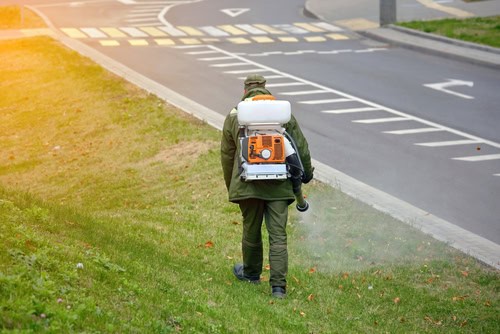
We are a NYS DEC-licensed commercial pesticide applicator serving Smithtown and the surrounding North Shore communities of Suffolk County. That license isn’t a marketing claim it’s a legal requirement to apply pesticides for hire in New York State, and it means every technician on your lawn has passed state-mandated exams, carries credentials, and completes continuing education to keep them current.
Operating out of Port Jefferson Station, just east of Smithtown along the Route 347 corridor, we’re a genuinely local operation. The technicians who show up at your property know the difference between a lawn near the Nissequogue River wetlands and one on a drier, open lot in Nesconset or St. James and we treat them differently because they should be.
After every application, you receive written documentation of what was applied, at what rate, and under what conditions. That’s not optional it’s required by law, and it’s the kind of accountability that separates a licensed professional from anyone who just picks up a sprayer.
The process starts with a proper assessment of your lawn not a glance from the truck, but an actual evaluation of the affected areas. Brown patch, dollar spot, and red thread are the three most common fungal diseases on Smithtown lawns, and they can look similar in early stages. Identifying the right disease before selecting a product is the difference between a treatment that works and one that wastes your time and money.
Once the disease is confirmed, we select the appropriate fungicide chemistry for that specific pathogen. For brown patch, that typically means a fungicide in the triazole or strobilurin class applied during the active disease window which in Smithtown runs roughly June through August when overnight temperatures stay above 70°F and Long Island Sound humidity keeps conditions elevated. Dollar spot treatments are timed differently, and red thread which peaks in Smithtown’s cooler spring and fall months requires its own approach.
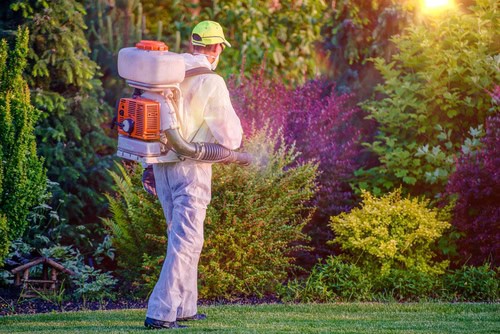
We also rotate between fungicide classes across applications to prevent resistance. This matters because using the same chemistry repeatedly creates resistant fungal strains that stop responding to treatment. It’s standard professional turf management practice, and it’s the reason our program delivers lasting results instead of a temporary fix. New York State also requires neighbor notification prior to pesticide applications we handle that as part of every visit, keeping you fully compliant.
Ready to get started?
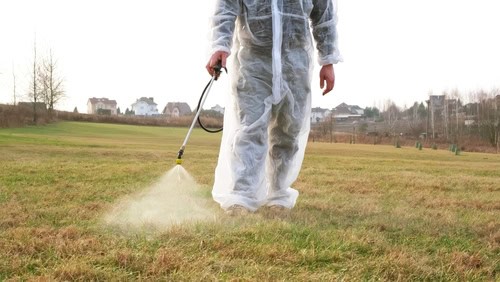
One of the most concrete differences between our fungicide treatment and anything you can do yourself is the product. As a NYS-licensed commercial pesticide applicator, we have legal access to restricted-use fungicides professional-grade formulations of active ingredients like azoxystrobin and propiconazole that are not available at any garden center or hardware store in Smithtown. These are the same chemistries used on golf courses and professional athletic fields. What’s on the shelf at retail is a diluted, over-the-counter version of what a licensed applicator can legally apply.
Our program covers the three diseases that hit Smithtown lawns hardest. Brown patch treatment is timed to the summer disease window, when the combination of Smithtown’s maritime humidity and the moisture output from the Nissequogue River corridor creates peak activation conditions. Dollar spot treatments account for the sandy, fast-draining soils that stress turf and make it vulnerable. Red thread applications are scheduled around the cool, nitrogen-deficient conditions of spring and early fall that make North Shore lawns susceptible each year.
For lawns near the Nissequogue River, Blydenburgh County Park, or other wetland-adjacent areas in Smithtown, we make applications in full compliance with NYS DEC buffer zone requirements for pesticide use near waterways. You get written documentation after every visit, and we handle the neighbor notification requirement required by New York State law. The entire program is built around your lawn’s specific conditions not a generic schedule applied the same way across every property.
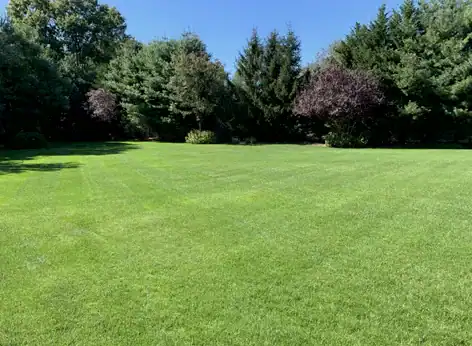
Those recurring patches are almost always brown patch disease Rhizoctonia solani not a watering or soil issue, even though that’s usually the first thing homeowners adjust. The fungus overwinters as dormant mycelium in your thatch layer and reactivates each summer when nighttime temperatures hold above 70°F and humidity is elevated. In Smithtown, that combination arrives reliably every June and can persist through August, particularly in neighborhoods near the Nissequogue River corridor where ambient moisture stays higher than it does further inland.
The reason it keeps hitting the same spots is that the pathogen is still there between seasons. Reseeding without treating the disease just puts new grass into infected ground. The new growth dies in the same place, the same time of year, for the same reason. A properly timed fungicide treatment applied before or at the first sign of active disease breaks that cycle. Once the pathogen load is reduced and conditions are managed, those spots can recover and stay recovered.
They’re three different diseases caused by three different pathogens, and they require different fungicide chemistries to treat effectively. Brown patch creates large, roughly circular areas of tan, collapsed grass often with a darker border and spreads fast under hot, humid conditions. Dollar spot shows up as smaller, silver-dollar-sized straw-colored patches that can merge into larger dead zones if left alone. Red thread is the most visually distinct: you’ll see pinkish-red threads or a cottony pink mass extending from the grass blades, usually in irregular patches.
Misidentifying one for another is genuinely common, and it leads to the wrong treatment. Applying a fungicide that targets brown patch won’t resolve a dollar spot outbreak, and vice versa. On Long Island lawns, all three can appear in the same season brown patch in summer, red thread in spring and fall, dollar spot through much of the growing season. That’s why diagnosis before treatment isn’t just a good idea, it’s the only approach that actually works.
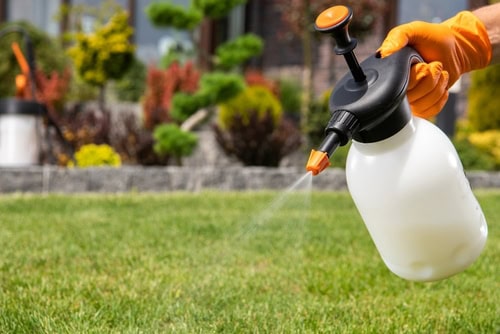
You can apply over-the-counter fungicide products, but there are two real limitations worth understanding. First, retail fungicide products available in Smithtown at Home Depot, Ace Hardware, or any garden center are consumer-grade formulations. They contain the same active ingredient categories as professional products, but at lower concentrations and without the application precision that a licensed technician brings. Second, and more importantly, the effectiveness of any fungicide depends heavily on correct disease identification, proper timing, and the right application rate. Getting any one of those wrong reduces results significantly.
There’s also the resistance issue. Most homeowners apply whatever product they have on hand, repeatedly, without rotating chemistry. That’s one of the fastest ways to develop a fungicide-resistant fungal strain in your lawn a problem that’s already documented in Long Island turf markets with overused strobilurin products. A licensed professional fungicide application uses restricted-use chemistries unavailable at retail, rotates modes of action to prevent resistance, and is timed to the actual disease pressure window for your specific lawn.
If you’re already seeing visible symptoms circular dead patches, discolored grass, or red threads you’re in curative territory. The disease is active, and the goal is to stop it from spreading further and reduce the pathogen load so recovery can begin. Curative applications work, but they can’t undo damage that’s already occurred. The affected grass that’s already collapsed won’t green back up on its own it will need to be reseeded once the disease is under control.
Preventative treatment makes the most sense for lawns that have had recurring disease in previous seasons, or for properties in high-risk microclimates. Homes adjacent to Blydenburgh County Park and the Nissequogue River wetlands sit in exactly that category reduced airflow, persistent dew, and elevated overnight humidity create conditions where brown patch and red thread are essentially predictable every year. A preventative fungicide application timed just ahead of the disease pressure window keeps the pathogen from reaching the threshold where visible damage occurs. For lawns with a history of summer disease, preventative treatment is almost always the more cost-effective approach.
In mild cases, red thread can slow down once conditions shift it’s most active when temperatures are between 60 and 75°F and nitrogen is low, so a warm spell or a nitrogen application can reduce its spread. But “slowing down” isn’t the same as resolving the disease. The pathogen remains in the turf and thatch, and it will come back the following spring or fall under the same conditions. On Long Island North Shore lawns, those conditions return every year without fail.
Red thread also spreads by spore dispersal spores can travel up to 8 feet from an infected area, which means a small outbreak in one corner of your lawn becomes a much larger problem quickly if left alone. The pink-red threads are visible and alarming, and the affected areas can take weeks to recover even after the disease stops spreading. A targeted fungicide treatment stops the active infection faster, reduces the spore load in your turf, and gives the lawn a clean window to recover. Paired with a nitrogen application to address the deficiency that made the turf vulnerable, it’s a straightforward fix.
Yes and it’s worth understanding why, beyond just the legal angle. In New York State, applying pesticides for hire without a NYSDEC commercial pesticide applicator license is illegal. But the license also matters practically: it’s the credential that grants access to restricted-use fungicide products that are simply not available to unlicensed operators or homeowners. If a company can’t produce a NYS DEC license, they are limited to the same retail products you could buy yourself at your own risk.
For Smithtown specifically, there’s an additional layer. Properties near the Nissequogue River and its associated wetlands fall within areas where NYS DEC buffer zone regulations apply to pesticide applications near waterways. A licensed applicator knows those rules, follows them, and documents compliance. An unlicensed operator may not even be aware they apply. New York State also requires that commercial lawn care operators notify neighbors before pesticide applications another requirement that unlicensed operators frequently skip. When you hire us, you get a licensed professional, restricted-use chemistry, written application records, and full regulatory compliance. That’s not a bonus it’s the baseline for what professional fungicide treatment near Smithtown, NY should look like.
Useful Links
Other Services we provide in Smithtown