
Hear from Our Customers
If you’ve been fertilizing your lawn for years and still dealing with thin patches, poor color, or bare spots that won’t fill in the problem probably isn’t the fertilizer. On the sandy loam and clay-influenced soils common throughout Holtsville and the Brookhaven Town area, compaction builds a barrier at the surface that blocks nutrients from ever reaching the root zone. You’re essentially feeding a wall. Studies show fertilizer uptake can improve 30–40% after proper core aeration, because the soil can finally absorb what you’re putting into it.
For Holtsville homeowners specifically, this matters more than it might in newer developments. Homes here were mostly built between the 1960s and 1970s which means these lawns have had 50-plus years of compression from mowing equipment, foot traffic, and freeze-thaw cycles. Many have never been professionally aerated. The compaction layer in a lawn like that isn’t shallow. It’s deep, it’s dense, and it requires equipment that can actually reach it.
Beyond fertilizer efficiency, proper aeration restores how your lawn handles water. Compacted soil can reduce water infiltration by up to 50%, which is why some Holtsville lawns pool after rain or dry out fast despite regular irrigation. Once that surface layer opens up, water moves the way it’s supposed to down to the roots, not off into the street.
We’re a Suffolk County lawn care company not a franchise routing your call through a 1-800 number. We understand the specific soil conditions, grass varieties, and seasonal timing that matter in Holtsville and central Long Island, including the sandy loam and clay-loam mix typical of properties throughout the Brookhaven Town area. That’s not something you get from a national chain with a generic Holtsville blog page.
Every applicator on our team holds a New York State DEC Pesticide Applicator License the credential legally required for commercial fertilizer and pesticide application in New York. A lot of the smaller operators that circulate through Holtsville neighborhoods can’t produce that. It matters, especially given New York’s fertilizer restrictions near waterways and groundwater recharge areas across Suffolk County.
Our approach is integrated. Aeration isn’t sold as a standalone transaction it’s the foundation that makes overseeding and fertilization actually work. If you’ve been running a lawn program that hasn’t delivered, this is usually where the gap is.
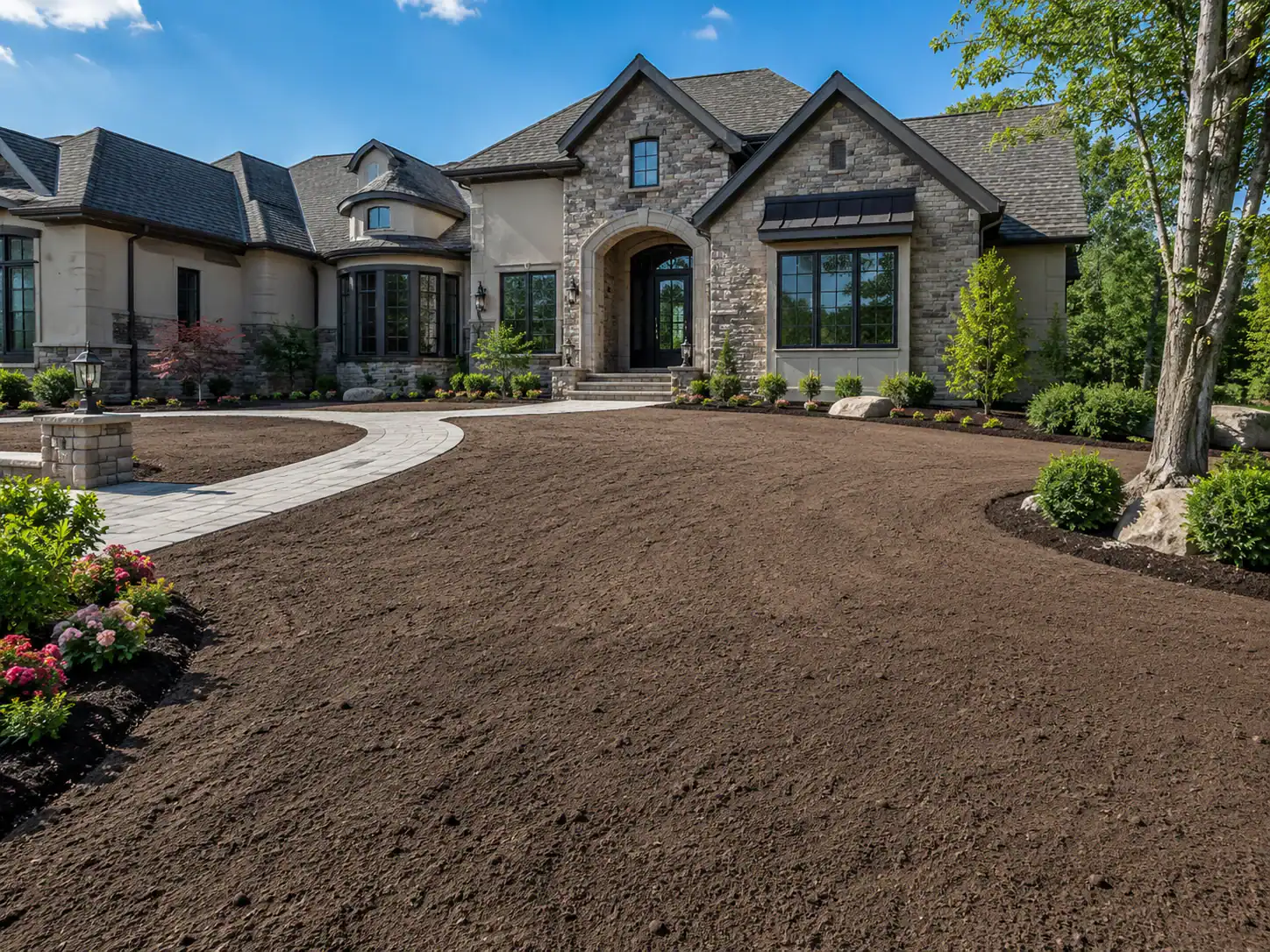
Before anything starts, we assess your lawn. Soil type, thatch depth, compaction level, and current turf density all factor into how the job gets done. For most Holtsville properties older homes on mature lots with years of compaction built up that assessment usually confirms what the lawn is already showing: the soil needs real mechanical relief, not a surface pass.
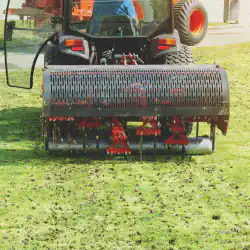
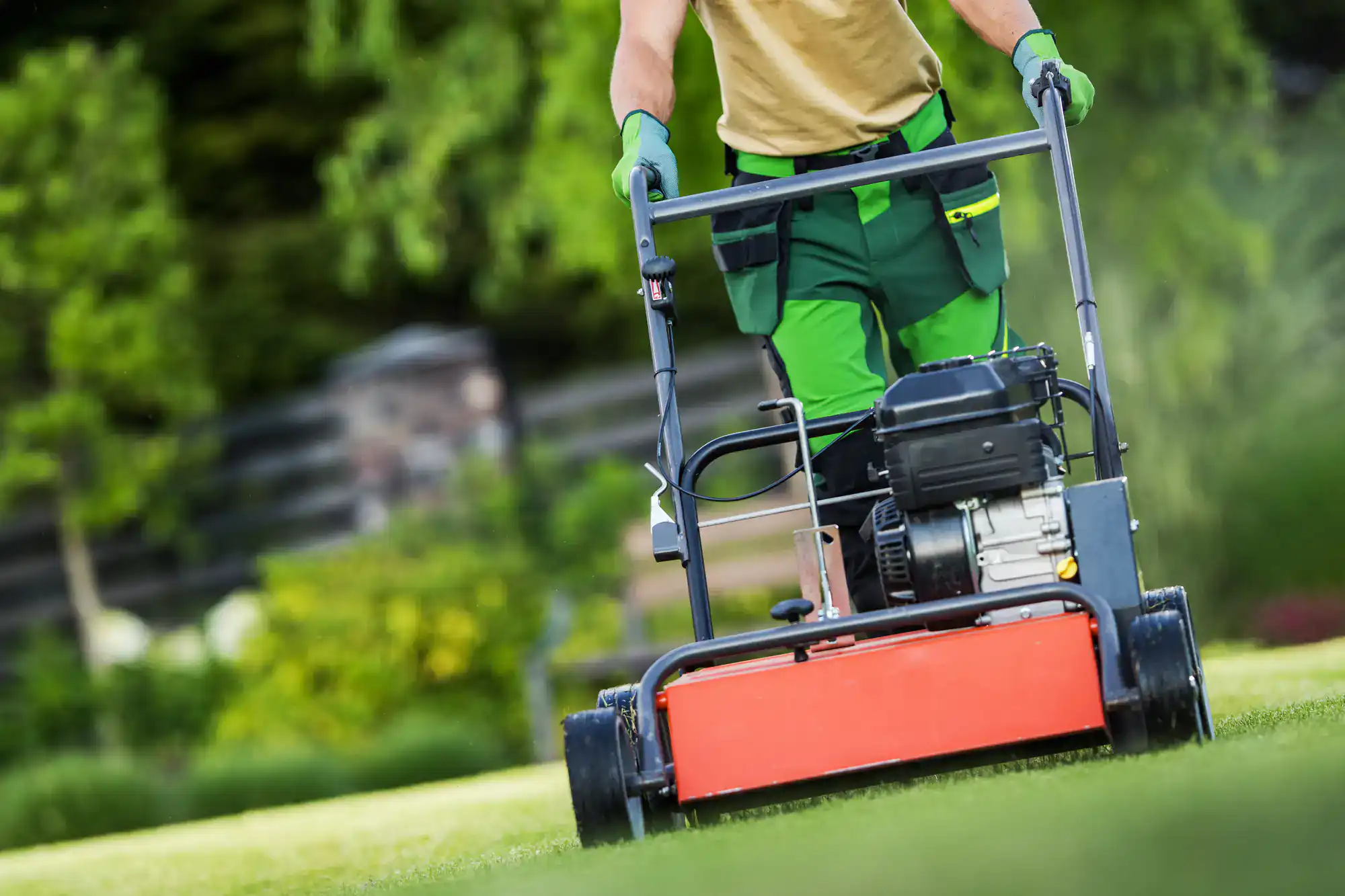
Then comes the equipment difference that actually matters. We use a commercial hydraulic aerator, not the drum-style machines available at rental centers. A drum aerator relies on its own weight to push tines into the ground. On compacted clay-loam soil which is exactly what you’re dealing with in much of Holtsville and central Suffolk County that typically gets you 1.5 to 2 inches of penetration, if you’re lucky. Our hydraulic aerator applies controlled downward pressure and drives tines 3 to 4 inches deep, reaching the actual compaction layer rather than just the surface. That’s the difference between a treatment that works and one that looks like it worked.
After aeration, soil cores are left on the lawn. They’ll look like a mess for a few weeks that’s normal, and they’re supposed to be there. Those plugs contain soil microbes and organic matter that break down naturally over 2 to 4 weeks, returning nutrients to the surface and helping reduce thatch. If aeration is paired with overseeding, seed drops directly into the open holes and makes immediate soil contact, which is why germination rates after aeration run 30 to 50% higher than seeding on un-aerated, thatch-covered ground. The fall window late August through October is when this process works best for the cool-season grasses that dominate Holtsville lawns.
Ready to get started?
Core aeration with us isn’t a one-pass-and-done job. Our hydraulic aerator makes consistent, evenly spaced passes across the entire lawn to ensure full coverage because incomplete aeration leaves bare zones that don’t respond, and that’s a complaint Holtsville homeowners have made about other local services. The goal is uniform decompression across the whole lawn, not just the easy sections.
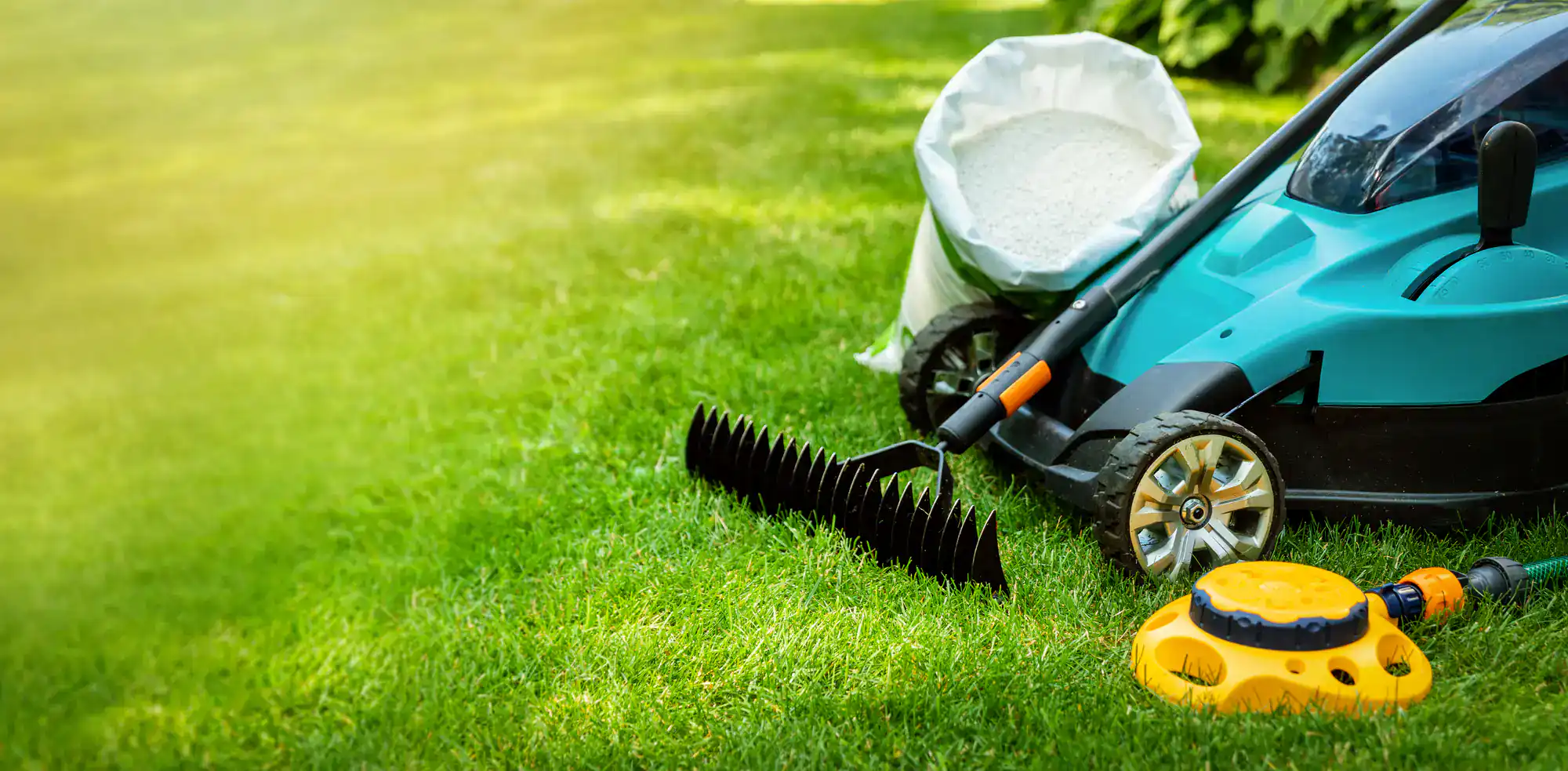
For most Holtsville properties, core aeration pairs naturally with overseeding and a post-aeration fertilization program. The tall fescue, Kentucky bluegrass, and perennial ryegrass that make up most lawns in this area respond well to that sequence aerate to open the soil, overseed to fill thin areas, then fertilize into a root zone that can now actually absorb it. That’s the program. It’s not complicated, but the order matters, and skipping the first step is why a lot of fertilization programs in this area underdeliver.
Our applicators are NYS-licensed and trained in New York’s fertilizer regulations, including the phosphorus restrictions that apply near waterways throughout Suffolk County. Whether your property is near Waverly Avenue, off Portion Road, or anywhere in the Sachem school district area, the program is calibrated to what your specific lawn actually needs not a generic package applied the same way regardless of conditions.
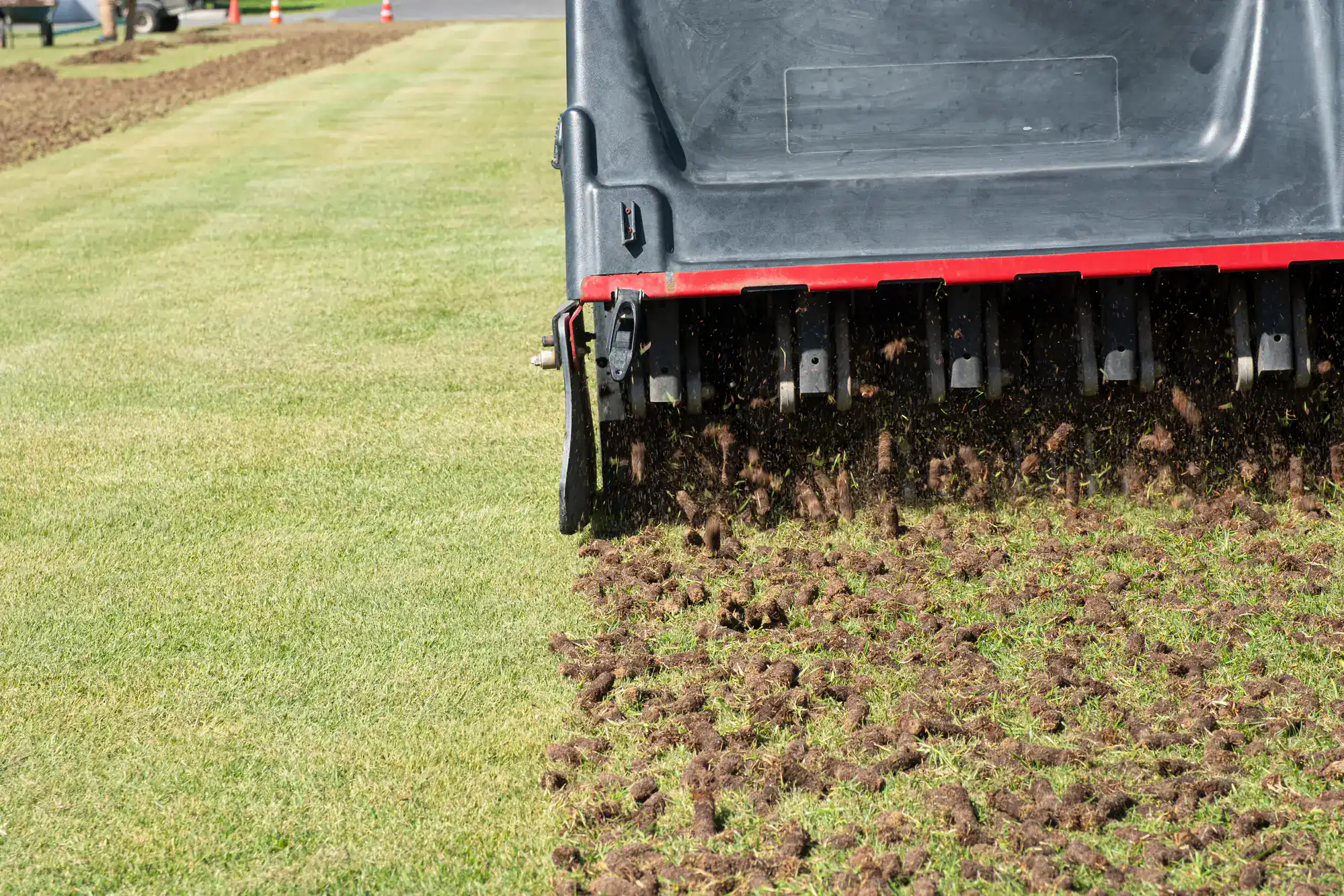
For Holtsville lawns, the optimal window runs from late August through October. The cool-season grasses that dominate properties here tall fescue, Kentucky bluegrass, perennial ryegrass grow most aggressively in fall, which means aeration and overseeding done during this period has the best chance of producing real, visible results before winter sets in.
The timing matters for a specific reason: soil temperatures in Holtsville and central Suffolk County stay warm from summer well into September and early October, which supports seed germination, while the cooler air temperatures reduce heat stress on new growth. Once you get into late October and November, that window closes fast. We schedule fall aeration in advance because this is the most in-demand period across all of Suffolk County if you’re thinking about it, booking early is the right move.
This is one of the most common frustrations among homeowners in Holtsville, and the answer is almost always the same: compaction. On the sandy loam and clay-influenced soils typical of Holtsville and the Brookhaven Town area, compaction creates a dense barrier at the soil surface that prevents fertilizer from penetrating to the root zone. The nutrients sit on top, and the next rain washes a good portion of them away before they do anything useful.
It’s not that the fertilizer isn’t working it’s that the soil isn’t letting it work. Core aeration mechanically removes plugs of soil, opening direct channels to the root zone. Once those channels exist, fertilizer moves the way it’s supposed to. Research consistently shows that fertilizer uptake efficiency improves 30 to 40 percent after proper aeration. If your lawn hasn’t responded to years of treatment, this is almost certainly the missing step.
Core aeration removes a physical plug of soil from the ground, creating an open channel for air, water, and nutrients to reach the root zone. Spike aeration pushes a solid tine into the soil without removing anything which means the soil around each hole gets compressed further, not relieved. On the clay-loam soils common in the Brookhaven Town area, spike aeration can actually make compaction worse over time.
This distinction matters when you’re comparing services or considering a rental. A lot of the aerator attachments sold at home improvement stores and rental centers in central Suffolk County are spike-style or drum-style machines that don’t pull cores. If a service provider can’t tell you specifically that they pull cores and how deep their tines penetrate, that’s worth asking before you book. Core aeration is the only method that provides genuine compaction relief everything else is surface-level at best.
Depth is where most aeration jobs fall short and it’s the detail that separates a treatment that works from one that just looks like it did something. On compacted soil, the actual compaction layer typically sits 2.5 to 4 inches below the surface. Standard drum aerators, which rely on their own weight for penetration, often reach only 1.5 to 2 inches on dense ground which means they’re working above the problem, not through it.
Our hydraulic aerator applies controlled downward pressure that drives tines to 3 to 4 inches, even on the denser clay-loam soils found throughout Holtsville and central Suffolk County. For Holtsville properties with mature lawns that have never been properly aerated, that depth difference is the difference between real compaction relief and a cosmetic treatment. If you’ve had aeration done before and didn’t see meaningful improvement, the equipment’s penetration depth is the first question worth asking.
For most Holtsville lawns, yes and the timing is important. Core aeration creates hundreds of open channels directly into the soil, and overseeding immediately after takes advantage of those channels. Seed drops into the holes, makes direct contact with the soil, and germinates at rates 30 to 50 percent higher than seed scattered over un-aerated, thatch-covered ground. On a lawn that’s been thinning out over the years, that difference is significant.
The fall window late August through October is when this combination works best for the cool-season grass varieties common in Holtsville. Soil temperatures are still warm enough for germination, but the cooler air means new seedlings aren’t fighting summer heat stress. If your lawn has bare patches, thin areas near high-traffic zones, or sections that just never seem to fill in, aeration followed by overseeding during this window gives you the best realistic shot at real density before the following spring.
It matters more than most people realize. The majority of homes in Holtsville were built between the 1960s and 1970s, and many of those lawns were established on subsoil that was graded during subdivision construction not quality topsoil. Subsoil compacts far more severely than undisturbed native soil, and after 50 or 60 years of mowing, foot traffic, and seasonal freeze-thaw cycles, the compaction in these older Holtsville lawns is deep and well-established.
Many of these properties have never received professional core aeration. That’s not a criticism it just means the soil has had decades to compress without any mechanical intervention. A hydraulic aerator that reaches 3 to 4 inches deep is especially important on these older Holtsville lots, because the compaction layer isn’t sitting just below the surface. It’s built up over generations, and a shallow pass won’t reach it. If your home was built during that era and your lawn has never been professionally aerated, the results from a proper treatment tend to be some of the most dramatic we see across all of Suffolk County.
Useful Links
Other Services we provide in Holtsville