
Hear from Our Customers
If you’ve been putting money into fertilization and your Smithtown lawn still looks thin, pale, or patchy, the fertilizer isn’t the problem. Compacted soil is. Nutrients applied to a locked-down lawn sit on the surface, wash off with the next rain, and never reach the roots. Core aeration breaks that cycle and fertilizer uptake can improve by 30 to 40 percent after a single treatment.
Smithtown’s soil is primarily loamy glacial till, which sounds forgiving but compacts steadily under years of mowing, foot traffic, and seasonal freeze-thaw cycles. Add the mature oak canopy common across Kings Park, The Branch, and Fort Salonga, and you’ve got a secondary problem: slow-decomposing leaf litter building a thatch layer that acts like a lid on your soil. Water pools instead of absorbing. Seed drops and doesn’t germinate. Nothing gets through.
After aeration, water moves down to the root zone instead of running off toward the storm drain. Overseeded lawns on aerated ground germinate at rates 30 to 50 percent higher than those seeded on untreated soil. And if you’re near the Nissequogue River watershed which covers a significant portion of Smithtown a lawn that actually absorbs water is doing its part to keep runoff out of one of Suffolk County’s most protected waterways.
We’re a locally owned Suffolk County lawn care company not a franchise, not a national call center routing jobs to whoever’s available. Our team serving Smithtown actually knows the difference between the sandy soils closer to the South Shore and the loamy glacial till you’re dealing with on the North Shore. That distinction matters when you’re deciding how deep to drive tines and when to schedule service.
Every applicator on our crew holds a New York State DEC pesticide applicator license. That’s a legal requirement that a lot of informal operators in the Smithtown market quietly skip. Near the Nissequogue River a designated State Scenic and Recreational River running right through this town that licensing isn’t a formality. It’s how we make sure the work being done on your property is compliant with New York’s fertilizer laws and isn’t contributing to watershed runoff.
We serve all of Smithtown’s hamlets: Kings Park, St. James, Nesconset, Hauppauge, Commack, and the hamlet center itself. One company, one standard, across all of them. We also guard against pests with Smithtown flea and tick control.
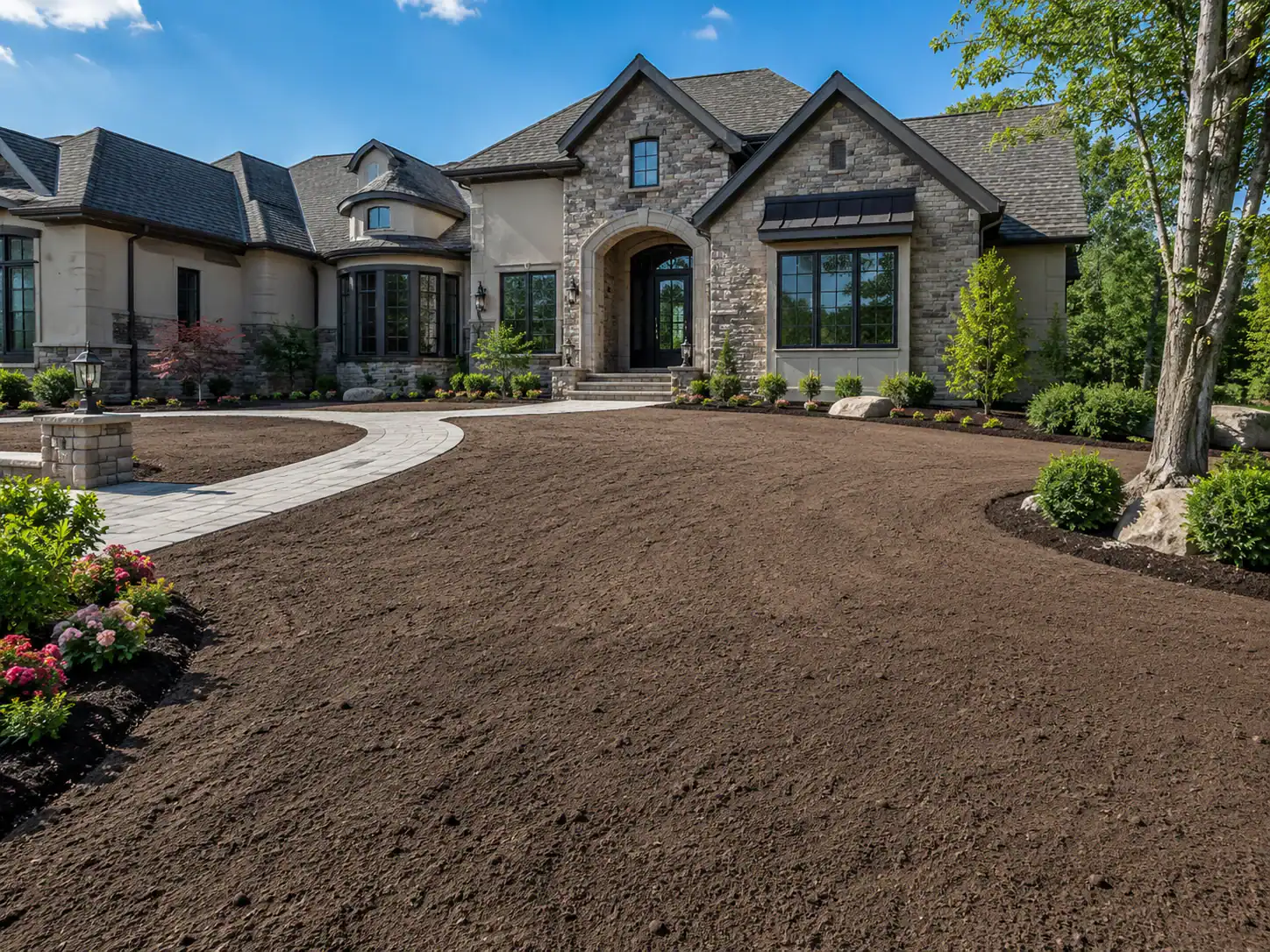
It starts with a property assessment. Before anything runs across your lawn, we evaluate the conditions thatch depth, visible compaction signs, turf density, and any problem areas like shaded zones under oak canopy or salt-damaged strips along the driveway or curb line. Smithtown roads see heavy winter treatment, and salt accumulation near Route 25, Route 347, and residential streets is a real factor that affects how we approach the job in spring versus fall.
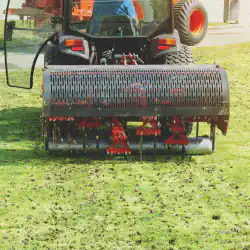
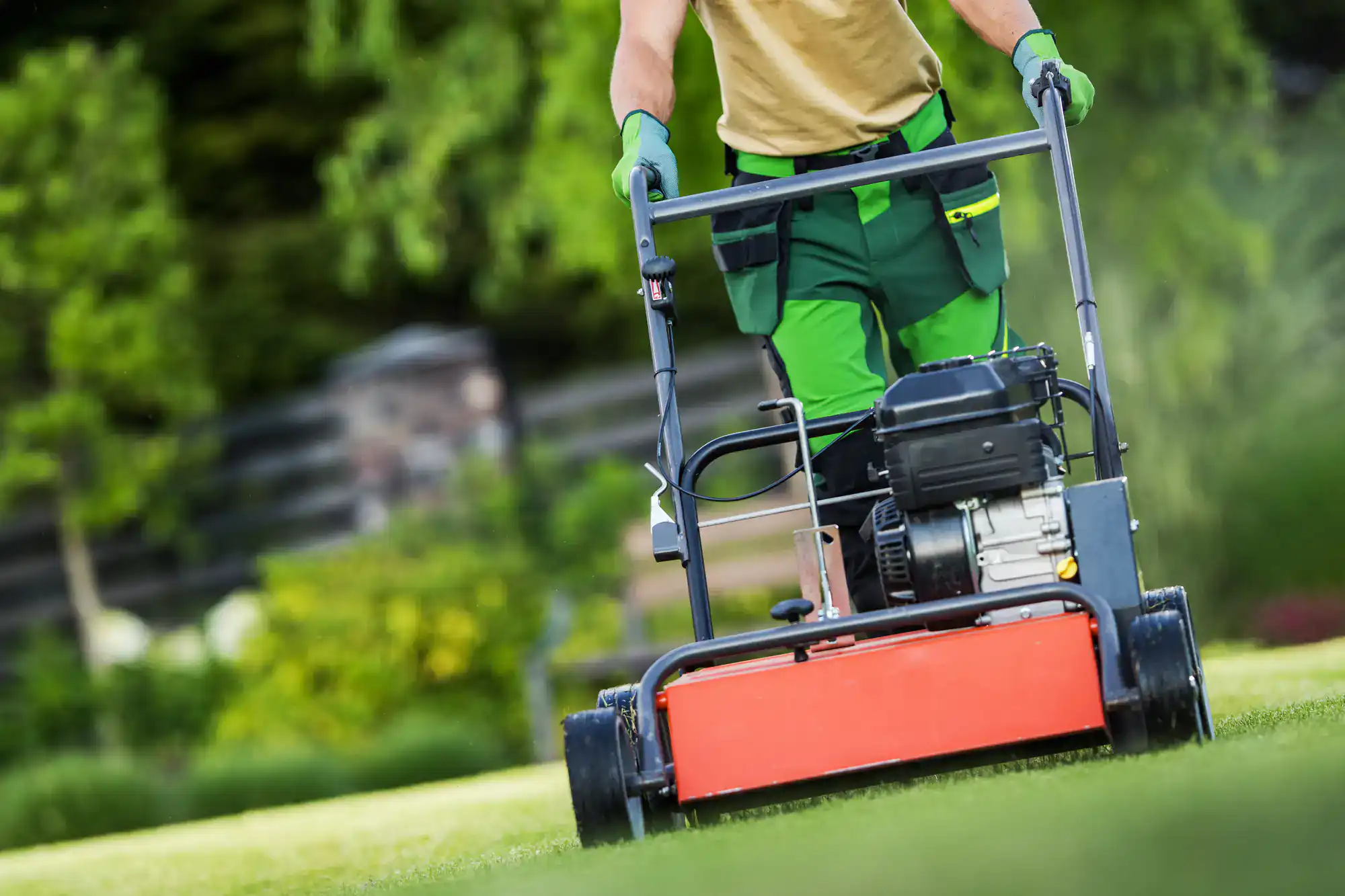
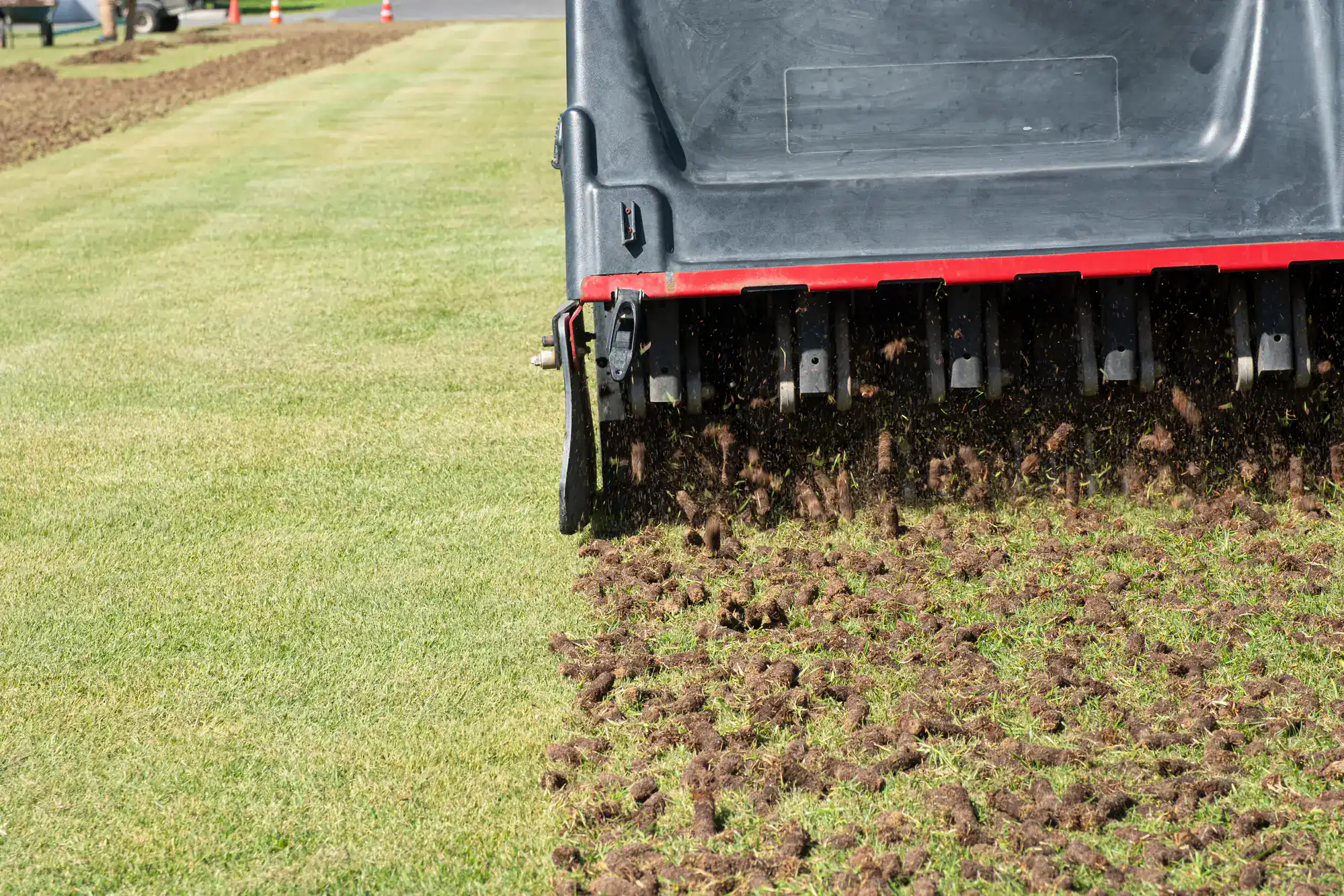
From there, our hydraulic aerator makes passes across your lawn, pulling cores 3 to 4 inches deep. That depth matters. Rental drum aerators from the hardware store typically reach 1.5 to 2 inches on compacted loamy soil which means they’re working above the actual compaction layer, not through it. Our hydraulic machine drives past that layer and creates real channels for air, water, and nutrients to follow.
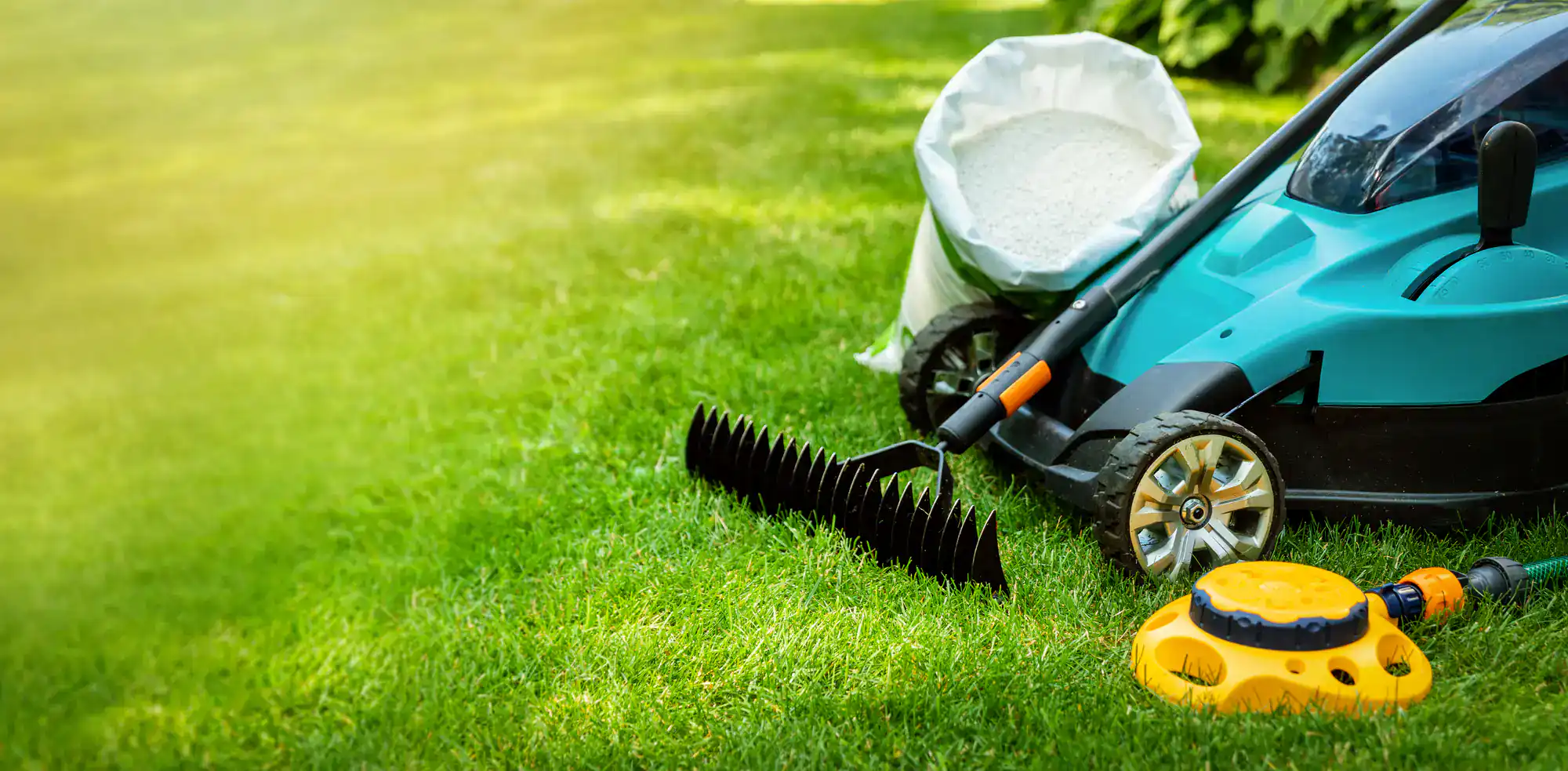
The cores pulled from your lawn get left on the surface. That’s intentional. Those plugs contain soil microbes and organic matter that break down within two to four weeks, returning nutrients to the turf and helping digest the thatch layer from the top down. For fall service the primary window for Smithtown’s cool-season grasses aeration is paired with overseeding and fertilization so the seed drops directly into open soil channels where germination conditions are best.
Ready to get started?
Core aeration and lawn aeration are the same service and at Lawn Master, we don’t sell it as a standalone transaction. It’s the foundation that the rest of the program is built on. Fertilization works better after aeration. Overseeding works better after aeration. Even grub and weed control products penetrate more effectively when the soil isn’t locked down. That’s the agronomic sequence: open the soil first, then feed it, then seed it.
For Smithtown properties specifically, the fall window late August through October is when this service delivers the most value. Soil temperatures are still warm enough for seed germination, air temperatures have dropped enough to reduce heat stress, and the full fall and spring growing seasons are ahead for any new turf. Tall fescue, Kentucky bluegrass, and perennial ryegrass the cool-season grasses most common across Smithtown lawns respond best in this window. Missing it means waiting another year for optimal results, and our fall schedule across Smithtown and its hamlets fills up quickly.
Spring aeration is also available and particularly useful for lawns dealing with salt damage from winter road treatment a common issue for properties along Smithtown’s 470-plus miles of maintained roads. If your lawn has dead or thinning strips near the curb or driveway, spring aeration combined with deep watering and targeted reseeding is the right starting point before the growing season gets underway.
For most Smithtown lawns, fall is the right window specifically late August through October. Smithtown’s most common turf types are cool-season grasses: tall fescue, Kentucky bluegrass, and perennial ryegrass. These grasses are actively growing in fall, soil temperatures are still warm enough to support seed germination, and the cooler air reduces the stress on new growth. That combination makes fall aeration and overseeding significantly more effective than anything done in the heat of summer.
Spring is a secondary option and makes the most sense for lawns dealing with winter salt damage which is common along Smithtown’s roads and driveways given the town’s extensive winter treatment program. If you’ve got dead patches near the curb on Route 25A or along a residential street in Kings Park, spring aeration paired with salt-flushing and reseeding is worth doing even if you missed the fall window. Summer aeration is generally not recommended the heat stress on open soil and newly germinated seed is too high during July and August to get reliable results.
Core aeration removes a physical plug of soil from the ground, creating a genuine opening in the compacted layer. Spike aeration pushes a solid tine into the soil without removing anything which means the soil around the hole gets displaced and compacted further, not relieved. On Smithtown’s loamy glacial till soils, which compact readily and hold density well, spike aeration doesn’t just underperform it can actively make the compaction problem worse over time.
The other issue with spike aeration is depth. Even the better spike tools don’t reach the actual compaction layer on these soils. Our hydraulic aerator pulls cores 3 to 4 inches deep, which is where the real restriction is on most established Smithtown properties. Rental drum aerators the kind available at Home Depot typically reach 1.5 to 2 inches on compacted loamy ground. That’s above the problem, not through it. If you’ve tried DIY aeration and seen minimal improvement, the tool is almost certainly the reason.
Compacted soil is almost always the answer. Fertilizer applied to a locked-down lawn sits on the surface and washes off with the first rain instead of reaching the root zone. It’s not that the product is wrong or the application is off the soil physically can’t receive it. Fertilizer uptake efficiency can increase by 30 to 40 percent after proper core aeration. That means years of fertilization investment can start paying off from a single treatment.
This is especially common on older, established Smithtown properties particularly in neighborhoods like The Branch or the tree-canopied streets of Kings Park where decades of mowing, foot traffic, and seasonal stress have built up a compaction layer that no amount of surface-applied product can penetrate. If your lawn has been on a fertilization program and the results have been flat, the soil is the bottleneck. Aeration is what removes it.
For most residential properties in Smithtown, core aeration runs somewhere between $150 and $350, depending on lot size and lawn conditions. Smaller standard lots in Nesconset or Commack will sit at the lower end of that range. Larger properties like the bigger lots common in Kings Park, Fort Salonga, or along the older streets near the hamlet center will typically fall in the mid-to-upper range. Pricing is based on the actual square footage being serviced, not a flat rate that ignores what’s in front of us.
The more useful way to think about cost is relative to what you’re already spending. If you’re running a fertilization program at $400 to $600 per year and it’s underperforming because of compaction, a single aeration treatment that unlocks that investment pays for itself quickly. The question isn’t whether aeration is worth the cost it’s whether you can afford to keep spending on programs that aren’t reaching the root zone.
A few simple things make the job go better. Mow your lawn a day or two before the scheduled service shorter turf allows the tines to penetrate more cleanly. Water the lawn 24 to 48 hours ahead of time if conditions have been dry, especially during a dry Smithtown fall when the loamy soil can become quite firm. You don’t want the ground saturated, but soil that’s been dry for weeks will resist penetration even from hydraulic equipment.
Mark any irrigation heads, invisible fence lines, or shallow utility runs before the crew arrives. Smithtown properties with in-ground irrigation systems are common, and flagging those heads takes about five minutes but prevents a problem. Beyond that, there’s nothing complicated to do. After the service, the cores left on your lawn surface are supposed to be there don’t rake them up. They’ll break down within two to four weeks and return organic matter and microbes to your turf.
The aeration itself doesn’t change near the Nissequogue, but what follows it does. New York State restricts phosphorus fertilizer use within 20 feet of surface water, and the Nissequogue River a designated State Scenic and Recreational River running from Caleb Smith State Park northward through Kings Park to the Sound has a watershed that covers a significant portion of Smithtown’s residential areas. If your property drains toward the river or any of its tributaries, the fertilization applied after aeration needs to be handled by a licensed applicator who understands those restrictions.
Our applicators hold New York State DEC pesticide applicator licenses, which means we’re trained on these rules and apply them on every job not just when someone asks. For homeowners in Kings Park, near Caleb Smith State Park Preserve, or anywhere in the Nissequogue watershed, this matters. An unlicensed operator applying phosphorus-heavy fertilizer on a freshly aerated lawn near that watershed isn’t just cutting corners on quality it’s creating real environmental and legal exposure for the property owner.
Useful Links
Other Services we provide in Smithtown