
Hear from Our Customers
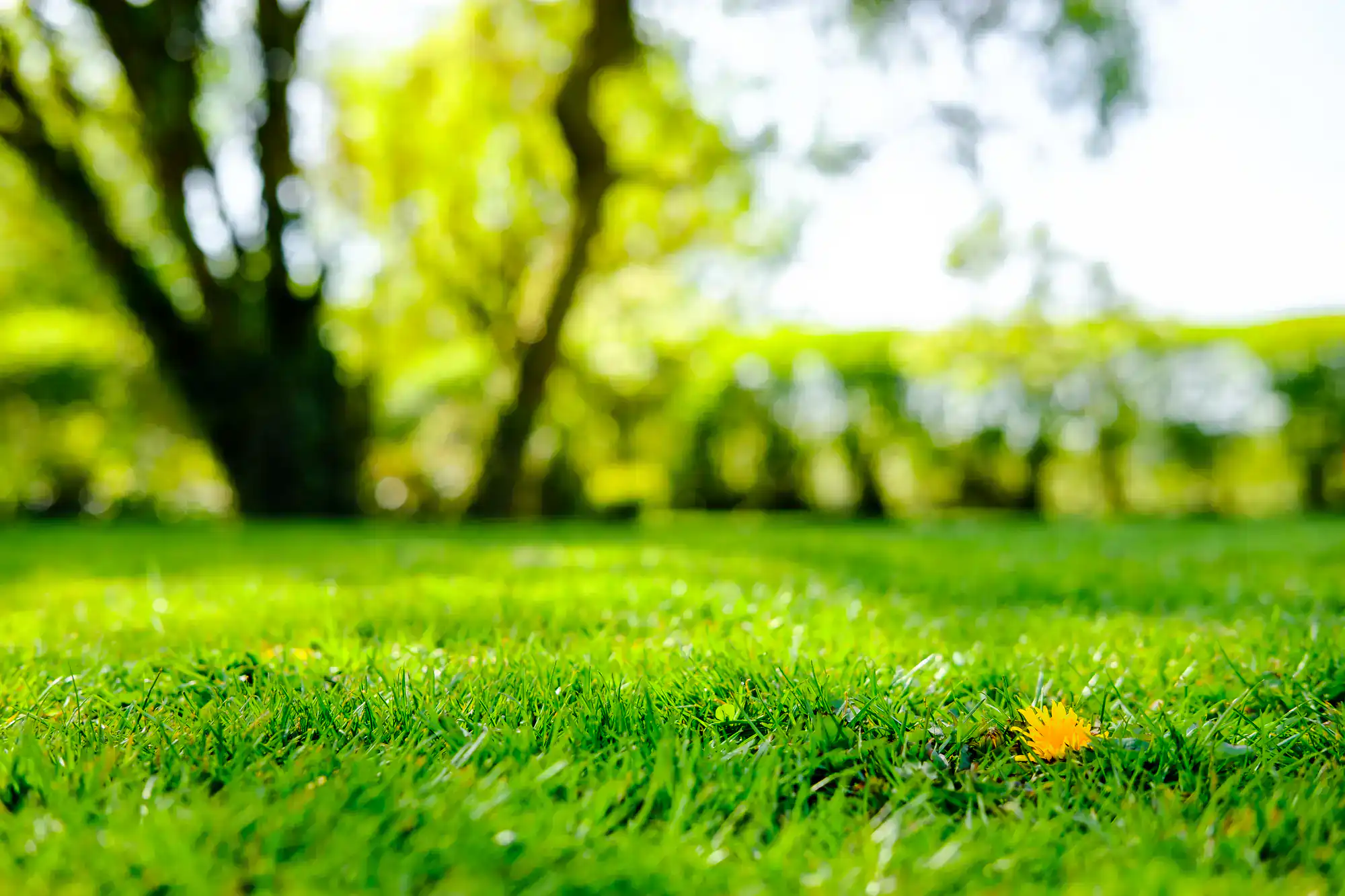
Most lawns in Kings Park aren’t struggling because of bad luck. They’re struggling because they’ve been on a program that wasn’t designed for them. The sandy, glacially deposited soils throughout the North Shore leach nutrients faster than the denser soils in other parts of the state which means a generic fertilizer schedule that works somewhere else will consistently underperform here. When you’re on a program built around what your lawn actually needs, the difference shows up in density, color, and how the lawn holds up through summer stress and into fall.
Kings Park’s older residential streets many with homes built in the 1960s have lawns that have been compacted, neglected, and put through multiple owners and multiple programs over the decades. That kind of history doesn’t get fixed with a standard maintenance visit. It gets fixed with proper aeration that reaches deep enough to matter, overseeding timed to the fall window when cool-season turf actually responds, and a fertilizer formulation that accounts for how quickly your soil releases what you put into it.
The goal isn’t just a lawn that looks okay. It’s a lawn that holds up year after year without you having to think about it one that looks the way it should in a neighborhood where people notice.
We’ve been operating continuously in Suffolk County since 1987, and we’ve been treating Kings Park properties for that entire span. That’s not a rounded number or a marketing estimate it’s a specific, verifiable fact that no competitor in the Kings Park area can match. When we started treating lawns on Long Island, most of the companies you’d find on a search today didn’t exist yet.
That kind of tenure means something in a place like Kings Park. We know the soil conditions along the North Shore, the grub pressure that cycles through Suffolk County every season, the fertilizer blackout periods that run from November through April. We’ve been working in these conditions for nearly four decades. We know the Nissequogue watershed. We know what the sandy soils near the Sound do to a fertilizer program. That’s not something you learn from a training manual.
Every technician who shows up at your Kings Park property holds a valid NYS DEC pesticide applicator license. Not one license on file at headquarters every technician, every visit. That’s the standard we hold, and it’s not the standard most companies in this market meet.
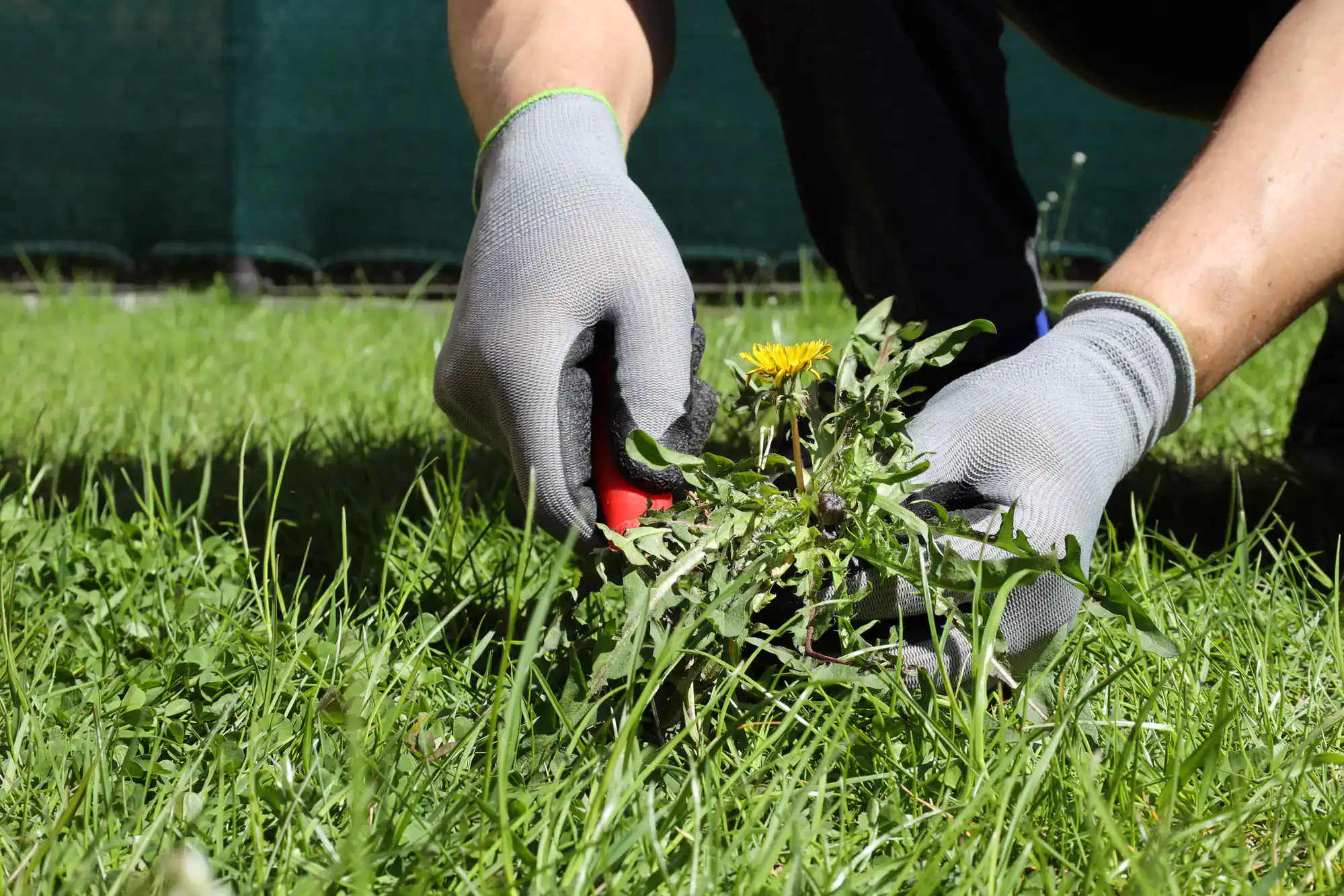
It starts with an assessment of what your lawn is actually dealing with. Not a quick glance from the truck a real look at the turf condition, the compaction level, the weed pressure, the sun exposure, and any problem areas that need attention before a program makes sense. Kings Park lawns vary more than people expect. A shaded lot under a mature tree canopy off one of the residential streets near Indian Head Road needs a completely different approach than a full-sun corner lot two blocks away.
Once the picture is clear, we build a program around what your lawn needs not a pre-packaged tier designed for average conditions somewhere else. The fertilizer we use is custom-blended specifically for our programs and for Long Island’s soil profile. If aeration is part of the plan, we do it with hydraulic equipment that pulls cores deep enough to actually improve water infiltration and root development not the lightweight drum aerators that most companies use and that barely scratch the surface of compacted suburban soil.
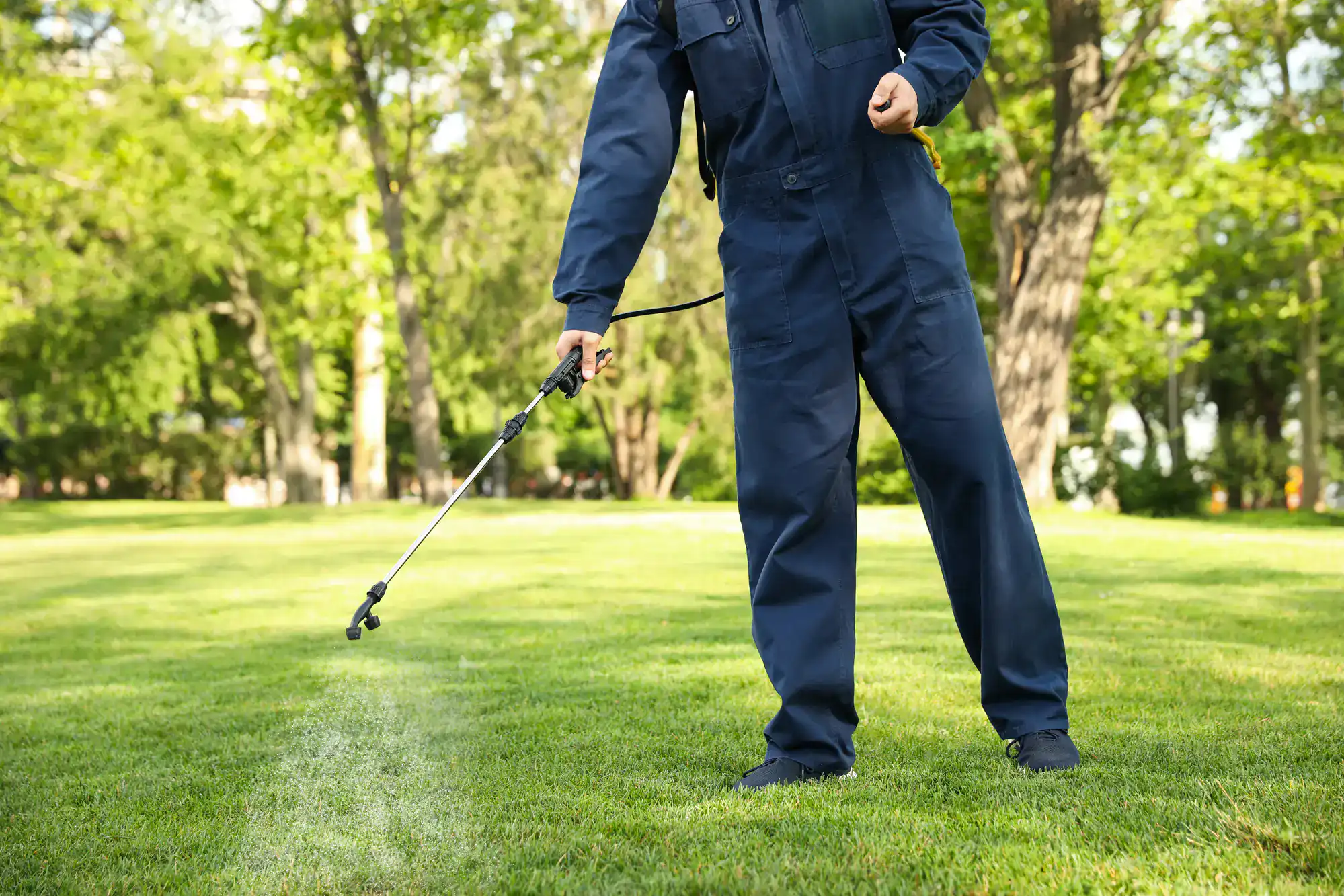
From there, the program runs on schedule. Applications go out when the timing is right for your turf not when it’s convenient for a route sheet. Suffolk County’s fertilizer blackout period runs from November 1 through April 1, and every application we make is planned around that compliance window. You don’t have to track it. That’s already handled.
Ready to get started?
Our program covers the full cycle of what cool-season turf in Kings Park needs to perform fertilization, weed control, grub prevention, aeration, overseeding, and pH management where the soil calls for it. The fertilizer is not an off-the-shelf product. It’s custom-blended for our programs and formulated with the slow-release nitrogen profiles that Long Island’s sandy soils require. That distinction matters more here than it would in a heavier soil market, because what you apply to a Kings Park lawn needs to stay in the root zone long enough to do something.
Grub control is one of the more critical pieces for lawns in this area. Japanese beetle and European chafer pressure is real in Suffolk County, and the most effective preventive treatments imidacloprid-based products are classified as restricted-use pesticides here. That means only a licensed applicator can legally use them. Every Lawn Master technician carries a valid NYS DEC Commercial Pesticide Applicator Certificate, which is exactly why this matters: an unlicensed operator simply cannot give your Kings Park lawn the grub protection it needs.
For lawns that need more than maintenance thin turf, heavy compaction, years of inconsistent care we also offer full lawn restoration programs and new lawn installs from seed. If your lawn has been disappointing you for a few seasons, that’s usually a fixable problem. It just takes the right diagnosis and the right program to fix it.
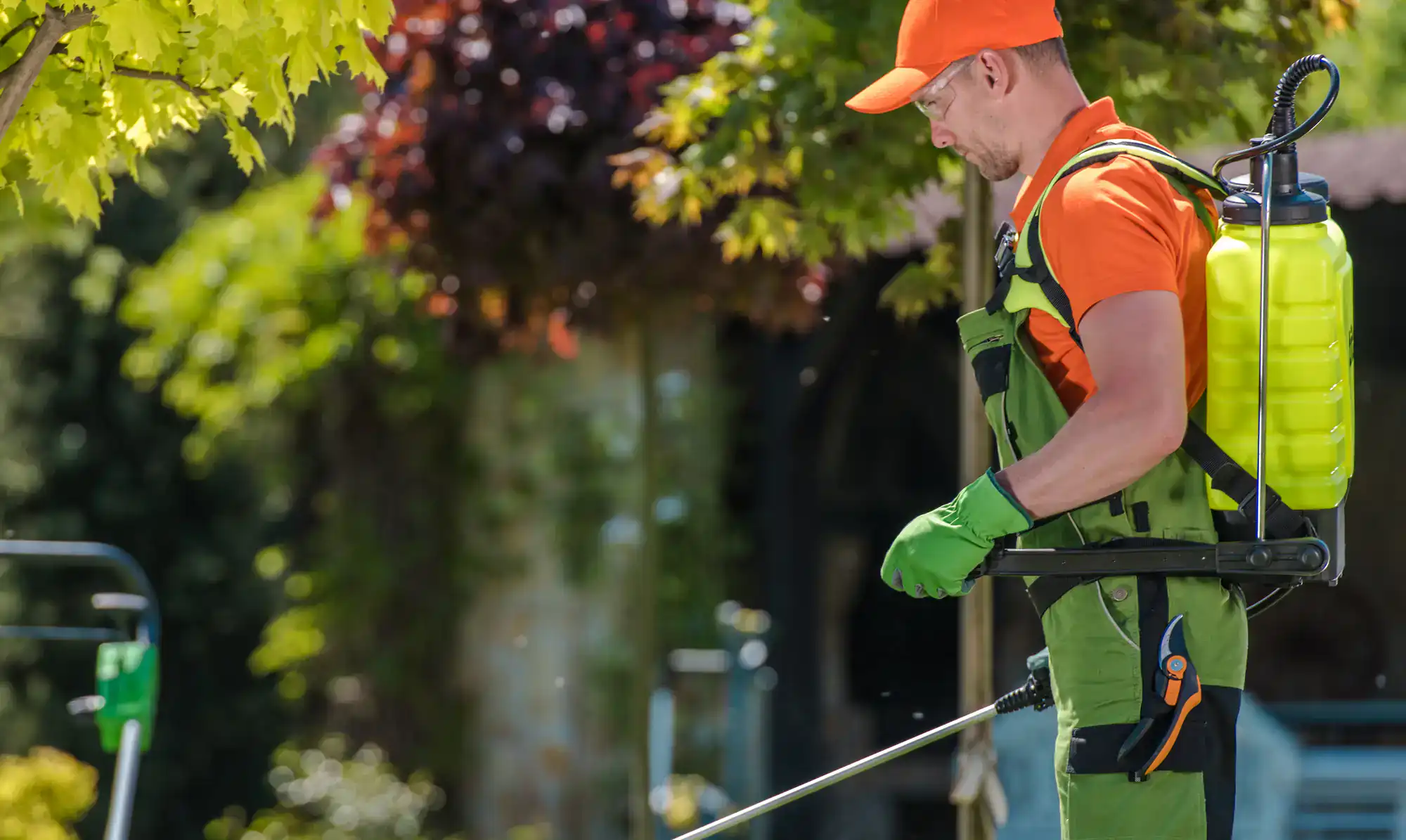
The most common reason is that the fertilizer being used isn’t formulated for Long Island’s soil. Kings Park sits on sandy, glacially deposited soils that leach nutrients quickly much faster than the heavier soils that most commercial fertilizer products are designed for. When nitrogen moves through the root zone before the turf can absorb it, you get mediocre results no matter how often you fertilize. The product and the timing both have to be right for this specific soil type.
The other common factor is compaction. Most Kings Park homes were built in the 1960s, which means the lawns on these properties have had 50 to 60 years to compact under foot traffic, equipment, and natural settling. Fertilizer applied to heavily compacted soil has a hard time reaching the root zone effectively. Aeration done with equipment that actually penetrates deep enough is usually the missing piece for lawns in Kings Park that fertilize regularly but never seem to improve.
For basic fertilization, New York State requires a commercial pesticide applicator license for any company applying fertilizer or weed control products for hire. But the licensing question becomes especially important when it comes to grub control. The most effective preventive grub treatments available imidacloprid-based products are classified as restricted-use pesticides in Suffolk County. That means only a licensed NYS DEC pesticide applicator can legally purchase and apply them.
Grub pressure from Japanese beetles and European chafers is a consistent problem in Kings Park and throughout Suffolk County. If the company treating your lawn isn’t licensed, they either can’t access the products that actually work, or they’re applying them illegally neither of which is a good outcome for your lawn or for you as the property owner. Licensing isn’t a technicality here. It’s the difference between real grub protection and a gap in your program that you might not notice until late summer when the damage is already done.
Late August through early October is the window that produces the best results for cool-season turf on Long Island. Soil temperatures are dropping back into the range where Kentucky bluegrass, tall fescue, and perennial ryegrass the dominant grass types in Kings Park actively grow and establish. Seeding during this window gives new grass the best possible conditions for germination and root development before winter.
The fall timing also matters because it’s when the soil is typically at its driest after summer, which means aeration equipment can pull cleaner, deeper cores. Hydraulic aerators the type we use perform significantly better than drum aerators in this condition, pulling cores that actually improve water infiltration and give seed real contact with the soil. Overseeding done in conjunction with hydraulic aeration in the fall is the single most impactful treatment you can do for a thin or compacted Kings Park lawn. Spring seeding is possible, but the competition from crabgrass and summer heat stress makes fall the far more reliable window.
Suffolk County prohibits the application of nitrogen and phosphorus-containing fertilizers on turf from November 1 through April 1. This blackout period applies countywide, which includes Kings Park. Violations carry fines of up to $1,000 per application, and the restriction applies to both homeowners and commercial applicators. The county also restricts phosphorus applications year-round unless a soil test confirms a deficiency, and fertilizer cannot be applied within 20 feet of water bodies, wetlands, or storm drains.
For Kings Park specifically, the proximity to the Nissequogue River and its tributaries makes these buffer zone rules particularly relevant. Properties near the river corridor or the edges of Nissequogue River State Park may have wetland boundaries that affect where applications can legally go. A licensed, experienced lawn care company builds these compliance requirements into your program automatically the right products, the right timing, and the right placement on your specific property. You shouldn’t have to manage that yourself, and with us, you don’t.
The most practical difference is who shows up and what they’re using. National lawn care companies grow by adding accounts faster than they add expertise. The result is a rotating cast of technicians who don’t know your lawn’s history, applying a standardized product that wasn’t formulated for Long Island’s specific soil conditions. When you call with a problem, you’re often routed to a call center with no knowledge of your property.
We’ve been operating in Suffolk County since 1987. Every technician holds a valid NYS DEC pesticide applicator license not one license on file somewhere, but every person who treats your lawn. The fertilizer is custom-blended specifically for our programs and for Long Island’s sandy soils, not purchased off a wholesale pallet. And the aeration equipment is hydraulic not the lightweight drum aerators that most companies use. Those aren’t small differences. They’re the reason lawns on a Lawn Master program consistently outperform lawns that have been on a national chain program for years.
In most cases, yes and the diagnosis is usually more straightforward than homeowners expect. Lawns that have been thin, patchy, or declining for multiple seasons are almost never beyond recovery. What they typically need is a clear-eyed assessment of what went wrong: compaction that was never addressed, a pH that drifted out of range and was never corrected, a fertilizer program that wasn’t matched to the soil, or grub damage that went untreated long enough to kill the root system in patches.
Kings Park’s older residential lots many with lawns that have been through three or four ownership cycles and multiple lawn care companies are exactly the kind of properties where restoration programs make a real difference. We offer full restoration programs and new lawn installs from seed for situations where a standard maintenance program isn’t the right starting point. The process involves correcting the underlying conditions first, then rebuilding the turf through properly timed aeration, overseeding with the right seed mix for the specific conditions on your property, and a fertilization program designed to support establishment. It takes a season to see the full result, but the improvement is real and it holds.
Useful Links
Other Services we provide in Kings Park