

Hear from Our Customers

Most lawns in Patchogue don’t fail because of bad luck. They fail because they’re being treated with the wrong program generic fertilizer that wasn’t formulated for Long Island’s sandy, fast-draining soils, applications timed for the national average instead of the South Shore, and no one on your property who actually knows what they’re looking at. The result is a lawn that looks the same in October as it did in April, despite the checks you’ve been writing.
When the program is right, you stop chasing problems and start seeing real progress. Thicker turf, fewer weeds pushing through, and grass that holds up through summer heat instead of browning out by July. For Patchogue properties near the Great South Bay, that also means a program that works within Suffolk County’s fertilizer regulations no guesswork, no violations, no risk of a fine because someone applied nitrogen during the November-through-April blackout period.
The difference between a lawn that looks maintained and one that actually improves year over year comes down to what’s being applied, when, and by whom. That’s the conversation worth having.
We’ve been treating residential lawns in Patchogue and throughout Suffolk County since 1987. That’s not a rounded number it’s a specific founding year that places us in the Patchogue area before most of the current competition ever existed. Through every drought year, every grub outbreak, and every disease cycle Long Island’s South Shore has produced, we were here doing the work.
Every technician who shows up at your property holds a valid NYS DEC Commercial Pesticide Applicator Certificate. That credential requires real training, a state exam, and two years of supervised experience. It’s not a formality it’s the difference between someone who understands what they’re applying and someone who doesn’t. In a village that sits directly on the Great South Bay, that distinction matters more than most homeowners realize.
The fleet of five fully wrapped trucks you’ve probably seen around Patchogue, North Patchogue, and East Patchogue isn’t a branding exercise. It’s accountability. You know exactly who’s on your property and who to call.
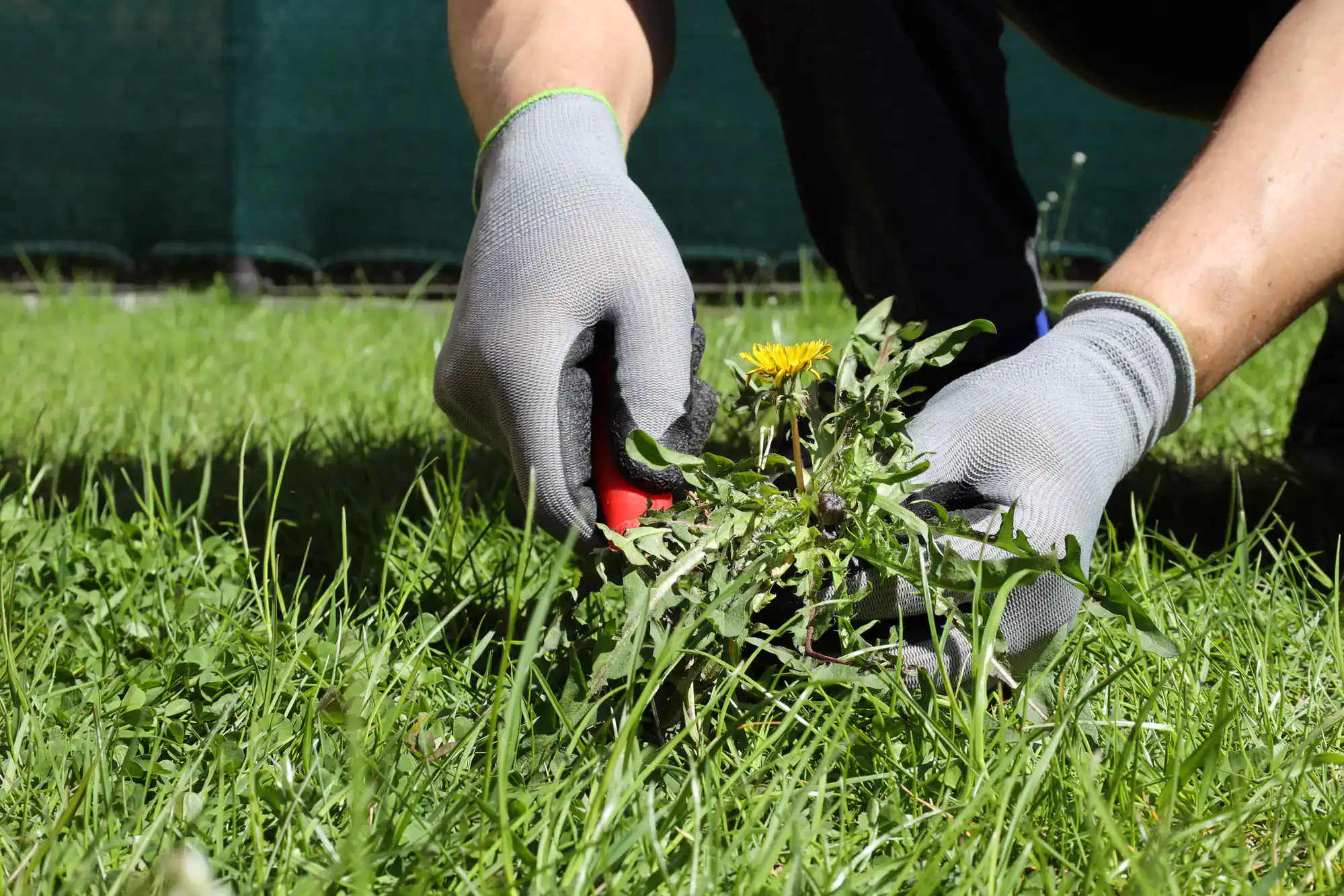
It starts with an assessment of what your lawn actually needs not a templated package applied identically to every property on a route. The turf species, soil condition, sun exposure, existing weed pressure, and history of grub damage all shape what your program looks like. Two lawns on the same Patchogue street can need meaningfully different treatments, and a company that doesn’t account for that is going to produce mediocre results on both.
From there, we build your program around a custom-blended fertilizer formulated specifically for Long Island’s soil conditions. The sandy, loamy soils common along the South Shore leach nutrients faster than the clay-based soils that most commercial fertilizer programs are calibrated for. Off-the-shelf product wasn’t designed for your lawn. Our formulation was.
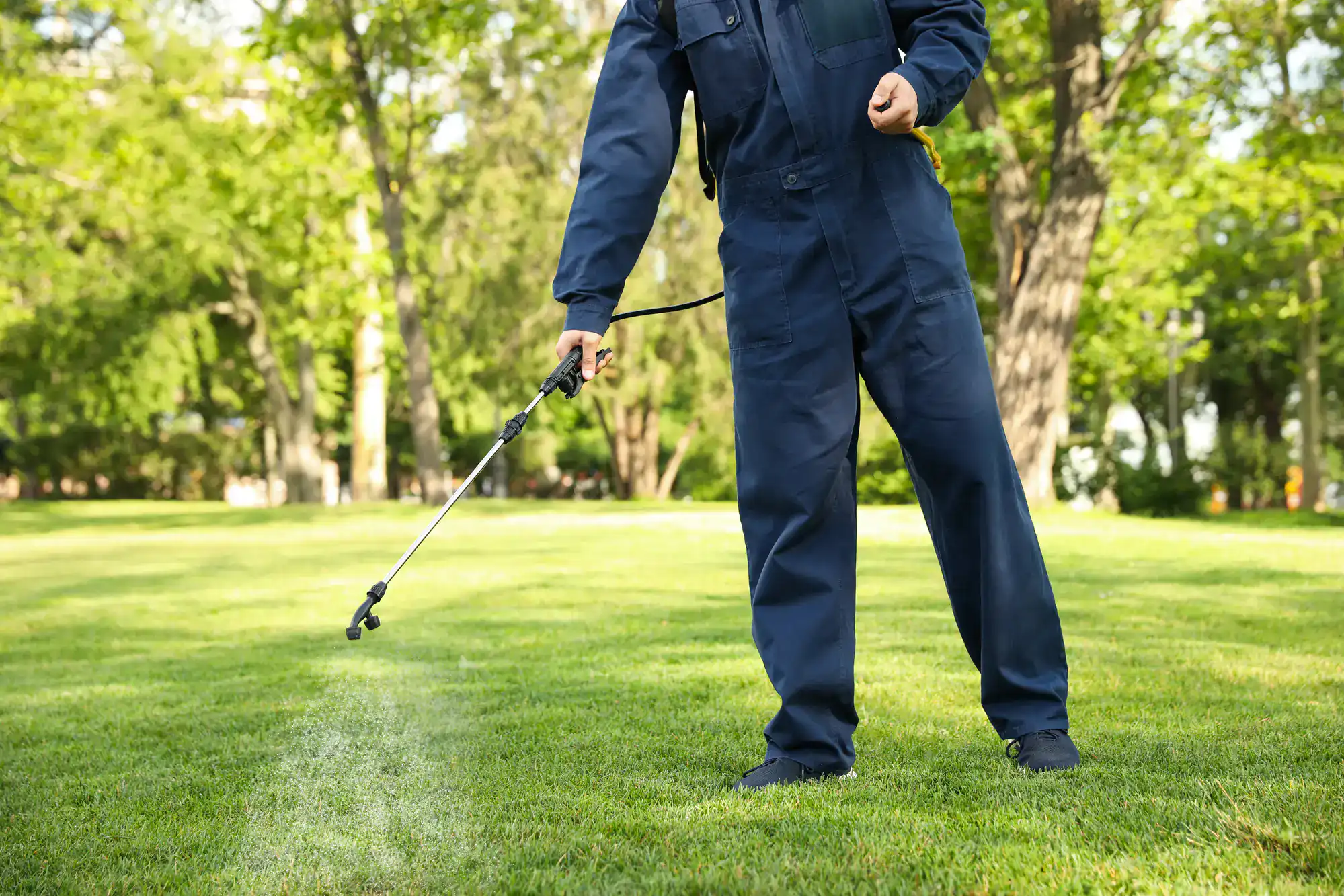
Treatments are timed to what’s actually happening in the season pre-emergent crabgrass control before Patchogue’s sandy soil warms up and triggers early germination, grub preventative applied at the right point in the beetle’s life cycle, and fall aeration and overseeding scheduled for the window when cool-season turf establishes best. Suffolk County’s fertilizer blackout period is built into the schedule automatically. Nothing gets applied when it shouldn’t. Everything that should get done, does.
Ready to get started?
A Lawn Master program for a Patchogue property typically covers the full cycle fertilization with the custom-blended formulation, pre-emergent and post-emergent weed control, grub preventative, and lime applications when soil pH needs correction. Crabgrass is a persistent problem in this area, particularly in the fast-draining sandy soils along Montauk Highway and the surrounding neighborhoods, and timing the pre-emergent correctly is critical. Miss the window and you’re dealing with a post-emergent situation that’s harder and more expensive to fix.
For lawns that are past the maintenance stage thin, weed-dominated, or coming back from grub damage we also handle full lawn restoration and new lawn installs from seed. We use hydraulic seeders and aerators instead of the lightweight drum equipment common among lower-cost operators. The difference in core penetration and seed-to-soil contact is real, and it shows in the results the following spring.
If your property is on the south side of Patchogue, close to the Bay or a storm drain, buffer zone restrictions under Suffolk County’s fertilizer regulations apply directly to you. Our programs are designed with those requirements already factored in. You don’t have to figure out what’s legal and what isn’t that’s already handled.
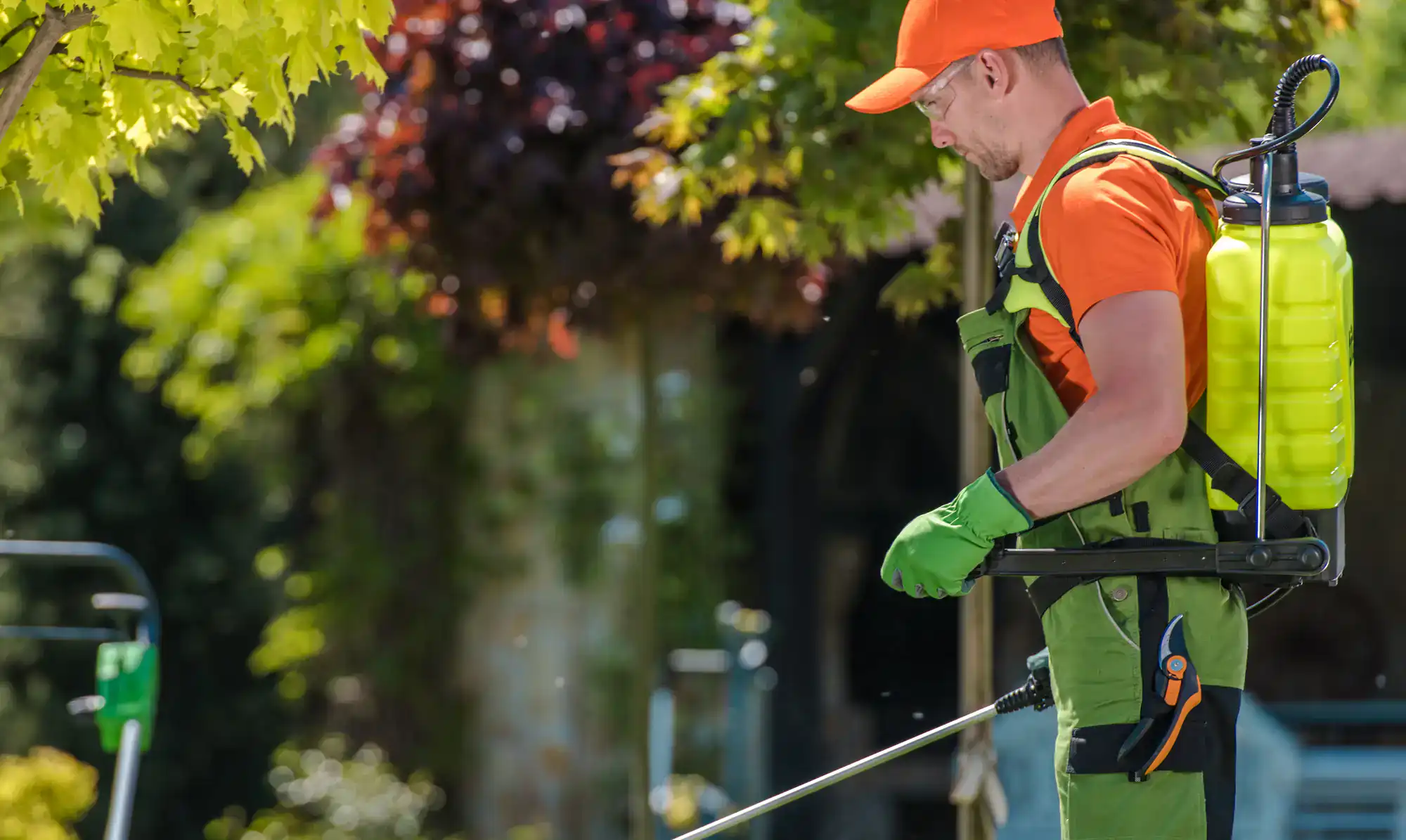
The short answer is early spring but the more useful answer is that the timing depends on what your lawn actually needs. For most Patchogue properties, the critical early-season treatment is pre-emergent crabgrass control. Patchogue’s sandy South Shore soils warm up faster in spring than heavier clay-based soils, which means crabgrass germinates earlier here than it does in inland parts of Suffolk County. If the pre-emergent goes down late, you’ve already lost the window and you’re looking at a much harder weed problem to manage through the rest of the season.
If your lawn needs aeration and overseeding, that’s a fall treatment specifically late August through October, when soil temperatures are right and cool-season turf establishes well before winter. Starting a program in spring is the right move for fertilization and weed control. Restoration work is typically a fall conversation. The best thing you can do is get an assessment early so the program is built around what your specific lawn needs, not just what’s standard for the calendar.
This is one of the most common situations we hear about, and the cause is almost always one of two things or both. First, the fertilizer being used isn’t formulated for Long Island’s soil conditions. Patchogue’s soils are predominantly sandy and fast-draining, which means nutrients leach through the profile faster than in clay-based soils. Consumer-grade fertilizers calibrated for the national average don’t account for that, so your lawn is getting less of what it needs than the bag suggests.
Second, without pre-emergent weed control applied at the right time, fertilizing a lawn with thin turf just feeds the weeds competing for space. Crabgrass and broadleaf weeds fill in wherever the grass isn’t dense enough to crowd them out. Fertilizing alone doesn’t fix that you need a full program that addresses weed pressure, soil health, and turf density together. A lawn that’s been fertilized without a weed control component for a few seasons usually needs a reset, not just a better bag of product.
Yes, and they’re worth understanding before you hire anyone. Suffolk County’s fertilizer law Chapter 459 of the Suffolk County Code prohibits nitrogen and phosphorus fertilizer applications on turf from November 1 through April 1. Violations carry fines of up to $1,000 per application. For Patchogue homeowners specifically, there are also buffer zone restrictions that prohibit fertilizer applications within 20 feet of water bodies, wetlands, and storm drains. Given how close parts of the village are to the Great South Bay and its tributaries, those restrictions apply directly to a number of properties here.
There are also phosphorus restrictions you can’t apply phosphorus-containing fertilizer without a confirming soil test showing a deficiency and certain applications require slow-release nitrogen formulations. A licensed professional manages all of this automatically. An unlicensed operator who doesn’t know these rules, or doesn’t follow them, puts you at legal risk and puts the Bay at environmental risk. When you hire us, the schedule is built around full compliance from the start. You don’t have to track any of it.
The most visible signs of a grub infestation are irregular brown patches that appear in late summer or early fall, where the turf feels spongy underfoot and pulls back from the soil without resistance almost like a loose carpet. You might also notice increased activity from skunks, raccoons, or birds digging into the lawn, which is often the first thing homeowners notice before the turf damage becomes obvious. In Patchogue’s South Shore soils, Japanese beetle grubs are the primary culprit, and populations of ten or more grubs per square foot are not unusual in untreated lawns.
The most effective approach is preventative a grub control product applied at the correct point in the beetle’s life cycle, before the larvae are established in the root zone. Once grubs have caused significant damage, you’re in restoration territory rather than prevention territory, which takes longer and costs more. If you’ve had grub damage in a previous season, that’s a strong signal that preventative treatment should be part of your program going forward. We include grub preventative as part of our programs for properties in Suffolk County where grub pressure is a known and recurring issue.
Hiring someone to fertilize your lawn is a single treatment. A lawn care program is a coordinated sequence of treatments fertilization, weed control, pH correction, pest management, and aeration timed to work together across the full growing season. The distinction matters because no single application fixes a lawn. Fertilizing a lawn with a pH problem, for example, produces poor results regardless of how good the product is, because nutrients become unavailable to the grass outside the correct pH range. Cornell Cooperative Extension’s guidance for Long Island lawns identifies a soil pH between 6.0 and 7.0 as necessary for nutrient availability and many Patchogue lawns trend acidic without regular lime applications.
A program approach also means someone is looking at your lawn multiple times per season with the knowledge to identify problems before they become expensive. A one-time fertilizer application doesn’t catch early grub activity, doesn’t address a crabgrass problem building in the soil, and doesn’t adjust for how your lawn responded to the previous treatment. If you’ve been paying for individual fertilizer applications and not seeing consistent improvement, a full program is the conversation worth having.
We’re not the cheapest option in the Patchogue market, and that’s by design. A custom-tailored program with licensed professionals, a proprietary fertilizer formulation, and hydraulic equipment costs more to deliver than a templated package applied by an unlicensed crew. What you’re paying for is the difference between a program that’s designed for your specific lawn and a program that’s designed to be applied to as many lawns as possible as quickly as possible.
For Patchogue homeowners specifically, the stakes are real. Median home values in the village are around $535,000, and homes have been moving in under two weeks. A lawn that looks thin, weedy, or neglected on a block where the surrounding properties are well-maintained is a liability not just aesthetically, but financially. The cost of a professional program is a fraction of what a poor lawn does to your property’s curb appeal and perceived value. National chains like TruGreen have a well-documented pattern in Suffolk County of rotating technicians, skipped treatments, and customer service that runs through a national call center. We’ve been serving this area since 1987. If something isn’t right, you’re talking to someone who knows your lawn not a representative reading off a service ticket.
Useful Links
Other Services we provide in Patchogue