Hear from Our Customers
Kyllinga doesn’t just look bad it crowds out the turf you’ve spent years building. Once it gets a foothold in a low-lying or consistently moist area of your property, it spreads through an underground rhizome network that keeps pushing new growth even after the surface looks treated. A single spray doesn’t touch what’s happening below.
For Mount Sinai homeowners, this problem is especially common near the harbor-adjacent areas and on properties with glacially formed terrain that holds water in specific low spots. Those micro-wet zones are exactly where kyllinga establishes first and moves fastest. If you’ve got an irrigation system running on a set schedule, there’s a good chance you’re feeding it without realizing it.
What you get on the other side of a real kyllinga control program is a lawn that looks consistent again no more bright green patches standing out against your turf in July, no more bare spots where the sedge was crowding everything else out. And because the program addresses the conditions that invited kyllinga in the first place, you’re not just buying time until next summer.
We’re based in Port Jefferson Station right on the Route 25A corridor that runs directly through Mount Sinai. This isn’t a company dispatching technicians from Yaphank or Holbrook. When you call, you’re reaching someone who works this stretch of the North Shore every week and knows the difference between a standard weed problem and a sedge infestation that needs a completely different approach.
Kyllinga is a sedge, not a grass and not a broadleaf weed. That distinction matters because the herbicides that actually work on it professional-grade products like halosulfuron-methyl and sulfentrazone require a New York State DEC Commercial Pesticide Applicator License to purchase and apply. We hold that credential. We’re also fully familiar with Suffolk County’s pesticide buffer zone requirements, which matters in a hamlet like Mount Sinai where many residents are on private wells.
We don’t treat every weed the same way. We identify what’s actually in your lawn before we touch it and that’s where most of the work starts.
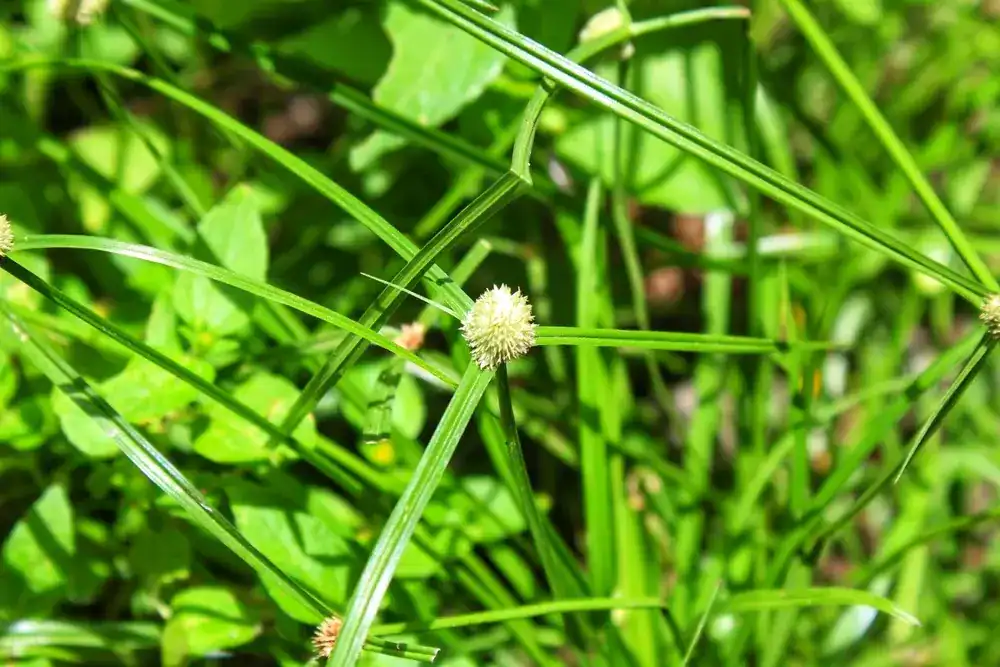
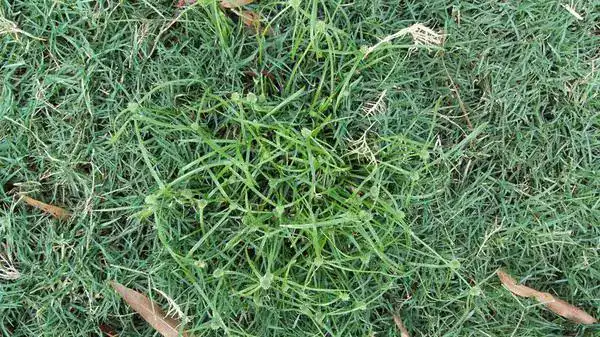
It starts with identification. Kyllinga and nutsedge are both sedges, but they’re different plants and they don’t always respond identically to the same program. Before any product goes down, we confirm what you’re dealing with looking at stem shape, seed head structure, and growth pattern. Kyllinga grows low, forms a dense mat, and has a round seed head. Nutsedge grows taller with a star-shaped cluster. Getting this right upfront is what separates a program that works from one that produces partial results and leaves you wondering what happened.
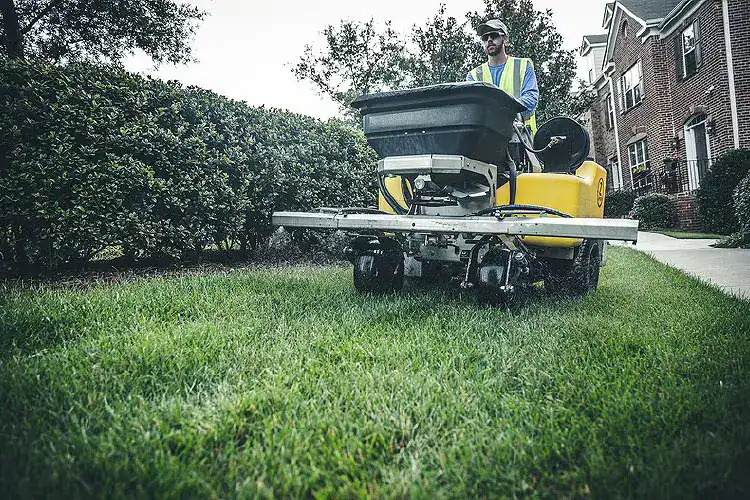
Once we’ve confirmed the species, we build a treatment schedule around the active growing window which on Long Island’s North Shore runs from roughly late May through late August. Kyllinga is most vulnerable to herbicide uptake when it’s actively growing, so timing each application correctly is as important as the product itself. A properly structured program means a minimum of two to three targeted applications spaced four to six weeks apart. One treatment will knock back the visible growth, but the rhizome network underneath will push new shoots if you stop there.
After the kyllinga is gone, the work isn’t quite finished. Successful treatment leaves behind thin and bare areas where the sedge was crowding out your turf. We follow up with overseeding recommendations, irrigation adjustments, and drainage guidance the cultural steps that close those gaps and make it harder for kyllinga to re-establish the following season. That’s the renovation side of what we do, and it’s what turns a weed treatment into a lasting result.
Ready to get started?
The herbicides that reliably eliminate kyllinga aren’t on the shelf at any hardware store in Mount Sinai at least not in the professional-grade formulations that actually work on established infestations. Halosulfuron-methyl and sulfentrazone are the two primary active ingredients used in professional kyllinga control programs, and they require a NYSDEC Commercial Pesticide Applicator License to obtain and apply correctly. This is the core reason DIY attempts fail. It’s not a lack of effort it’s a product access problem that only a licensed applicator can solve.
Every program we run in Mount Sinai is structured around the biology of this specific weed and the conditions of North Shore Long Island lawns. That means accounting for the coastal humidity that keeps soil moisture elevated longer than in inland towns, the variable drainage patterns created by the hamlet’s glacially formed terrain, and the irrigation habits that are common on properties in this area. If your lawn near Crystal Brook or along the harbor side of your property keeps producing kyllinga despite previous treatments, the program needs to address those underlying conditions not just the surface growth.
We’re also fully compliant with Suffolk County Local Law 41-2007 and SCDHS pesticide buffer zone requirements. In a community where private well use is common and where the Coram–Mt. Sinai–Port Jefferson Station corridor has documented history of pesticide detection in drinking water, that compliance isn’t optional it’s the baseline. Every application is recorded, licensed, and done by the book.
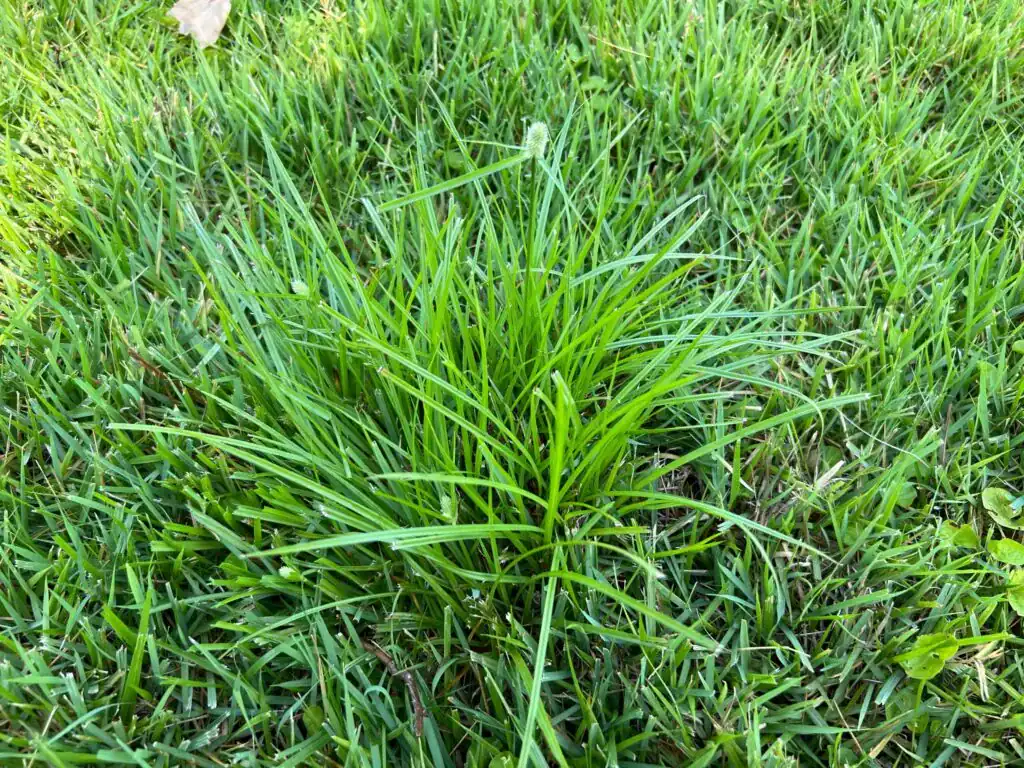
Kyllinga is easy to mistake for crabgrass, nutsedge, or even just a patch of faster-growing turf especially early in the season when it’s just getting established. The clearest visual tells are the stem shape and the seed head. Kyllinga has a triangular stem if you roll it between your fingers, it won’t roll smoothly the way a round grass stem does. The seed head is round or oval and sits close to the plant, which tends to grow low and form a dense, mat-like patch. The color is a brighter, more saturated green than most cool-season turf grasses, which is why it stands out so clearly in July and August when your lawn slows down.
In Mount Sinai specifically, kyllinga tends to show up first in low spots, near irrigation heads, or in areas that stay moist longer after rain which is common on properties with the kind of variable terrain this hamlet has. If you’ve got a patch that keeps coming back in the same spot despite mowing and standard weed treatments, there’s a strong chance you’re dealing with a sedge, not a grassy weed. The right call is to have it properly identified before any product goes down.
This is the most common frustration we hear from homeowners who’ve already tried to handle it themselves. The short answer is that kyllinga is a sedge it belongs to the Cyperaceae family, not the grass family or the broadleaf weed family. The herbicides that target broadleaf weeds, like products containing 2,4-D or dicamba, have essentially no activity on sedges. The same goes for crabgrass preventers and most general-purpose weed controls. They’re simply not built for this plant’s biology.
The products that actually work halosulfuron-methyl and sulfentrazone aren’t available to homeowners in the same professional-grade formulations used by licensed applicators. What you find on the retail shelf is either a diluted version or a product that targets a different class of weeds entirely. So if you’ve sprayed your lawn twice and the kyllinga is still there, that’s not a failure on your part. It’s a product access issue. A licensed applicator with the right chemistry and the right program structure is the only realistic path to getting rid of it.
At minimum, two to three targeted applications spaced four to six weeks apart during the active growing season. One treatment will damage the visible above-ground growth, but kyllinga spreads through an underground rhizome network that survives a single application and pushes new shoots within a few weeks. If you stop after the first treatment because the lawn looks better, you’re likely to see a resurgence before the season ends.
On Long Island’s North Shore, the active treatment window runs from roughly late May through late August. Timing each application within that window when the plant is actively growing and most vulnerable to herbicide uptake is just as important as the product itself. For lawns in Mount Sinai with more established infestations, particularly in areas near the harbor or in consistently moist low spots, a second season of follow-up monitoring is sometimes warranted. Kyllinga produces thousands of seeds per plant each year, and those seeds persist in the soil. A thorough program addresses both the existing plants and the conditions that allow new seedlings to establish.
It can but whether it does depends largely on what happens after the herbicide program ends. Kyllinga is a perennial sedge, which means it goes dormant in winter and resumes growth each spring from its root system. If the rhizome network wasn’t fully disrupted during the treatment program, or if the underlying conditions that invited the infestation overwatering, poor drainage, thin turf haven’t been addressed, there’s a real chance it comes back.
The cultural steps that follow a kyllinga control program are what make the difference between a one-season fix and a lasting result. Overseeding thin areas after treatment helps rebuild turf density, which is one of the best natural defenses against sedge reinfestation a thick, healthy lawn gives kyllinga fewer entry points. Adjusting irrigation schedules to avoid keeping soil consistently wet removes the moisture advantage kyllinga depends on. For Mount Sinai properties with drainage challenges in specific low spots, improving how water moves through those areas is worth addressing directly. We walk through all of this as part of the program not as an upsell, but because it’s what actually keeps the problem from cycling back.
They’re related but not the same. Both kyllinga and nutsedge belong to the sedge family, which is why they’re often confused and why treating one with a program designed for the other sometimes produces incomplete results. The main visual difference is in how they grow. Nutsedge grows taller, often reaching above your turf line quickly, and has a star-shaped seed head cluster. Kyllinga stays lower to the ground, forms a denser mat, and has a rounder, more compact seed head that sits close to the plant. Both have the characteristic triangular stem that distinguishes sedges from true grasses.
From a treatment standpoint, the same professional-grade herbicides halosulfuron-methyl and sulfentrazone are effective against both, but the program structure, timing, and number of applications can vary depending on which species you’re dealing with and how established the infestation is. This is why correct identification before treatment matters. If a lawn care company is treating your kyllinga as if it’s nutsedge without confirming the species, you may get partial control and a lot of confusion about why the program didn’t fully work. We identify the specific sedge in your lawn before any product goes down.
Technically, you can attempt it yourself but the products available to unlicensed homeowners aren’t the same as what licensed applicators use, and the results reflect that gap. The professional-grade formulations of halosulfuron-methyl and sulfentrazone that reliably control kyllinga require a New York State DEC Commercial Pesticide Applicator License to purchase and apply. What’s available over the counter is either a diluted retail version or a product that isn’t well-suited for established sedge infestations.
There’s also a compliance layer that’s specific to Mount Sinai. Suffolk County Local Law 41-2007 establishes pesticide-free buffer zones around public drinking water supply wells, and a significant portion of Mount Sinai residents are on private wells rather than a municipal water system. The New York State Department of Health’s environmental investigation of the Coram–Mt. Sinai–Port Jefferson Station corridor documented pesticide detection in private drinking water wells in this area it’s a real, documented local concern. A licensed applicator knows these requirements, follows them, and documents every application accordingly. For a community where water quality has been a legitimate issue, working with someone who understands that regulatory environment isn’t just a preference it’s the responsible choice.
Useful Links
Other Services we provide in Mount Sinai