Hear from Our Customers
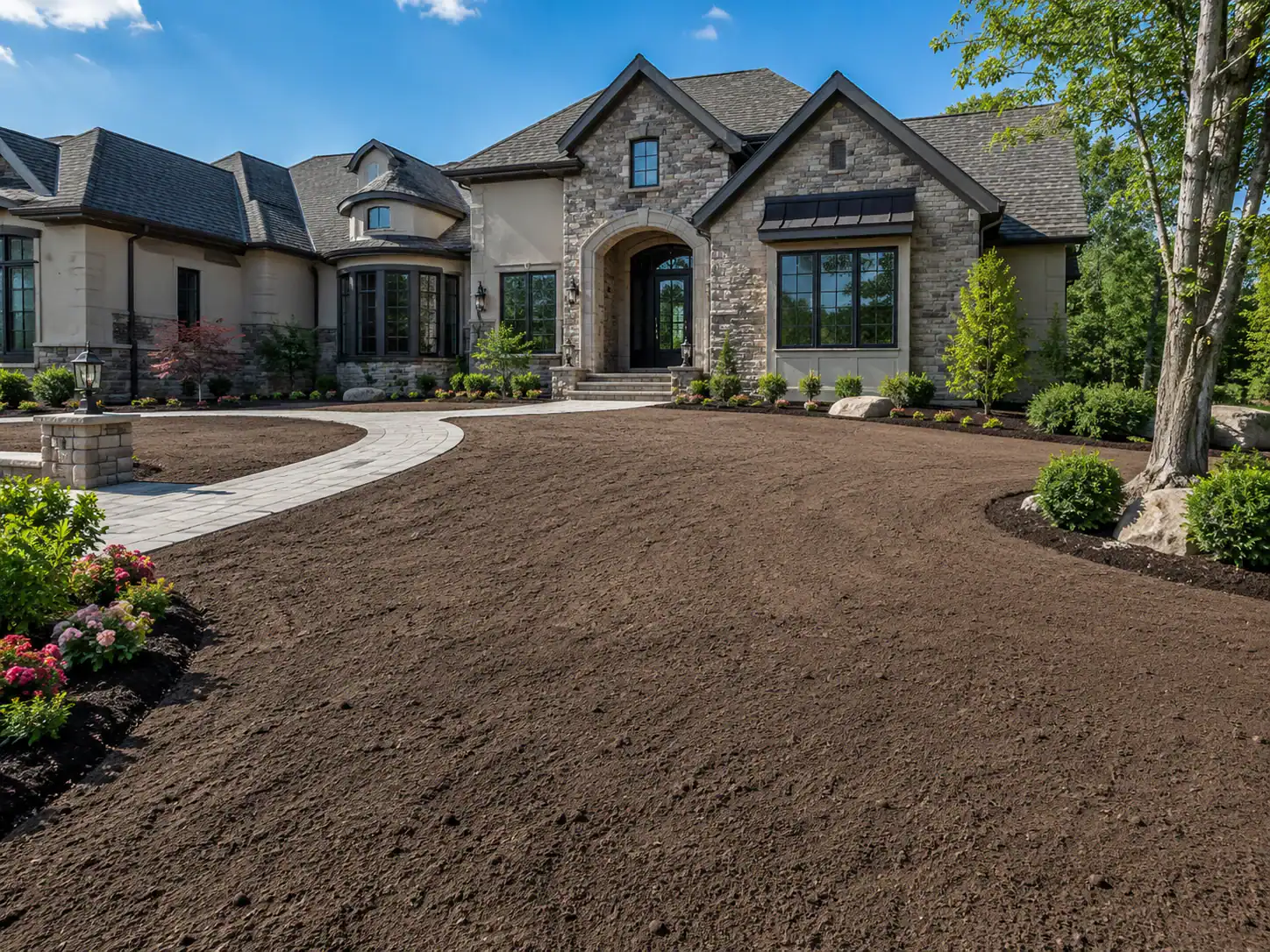
When lawn restoration in Mount Sinai, NY is done right, you stop seeing the bare patches near the back fence and the thin strips along the driveway that never seem to fill in. The turf gets dense again. Color comes back. And you’re not reseeding the same spots every fall wondering why nothing sticks.
A lot of Mount Sinai lawns struggle for the same reason: the soil underneath hasn’t been addressed. The glacial moraine deposits that make up the North Shore drain fast, run low on organic matter, and tend to drift acidic over time. Grass planted in that environment without correction will thin out no matter how much seed or fertilizer goes on top. Once the foundation is fixed, the results hold.
The coastal microclimate in Mount Sinai also creates fungal pressure that inland Suffolk County communities don’t deal with at the same level. Dollar spot, brown patch, and red thread show up more frequently when humidity is high and airflow is limited which is most of the summer along the Sound corridor. Restoring a lawn here means accounting for that, not just throwing seed at the problem and hoping for the best.
We’ve been restoring Suffolk County lawns for 38 years, and we hold a New York State pesticide applicator’s license which matters more in Mount Sinai than most people realize. Properties near Mount Sinai Harbor and the Long Island Sound fall under Suffolk County’s near-waterway fertilizer restrictions. Every application we make is compliant, documented, and appropriate for your specific property.
We’ve worked throughout the North Shore corridor from the established neighborhoods near Cedar Beach to the planned developments like The Hamlet at Willow Creek and South Harbor Woods. We know how North Shore soils behave, how late they warm in spring compared to the South Shore, and what that means for seeding and treatment timing.
This isn’t a franchise running the same program on every lawn. It’s 38 years of working this region, understanding its conditions, and delivering restoration work that actually lasts.
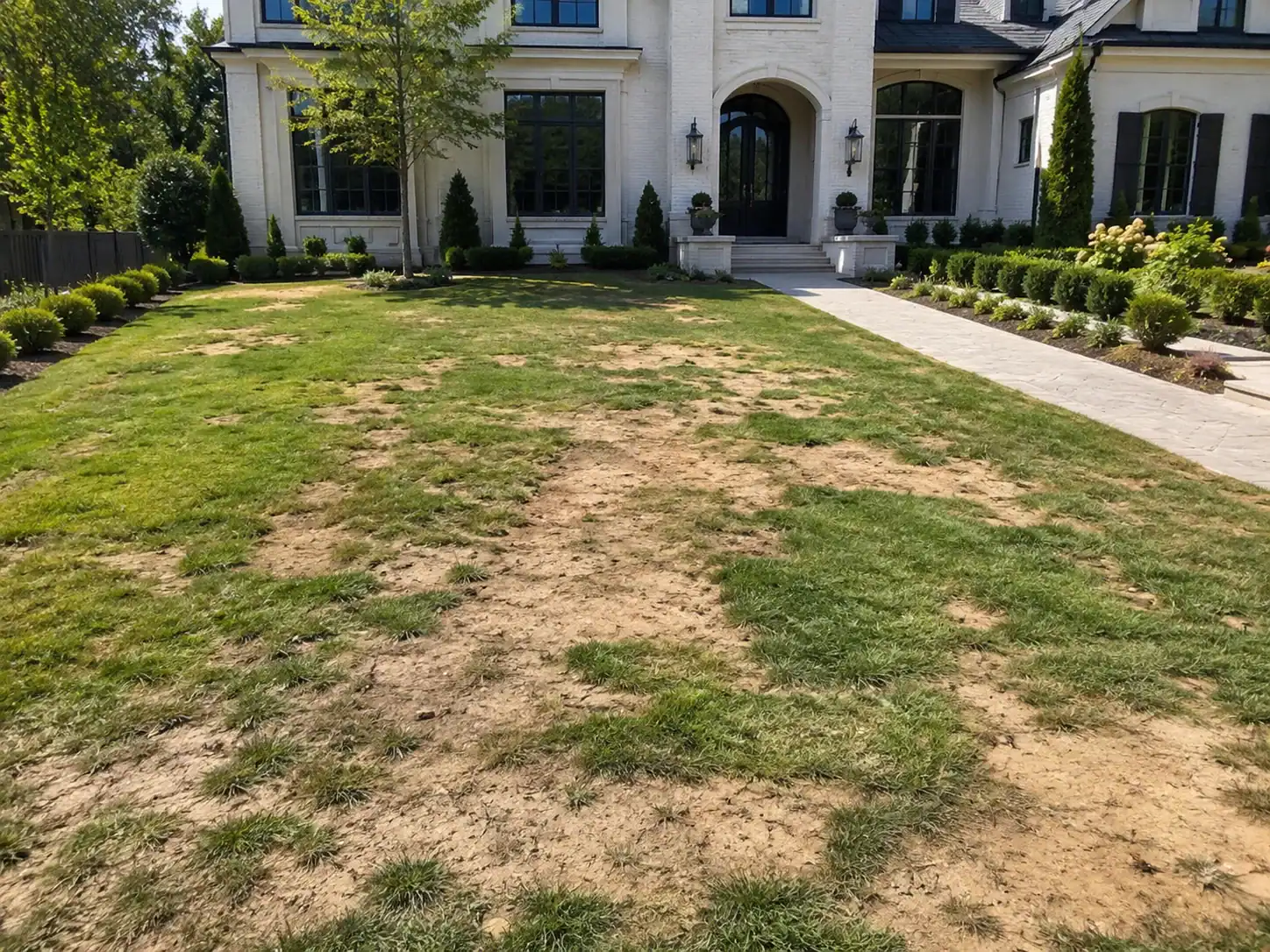
It starts with a property assessment not a sales pitch. We look at what’s actually happening with your turf: soil compaction, thatch depth, pH levels, root zone health, and the specific damage patterns present. In Mount Sinai, that often means identifying whether bare patches are from grub activity, fungal damage, deer hoof compaction along lot edges near the wooded corridors, or irrigation dead zones. The cause determines the treatment. Skipping that step is why most DIY attempts don’t hold.
Once we understand what we’re working with, soil correction comes first. That means core aeration to relieve compaction, pH adjustment with lime or sulfur based on your soil test results, and organic matter incorporation where needed. On North Shore glacial soils, this step isn’t optional it’s the reason the restoration lasts instead of just looking okay for one season.
After the foundation is corrected, we move into slice seeding for bare and thinning areas. Unlike surface overseeding, slice seeding cuts directly through thatch and deposits seed into the soil profile where it can actually germinate. We time everything to the late summer and early fall window late August through October when soil temperatures on the North Shore support strong germination and summer weed competition is declining. You’ll see real progress within a few weeks, and a noticeably different lawn by the following spring.
Ready to get started?
Lawn restoration is specifically about bringing your existing lawn back to health. That’s different from renovation, which involves stripping and rebuilding from scratch. For most Mount Sinai homeowners dealing with thinning turf, bare patches, or a lawn that’s been in slow decline, restoration is the right call less disruptive, faster to results, and more cost-effective than a full rebuild. If your lawn is too far gone for restoration alone, we’ll tell you honestly and walk you through what full renovation would involve instead.
What’s included in a restoration program depends on your soil test and property assessment, but typically covers core aeration, pH and soil correction, slice seeding with turf varieties suited to North Shore conditions, and bare patch repair in affected areas. For properties near Mount Sinai Harbor or within 100 feet of surface water, all applications are made in full compliance with Suffolk County’s fertilizer restrictions no phosphorus on established turf without a confirmed soil deficiency, and no nitrogen within the restricted setback zones.
The goal isn’t a lawn that looks good for one season. It’s turf with a corrected soil foundation that can handle Mount Sinai’s coastal humidity, the summer drought stress that hits fast-draining glacial soils hard, and the annual wear that comes with living on the North Shore. That’s what a restoration program from Lawn Master is built to deliver.
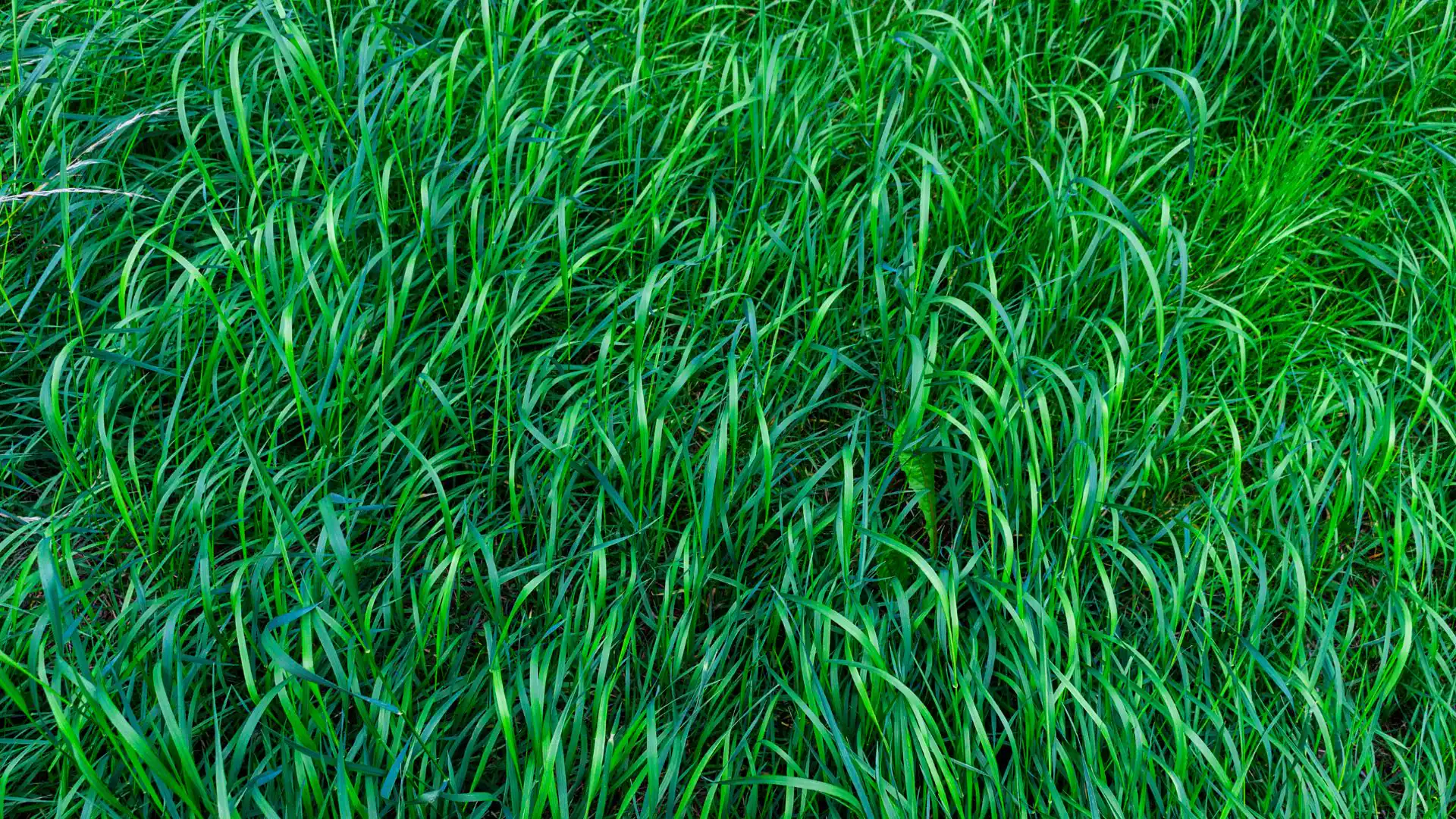
Restoration means working with the lawn you already have correcting the soil, relieving compaction, filling in bare and thinning areas through slice seeding, and addressing whatever caused the decline in the first place. The existing turf stays in place, and the goal is to bring it back to a healthy, dense condition. Renovation is a different scope entirely: it involves killing off or removing the existing lawn and rebuilding from the ground up with new seed or sod.
For most Mount Sinai homeowners, restoration is the right starting point. If your lawn still has reasonable coverage even if it’s patchy, thin, or clearly stressed it’s almost always worth a restoration assessment before committing to a full rebuild. The exception is a lawn with severe grub damage across most of the property, extensive fungal scarring, or soil so degraded that correction alone won’t support recovery. In those cases, we’ll tell you directly that renovation makes more sense, and we can handle that too. If renovation is the right path for your property, we’ll point you there rather than put restoration money into a lawn that can’t respond to it.
In most cases, yes but the honest answer depends on what’s actually going on beneath the surface. A lawn that looks dead in August in Mount Sinai is frequently not dead at all. Cool-season grasses go dormant under heat and drought stress, and Mount Sinai’s fast-draining glacial soils accelerate that process. What looks like a failed lawn in late summer often recovers significantly once temperatures drop and fall moisture returns especially if a restoration program with soil correction and slice seeding is timed to the late August through October window.
The situations where restoration genuinely can’t deliver are when grub damage is widespread enough that the root system is gone across large sections, when fungal disease has been left untreated long enough to cause deep crown damage, or when the soil profile is so compacted and depleted that it can no longer support root development without a full rebuild. A proper assessment tells you which situation you’re in. We’d rather give you an honest answer upfront than take your money on a restoration that won’t hold.
For slice seeding done in the late summer and early fall window which is the optimal timing for North Shore lawns you’ll typically see germination within 10 to 21 days, depending on soil temperature and moisture. Visible coverage in the seeded areas usually develops over 4 to 6 weeks. By the following spring, a properly restored lawn looks noticeably different: denser, more uniform, and without the bare patches that were there before.
One thing worth knowing about Mount Sinai specifically: North Shore soils warm 7 to 14 days later in spring than South Shore communities, which affects spring treatment timing. If you’re looking at a spring restoration, that calendar shift matters for pre-emergent timing and early seeding windows. For most North Shore homeowners, the fall window produces stronger results anyway soil temperatures are warm from the summer, air temperatures are cooling, and there’s far less competition from crabgrass and other summer weeds. That’s when we do our best work in this area.
There are several common causes in this area, and identifying the right one is the whole point of the assessment. Grub damage is one of the most frequent culprits on the North Shore Japanese beetle populations are active in Mount Sinai’s glacial moraine soils, and when grubs feed on root systems, the turf lifts away from the soil like a carpet. Seeding over an active or untreated grub infestation is a waste of time and money.
Fungal disease is another major factor. Mount Sinai’s coastal proximity to the Sound and the harbor creates elevated humidity that drives dollar spot, brown patch, and red thread all of which thin turf and leave irregular bare patterns that homeowners often mistake for drought damage. Deer hoof compaction along lot edges, especially in properties bordering the wooded areas near the Rocky Point corridor, is also a recurring issue. And then there’s straightforward drought stress: the sandy, fast-draining soils in this area don’t hold moisture well, and any irrigation gaps show up fast in summer. The restoration approach is different for each of these causes, which is why we assess before we treat.
No permits are required for standard lawn restoration services aeration, seeding, and soil amendment don’t trigger any Town of Brookhaven permitting requirements. However, if your property is near Mount Sinai Harbor, a tributary, or within 100 feet of any surface water, Suffolk County’s fertilizer law applies. That law restricts nitrogen application within 100 feet of surface water and prohibits phosphorus applications on established lawns unless a soil test confirms a deficiency.
This is where our NYS pesticide applicator’s license matters. Every application we make is compliant with Suffolk County’s near-waterway regulations, and we document it. For homeowners in neighborhoods along the harbor or in the Cedar Beach area, this isn’t a minor detail it’s a legal requirement that unlicensed or out-of-area operators frequently ignore. Working with us means you’re not taking on liability for non-compliant applications on your own property.
The cost depends on the size of your property, the extent of the damage, and what the soil assessment reveals. A standard restoration program for a typical Mount Sinai residential lot covering core aeration, soil correction, and slice seeding generally ranges from $400 to $900 for most properties. Larger lots in communities like The Ranches at Mount Sinai or South Harbor Woods, or properties requiring more extensive bare patch repair and pH correction, will fall toward the higher end or above that range.
What affects cost most is the scope of soil correction needed. A lawn that requires significant lime application to address acidic glacial soils, plus multiple rounds of aeration and overseeding, costs more than a lawn that just needs targeted slice seeding in a few bare areas. That’s exactly why the estimate process matters it gives you a clear picture of what your specific lawn needs before any money changes hands. There’s no package price that applies to every property, and we don’t quote without seeing the lawn first. Request an estimate and we’ll come out, assess the property, and give you a straightforward number based on what’s actually there.
Useful Links
Other Services we provide in Mount Sinai