
Hear from Our Customers
When you’re standing at the end of a construction project or a major renovation, bare ground feels like an unfinished sentence. The house looks great. The hardscape is done. But the lawn or the lack of one is the first thing anyone notices when they pull up. A properly installed lawn closes that gap. It’s the detail that makes everything else look intentional.
Mount Sinai properties come with specific challenges that a generic lawn install won’t survive. The sandy, fast-draining soils near the harbor and Cedar Beach lose moisture and nutrients quickly. Without the right soil prep underneath, a new lawn can look fine in October and be thin and struggling by July. That’s not a watering problem it’s a foundation problem, and it starts before the first seed goes down.
There’s also the construction factor. If your home was built or significantly renovated, there’s a real chance the topsoil was stripped during the process and what’s left underneath is clay or fill. It’s one of the most documented problems on Long Island, and we’ve seen it firsthand at properties right here in Mount Sinai. Getting the soil right before installation is what separates a lawn that lasts from one that has to be redone.
We’ve been installing lawns on Long Island for 38 years, based out of Port Jefferson Station about two miles from Mount Sinai’s center. That’s not a coincidence. This is our service area. Route 25A runs right through it, and the North Shore conditions the glacial soils, the coastal microclimate, the timing differences from the South Shore are things we’ve worked with for decades, not read about.
We’re not a landscaping company that also does lawns. We’re a lawn installation and renovation specialist. That distinction matters when you’re starting from bare ground and you need someone who knows the difference between a lawn that looks good on day one and one that’s still performing three years later.
The Mount Sinai community from the custom Colonials near The Villages to the older homes along the North Country Road corridor deserves installation work that matches what homeowners here have actually invested in their properties.
Every new lawn installation in Mount Sinai starts with a soil assessment. Before anything is seeded, graded, or amended, we evaluate the ground. What’s actually there? How does it drain? Is there enough topsoil depth to support establishment? On a lot of North Shore properties especially anything that went through new construction the answer to that last question is no, and the fix has to happen before a single seed goes down.
From there, grading comes next. Proper grading isn’t just about making the surface level it’s about making sure water moves away from the home, that low spots don’t collect standing water, and that the finished surface gives the lawn a real chance. This is the work that most homeowners don’t see and most generalist contractors skip. It’s also the work that determines whether a lawn holds up through a Long Island summer or fails by August.
Once the soil is prepared and the grade is right, installation begins seed, sod, or seeding depending on your property, your timeline, and your budget. For the larger lots common in Mount Sinai, seeding is often the right call: it’s significantly more cost-effective than sod and produces a root system that grows in place rather than being transplanted. The optimal window for cool-season grass on the North Shore is late August through October, when soil temperatures are still warm but the heat stress of summer is behind you. That timing is built into every project schedule.
Ready to get started?
New lawn installation in Mount Sinai isn’t a single service it’s a process that adapts to what your property actually needs. Some lots need topsoil brought in. Some need full grading before anything else can happen. Some are ready for seed; others are better candidates for sod or seeding based on the size, the slope, and the timeline. We assess every project individually before making a recommendation.
For new construction buyers in communities like The Villages at Mount Sinai, the starting point is almost always soil reconditioning. Builders strip topsoil during construction and leave subsoil behind it’s a known issue on Long Island, and we’ve documented it at properties right here in this hamlet. Starter fertilizer, topsoil addition, and proper amendment are part of every new build installation, and under New York State regulations, new lawn installations are a permitted exception to the high-phosphorus fertilizer ban meaning your new lawn can receive the starter nutrition an established lawn legally cannot.
Suffolk County Local Law 41-2007 also restricts fertilization from November 1 through April 1, which is another reason the late summer and fall installation window matters. A lawn seeded in September is established and fertilized within the legal window. One seeded in spring is racing against summer heat on the North Shore, where soils warm 7 to 14 days later than the South Shore compressing the window further. These are the details that get built into the plan before the first call ends.
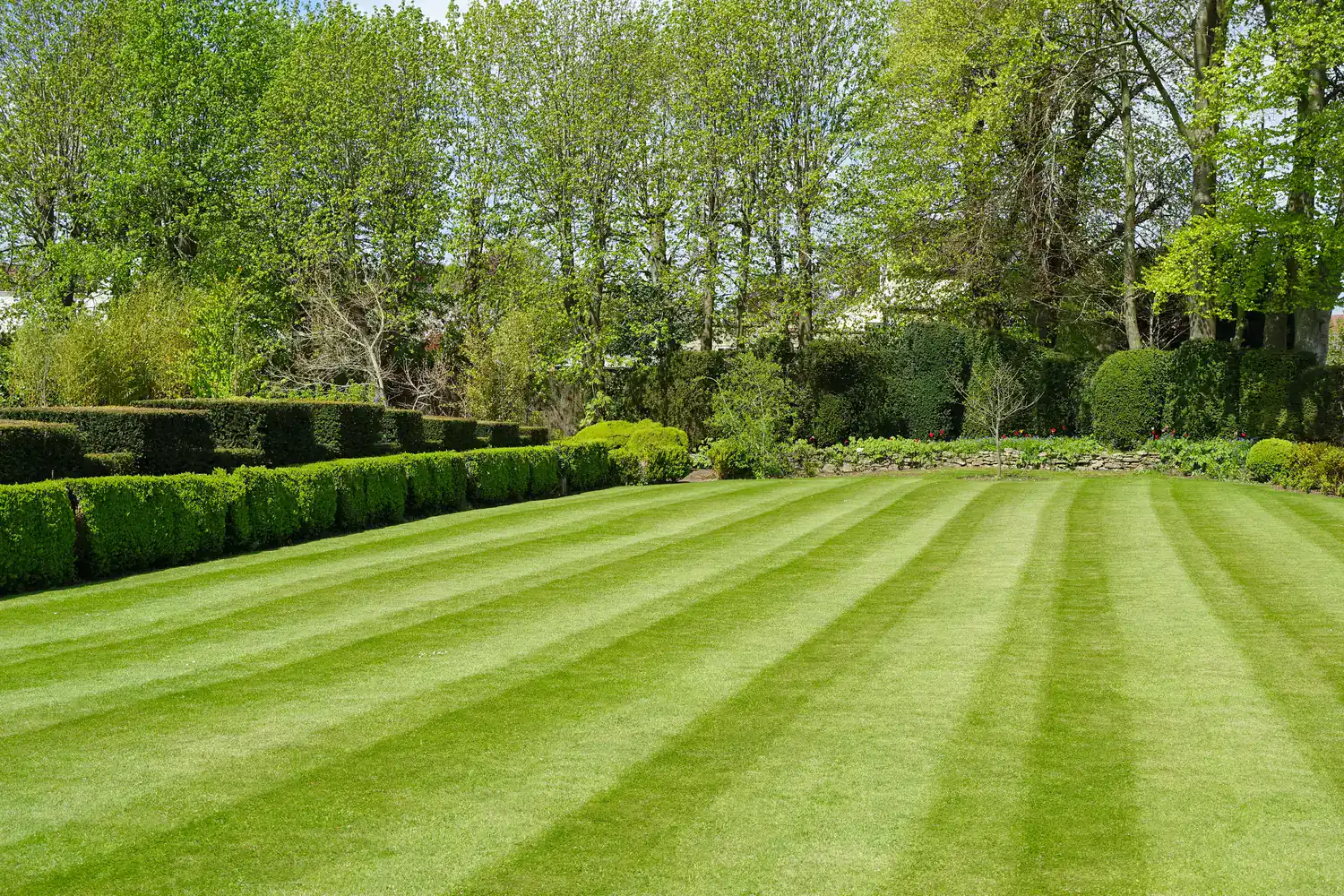
Late August through October is the optimal window for new lawn installation on Long Island’s North Shore, and Mount Sinai is no exception. Cool-season grasses the blends of tall fescue, Kentucky bluegrass, and perennial ryegrass that perform best here germinate well when soil temperatures are still warm but air temperatures are starting to drop. That combination gives new grass the best possible start before winter.
There’s also a North Shore-specific reason to favor fall over spring. The glacial moraine soils in Mount Sinai warm 7 to 14 days later in spring than the outwash soils on the South Shore. By the time the ground is ready for seeding in April or May, summer heat is only weeks away and a newly seeded lawn under heat stress before it’s established is a lawn that’s likely to struggle. Fall installations avoid that entirely, and they align naturally with Suffolk County’s fertilization restrictions, which prohibit lawn fertilization from November 1 through April 1.
Cost depends on the method, the size of the area, and the condition of the soil going in. As a general range, professional new lawn installation in New York runs from $1 to $4 per square foot depending on those variables. seeding typically falls between $0.50 and $1.00 per square foot installed, while sod runs $1 to $3 per square foot installed a meaningful difference on the larger lots that are common in Mount Sinai.
What often gets overlooked in cost conversations is the soil prep underneath. If topsoil needs to be brought in which is common on properties that went through new construction, where builders frequently strip the original topsoil and leave subsoil or fill that’s an additional cost that has to be factored in. Skipping it to save money upfront is how a $4,000 lawn installation becomes a $7,000 reinstallation two seasons later. The right quote gives you the full picture before any work starts.
Both methods work well when the soil prep is done correctly the right choice depends on your specific situation. Sod gives you an established-looking lawn almost immediately, which matters if you’re up against a deadline or a move-in date. It’s the higher-cost option, but for smaller areas or highly visible front lawns, the instant result can be worth it.
seeding is a strong choice for the larger lots that are typical in Mount Sinai. The cost is significantly lower, and it produces a root system that grows in place which tends to perform better long-term on the sandy, fast-draining soils near the harbor and Cedar Beach, where transplanted sod can struggle to anchor during its first summer. The tradeoff is time: hydroseeded lawns need 4 to 6 weeks of establishment before they look finished. If your timeline allows for a fall installation, seeding is often the most practical and cost-effective path for a North Shore property.
This is one of the most common situations on Long Island, and we’ve seen it firsthand at properties in Mount Sinai including developments where builders stripped the original topsoil during construction and left clay or compacted fill behind. If you’ve tried seeding over what the builder left and watched it fail, the soil is almost certainly the reason.
The starting point is a soil assessment. Before any seed, sod, or amendment goes down, we evaluate the ground how deep is the topsoil, what’s the drainage situation, what does the grade look like? From there, the plan gets built: topsoil addition where needed, amendment for soil structure, proper grading so water moves the right direction, and then installation with the method that fits your property and timeline. It sounds like a lot of steps, but it’s the only approach that produces a lawn that actually holds up. Every shortcut in the prep phase shows up in the lawn’s performance within the first season.
Cool-season grass blends are the right choice for Mount Sinai and all of Long Island’s North Shore. The most common and best-performing mixes combine tall fescue, Kentucky bluegrass, and perennial ryegrass in proportions that balance drought tolerance, density, and recovery from traffic. Tall fescue handles the dry spells that hit Long Island in July and August better than most other cool-season options, which makes it a strong anchor for any North Shore blend.
For properties near Mount Sinai Harbor or Cedar Beach, salt air exposure is a real factor that affects grass variety selection. Not all fescue blends perform equally under coastal conditions, and the seed mix for a waterfront-adjacent property should reflect that. Grass selection is part of the installation process not an afterthought and we match it to the specific conditions of your lot: sun exposure, soil drainage, proximity to the water, and how the lawn will be used.
For a seed-based or hydroseeded installation, you’ll typically see germination within 10 to 21 days under good conditions consistent moisture, appropriate soil temperature, and minimal foot traffic. By 6 to 8 weeks, the lawn should have enough coverage to look like a lawn. Full establishment, where the root system is deep enough to handle normal stress and traffic, takes one full growing season.
The first winter is an important milestone for a fall-installed lawn in Mount Sinai. The lawn should be protected from heavy foot traffic through the cold months, and what looks thin in January will typically fill in significantly come spring as root development continues. The establishment guidance what to expect at 30, 60, and 90 days, when to mow for the first time, how to water through the first summer is part of every installation. A lawn that gets the right care during establishment performs fundamentally differently than one that gets left to figure it out on its own.
Useful Links
Other Services we provide in Mount Sinai