
Hear from Our Customers
Most lawns in Mount Sinai don’t struggle because of bad luck. They struggle because the program treating them wasn’t built for this area. Sandy outwash soils drain fast nutrients leach through before the grass can absorb them. Salt air off Long Island Sound stresses cool-season grasses and accelerates thinning, especially on properties closer to the harbor. A generic fertilizer bag from a big-box store, or a template program from a national chain, doesn’t account for any of that. The result is a lawn that looks okay in April and fades by July.
When the program actually fits the property the right fertilizer blend, the right timing, the right treatment for what’s actually growing there the difference shows up fast. Color holds through the summer. Bare spots fill in after fall seeding. Weeds that kept coming back stop coming back. And in a community where homes regularly list above $700,000 and places like The Hamlet at Willow Creek have curb appeal expectations baked into the HOA, a lawn that looks the part isn’t a luxury it’s part of protecting what you’ve invested here.
The other thing that changes is your time. A professionally managed lawn program means you’re not troubleshooting brown patches in August or trying to figure out if that’s nutsedge or just crabgrass. You get your weekends back, and you stop guessing.
We’ve been treating Mount Sinai and Suffolk County lawns since 1987 that’s nearly four decades of working in the same sandy soils, the same coastal microclimates, and the same neighborhoods where our Mount Sinai customers live every day. We’re based out of Port Jefferson Station, less than two miles from Mount Sinai. These aren’t distant crews dispatched from a regional hub. We’re your neighbors, on your roads, and our reputation is built right here.
Every technician on our team is a NYS DEC-licensed pesticide applicator not a labor crew handed a sprayer and a route sheet. We use a custom-blended fertilizer formulated specifically for our company and calibrated to Long Island’s soil chemistry. No national chain offers that. No local competitor in this market does either. Add hydraulic aerators, a fleet of five fully wrapped trucks, and owner-level expertise on every job, and you have a company that’s built for the kind of results Mount Sinai properties actually deserve.
This isn’t a franchise. There’s no 800 number. When something needs attention, you reach the people who did the work.
It starts with an assessment of your actual property not a clipboard checklist, but a real look at what’s growing, what’s not, and why. Grass type, sun and shade exposure, soil condition, weed pressure, proximity to water all of it factors into what your program looks like. A shaded lot under mature oaks near Old Country Road needs a completely different approach than an open lawn in Island Estates or a harbor-adjacent property on Shore Road where salt air is a daily reality.
From there, we build a custom program around your lawn’s specific needs and the seasonal rhythm of the North Shore. Spring treatments focus on recovery and pre-emergent weed control, typically beginning in mid-April when soil temperatures hit 55°F which also marks the end of Suffolk County’s fertilizer blackout period that runs November 1 through April 1. Summer visits monitor for stress, grub activity, and pest pressure. Fall is where the real investment happens: core aeration, overseeding, and the fertilization application that sets your lawn up for the following spring.
Throughout the season, you’re not wondering what was applied or when the next visit is. We handle the scheduling, communicate clearly, and show up in fully branded trucks that make it obvious exactly who’s on your property and why.
Ready to get started?
Our treatment programs cover the full range of what a North Shore lawn actually needs across a season. Fertilization uses a proprietary blend we’ve formulated specifically not a commercial product off a distributor’s shelf. It’s calibrated for Long Island’s fast-draining, sandy soils, which means the nutrients stay available to the root zone long enough to actually matter. Weed control targets what’s actually present on your property, including the nutsedge and bentgrass that show up repeatedly in Mount Sinai and across Suffolk County and that most generic programs simply don’t resolve.
Core aeration and overseeding are done with hydraulic equipment that pulls deeper, more consistent cores than the consumer-grade units most companies use. That matters in Mount Sinai, where soil compaction builds over time and the fall seeding window September through early November is the most important investment you can make in next year’s lawn. Grub prevention is also a standard part of our seasonal program, because Japanese beetle grub activity is a documented and recurring problem throughout Suffolk County, and the damage happens underground before you ever see it on the surface.
For properties near Mount Sinai Harbor, Cedar Beach, or anywhere close to the Long Island Sound, all applications are timed and dosed in full compliance with Suffolk County Law 41-2007 and Town of Brookhaven regulations. Licensed professionals who know the rules and follow them are not optional in this area. They’re the baseline.
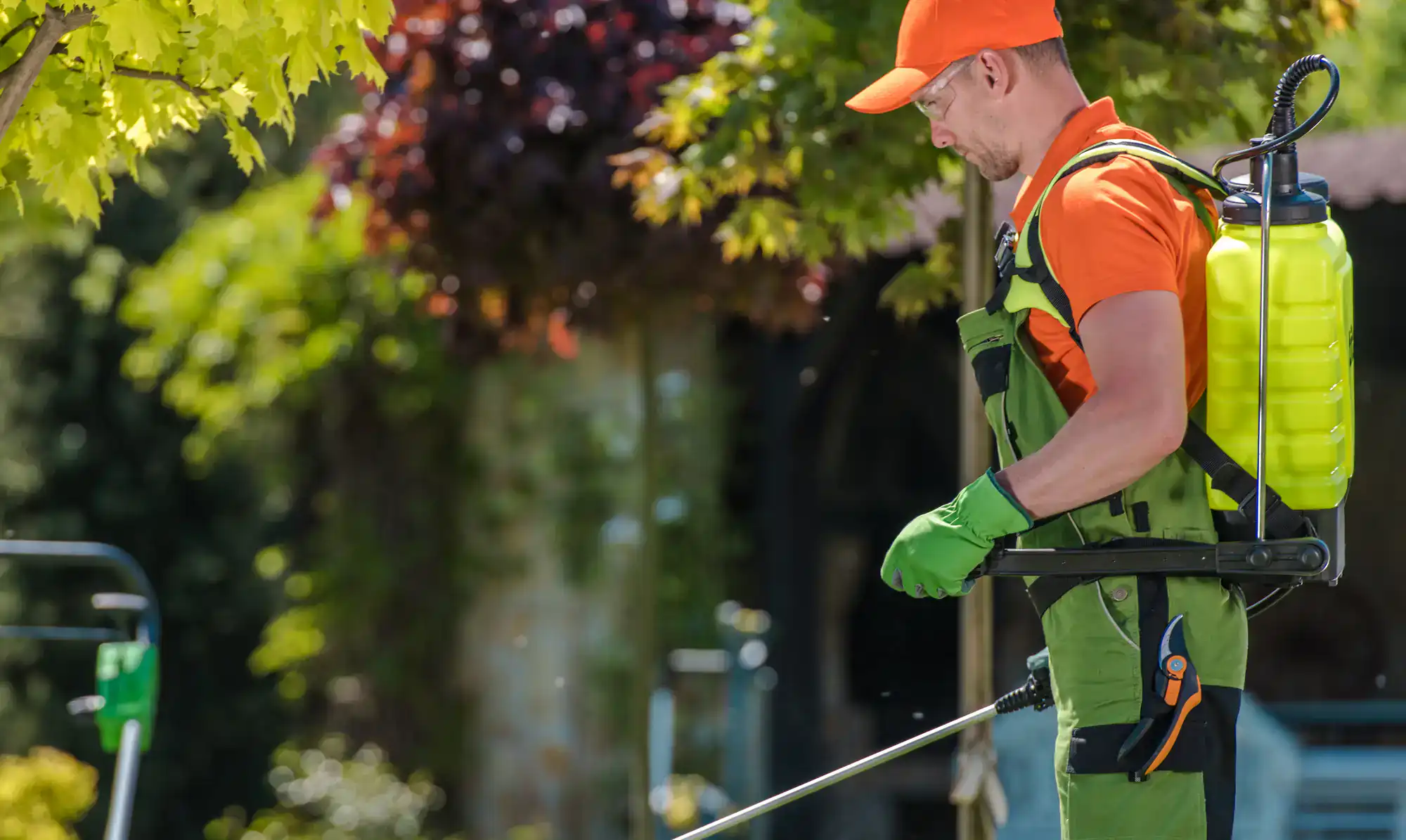
Suffolk County Law 41-2007 prohibits fertilizer applications to lawns between November 1 and April 1 each year. Violations carry fines of up to $1,000. This blackout period applies to all of Suffolk County, including Mount Sinai and it’s particularly significant here given Mount Sinai’s proximity to Mount Sinai Harbor, Cedar Beach, and the Long Island Sound. Nitrogen runoff into these coastal water bodies is the primary concern behind the law, and the conservation-managed salt marshes surrounding the harbor make compliance more than just a legal formality.
In practical terms, this means your spring program should begin in mid-April, once soil temperatures reach approximately 55°F which typically aligns with the end of the blackout period and the point at which cool-season grasses are actively growing and able to absorb nutrients. A licensed professional will know exactly when to start and how to sequence treatments to maximize results within those windows. An unlicensed operator who isn’t aware of the blackout period isn’t just a quality risk they’re a liability.
New York State requires anyone applying pesticides commercially to hold a valid NYS DEC pesticide applicator license. This isn’t a certification a company can self-report it’s a regulated credential that requires a 30-hour training course and a passing score on a state exam. You can verify any applicator’s license through the NYS DEC’s online database using their name or business information.
This matters more than most homeowners realize. In Mount Sinai, where properties border conservation-managed wetlands and the Town of Brookhaven has its own lawn maintenance regulations layered on top of county rules, an unlicensed operator applying pesticides at the wrong rate or the wrong time isn’t just doing a bad job they’re operating illegally. Every technician on our team holds a current NYS DEC license. That’s verifiable, regulated, and non-negotiable on every visit. If a company you’re considering can’t produce license numbers when asked, that’s your answer.
Properties close to Mount Sinai Harbor, Cedar Beach, or the Sound-facing areas of Mount Sinai deal with a combination of factors that inland Suffolk County lawns don’t face at the same intensity. Salt air desiccates grass blades and, over time, increases soil salinity which stresses cool-season grasses like Kentucky bluegrass and tall fescue and accelerates thinning. Sandy soils compound the problem by draining quickly, which means moisture and nutrients move through the root zone faster than the grass can use them.
The fix isn’t more fertilizer it’s the right fertilizer at the right rate, applied at the right time, combined with core aeration to open the soil and overseeding to restore density. A slow-release, custom-blended fertilizer calibrated for Long Island’s sandy soils holds nutrients in the root zone longer than generic commercial products. Fall aeration and seeding done with hydraulic equipment that produces real core depth is what actually rebuilds the turf structure over time. If your lawn has been thinning for a couple of seasons despite regular treatment, the program isn’t right for your property.
The short answer is that store-bought fertilizer is a generic product applied at your best guess, and a professional program is a calibrated, licensed, and sequenced treatment plan built around what your lawn actually needs. In Mount Sinai specifically, the gap between those two approaches is wider than it might seem. Long Island’s sandy outwash soils drain fast a granular fertilizer applied without the right slow-release formulation can leach through the root zone in a matter of days, especially after rain, leaving the grass without the nutrients you just paid for.
Beyond the product itself, timing matters enormously. Pre-emergent weed control only works if it’s applied before crabgrass germinates, which is a narrow window tied to soil temperature. Grub prevention needs to go down at a specific point in the season to intercept larvae before they establish. Overseeding needs to happen in fall, not spring, to give cool-season grass the best chance of establishing before winter. A professional program sequences all of this correctly, with licensed applicators who know the local conditions not a homeowner working from the bag instructions on a product that wasn’t designed for North Shore soils.
Nutsedge sometimes called nutgrass is one of the most persistent weed problems in Mount Sinai and across Suffolk County lawns, and it’s particularly common in areas with sandy, moisture-variable soils like those throughout the area. It looks like grass but grows faster, turns yellow-green in summer, and does not respond to standard broadleaf weed control products. Most generic lawn programs don’t include a targeted nutsedge treatment, which is why homeowners often deal with it year after year despite regular service.
Effective nutsedge control requires a selective herbicide specifically labeled for sedge suppression, applied at the right growth stage typically when the plant is young and actively growing in late spring or early summer. A single application usually isn’t enough; follow-up treatments are often needed because nutsedge reproduces through underground tubers that can persist even after the visible plant is gone. If you’ve had nutsedge for more than one season and your current lawn care company hasn’t addressed it specifically, it’s worth asking whether targeted sedge control is actually part of your program or whether you’re paying for a general treatment that’s leaving your biggest problem untouched.
For cool-season lawns on Long Island’s North Shore, fall is genuinely the most important season not spring, despite what most homeowners assume. September through early November is when soil temperatures are ideal for seed germination, root development is at its most active, and the grass has the best chance of establishing before the ground hardens. Core aeration done in fall breaks up compaction that’s built over the summer, opens the soil for water and nutrient penetration, and creates the seedbed that makes overseeding actually work. What you do or don’t do in October shows up clearly the following May.
In Mount Sinai specifically, the fall window also matters because of how quickly the sandy soils lose moisture and how much stress the summer puts on coastal lawns. A lawn that came through July and August looking thin and faded needs fall intervention to recover, not just a spring fertilizer application to mask the problem temporarily. The fertilization applied in late fall before the November 1 blackout period is also the most important feeding of the year for root energy storage heading into winter. Getting that timing right, with the right product at the right rate, is what separates a lawn that bounces back in spring from one that starts the season already behind.
Useful Links
Other Services we provide in Mount Sinai