
Hear from Our Customers
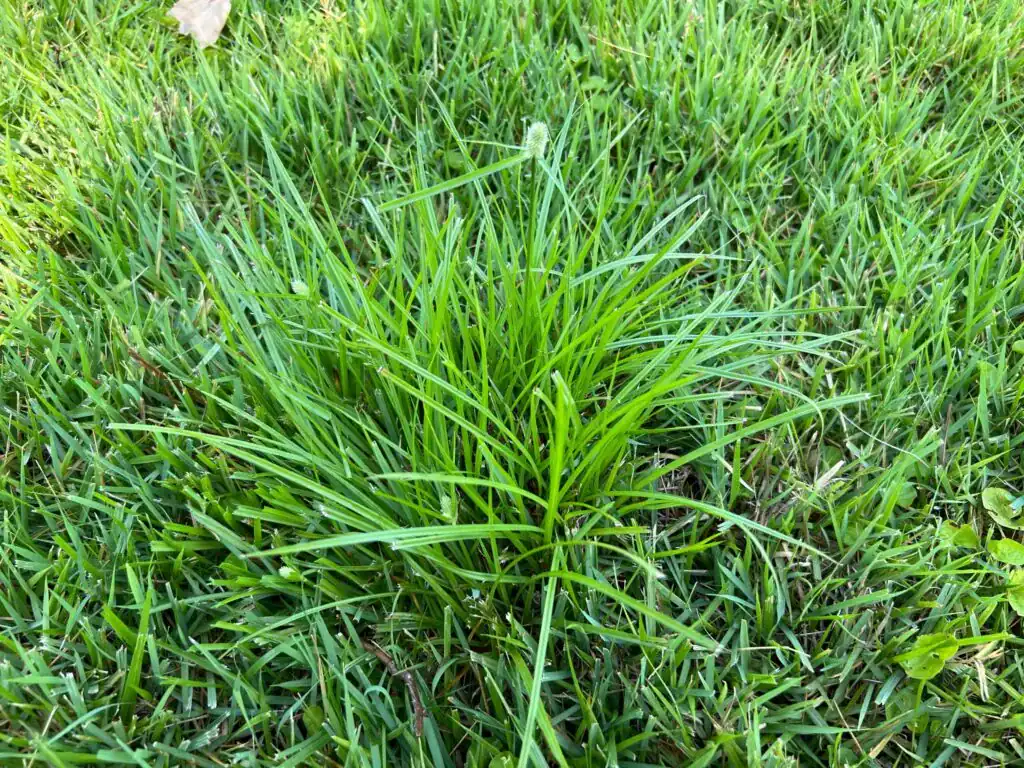
Kyllinga doesn’t respond to the same products that handle broadleaf weeds or crabgrass. It’s a sedge a completely different plant category and if it’s been treated like anything else, that’s why it’s still there. Once it gets the right chemistry at the right time, the spreading stops, the patches thin out, and your desirable turf finally has room to recover.
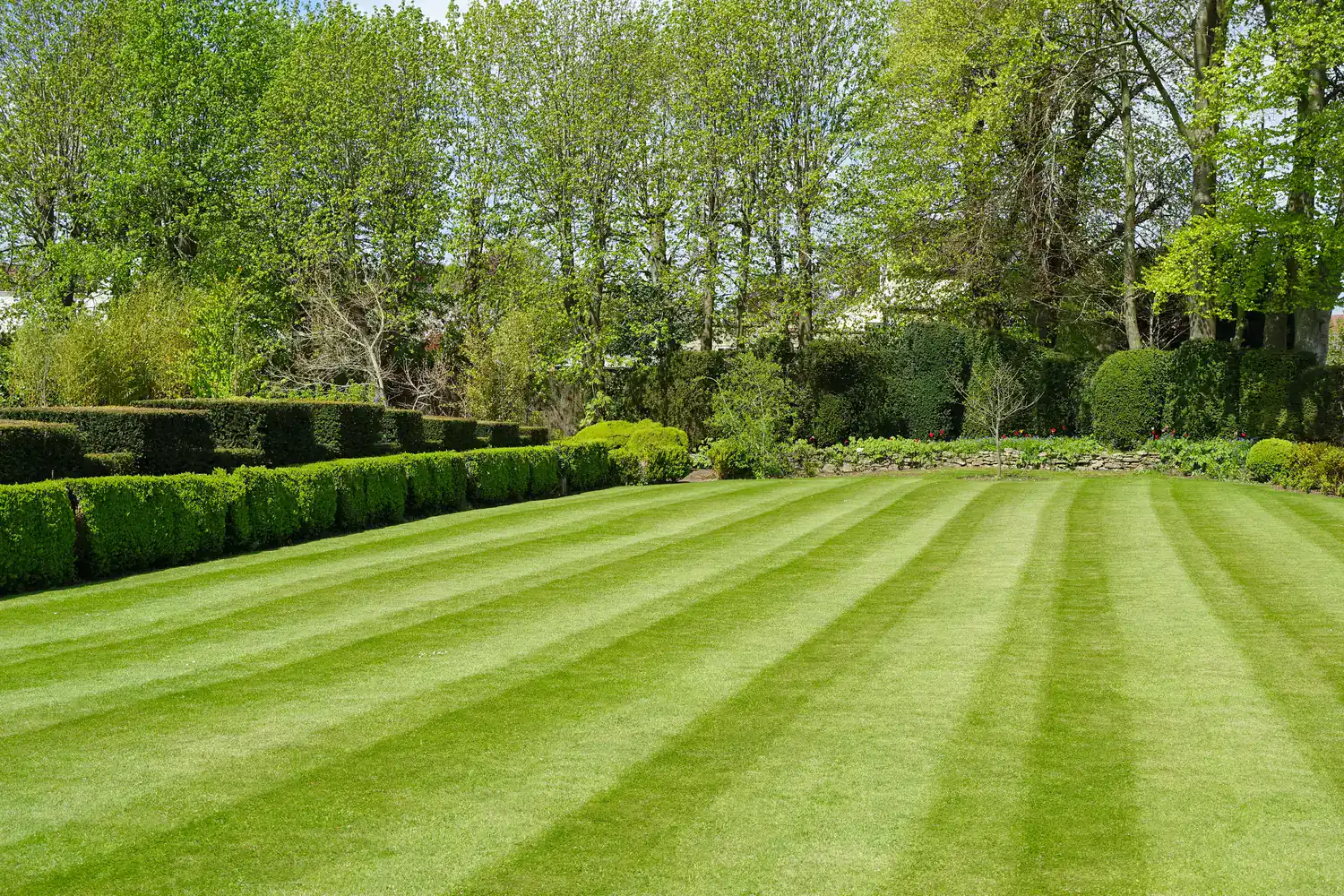
St. James lawns are particularly vulnerable to this weed. The North Shore geography the proximity to Stony Brook Harbor, the Nissequogue River watershed, the mature tree canopy on older properties along the Route 25A corridor creates the kind of persistently moist, shaded soil conditions that kyllinga thrives in. If your property has low-lying areas, established trees, or an irrigation system running on a fixed schedule, you’ve got the exact environment this weed is built for.
The good news is that once it’s properly identified and treated with a structured program, your St. James lawn can recover. Dense, healthy cool-season turf is actually the best long-term defense against reinfestation. That’s the goal not just eliminating the weed, but restoring the lawn behind it so it doesn’t come back.
Lawn Master is based out of Port Jefferson Station, just a few miles east of St. James along the same Route 25A corridor that runs through the heart of the hamlet. That’s not a coincidence it means we’re treating lawns in the same North Shore geography, with the same Haven Loam soils, the same coastal humidity, and the same weed pressure that St. James homeowners deal with every season.
We hold a NYSDEC Commercial Pesticide Applicator License (Category 3a, Ornamental and Turf) the credential required to purchase and apply the professional-grade herbicides that actually work on kyllinga. We also operate in full compliance with Suffolk County Local Law 41-2007 and the SCDHS pesticide buffer zone requirements, which matter in a community sitting within the Nissequogue River watershed and the North Shore aquifer recharge zone.
This isn’t a national franchise applying a template program to your lawn. We’re a locally owned operation that knows what kyllinga looks like in a St. James lawn and what it actually takes to get rid of it. If the turf is beyond rescue, our new lawn installation in St. James rebuilds it properly.
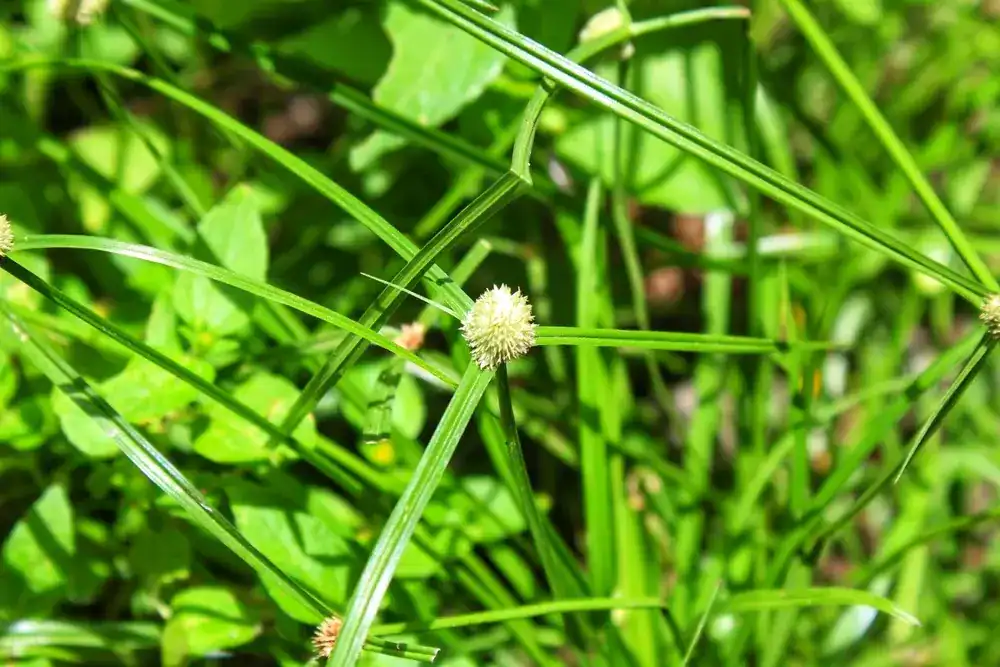
The first step is identification. Kyllinga is commonly misidentified as nutsedge, and treating one with the protocol for the other produces incomplete results. We confirm the specific sedge species present in your lawn before anything gets applied green kyllinga, false green kyllinga, and nutsedge are related but different plants, and the treatment approach matters. The triangular stem and round, globe-shaped seed head are the key identifiers, and getting this right before selecting chemistry is what separates a program that works from one that doesn’t.
Once identified, the treatment program runs through the active growing season. In St. James’s North Shore climate, kyllinga typically emerges in late May and remains metabolically active through late August. The first application targets the plant at early emergence, when it’s most vulnerable. Follow-up applications are spaced four to six weeks apart through the peak of the season, progressively depleting the rhizome network that allows this weed to regenerate after a single treatment. One application is not enough the underground root system survives and regrows. The program is designed around that biology.
After the weed is eliminated, the bare and thin areas it leaves behind need to be addressed. We don’t stop at herbicide. Overseeding and lawn restoration following treatment is part of closing the loop because an open patch of soil is an open invitation for kyllinga to come back from seed already in the ground.
Ready to get started?
Every kyllinga program we run starts with a proper lawn assessment not a quick glance, but a real look at what’s present, how far it’s spread, and what conditions on your specific property are driving it. For St. James homeowners, that often includes evaluating irrigation schedules, drainage patterns, and shaded areas under mature trees, because those are the conditions that keep kyllinga coming back even after treatment.
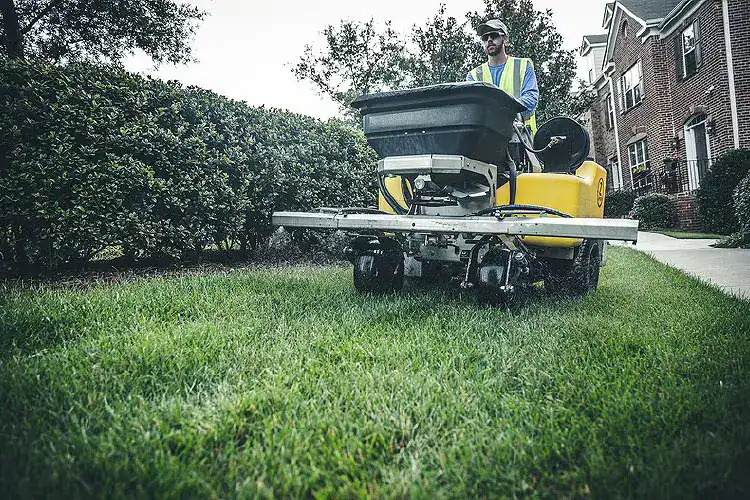
The herbicide applications we use professional-grade halosulfuron-methyl or sulfentrazone the active ingredients in products like Sedgehammer and Dismiss. These are not available in retail formulations that produce professional results. They require a licensed commercial applicator to purchase and apply, which is exactly why DIY attempts and generalist lawn services consistently fall short on this particular weed. Every application we make in St. James is done in compliance with NYSDEC licensing requirements and the Suffolk County SCDHS pesticide buffer zone map a compliance step that matters in a community where groundwater protection is taken seriously.
Beyond the herbicide program, kyllinga control in an established St. James lawn typically involves a post-treatment restoration component overseeding the areas where the sedge was crowding out desirable turf, and in some cases recommending drainage or irrigation adjustments to reduce the conditions that made your lawn susceptible in the first place. The goal is a lawn that doesn’t just look better this season, but holds up through the next one.
The most common reason is that kyllinga was never correctly identified in the first place. If it was treated as a broadleaf weed or even as nutsedge, the chemistry used simply doesn’t have meaningful activity against it. Kyllinga is a sedge, and it requires a specific class of herbicide halosulfuron-methyl or sulfentrazone applied by a licensed commercial applicator. Retail products don’t cut it here.
The second reason is that even the right chemistry, applied only once, won’t eliminate an established infestation. Kyllinga spreads through a rhizome network underground, and a single application damages the visible plant while leaving root structures intact and capable of regenerating. A properly structured program requires a minimum of two to three applications spaced through the active growing season. If you’ve had one treatment and watched it come back, you didn’t get a complete program you got an incomplete one.
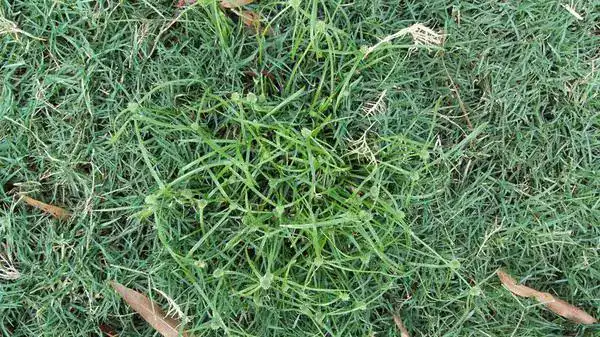
They’re related both are sedges, both have the characteristic triangular stem that distinguishes them from grasses but they’re different plants with different growth habits and slightly different responses to herbicide programs. Nutsedge grows taller and more upright, with an elongated seed head. Kyllinga stays lower to the ground, forms a denser mat, and produces a round, globe-shaped seed head. False green kyllinga, which Rutgers NJAES has identified as an increasingly common problem in the Northeast, is particularly compact and can be easy to overlook until it’s colonized a significant area.
In practical terms, the distinction matters because treating kyllinga as nutsedge or vice versa can produce incomplete results even when the applicator is using the right general category of herbicide. Correct identification before treatment is the step that generalist lawn services most often skip, and it’s the step that determines whether the program actually works.
Yes, and this is one of the most common mistakes homeowners make when they first notice kyllinga in their lawn. When you pull kyllinga, you’re almost certainly dispersing seeds from the plant’s seed heads at the same time. Kyllinga can produce up to 5,000 seeds per plant per season, and those seeds are viable in the soil for multiple seasons. Every time you pull a plant and the seed head breaks apart, you’re planting next year’s problem.
Beyond seed dispersal, manual removal also disturbs the soil around the rhizome network, which can stimulate regrowth from root fragments that stay in the ground. If you’ve been pulling kyllinga in your St. James lawn and watching it spread faster and into new areas, this is exactly why. The only reliable approach to an established kyllinga infestation is a properly timed herbicide program using the right chemistry not hand-pulling, not digging, and not cultivating the infested area.
The treatment window opens in late May, when kyllinga begins active growth in the North Shore climate, and runs through late August before the plant starts moving toward dormancy. Applications made outside this window too early in spring before the plant is actively growing, or in fall after it begins shutting down are significantly less effective because kyllinga isn’t actively translocating the herbicide through its system when it’s dormant or just emerging.
The most effective timing for the first application is late May to early June, targeting the plant at first emergence when it’s most metabolically active and most vulnerable. Follow-up applications run through July and into August. If you’re noticing kyllinga now even late in the season it’s still worth calling. An assessment can be done, the infestation can be documented, and a program can be structured to start at the optimal point in the next growing season. Waiting another full year without a plan only gives the rhizome network more time to expand through your St. James lawn.
It can, and in St. James it’s a factor worth looking at closely. Kyllinga thrives in persistently moist soil not just wet soil after rain, but the kind of consistent moisture that a fixed irrigation schedule creates regardless of whether it rained the day before. Higher-income communities on the North Shore, including St. James, have a higher rate of residential irrigation system installation than mid-island communities, and irrigation systems running on set schedules are one of the most common drivers of kyllinga establishment in established lawns.
The fix isn’t to stop watering it’s to water smarter. Deeper, less frequent irrigation cycles that allow the soil surface to dry between waterings are far less favorable to kyllinga than shallow, frequent cycles that keep the top few inches of soil consistently wet. As part of a kyllinga control program, we’ll look at your watering habits and make specific recommendations for your property. Adjusting irrigation is one of the most effective long-term cultural practices for reducing kyllinga pressure after treatment.
Yes. The herbicides that actually work on kyllinga specifically halosulfuron-methyl (Sedgehammer) and sulfentrazone (Dismiss) in professional-grade formulations are not available to homeowners at retail. Purchasing and applying these products commercially requires a NYSDEC Commercial Pesticide Applicator License, Category 3a, Ornamental and Turf. This isn’t a technicality it’s the reason that professional-grade kyllinga control produces results that retail products don’t.
In Suffolk County specifically, there’s an additional layer of compliance. Suffolk County Local Law 41-2007 establishes pesticide-free buffer zones around public drinking water supply wells, and licensed commercial applicators are required to consult the SCDHS pesticide buffer zone map before any application. For a community like St. James sitting within the Nissequogue River watershed and the North Shore aquifer recharge zone this compliance step is genuinely meaningful, not just administrative. The Long Island aquifer is the sole source of drinking water for the entire island, and North Shore communities are acutely aware of that. We hold the required state license and operate in full compliance with all Suffolk County regulations on every application.
Useful Links
Other Services we provide in St. James