Hear from Our Customers
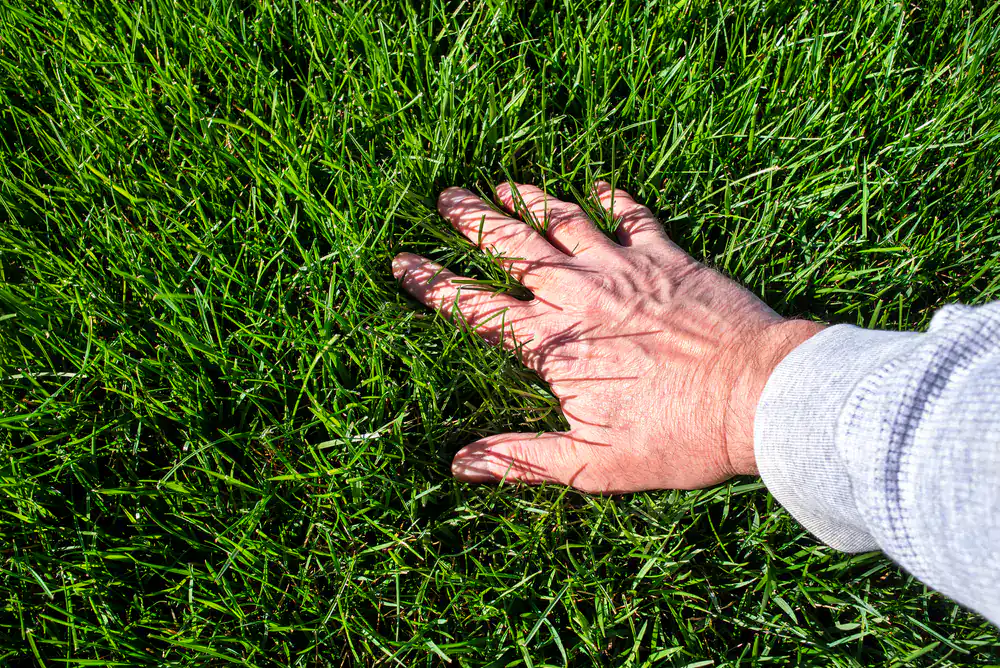
When soil pH is off, your lawn can’t absorb the nutrients you’re putting into it. Nitrogen, phosphorus, potassium all of it gets chemically locked in the soil before your grass ever sees it. That’s not a fertilizer problem. That’s a pH problem, and no amount of extra product fixes it until the soil is corrected first.
St. James sits on Long Island’s North Shore, where the soils trend acidic by default. The sandy, porous substrate common throughout this area drains quickly and leaches the minerals that keep pH balanced. Layer on top of that the mature oak and maple canopy lining the older streets near North Country Road those trees drop leaf litter every fall, and as it breaks down, it produces organic acids that push your soil pH lower year after year. Homes in the historic core of St. James, where those trees have been growing for decades, tend to have some of the most acidified soil in the area.
Once pH is corrected and sitting in the right range, the difference shows up fast. Grass fills in thicker, color deepens, and the bare or thin patches that never seemed to respond to anything start recovering. Weeds and moss lose their foothold because the soil conditions that gave them an advantage over turf grass are gone. Everything you’re already spending on lawn care starts working the way it was supposed to.
We’re based in Port Jefferson Station, right along the same Route 25A corridor that runs through the heart of St. James. This isn’t a franchise routing technicians in from Nassau County or a call center scheduling jobs from a map. Our team works this specific stretch of the North Shore the same soil profile, the same tree canopy, the same seasonal patterns and that familiarity shows up in how your lawn gets treated.
When you call, you reach a real person. Carol handles scheduling directly, and our program-based approach means you’re not chasing down reminders or wondering when your next service is due. That matters a lot if you’re commuting out of the St. James LIRR station most mornings and don’t have time to manage it yourself.
We hold all required New York State DEC registrations and operate in full compliance with Suffolk County’s fertilizer and groundwater protection requirements which is especially relevant here, where the aquifer is the county’s sole drinking water source.
It starts with a soil test. Before anything gets applied, we measure the actual pH of your lawn. This tells us exactly how acidic the soil is, how far it needs to move, and how much lime is needed to get there. Skipping this step is how homeowners end up applying lime for years without seeing results either the amount was wrong, or the timing was off, or both.
Once the test results are in, we calibrate a lime application specifically to your lawn’s readings. For most St. James properties, that means pelletized lime worked into the surface so it can begin integrating into the soil profile. The best time to do this on Long Island is fall September through November because the freeze-thaw cycle through winter and the increased precipitation during that period help move the lime down through the soil before the spring growing season begins. Homeowners who wait until spring to apply are already a full season behind.
After the application, pH doesn’t shift overnight. Lime typically takes two to four months to fully integrate, which is exactly why fall timing matters so much. Follow-up testing the next season confirms whether the correction held or whether another adjustment is needed. It’s a process, not a one-time fix and our seasonal reminder system keeps everything on schedule without you having to track it.
Ready to get started?
Our lawn pH treatment program isn’t a bag of lime dropped on your lawn and a wave goodbye. It starts with professional soil pH testing to establish a real baseline. From there, we plan a lime application based on your results not a generic formula applied to every property in the 11780 ZIP code. The amount, the product type, and the timing are all specific to what your soil actually needs.
For properties in St. James, including the larger lots in Head of the Harbor and Nissequogue, this matters more than it might in a typical subdivision. Estate-sized lawns require proportionally larger applications, and over-applying lime is just as problematic as under-applying. Pushing the soil too alkaline creates a different set of nutrient problems. Getting it right requires a real measurement, not an estimate.
Our program also fits into our broader soil amendment and lawn care services, so if your lawn needs more than pH correction aeration, overseeding, fertilization those can be layered in once the foundation is right. Suffolk County’s Healthy Lawns program recommends exactly this kind of soil-test-first, amendment-based approach for Long Island homeowners, and it’s the same methodology we follow. pH-balanced fertilization in St. James, NY only works when the soil is ready to receive it and that’s what this service is built around.
The most reliable way to know is a soil test not a visual inspection. Yellow grass, thin turf, and persistent weeds can all point to a pH problem, but they can also point to other issues like compaction, drought stress, or disease. Without a test, you’re guessing. And in St. James, where the soil is naturally acidic to begin with and many homes have older lawns that have never been amended, the odds are reasonably high that pH is at least part of the problem.
The target range for Long Island turf is 6.3 to 6.5. Untreated North Shore soils commonly test between 4.8 and 5.5 well below that threshold. If your lawn has mature trees nearby, especially oaks or maples, the decomposing leaf litter is continuously pushing that number lower. A professional soil test gives you the actual number so treatment can be calibrated correctly, rather than applied based on what the lawn looks like from the curb.
This is one of the most common frustrations among homeowners on Long Island, and pH is almost always the explanation. When soil pH drops below 6.0, the essential nutrients in fertilizer nitrogen, phosphorus, and potassium become chemically bound to soil particles and unavailable to grass roots. The fertilizer is there, but the grass can’t access it. You’re essentially paying for product that the soil is holding hostage.
Because pH is measured on a logarithmic scale, the problem compounds quickly. A lawn sitting at pH 5.0 isn’t slightly acidic it’s ten times more acidic than a lawn at pH 6.0. That level of acidity doesn’t just reduce nutrient availability, it actively suppresses the microbial activity that healthy soil depends on. Correcting the pH doesn’t replace fertilization it makes fertilization work. Once the soil is in the right range, the same products you’ve been applying will deliver noticeably better results.
Fall is the optimal window specifically September through November. Long Island winters bring a consistent freeze-thaw cycle, and that physical movement of the soil, combined with fall and winter precipitation, helps integrate lime into the soil profile before the spring growing season starts. By the time your lawn wakes up in March or April, the pH correction is already underway.
Spring applications aren’t useless, but they’re working against the clock. Lime applied in April won’t be fully active until late summer or fall, which means your lawn is spending its primary growing season in soil that’s still too acidic. If you’re thinking about pH treatment for the first time, the best move is to get a soil test done now and schedule the application for fall. That positions your St. James lawn to have its best spring in years rather than another season of mediocre results despite everything you’re putting into it.
Yes. Lime is ground limestone a natural mineral, not a synthetic chemical. Pelletized lime, which is the professional application standard, is non-toxic and non-corrosive once it has settled into the lawn surface. After a watering or rainfall, it’s safe for kids and pets to be back on the grass. There’s no residue concern the way there is with pesticide applications.
For the mature trees that are part of so many St. James properties especially in the older neighborhoods near North Country Road lime is actually beneficial rather than harmful. Acidic soil stresses tree root systems the same way it stresses turf grass. Correcting the pH improves the growing environment for both your lawn and the established trees around it. If anything, the organic acids those trees produce through leaf decomposition are one of the reasons pH treatment is needed in the first place. Lime works with the landscape, not against it.
The North Shore has a few factors that accelerate soil acidification compared to South Shore communities. First, rainfall is higher on the North Shore due to proximity to Long Island Sound and rainwater is naturally slightly acidic, around pH 5.6. More precipitation means more acidic water moving through the soil, leaching the basic minerals that buffer pH. Second, the North Shore’s tree canopy is significantly more mature and dense than many South Shore neighborhoods, and that organic matter is a continuous source of soil acidification.
St. James specifically has a lot of older housing stock the median construction year is around 1974, and a portion of homes in the historic core date back much further. Older properties often have lawns that have never been professionally tested or amended, which means the acidification has been building for decades. Combine that with the naturally sandy, porous Long Island substrate that doesn’t hold minerals well, and you have conditions where pH problems are both more common and more severe than in newer developments or South Shore communities with different soil and canopy profiles.
In most cases, yes and pH is often the overlooked reason those areas keep losing to moss and weeds no matter what you spray on them. Moss thrives in acidic, compacted, low-nutrient soil. Many broadleaf weeds do too. If your lawn has shaded spots under trees where moss keeps coming back every spring, the soil underneath is almost certainly more acidic than the open areas of your yard, because shade slows drying and leaf litter accumulates more heavily there.
Treating the moss without correcting the soil is a temporary fix at best. The conditions that favor moss over grass haven’t changed, so it returns. Once pH is corrected into the 6.3 to 6.5 range, grass becomes more competitive and moss loses the environmental advantage it had. This is especially relevant in St. James, where mature deciduous trees create significant shaded zones across many properties. pH correction doesn’t guarantee those areas will become lush overnight shade is still a factor but it removes the soil chemistry obstacle that was making recovery impossible in the first place.
Useful Links
Other Services we provide in St. James