
Hear from Our Customers
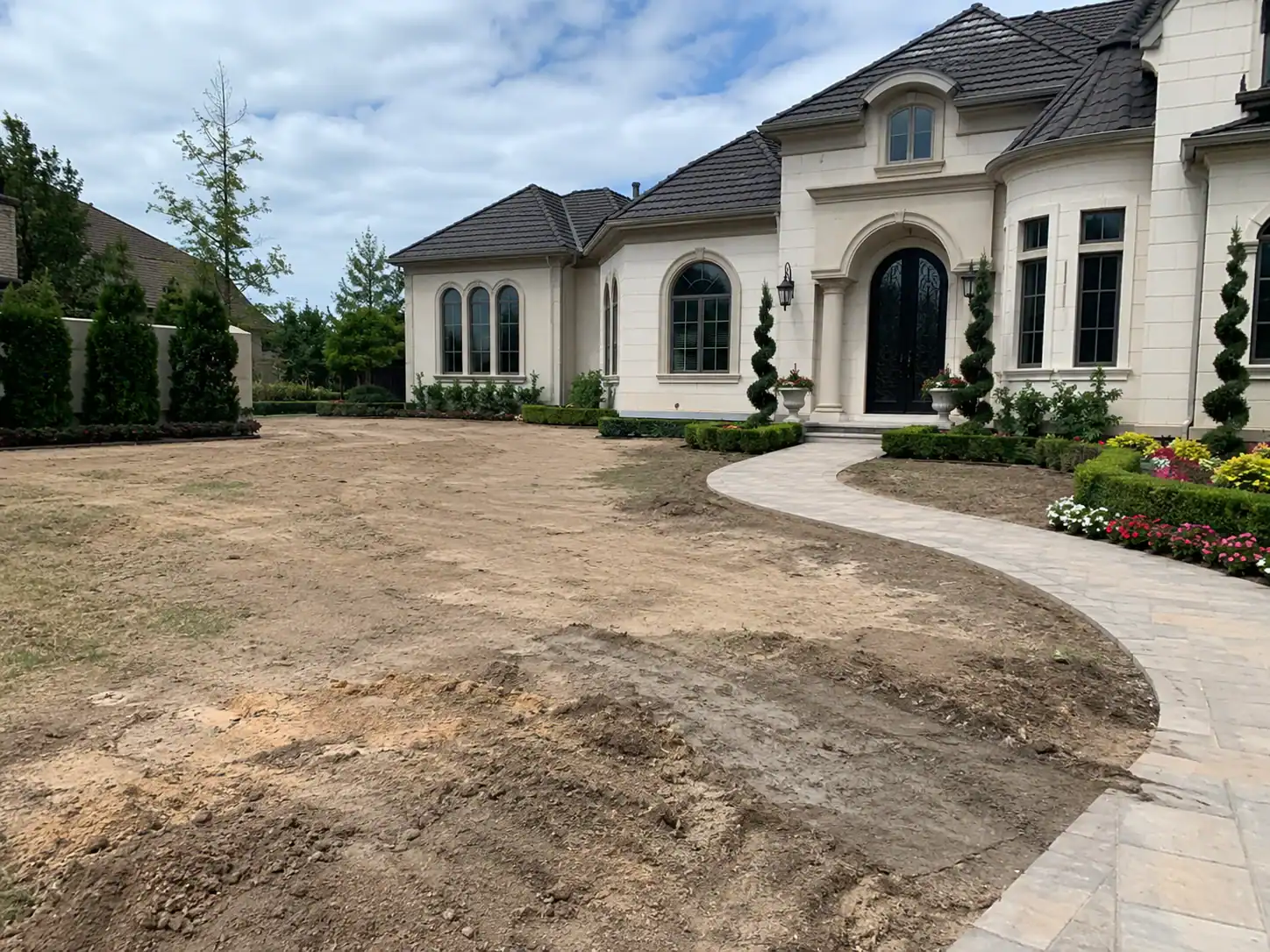
A lot of St. James homeowners have been dealing with the same lawn for 20, 30, even 40 years. The homes along the tree-lined streets off Lake Avenue and throughout St. James East weren’t built yesterday and neither were the lawns. Decades of foot traffic, mowing cycles, and inconsistent care compound over time. What you’re left with isn’t always a dead lawn. It’s often a lawn that’s been pushed past its limit and needs the right intervention to come back.
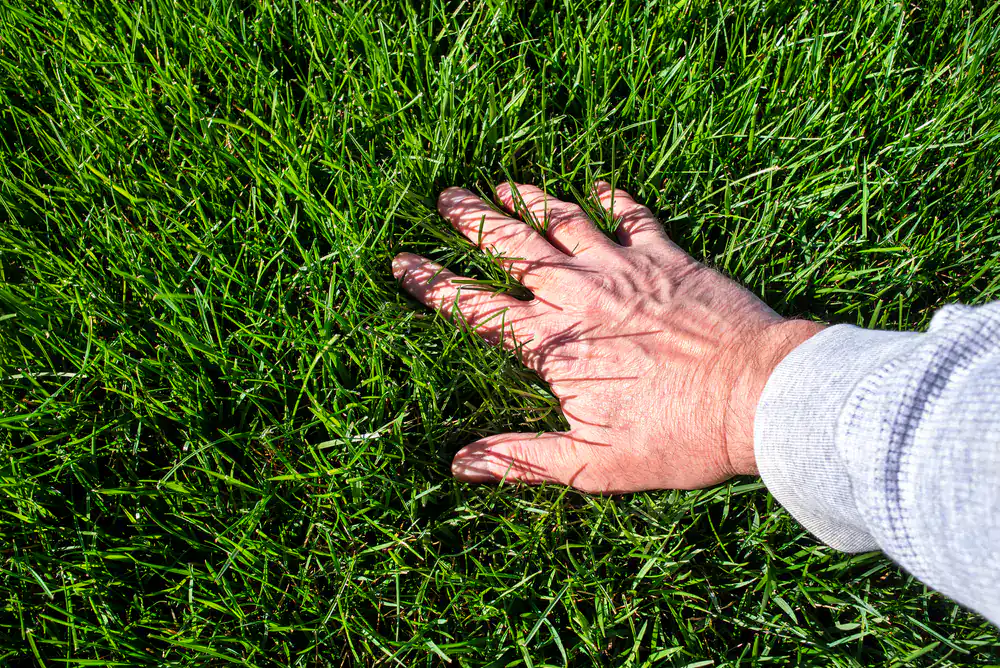
When a lawn restoration program is done correctly, the results are visible within a single season. Dense, even turf where bare patches used to be. Grass that holds its color through the summer stress period instead of going thin and brown by August. Fewer weeds moving in because healthy, thick turf doesn’t leave room for them. In St. James, where median home values are sitting above $650,000, a lawn that looks the part isn’t just about pride it’s about protecting what you’ve built here.
The North Shore climate gives cool-season grasses like fescue and bluegrass a solid growing window in spring and fall, but those same grasses take a beating in July and August. If your lawn looks its worst in late summer, that’s not necessarily a death sentence it may be heat stress, disease pressure, or compacted soil blocking recovery. Understanding which one is the entire point of starting with a real diagnosis.
We’ve been working in Suffolk County since the late 1980s long before lawn restoration became a marketing term. That’s 38 growing seasons on Long Island, through droughts, disease outbreaks, and every variation of what a North Shore summer can do to cool-season turf. We hold a current NYS DEC Commercial Pesticide Applicator certification, which isn’t optional it’s a legal requirement for any company applying treatments to your lawn in New York State.
What that means for you practically: every application we make on your St. James property is compliant with Suffolk County’s pesticide buffer zone requirements, the county’s Phase-Out Law, and New York State fertilizer restrictions. You’re not taking on any liability, and you’re not getting a treatment that cuts corners to save time.
We serve St. James as part of our core Suffolk County territory, alongside communities like Smithtown, Kings Park, Stony Brook, and Nesconset. This isn’t a company stretching its service area from Nassau County we’re a team that knows the soil profiles, the seasonal patterns, and the specific lawn conditions of the North Shore because we’ve been working them for nearly four decades.
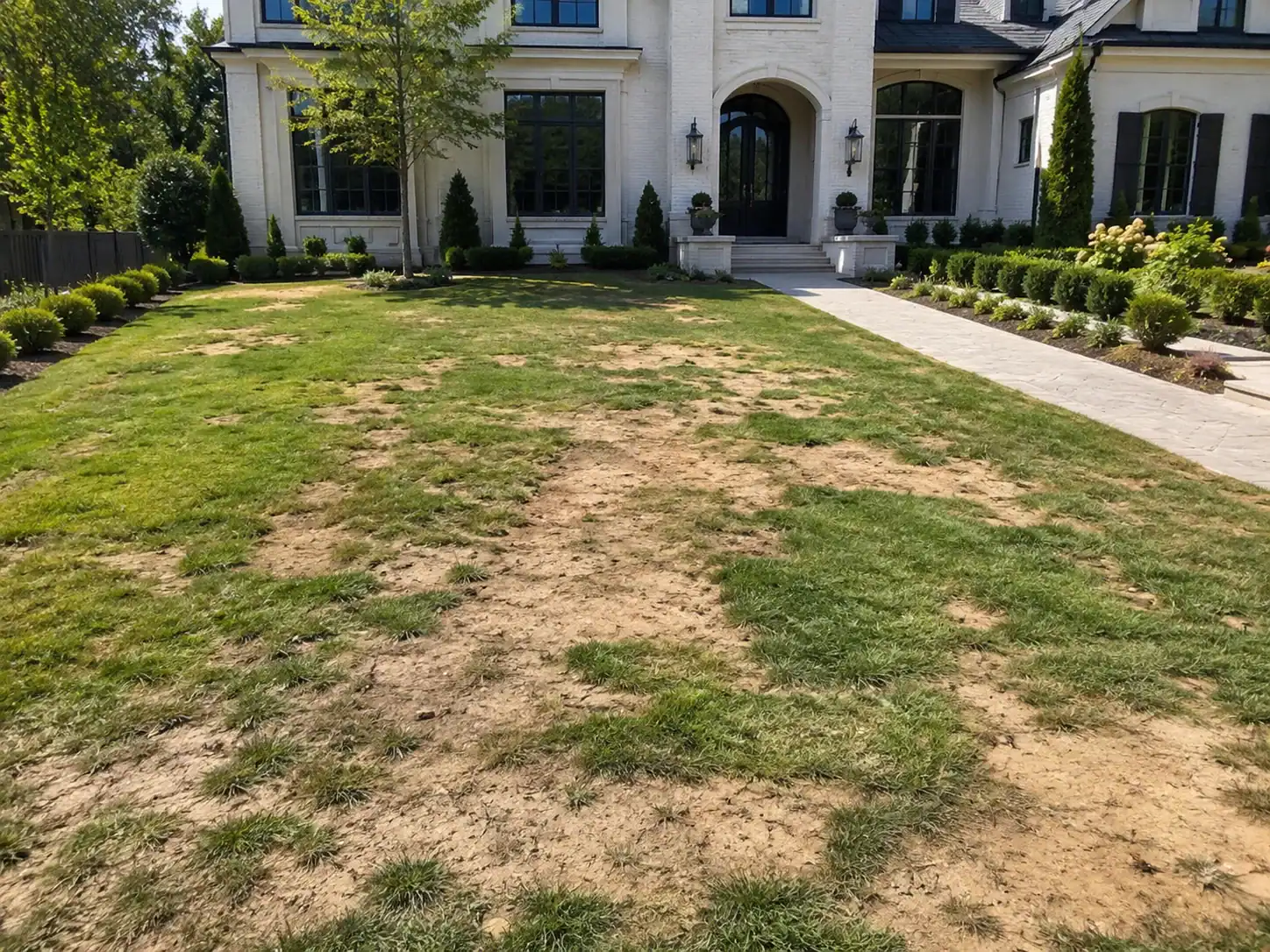
The first step is an honest assessment of what’s actually happening with your lawn. Not a quick walk-around and a quote a real look at turf coverage, soil condition, thatch depth, and visible signs of disease or pest damage. In the older neighborhoods of St. James, where many homes were built between the 1940s and 1960s, compaction is almost always part of the picture. Decades of use tighten the soil to the point where water and nutrients can’t reach the root zone effectively. That’s not a seeding problem it’s a soil problem, and we address it first.
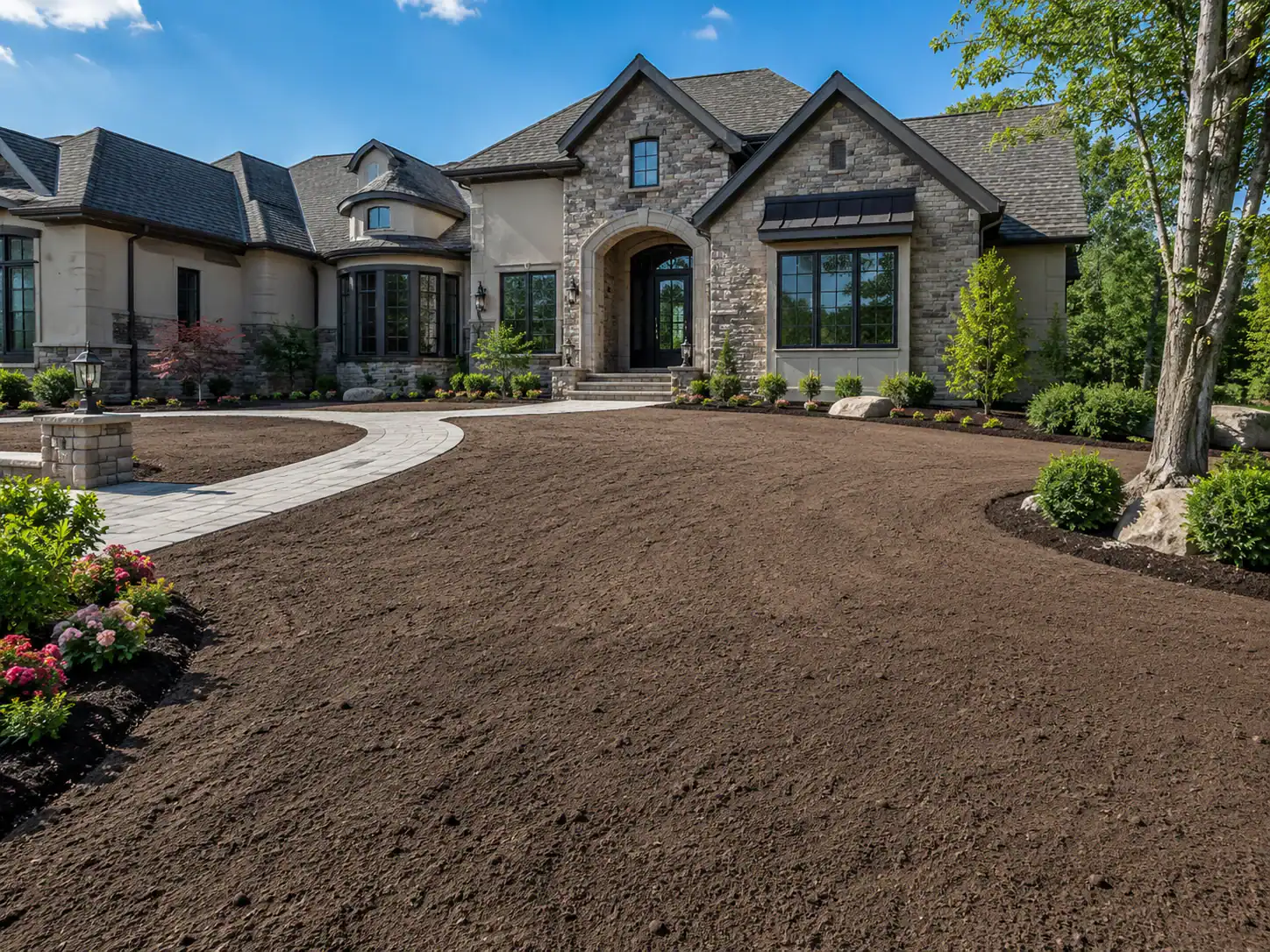
Once the diagnosis is clear, we build the restoration program around what your specific lawn actually needs. That typically involves core aeration to break up compaction, soil amendment to correct pH and organic matter levels, and slice seeding a mechanical process that cuts grooves directly into the soil and places seed at the right depth for reliable germination. Broadcast spreading seed on top of compacted or thatch-covered ground is one of the main reasons DIY overseeding fails. Slice seeding eliminates that problem.
Timing matters more than most homeowners realize. The optimal window for lawn restoration on Long Island is early September through mid-October. Soil temperatures are still warm enough for germination, the air has cooled down from summer stress levels, and fall rains typically support establishment without irrigation dependency. If you’re calling in August when the lawn looks its worst, the honest answer is that the execution window is about four to six weeks away and that’s worth waiting for.
Ready to get started?
Brown patches, bare spots, thin turf that weeds take over every spring these are symptoms. The causes behind them in St. James lawns are usually one or more of the following: soil compaction from decades of use, thatch buildup blocking water penetration, pH imbalance preventing nutrient uptake, grub damage from Japanese beetle or European chafer larvae, or summer disease pressure like brown patch and dollar spot that hits fescue and bluegrass lawns hard during Long Island’s humid August conditions. A restoration program that doesn’t identify which of these is driving the decline will produce temporary results at best.
Our restoration work covers the full process: soil testing, core aeration, targeted soil amendment, slice seeding with appropriate cool-season seed varieties for the North Shore’s climate, starter fertilization, and follow-up assessment to confirm establishment. Every step is compliant with Suffolk County’s fertilizer and pesticide regulations including the phosphorus restrictions on established turf and the pre-notification requirements before any commercial application.
It’s also worth being clear about what restoration is not. Restoration means bringing your existing lawn back to health working with the turf that’s there, correcting the soil, and filling in what’s been lost. If your lawn has deteriorated to the point where less than 40–50% of the turf is viable, a full renovation may be the more cost-effective path. We’ll tell you that honestly after the assessment, and if a full rebuild is what’s needed, that service is available as well. The goal is always to give you the right answer, not the more expensive one.
Restoration and renovation are two different services that solve two different problems, and mixing them up can cost you real money. Restoration means your existing lawn still has enough viable turf to work with the grass is there, but it’s thin, stressed, compacted, or damaged, and the right interventions can bring it back. Renovation means the lawn is beyond saving in its current state and needs to be rebuilt: existing vegetation killed off, soil reworked, and new seed or sod established from scratch.
For most St. James homeowners with established lawns in the older neighborhoods off Lake Avenue or throughout St. James East, restoration is the right starting point. These are mature lawns with root systems and soil history they don’t need to be torn out. They need to be diagnosed and treated correctly. The assessment we conduct at the start of every engagement is specifically designed to determine which path is appropriate for your property, so you’re not paying for a renovation when restoration will do the job.
In most cases, yes a damaged or declining lawn in St. James can be restored without starting over. The threshold that matters is turf coverage: if 40–50% or more of your lawn still has living grass, restoration is typically the better option. Below that threshold, the economics shift toward renovation because you’re spending restoration money on a lawn that doesn’t have enough viable turf to fill back in effectively.
The honest answer is that you won’t know for certain until someone walks the property and assesses it properly. What looks like a dead lawn in August on Long Island is often a dormant or heat-stressed one cool-season fescue and bluegrass go through visible decline during the summer stress period and can recover significantly once temperatures drop and the fall growing window opens. That’s one of the most common misreads homeowners make, and it’s exactly why the diagnostic step matters before any treatment decision is made.
If the restoration program is executed during the optimal fall window early September through mid-October you can expect to see germination within 10 to 21 days for most cool-season grass varieties used on Long Island. Meaningful turf coverage typically develops over four to eight weeks following seeding, with the most visible improvement appearing by late October into early November before the lawn goes dormant for winter.
The following spring is usually when the full picture becomes clear. A properly restored lawn that went through a fall program will break dormancy with noticeably denser, more even turf than the previous year. Some bare patches in heavily compacted or shaded areas may need a second-pass treatment in the following fall cycle. We’ll walk you through realistic expectations for your specific property during the assessment not a generic timeline, but one based on your lawn’s actual condition and the specific issues driving its decline.
Lawn restoration in Suffolk County typically ranges from around $500 on the lower end for a smaller property with targeted bare patch repair, up to $1,500 to $2,000 or more for a larger lot requiring full aeration, soil amendment, and slice seeding across the entire lawn. The primary factors that drive cost are lawn size, the extent of the damage, whether soil testing and amendment are needed, and how many passes of slice seeding are required to achieve adequate coverage.
For St. James properties where lots in established neighborhoods often run a quarter to a half acre most comprehensive restoration programs fall somewhere in the middle of that range. The assessment visit is where you’ll get a specific number based on your actual lawn, not a ballpark estimate over the phone. One thing worth keeping in mind: in a market where the median home value is above $650,000, the cost of a professional restoration program is a fraction of the property value it protects. Deferring it usually means a more expensive fix down the road.
This is one of the most common frustrations homeowners bring to us, and the answer is almost always the same: the seed never made proper soil contact. Broadcast spreading grass seed on top of an existing lawn even a thin or damaged one puts seed on top of thatch, dead material, and compacted soil. Without direct contact with loose, moist soil at the right depth, germination rates drop dramatically. You get spotty results at best, and the bare patches come back within a season.
The other common issue is timing. Seeding in late spring or summer on Long Island means the new grass is immediately hit with heat stress before it’s had time to establish any root depth. Cool-season grasses planted in that window often germinate weakly and die before fall. Slice seeding combined with proper fall timing resolves both problems the mechanical process ensures seed-to-soil contact, and the September–October window gives new turf the temperature and moisture conditions it needs to establish before winter dormancy.
Yes and in St. James specifically, grub damage and summer disease are two of the more common underlying causes of lawn decline that get misidentified as general thinning or drought stress. Japanese beetle and European chafer grubs feed on grass roots through late summer, and the damage often doesn’t become fully visible until September or October when the turf pulls back and reveals the dead root zones underneath. By that point, homeowners sometimes assume the lawn just had a bad summer. The actual cause was below the surface the whole time.
Brown patch and dollar spot fungus are also active on Long Island fescue and bluegrass lawns during the humid stretch of July and August, particularly when irrigation is running in the evening. Both conditions create visible patches that look similar to drought stress or compaction damage on the surface. Our diagnostic process includes identifying active or prior disease and pest pressure before any restoration work begins, so the treatment plan actually addresses what happened not just what it looks like.
Useful Links
Other Services we provide in St. James