
Hear from Our Customers
Most homeowners in St. James aren’t dealing with a lawn that’s completely gone they’re dealing with one that just never quite gets there. It greens up in spring, struggles through summer, and by fall it’s patchy again. That cycle usually comes down to one thing: the program wasn’t built for your lawn.
St. James sits on the North Shore’s glacial moraine soils heavier, slower to drain, and slower to warm in spring than the sandy soils you’ll find on the South Shore. That matters because a fertilization schedule that works in Medford or Bayport can actually do more harm than good here if the timing is off. North Shore soils typically warm 7 to 14 days later in spring, which means applications need to be timed to your soil, not a generic calendar date.
The homes in St. James were mostly built in the 1950s and 1970s. That’s a lawn with decades of compaction, thatch, and nutrient depletion underneath it. When those underlying issues get addressed real aeration, the right fertilizer at the right time, and a program that accounts for your specific soil the difference is visible within a season. A denser lawn, better color, fewer weeds competing for space, and turf that actually holds up through summer instead of thinning out when the heat hits.
We’ve been serving St. James and the surrounding North Shore communities since 1987. That’s not a marketing line it means we’ve been working in and around St. James longer than most of the area’s current homeowners have lived here. We know the North Shore. We know the heavier soils, the oak-shaded lots, the late springs, and the specific window Suffolk County gives you to fertilize before the November 1st blackout kicks in.
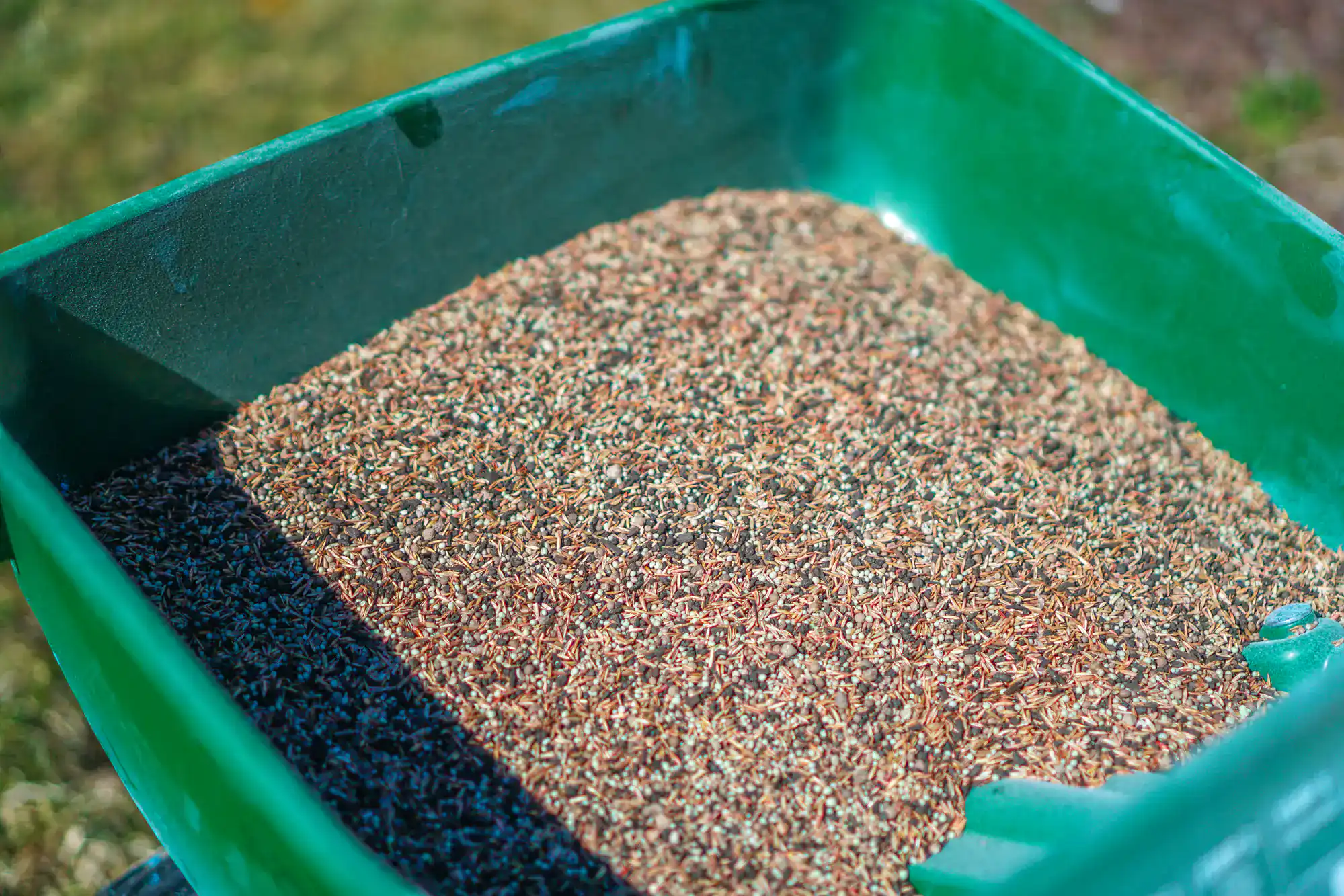
Every visit is handled by a licensed pesticide professional not a seasonal hire who’s new to the truck. The fertilizer we use isn’t pulled off a distributor’s shelf either. It’s custom-blended specifically for Lawn Master, formulated for Long Island’s soil conditions rather than some national average. That’s a level of investment in quality that most companies in this area simply don’t make.
From the neighborhoods near Head of the Harbor to the established streets closer to Route 25A, we’ve built programs for the full range of what St. James lawns look like and what they actually need.
It starts with an assessment of your lawn not a quick walk-by, but a real look at what’s going on. Soil condition, thatch depth, shade coverage, drainage, and any problem areas that need targeted attention. For older properties in St. James, that often means identifying compaction that’s been building for decades and turf that’s been thinning out because water and nutrients can’t reach the root zone effectively.
From there, we build a program around your lawn specifically. The fertilizer applications are timed to North Shore soil temperatures not a generic Long Island schedule. That matters more than most people realize. Suffolk County law also prohibits any fertilization between November 1st and April 1st, so the fall window is critical. The best time to fertilize for root development and winter hardiness is early September, and that window needs to be used correctly. Every application we make is handled by a licensed professional who knows the county’s regulations and follows them including the 48-hour neighbor notification requirement for spray applications.
If your lawn needs more than fertilization aeration, overseeding, or a full restoration we layer that into the program. The hydraulic aerators we use pull deeper plugs than the tow-behind equipment most companies bring, which means better results from every application that follows.
Ready to get started?
The fertilizer we apply is custom-blended made specifically for us, calibrated to Long Island’s soil chemistry. It’s not the same product every national chain uses, and that distinction matters when you’re dealing with the heavier, clay-influenced soils common throughout St. James and the adjacent villages of Head of the Harbor and Nissequogue. A generic granular program off a distributor’s shelf wasn’t formulated with your soil in mind. This one was.
Beyond fertilization, the program addresses what typically comes with it in St. James: crabgrass pre-emergent timed to actual soil temperatures, broadleaf weed control, and targeted treatment for tougher problems like nutsedge and bentgrass two of the most stubborn issues in North Shore lawns that most companies don’t have an effective answer for. Grub prevention is also part of the picture, especially relevant for the established lawns on older St. James properties where grub damage can go undetected until a section of turf lifts clean off the ground.
If your lawn needs aeration and overseeding, the ideal window on Long Island is mid-August through late September. We run hydraulic aerators and seeders commercial-grade equipment that delivers meaningfully better results than what smaller operators bring. And if the lawn is beyond a seasonal program, we offer full restoration and new lawn installation from seed. One company, start to finish.
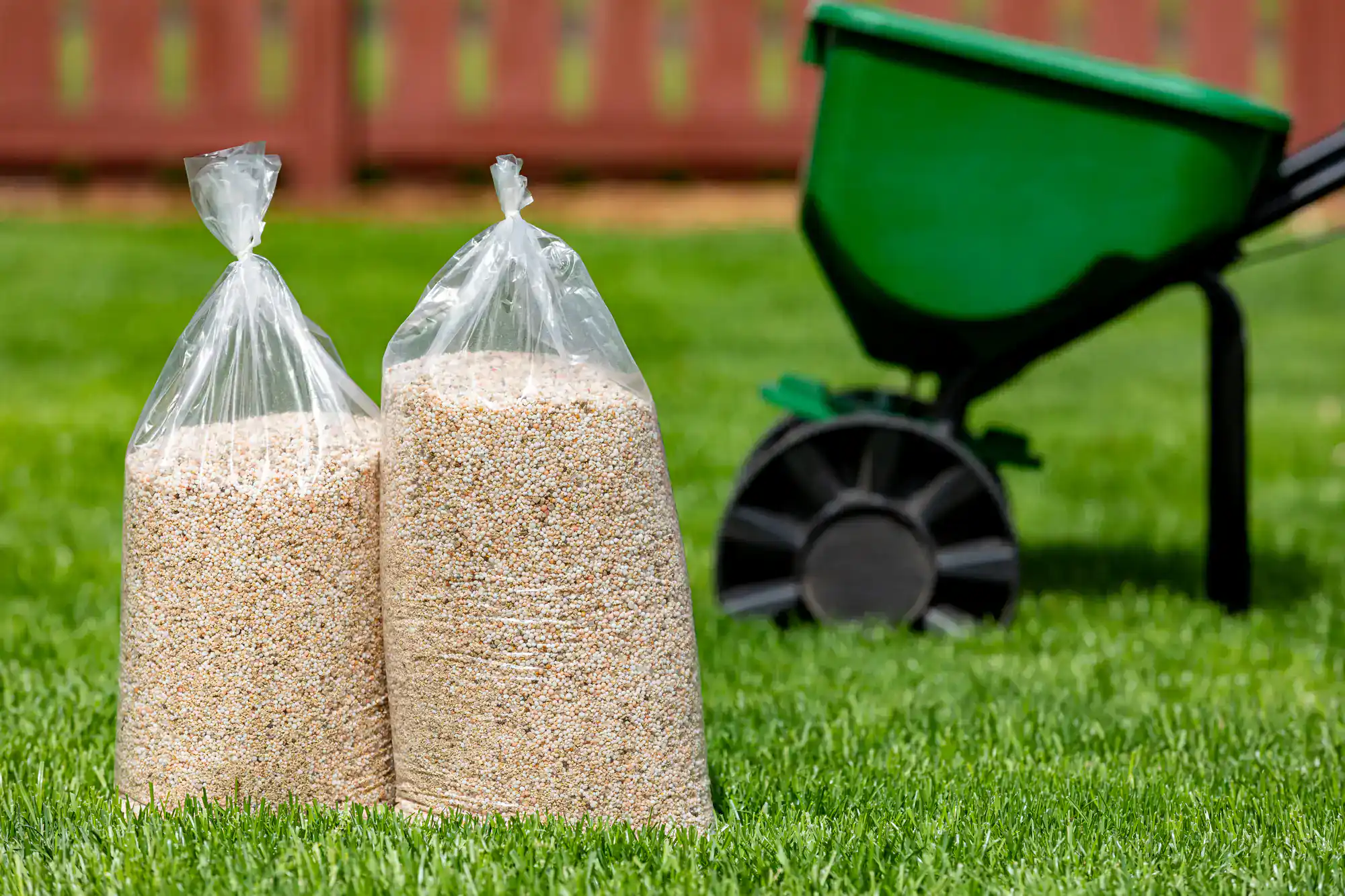
Timing is one of the most misunderstood parts of lawn fertilization on the North Shore, and getting it wrong can set your lawn back rather than move it forward. St. James sits on glacial moraine soils that warm significantly later in spring than the sandy soils on Long Island’s South Shore often by 7 to 14 days. That means a fertilization schedule based on a generic April date may be going down before the turf is actually ready to use it.
The most important window for North Shore lawns is fall. An early September application gives cool-season grasses the fuel they need to build root reserves before going dormant, which directly affects how the lawn comes back in spring. On the other end, Suffolk County law prohibits fertilization between November 1st and April 1st violations carry a fine of up to $1,000. A properly timed program works within that window and makes every application count.
The soil is the main difference, and it affects almost everything about how a fertilization program should be structured. South Shore communities like Bayport or Blue Point sit on sandy, fast-draining soils that warm quickly and respond fast to fertilizer inputs. St. James and the broader North Shore sit on heavier glacial moraine deposits more clay content, slower drainage, and a root environment that behaves differently across every season.
Heavier soils compact more easily, which reduces the soil’s ability to absorb water and nutrients even when the right fertilizer is applied at the right time. That’s why aeration is particularly important for established North Shore lawns it opens up the soil so the fertilizer actually reaches the root zone. It’s also why the fertilizer formula matters. A product designed for sandy South Shore conditions won’t perform the same way in the denser soils you’ll find throughout St. James, Head of the Harbor, and Nissequogue.
No. Suffolk County prohibits lawn fertilization between November 1st and April 1st, and the fine for a violation is up to $1,000. The restriction exists to protect Long Island’s groundwater which is the primary drinking water source for the entire region from nutrient runoff during the months when turf is dormant and can’t absorb what’s being applied.
This is one of the clearest reasons to work with a licensed professional rather than a company that cuts corners. A licensed applicator knows this calendar and builds your program around it. That means your fall application goes down at the right time early September is generally the target so the turf can actually use it before dormancy sets in. Any company that offers to fertilize your St. James lawn in December or March is either unaware of the law or ignoring it, and either way that’s not someone you want working on your property.
The honest answer is that most established lawns in St. James need both and usually in a specific order. Fertilization feeds the grass, but if the soil underneath is compacted, the nutrients have a hard time getting where they need to go. Water pools on the surface, roots stay shallow, and the lawn stays thin no matter how many applications you put down. That’s a compaction problem, not a fertilization problem.
For homes built in the 1950s and 1970s which covers a large portion of St. James’s housing stock the soil has had decades to compact under foot traffic, mowing, and general use. Core aeration pulls plugs out of the soil and opens channels for air, water, and fertilizer to penetrate the root zone. When aeration and overseeding are done in the right window (mid-August through late September on Long Island), followed by a well-timed fall fertilization, the improvement is usually significant within a single season. If you’re not sure what your lawn actually needs, a proper assessment before the program starts will tell you.
This is one of the most common complaints from homeowners in St. James, and it almost always comes down to the same few causes. The lawns throughout St. James are predominantly cool-season grasses Kentucky bluegrass, fescue, and ryegrass blends that thrive in the 60–75°F range and naturally slow down when summer heat arrives. That’s normal. But a lawn that thins out dramatically or develops dead patches during summer heat is usually dealing with something beyond normal dormancy.
Compacted soil is a major factor it reduces moisture retention, which means the root system dries out faster during hot stretches. Shallow root development from poorly timed or improperly formulated fertilization is another. And in the shadier parts of St. James particularly on lots with mature oak canopy, which is common throughout the North Shore reduced sunlight limits the turf’s ability to recover from summer stress. A program that addresses root depth in fall, uses the right fertilizer formula for your soil, and includes targeted treatment for any underlying issues will produce a lawn that holds up through summer rather than retreating every year.
Licensing is the first thing to check. Under New York State law, any company applying pesticides for hire must employ NYSDEC-certified commercial applicators. That certification requires passing both a core exam and a category-specific exam, with ongoing continuing education to maintain it. It’s not just a formality it’s the difference between a professional who understands Suffolk County’s fertilizer blackout, the neighbor notification requirements for spray applications, and the phosphorus restrictions that apply countywide, versus someone who doesn’t know those rules exist.
Beyond licensing, look for a company that actually assesses your lawn before proposing a program. St. James lawns vary significantly a shaded property near Head of the Harbor has different needs than a sun-exposed lot along Route 347, and a lawn on a home built in 1958 has different baseline conditions than one on a newer build. A company that offers the same five-step program to every customer regardless of what’s actually going on isn’t doing lawn care they’re doing lawn maintenance on autopilot. Local experience matters too. A company that has been working in Suffolk County for decades understands the North Shore’s soil, the seasonal timing, and what actually produces lasting results here.
Useful Links
Other Services we provide in St. James