
Hear from Our Customers
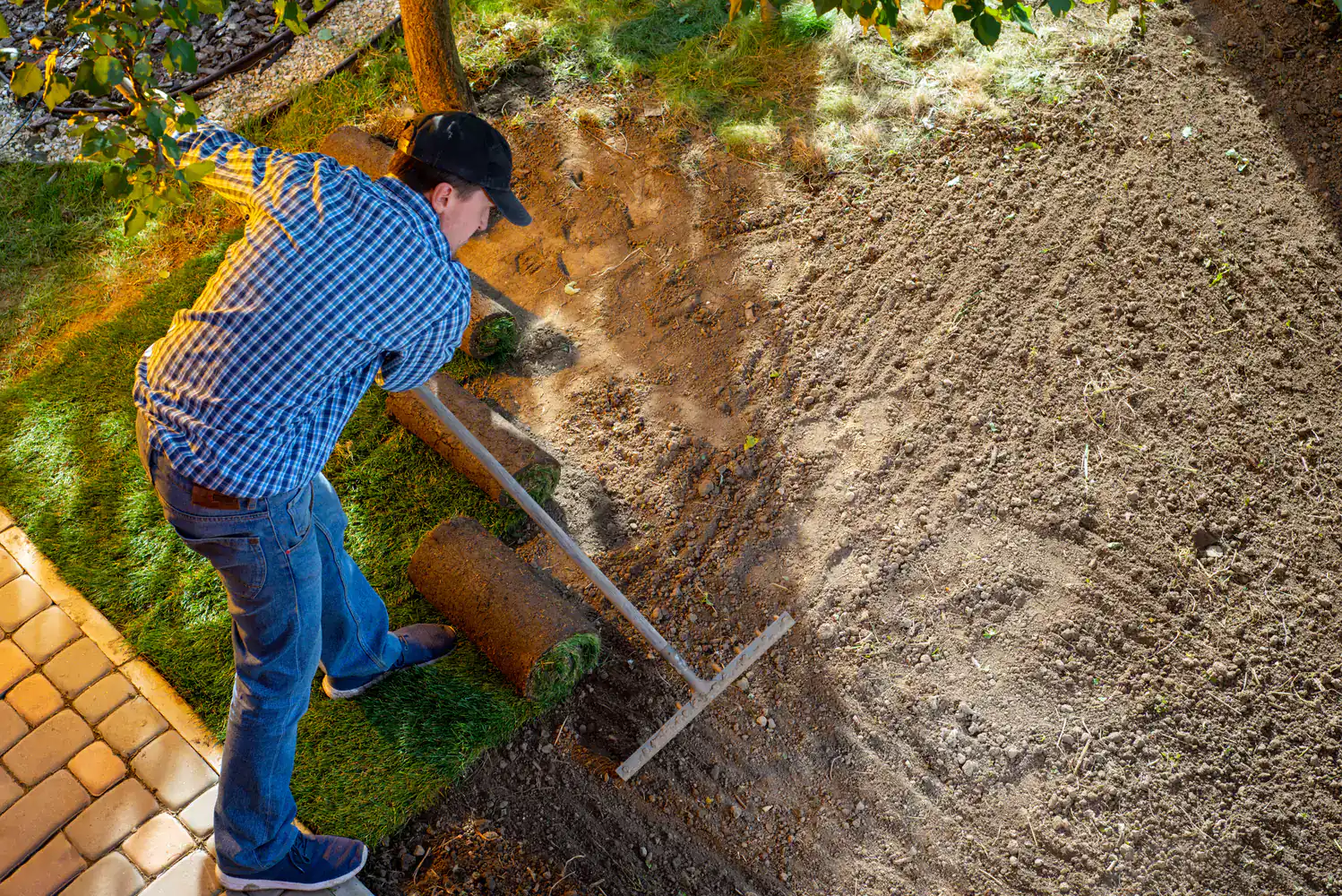
When you’re standing in front of bare ground after a renovation, a pool install, or a full tear-out, the gap between where you are and where you want to be can feel significant. The good news is that gap is entirely fixable if the installation is done correctly from the start.
A properly installed lawn doesn’t just look better. It holds. St. James properties, especially those built in the 1950s and 1970s, often sit on soil that has been compacted for decades, shaded by mature oaks and maples, and drained inconsistently due to the North Shore’s glacial terrain. That combination demands more than seed on bare ground it demands a process that starts with understanding what’s underneath before anything goes down on top.
When the work is done right, you end up with a lawn that establishes cleanly, survives its first Long Island summer, and stays dense through fall. In a neighborhood where homes are selling above $700,000 and the street-level standard is high, that matters. A finished lawn isn’t a luxury it’s the last step in a project you’ve already invested heavily in, and it deserves the same level of care as everything else.
We’re based in Port Jefferson Station, roughly 10 miles east of St. James along Route 25A the same road that runs through the heart of the St. James historic district. We’re not a general landscaping company that adds lawn installation to a service list. Installation and renovation is what we do, and it’s all we’ve done for 38 years across Suffolk County’s North Shore.
That tenure means something here specifically. We’ve worked in the sandy loam soil that drains fast under summer heat. We’ve dealt with the root competition from mature tree canopy along established residential corridors throughout St. James. We’ve handled post-construction bare ground in Nissequogue, renovations on aging lots near the Smithtown Central School District neighborhoods, and everything in between. The terrain in this part of Long Island is not forgiving to shortcuts, and we don’t take any.
When you call us, you’re talking to a team that has seen your exact situation before probably hundreds of times and knows how to handle it.
Every installation starts with a site assessment, not a seed spreader. Before anything goes down, we look at what we’re working with soil condition, compaction level, drainage patterns, grade, existing debris, and how much topsoil is actually present. On a St. James property where construction equipment has been through, or where a 60-year-old lawn has simply given out, that assessment often reveals issues that would cause a new lawn to fail if left unaddressed.
From there, we handle the ground preparation grading where needed, amending the soil with organic matter to improve water retention in the sandy loam that’s common across the North Shore, and bringing in clean topsoil to the correct depth. This step is where most installations fail when they’re done wrong. Skipping it is the reason lawns don’t establish.
Once the ground is ready, we select the right cool-season grass variety for your specific site accounting for sun exposure, shade from your tree canopy, and how much traffic the lawn will see. For standard residential lots, seed-based installation is typically the right call. For larger properties in the adjacent Nissequogue or Head of the Harbor areas, seeding is often the more practical and cost-effective approach. Timing matters here too the optimal window for new lawn installation on Long Island’s North Shore is late August through October, when soil temperatures support germination and the summer heat stress is behind you. We schedule your project to hit that window correctly, not whenever it’s convenient for a maintenance route.
Ready to get started?
Not every St. James property needs the same approach, and we’ll tell you that upfront. Sod gives you an instant finished surface and works well on smaller areas where immediate visual impact matters after a front yard renovation, for example, or on a high-visibility section of the property. It’s also the right call when erosion is a concern on a sloped area before root systems can establish.
Seed-based installation is the better long-term investment for most properties. Done correctly with proper soil preparation, the right variety selection for North Shore conditions, and appropriate timing, a seeded lawn establishes a deeper root system than sod and performs better through Long Island’s summer heat cycles. For the aging housing stock that defines St. James properties that have been through decades of compaction, thatch, and neglect a full tear-out followed by a properly executed seed installation is usually the right answer. Seeding is the most efficient method for large lawn areas, including the estate-scale lots found in Nissequogue and Head of the Harbor, where sod costs become prohibitive and coverage needs to be uniform across significant square footage.
Every installation we do includes soil preparation, correct topsoil depth, grade correction where needed, and a seed or installation method matched to your site. New York State’s phosphorus fertilizer restrictions apply to all new lawn installations, and our process follows those regulations phosphorus is only applied where a soil test documents a genuine deficiency. That’s not just compliance; it’s the right way to build a lawn that lasts.
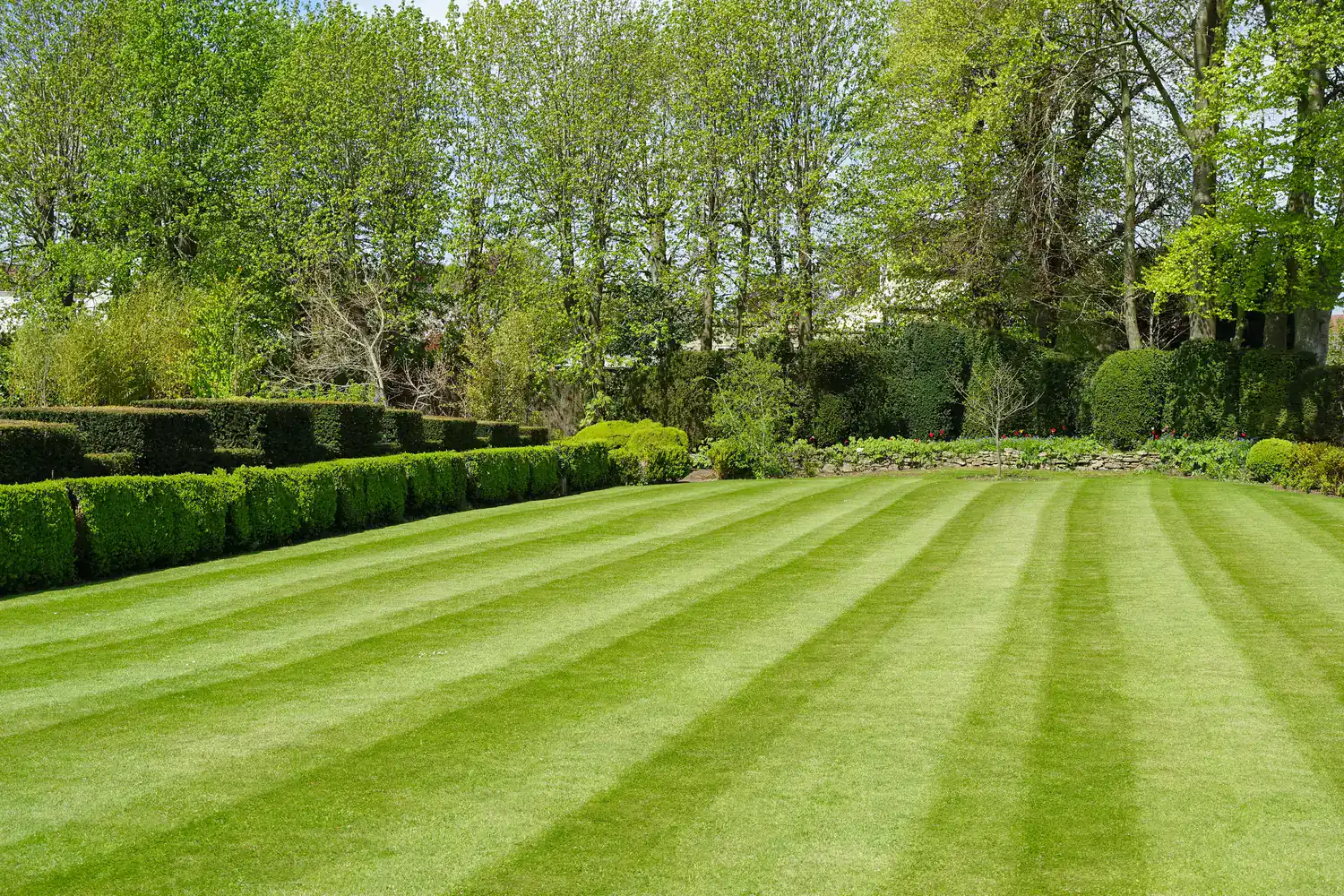
The best window for new lawn installation on Long Island’s North Shore including St. James is late August through October. Cool-season grasses, which are the standard for this climate, germinate best when soil temperatures are still warm from summer but air temperatures are dropping. That combination means faster germination, less heat stress on young grass, and lower weed competition than you’d face with a spring installation.
Spring seeding is possible, but it comes with real trade-offs. Weed pressure is significantly higher in spring, and a lawn seeded in April or May has to survive its first Long Island summer before it’s fully established which is a tough ask in a dry year. If you’re planning a new installation in St. James and have any flexibility on timing, fall is the window to target. We schedule projects to hit that window correctly, which is one of the reasons our installations establish the way they do.
The honest answer is that it depends on the scope of the project and scope varies significantly in St. James. A standard residential lot with moderate soil prep needs, clean grading, and a seed-based installation typically runs in the range of $4,000 to $10,000. Projects that require significant grading, heavy topsoil work, buried construction debris removal, or sod on larger areas can run higher $10,000 to $15,000 or more depending on the square footage and site conditions.
For estate-scale properties in Nissequogue or Head of the Harbor, where lawn areas can be an acre or more, seeding is usually the most cost-effective path, and pricing scales accordingly. What we can tell you is that the cost of a correctly done installation is always less than the cost of a failed one that has to be redone. We give clear, detailed quotes before any work starts no vague estimates, no surprise additions after the fact.
For most St. James properties, a properly executed seed-based installation is the better long-term choice. Seeded lawns develop deeper root systems, adapt more naturally to the specific soil conditions on your site, and tend to perform better through Long Island’s summer heat cycles once they’re established. The trade-off is time a seeded lawn takes a full growing season to reach maturity, whereas sod gives you an immediately finished surface.
Sod makes the most sense when you need instant coverage on a high-visibility area, when erosion on a sloped section is a concern before roots can establish, or when you’re working with a smaller, defined area where the cost difference is manageable. On larger properties particularly the estate lots in adjacent Nissequogue sod becomes cost-prohibitive quickly, and seeding is almost always the more practical answer. We’ll give you an honest recommendation based on your specific site, not based on which method is easier for us to install.
This is one of the most common scenarios we handle in St. James, and it requires a specific approach. When construction equipment has been through a property for a pool, an addition, a full exterior renovation the ground left behind typically has three problems: compaction from heavy machinery, stripped or buried topsoil, and often debris mixed into the soil that needs to come out before anything else happens.
The first step is always a thorough site assessment to understand what we’re actually working with. From there, we address compaction through mechanical means, remove debris, correct the grade if drainage has been disrupted, and bring in clean topsoil to the correct depth typically four to six inches minimum for a lawn that will establish and hold. Only after the ground is properly prepared do we talk about seed selection and installation method. Skipping the prep work is the single biggest reason post-construction lawn installations fail, and it’s the step most generalist contractors underestimate or skip entirely.
It’s a real factor, and it affects both what you plant and how you manage the installation. St. James has significant mature tree cover oaks, maples, and other established hardwoods are common across the older residential neighborhoods along and near Route 25A. Shade from that canopy reduces the amount of sunlight reaching the lawn, which means standard sun-loving grass varieties will struggle or fail in those areas.
The solution is variety selection shade-tolerant grass blends that are specifically suited to the lower light conditions under a mature canopy. We also account for root competition, which affects soil moisture and nutrient availability in ways that aren’t always obvious at the surface. Additionally, if your installation is happening in late September or October, leaf fall from that same canopy can smother newly seeded areas if it’s not managed something we factor into the post-installation guidance we give every client. This is the kind of site-specific detail that matters on a North Shore property and that a generalist lawn company is unlikely to address proactively.
For a fall installation which is the optimal timing for St. James and the North Shore you’ll typically see germination within 10 to 21 days depending on the grass variety and soil temperature at the time of seeding. By the end of the first fall, the lawn will have a visible, established surface. However, “established” and “fully mature” are different things. A seeded lawn reaches full density and root depth after one complete growing cycle meaning by the following fall, roughly 12 months after installation, you have a lawn that is genuinely mature and durable.
During that first year, the lawn needs to be treated carefully limited foot traffic, consistent watering during dry stretches, and no aggressive mowing until the grass is at the right height. We walk every client through exactly what to expect at 30, 60, and 90 days, and what the lawn should look like going into its first winter and coming out of it in spring. The goal isn’t just to get grass growing it’s to get a lawn that holds up through Long Island’s full seasonal cycle and looks the way it should for years after installation.
Useful Links
Other Services we provide in St. James