
Hear from Our Customers
There’s a certain standard in Great River. The properties along Great River Road are well-kept. The grounds at Timber Point are maintained. And the Bayard Cutting Arboretum one of the finest Olmsted-designed landscapes on the East Coast sits right in the middle of it all. That context shapes what a well-maintained lawn looks like here, and it raises the bar for everyone on the block.
The problem most homeowners run into isn’t that they don’t care it’s that the company they hired didn’t. Skipped treatments. A different face every visit. A lawn that looked the same in October as it did in April, despite a full season of paid service. That’s not lawn care. That’s a billing cycle.
What changes when you have the right program behind your property is straightforward. Thin areas fill in. Weeds stop creeping back every summer. The lawn holds its color through the heat and bounces back in the fall. And because Great River’s soils are sandy and fast-draining the kind that leach nutrients before a generic fertilizer program can even do its job getting the formulation right from the start is what separates a lawn that improves from one that just gets maintained into mediocrity.
We’ve been treating lawns in Great River and throughout Suffolk County since 1987. That’s not a rounded number it’s a specific founding year that predates most of the companies currently competing for your business. While national franchises were still figuring out Long Island, we were already learning how South Shore soils behave, how the humidity off the Great South Bay affects turf through summer, and what it takes to keep a lawn looking sharp in a community that holds its properties to a real standard.
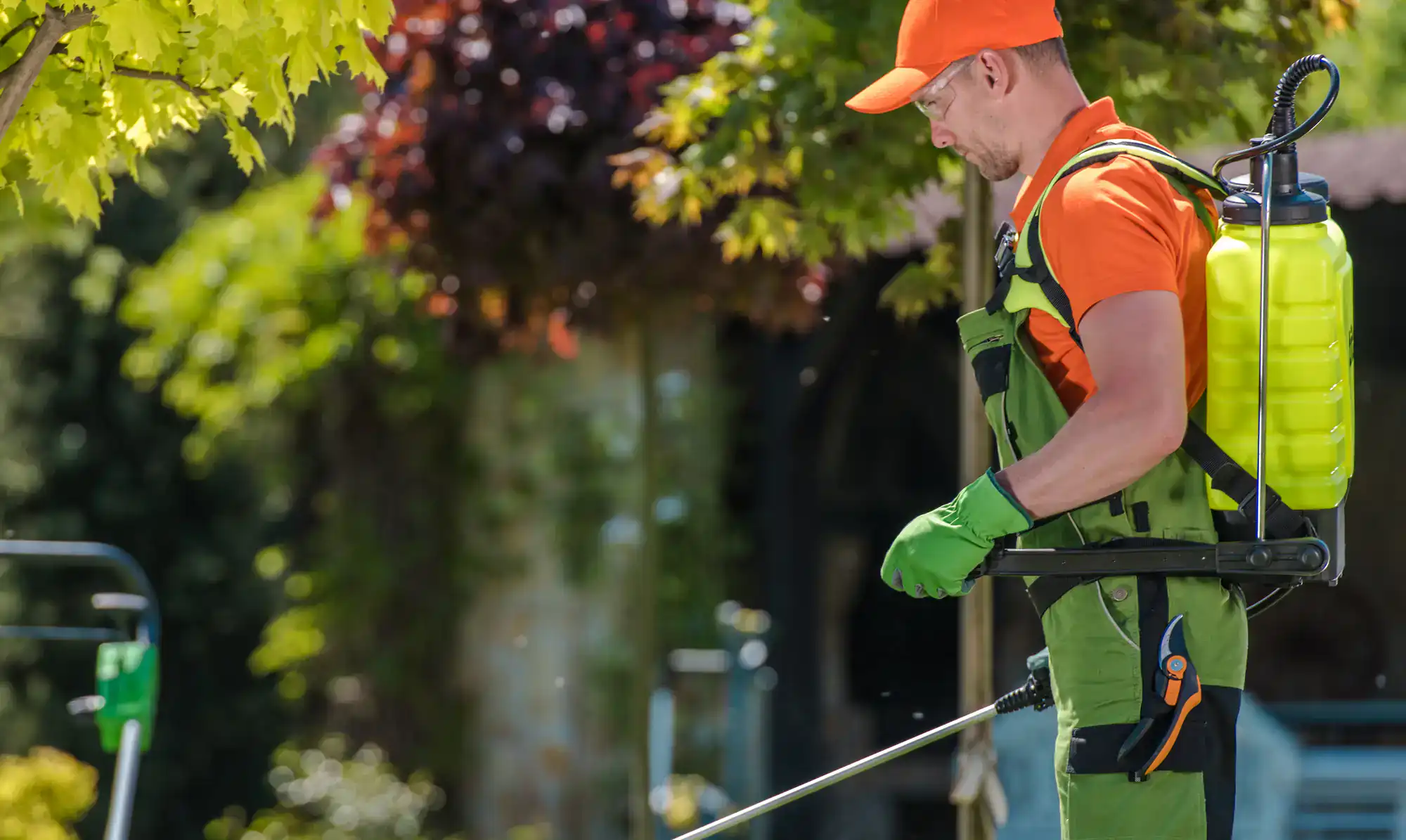
Every technician who shows up to your Great River property is a licensed NYS DEC pesticide professional not a seasonal hire with a spreader. The fertilizer we use on your lawn is a custom blend made specifically for our programs, formulated for the sandy, nutrient-leaching soils common throughout Great River and the surrounding Islip Town corridor. You won’t find that product at a hardware store or on a competitor’s truck.
Five fully wrapped trucks run throughout the South Shore. If you’ve seen them in East Islip or Oakdale, you already know what the operation looks like. That kind of visibility isn’t accidental it comes from doing work people notice.
It starts with understanding what your lawn is actually dealing with not just what it looks like from the curb. Great River properties near the Connetquot River and the bay come with their own set of considerations: buffer zone requirements, phosphorus restrictions, and the Suffolk County fertilizer blackout period that runs from November 1st through April 1st. We build a program around those factors from day one. That means the right products, applied at the right time, in the right locations on your property.
From there, the season is structured around your lawn’s specific needs not a one-size-fits-all schedule. Spring treatments focus on pre-emergent crabgrass control and the first fertilizer application of the year, timed carefully because sandy South Shore soils warm fast and the window closes earlier than most homeowners expect. Summer applications are calibrated to support the turf through heat stress without pushing growth that burns. Fall is the most important window of the year core aeration with hydraulic equipment that actually penetrates compacted soil, overseeding with proper seed-to-soil contact, and the primary fertilizer applications that set up next spring’s green-up.
The winterizer goes down before the November 1st blackout. That single application does more for root development and early spring recovery than almost anything else in the program. It doesn’t get skipped, and it doesn’t get rushed.
Ready to get started?
The fertilizer we apply isn’t pulled from a distributor’s standard pallet. It’s a proprietary blend formulated specifically for Long Island’s soil conditions the sandy, low-organic-matter profile that runs throughout Great River and the broader South Shore. That matters because generic fertilizer programs lose nitrogen to leaching before the turf can absorb it. The custom blend is calibrated to work with the ground beneath your lawn, not against it.
Weed control, grub prevention, and disease management are built into the program based on what your lawn actually needs. Japanese beetle grubs are a real and recurring pressure on South Shore properties an untreated infestation can gut a root system in late summer, right before the fall aeration and overseeding window. Catching that early is part of what a structured, season-long program does.
For lawns that are thin, weed-dominated, or coming off grub damage, we offer full restoration programs and new lawn installs from seed not just maintenance for lawns that are already in decent shape. Hydraulic aerators and professional-grade seeders handle the heavy lifting. If your lawn needs to be rebuilt, the equipment and the expertise to do it are already on the truck. And for Great River properties adjacent to the bay or the river, every application is managed with full awareness of Suffolk County’s buffer zone rules and environmental regulations because in this community, that’s not optional.
Great River sits directly on the Great South Bay and borders the Connetquot River, which puts it in one of the more environmentally regulated lawn care zones in all of Suffolk County. Suffolk County prohibits fertilizer applications between November 1st and April 1st, restricts phosphorus use unless a soil test confirms a deficiency, and requires a 20-foot buffer zone near water bodies and wetlands. For a Great River property especially one near the bay or the river those rules aren’t background details. They apply directly to how and when your lawn gets treated.
Beyond the regulatory side, the soils here are sandy and fast-draining, which means nutrients move through the ground faster than they do in areas with heavier soil. A program that works fine in a clay-heavy suburb somewhere else will underperform in Great River. The fertilizer formulation, the application timing, and the overall program structure all need to account for what’s actually under your lawn and that’s exactly what a properly designed South Shore program does.
A few things are easy to spot. If you’re walking across your lawn and the ground feels hard and compacted underfoot, water is likely pooling on the surface instead of soaking in and your roots aren’t getting the oxygen and nutrients they need. If you’re looking at thin or bare patches, especially in areas with heavy foot traffic or full sun exposure, those areas aren’t going to fill in on their own before winter. Fall is the only window where overseeding has a real chance to take hold, because cool-season grasses germinate best when soil temperatures drop into the 50s which happens here on the South Shore in September and October.
The other thing worth knowing is that aeration quality depends entirely on the equipment used. Lightweight drum aerators barely scratch the surface of compacted South Shore soil. We use hydraulic aerators that pull deep, consistent cores which is what actually relieves compaction and creates the seed-to-soil contact that makes overseeding work. If you’ve had aeration done before and didn’t see much improvement, the machine was likely the problem.
Yes, and it’s one of the most important scheduling factors in a South Shore lawn program. Suffolk County prohibits the application of lawn fertilizers between November 1st and April 1st. The regulation exists specifically to protect Long Island’s waterways including the Great South Bay and the Connetquot River from nitrogen runoff that contributes to algal blooms and marine ecosystem damage. Violations carry fines of up to $1,000 per application.
What this means practically is that the winterizer application the most critical single fertilizer treatment of the year for root development and spring green-up has to be completed before November 1st. A licensed professional schedules this automatically and doesn’t leave it to chance. If you’re working with a company that isn’t managing this timing carefully, or one that isn’t even aware of the blackout period, you’re not just risking a fine you’re missing the most important treatment window of the fall season entirely.
In New York State, any company applying pesticides commercially which includes herbicides for weed control, insecticides for grub and pest management, and fungicides for disease treatment is required by law to employ NYS DEC Commercial Pesticide Applicators. This is a state-issued credential that requires passing an examination, completing required training, and demonstrating knowledge of safe and legal application practices. It isn’t a formality it’s the difference between someone who actually knows what they’re applying and someone who’s guessing.
For a Great River homeowner, this matters beyond just the legal question. A licensed applicator understands buffer zone requirements near the bay and the river, knows which products are restricted near water bodies, and applies them at rates that are both effective and compliant. An unlicensed crew or a company where the license holder never actually visits the property doesn’t carry that knowledge onto your lawn. The homeowner bears the environmental and legal risk of that gap, and in a community like Great River, that’s not a risk worth taking.
Grub damage on Long Island’s South Shore follows a predictable pattern. Japanese beetle populations cycle through the region, and in active years, the larvae feed on grass roots through late summer often leaving behind patches of turf that peel back like a loose carpet because the root system underneath has been destroyed. The damage typically becomes visible in August and September, right when homeowners are thinking about fall aeration and overseeding.
The fix depends on how severe the damage is. Mild thinning with intact soil structure can often be addressed with aeration, overseeding, and a solid fall fertilizer program. More significant damage large bare areas, heavily disturbed soil may require a full restoration approach, including grading, seeding, and a structured program to rebuild the lawn from the ground up. The key is not skipping the grub control step in future seasons. A preventive application in late spring or early summer, timed to target larvae before they cause root damage, is far less disruptive and less expensive than repairing a lawn after the fact.
This is one of the most common frustrations among Great River homeowners who’ve been paying for lawn service and not seeing results. The honest answer is usually one of three things: the program wasn’t designed for your specific lawn, the fertilizer being applied wasn’t formulated for Long Island’s sandy soils, or the service was inconsistent enough that the cumulative effect never built up the way it should have.
Great River’s soils are fast-draining and low in organic matter. Nutrients leach through quickly, which means timing and formulation matter more here than in areas with heavier soils. A generic program applied on a national franchise schedule the same product, the same timing, the same approach used in a hundred other ZIP codes often produces thin, patchy results on South Shore properties because it was never calibrated for this ground. The other factor is compaction. Thin lawns in high-traffic areas or areas with clay subsoil beneath the sandy topsoil need real aeration not the kind a lightweight drum aerator provides before overseeding has any chance of producing the density you’re looking for. A program that addresses both the soil chemistry and the physical condition of the lawn is what actually turns the corner.
Useful Links
Other Services we provide in Great River