Hear from Our Customers
If you’ve paid for lawn care before and watched your yard stay thin, weedy, or patchy, the program was probably the problem not your lawn. Generic fertilizer applied on a generic schedule doesn’t account for the sandy, nutrient-leaching soils that run through Hauppauge and most of western Suffolk County. Nutrients wash through the root zone before your grass ever gets to use them. That’s why lawns here consistently underperform when they’re treated like they’re somewhere in the Midwest.
When the program is actually built for your soil and your turf, the difference shows up fast. Weeds stop filling in the thin spots. Grass thickens where it’s been struggling for years. Color holds through summer heat instead of fading by July. Hauppauge’s residential lots most of them built out in the 1950s through 1970s carry decades of compaction that blocks water, air, and nutrients from reaching roots. A program that accounts for that, with the right aeration equipment and the right fertilizer blend, produces results that a standard maintenance plan simply can’t.
We’ve been treating lawns in Hauppauge and across Suffolk County since 1987. That’s nearly four decades of working through Long Island’s drought years, grub cycles, and every regulatory change Suffolk County has put on the books including the fertilizer blackout period that runs November 1 through April 1 under Local Law 41-2007. We were here for all of it.
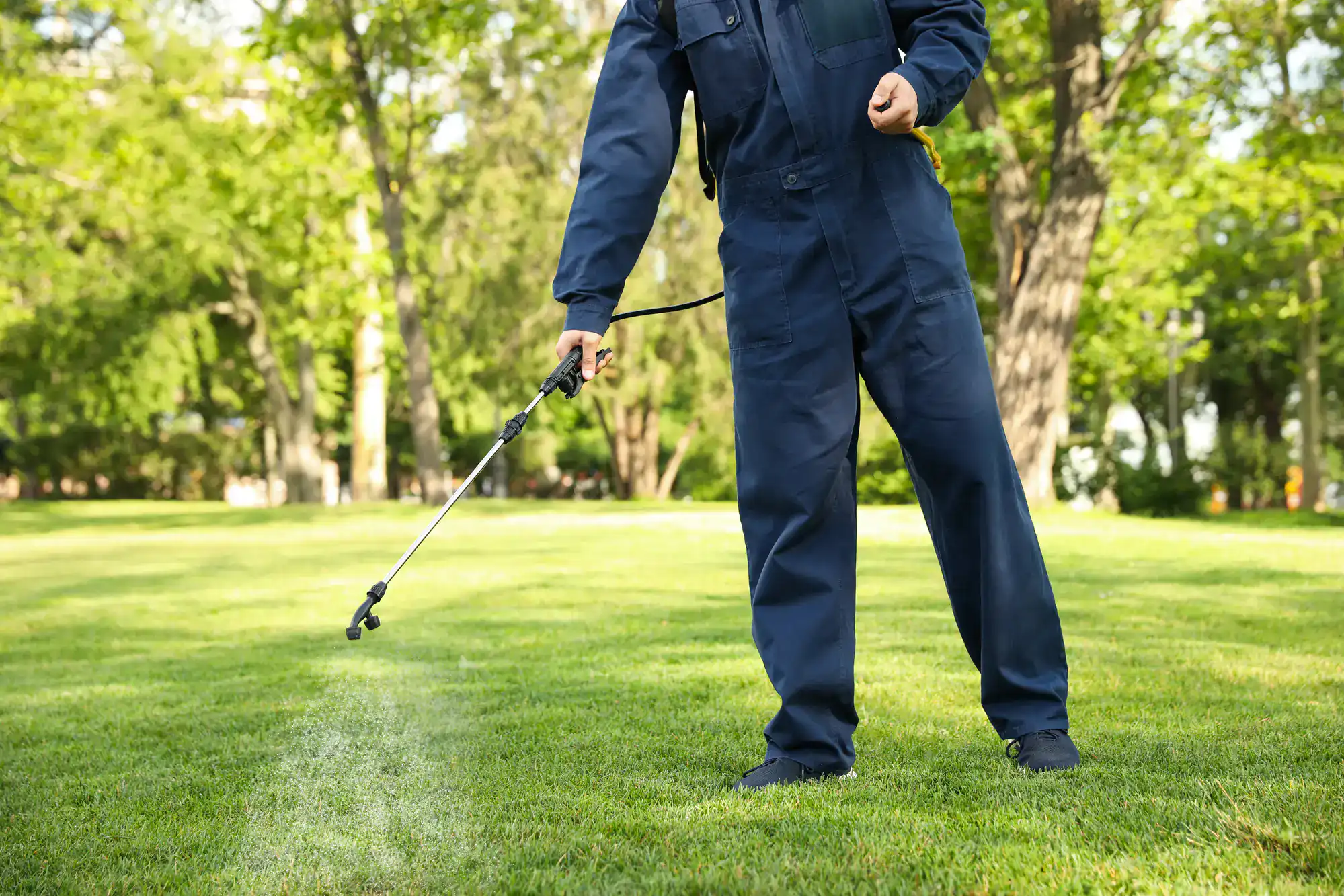
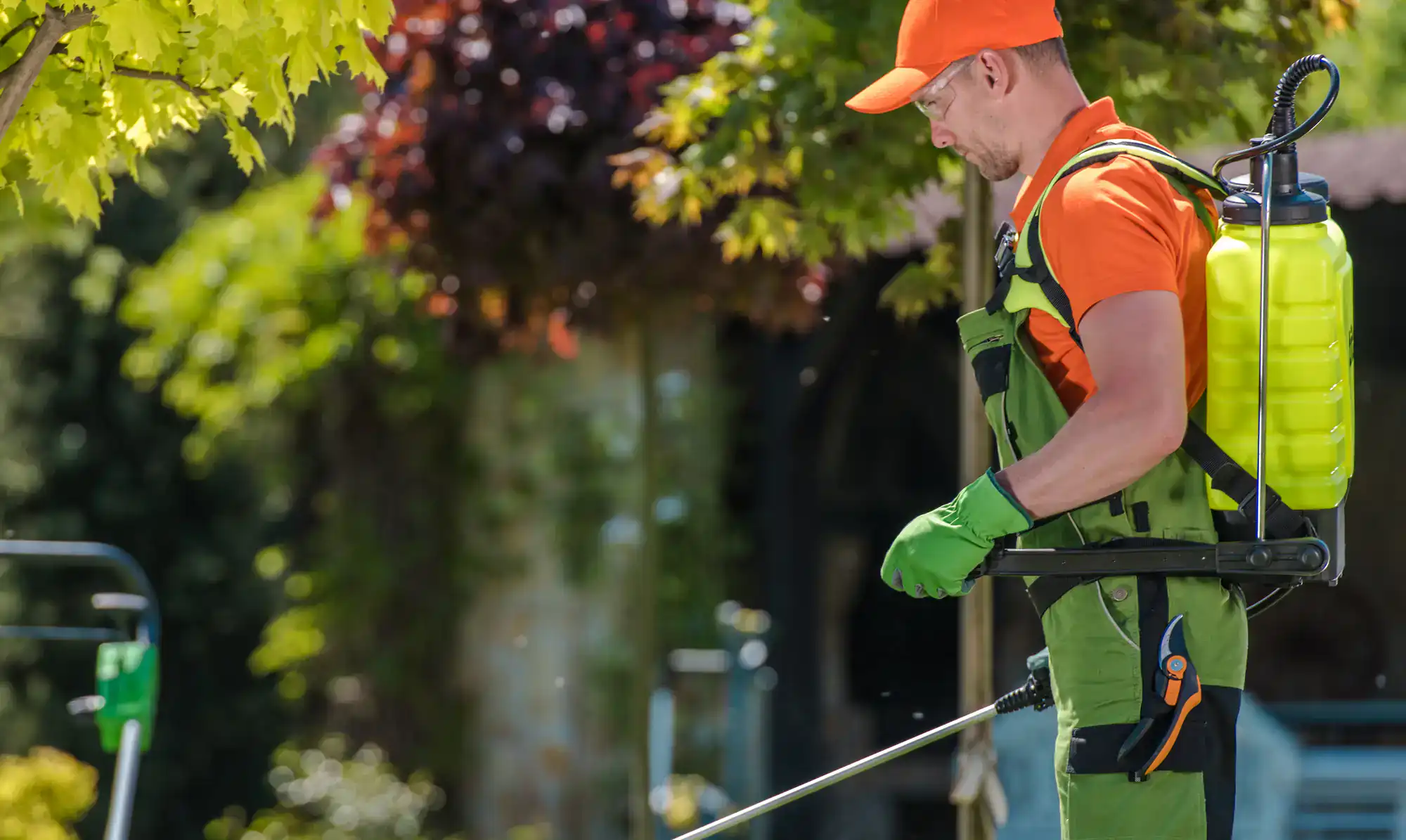
Our fleet of five fully wrapped trucks operates throughout Hauppauge and the surrounding residential neighborhoods near Blydenburgh County Park. Every technician who steps onto your property holds a valid NYS DEC Commercial Pesticide Applicator License not a crew supervised on paper by a certificate holder who never shows up. The person treating your lawn actually knows what they’re doing and why.
This isn’t a franchise. We’re a locally rooted operation that knows Hauppauge’s soils, its seasons, and what it actually takes to grow a healthy lawn here.
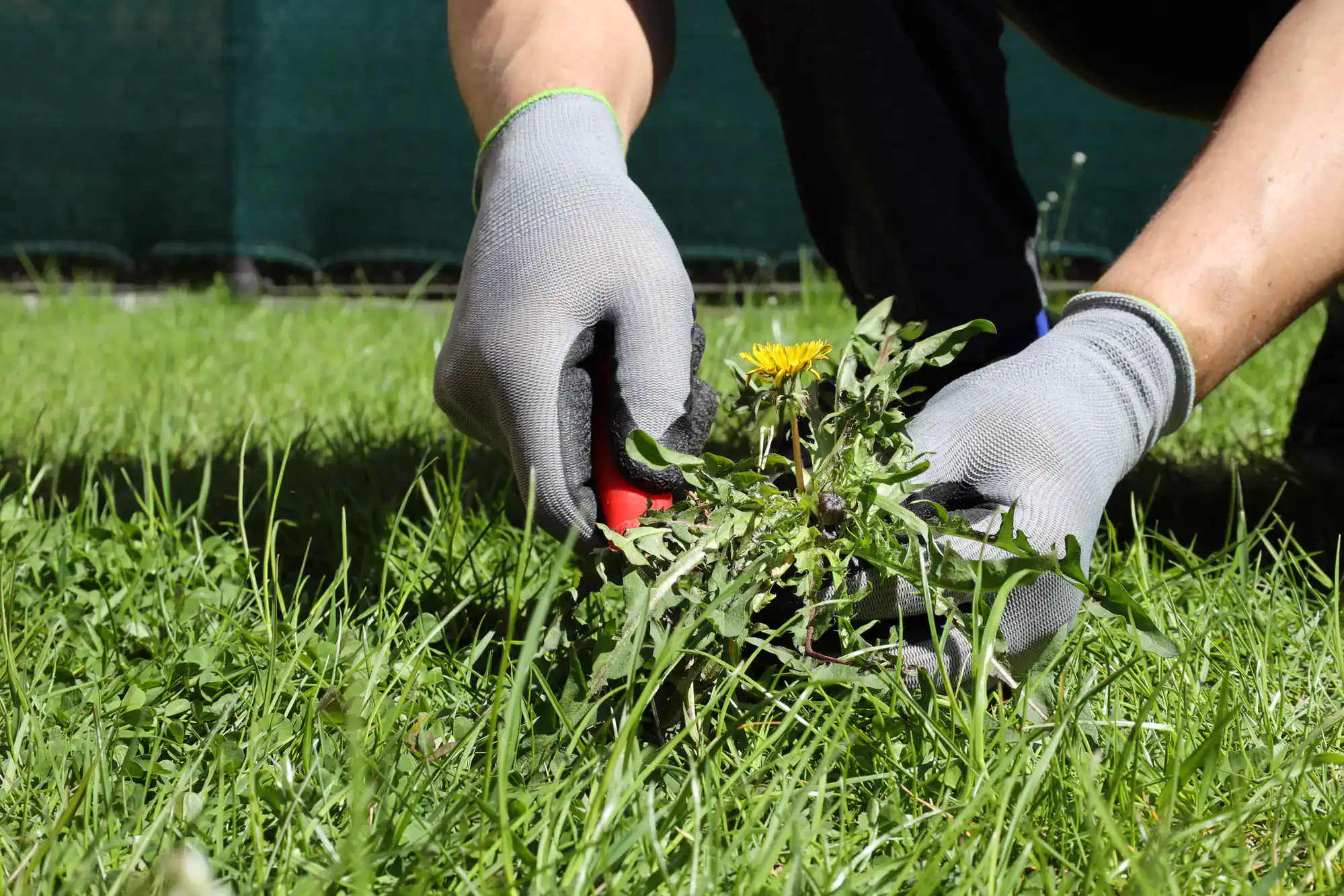
It starts with an assessment of your actual lawn not a glance from the truck, but a real look at what’s going on. Sun exposure, turf type, compaction zones, weed pressure, soil conditions, and any visible damage from grubs or disease all factor into what we recommend. Hauppauge’s sandy soils and older housing stock mean that what works on a newer lot in another part of Suffolk County may not be the right starting point here.
From there, your program is built around what your lawn specifically needs. If it’s a maintenance situation, the fertilizer schedule, weed control timing, and pre-emergent applications are set to match your turf’s growth windows spring green-up through May, and the critical fall window from late August through October when cool-season grass does most of its root work. If your lawn needs restoration, we address that directly: hydraulic aeration to break up compaction, overseeding with the right blend for Long Island conditions, and a fertilizer program that supports establishment rather than just maintenance.
Suffolk County’s November 1 blackout deadline shapes the late-season schedule for every Hauppauge property. The winterizer application the most important single treatment of the year for root development gets timed to land before that cutoff. Everything is managed for you. You don’t have to track the calendar or wonder if something was skipped.
Ready to get started?
Our fertilizer isn’t sourced off a national pallet. It’s a custom-blended formula made specifically for our programs and for Long Island’s soil conditions accounting for the nutrient leaching common in Hauppauge’s sandy soils and the pH variability that shows up across western Suffolk County. No other company in this market offers a proprietary blend. Most don’t even ask about your soil before they start applying.
Core programs include fertilization, weed control, pre-emergent crabgrass prevention, grub control, and pH management. For lawns that need more than maintenance, we offer full restoration programs hydraulic aeration, overseeding, and new lawn installs from seed for properties that are too far gone for a standard program to fix. If you’ve been told your lawn can’t be saved, it’s worth getting a second opinion from a company that has been restoring Hauppauge and Suffolk County lawns since 1987.
For homeowners near Blydenburgh County Park or adjacent to storm drains and drainage corridors, every application is managed in compliance with Suffolk County’s buffer zone requirements no fertilizer within 20 feet of water bodies or wetlands. New York State’s phosphorus restriction is also built into every program. These aren’t extras. They’re part of how a licensed professional operates, and they’re part of what you’re getting when you hire us.
Hauppauge sits on the same glacially deposited, sandy soils that run through most of western Suffolk County but the residential lots here carry a specific challenge that compounds the soil issue. Most of Hauppauge’s housing stock was built between the 1950s and 1970s, which means decades of compaction have built up under the surface. Foot traffic, vehicle overhang, and construction settling over 50-plus years press those sandy soils into a dense, root-restricting layer that standard fertilizer programs and lightweight aeration equipment can’t fully address.
The other factor is proximity. Hauppauge properties near Blydenburgh County Park and its water bodies fall under Suffolk County’s fertilizer buffer zone regulations, which restrict application within 20 feet of water bodies, wetlands, and storm drains. A lawn care company that doesn’t know those rules or ignores them puts you at risk of a violation fine that can reach $1,000 per application. Working with a licensed professional who already has these requirements built into their process removes that risk entirely.
The honest answer is that a lot of lawns being sold a maintenance program actually need restoration first. If your lawn has large bare patches, thin turf that weeds keep filling in, visible grub damage, or hasn’t responded to a full season of fertilization and weed control, maintenance alone isn’t going to fix it. You’re treating the surface of a problem that goes deeper compaction, poor soil structure, inadequate seed establishment, or a pH that’s been off for years.
The clearest sign that restoration is the right starting point is a lawn where weeds consistently outnumber grass in large areas, or where aeration has been done before but the lawn didn’t respond. In those cases, the equipment or the program design was likely the issue. Hydraulic aeration reaches compaction depths that rental-grade drum aerators don’t touch, and overseeding with the right cool-season blend for Long Island conditions gives new turf a real chance to establish. An honest assessment of your specific lawn will tell you which direction makes sense and that’s where the process starts.
Yes, and it’s one of the more commonly violated regulations in this market. Suffolk County Local Law 41-2007 prohibits nitrogen and phosphorus fertilizer application from November 1 through April 1. The reasoning is straightforward: cool-season turf goes dormant when soil temperatures drop, and any nitrogen applied during dormancy can’t be absorbed by grass roots. Instead, it moves directly into groundwater and surface water which is exactly what the law was designed to prevent on Long Island, where the aquifer system is the primary drinking water source for the entire region.
Violations carry fines of up to $1,000 per application, and they’re not difficult for inspectors to identify. New York State also prohibits phosphorus in lawn fertilizer unless a soil test confirms a deficiency another regulation that unlicensed or poorly managed operators frequently skip. When you work with us, these regulations are managed automatically. The late-October winterizer application the most important treatment of the year for root development and spring green-up gets timed to land before the November 1 cutoff, and nothing gets applied during the blackout window. You don’t have to track any of this yourself.
In New York State, any commercial pesticide application requires a valid NYS DEC Commercial Pesticide Applicator Certificate in Category 3A, which covers ornamental and turf applications. Getting that credential requires 30 hours of approved training, passing a state written examination, and two years of supervised experience. The business itself also has to hold a separate NYS DEC Pesticide Business Registration. These aren’t optional they’re legal requirements for anyone applying pesticides commercially in this state.
What this means practically is that a licensed applicator understands what they’re applying, at what rate, under what conditions, and what the regulations require. Many lower-cost operators in the Hauppauge market employ unlicensed labor crews supervised on paper by a single certificate holder who never visits your property. That arrangement is illegal, and it means the person walking your lawn has no formal training in what they’re putting down. For a homeowner with kids, pets, or a property near a water body, that distinction isn’t minor. Every technician who treats your lawn holds the credential not just the person who signed the paperwork.
The fall window late August through early October is the single most important time to aerate and overseed a cool-season lawn in Hauppauge. Soil temperatures in this range are still warm enough to support germination, but the air is cooling down, which reduces heat stress on new seedlings. The combination of warm soil and cooler air gives cool-season turf species like tall fescue, Kentucky bluegrass, and perennial ryegrass the best possible start before winter.
Missing this window means waiting a full year for the next real opportunity. Spring seeding is possible but significantly less reliable soil temperatures are rising fast, and new seedlings have to compete with crabgrass germination and summer heat before they’ve had time to establish a root system. For Hauppauge lawns that have been struggling, the fall aeration and overseeding window is the most important treatment event of the year. Hydraulic aeration done properly during this window breaks up the compaction that’s been blocking root growth, and fresh seed placed into those open cores has direct soil contact which is what drives germination. Timing and equipment both matter here.
Price differences in this market usually come down to three things: licensing, equipment, and program design. A company that sends unlicensed labor, uses rental-grade aeration equipment, and applies a generic fertilizer bought off a national distributor has lower operating costs and those savings get passed to you in the form of a lower quote. The trade-off is that the results reflect those inputs. Generic fertilizer applied to Hauppauge’s sandy soils leaches through the root zone before grass can absorb it. Lightweight drum aerators barely scratch the compaction that’s built up in homes that have been standing since the 1950s and 1960s. And unlicensed applicators aren’t managing your treatments around Suffolk County’s blackout period or buffer zone requirements.
Our programs cost more because the inputs cost more a custom-blended fertilizer formulated specifically for Long Island soils, hydraulic aeration equipment that actually penetrates compaction, and licensed professionals on every visit. For a homeowner with a property valued above $700,000 which describes most of Hauppauge the cost difference between a program that works and one that doesn’t is a fraction of what’s at stake in curb appeal and long-term lawn health. The cheaper quote looks different at the end of a season when the lawn looks the same as it did in April.
Useful Links
Other Services we provide in Hauppauge